

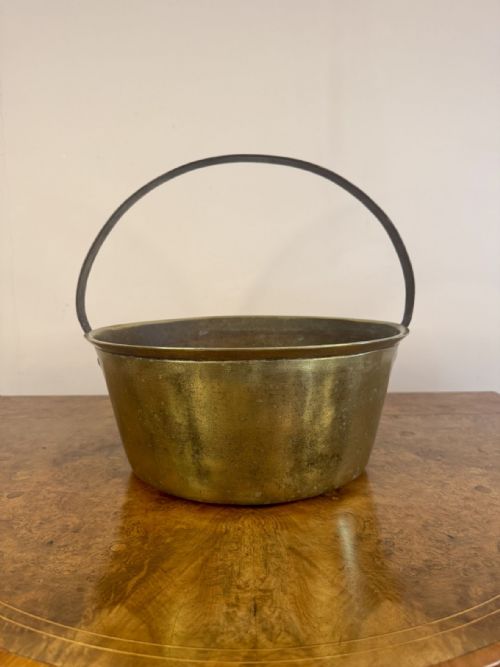
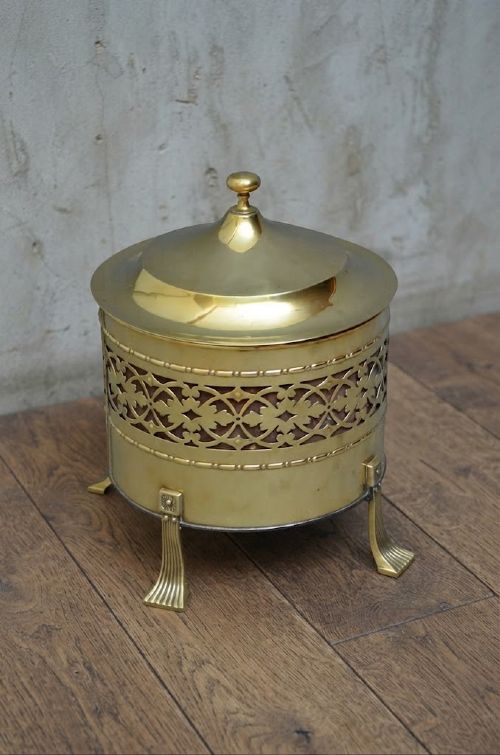
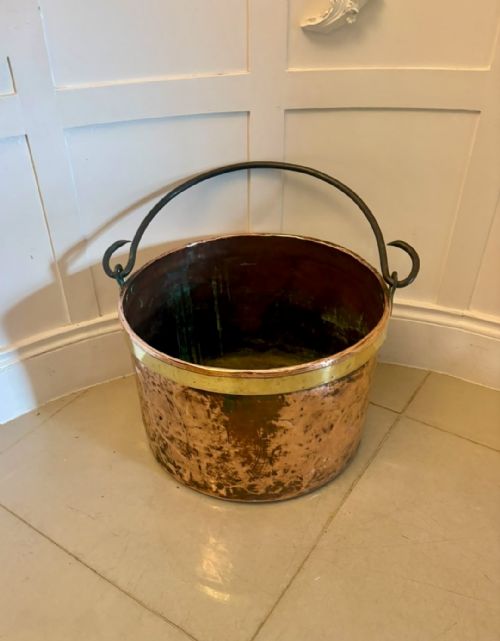


Brass Fireside Pot
A brass fireside pot brings useful warmth and period character to a hearth, uniting practical metalwork with traditional domestic craft.
Brass Fireside Pot
When you search for a brass fireside pot, you encounter an array of heavy metal vessels designed for hearth utility, ranging from coal buckets to log bins and preserve warmers. These items often cross over into related categories like kettles, trivets, and skillets, reflecting the varied tasks of historical domestic life.
The versions you meet most frequently on this page hail from the Georgian and Edwardian eras, spanning from the early nineteenth century up to around nineteen hundred. They combine functional storage with decorative presence beside the fireplace.
Makers utilised resilient metals to withstand daily heat and weight, creating sturdy containers that endured decades of fireside service. Their forms evolved from utilitarian cooking pans and kettles into decorative coal buckets and planters by the turn of the twentieth century.
Materials and construction
The primary materials recorded in these listings are brass and copper, frequently paired with wrought iron or bronze for handles, legs, and structural support. Metalworkers hammered, cast, and joined these durable elements to create vessels capable of holding heavy fuel or boiling water.
Detailing often included fretwork designs cut into metal sheets, adding decorative lightness to heavy coal buckets and planters. These techniques relied on traditional metalworking skills that balanced aesthetic appeal with structural endurance.
Brass Fireside Pot Retail Price Guide 2026
Typical asking prices for brass fireside pot among the pieces listed under this phrase on Sellingantiques today, from the lower quarter to the upper quarter. They describe what is for sale here now, not the wider market.
Listings span the Georgian, Edwardian, and nineteenth-century periods, showcasing items made from brass, copper, bronze, and wrought iron.
Judging quality
Quality reveals itself in the substance of the metal and the integrity of the construction, distinguishing robust early pieces from lighter later wares. Heavier gauges of brass and copper, combined with secure joinery, mark out the finer examples in this range.
Design sophistication also separates the standard items from the exceptional, particularly where delicate fretwork or thoughtful detailing elevate a utilitarian container into a statement of period interior style.
The Brass Fireside Pot Glossary
- Fretwork
- Openwork ornamentation cut into metal or wood sheets. This technique appears on Edwardian coal buckets to lighten their appearance.
- Trivet
- A metal support stand used to elevate cookware or kettles near a fire. These pieces often feature sturdy legs and heat-resistant metal construction.
- Skillet
- A long-handled metal cooking pan designed for hearth use. Georgian examples combine brass and iron elements.
- Preserve warmer
- A deep metal pan used for boiling and preserving fruit or jams over a heat source. These heavy bronze or copper vessels served vital roles in period kitchens.
Brass Fireside Pot: Frequently Asked Questions
What is a brass fireside pot used for?
These vessels were originally designed for practical hearth tasks such as holding coal, storing logs, or heating water and preserves near the fire.
Today, they serve equally well as decorative log bins, planters, or traditional fireplace accessories in period interiors.
How do I date a brass fireside pot?
Dating relies on observing stylistic details, construction methods, and the specific mix of materials like brass, copper, and wrought iron.
Pieces span from the Georgian era through to Edwardian times, with distinct shifts in design from utilitarian cookware to decorative fireside containers.
What is the difference between a coal bucket and a log bin?
Coal buckets generally feature smaller capacities, sturdy swinging handles, and sometimes intricate fretwork designs suitable for carrying solid fuel.
Log bins tend to be larger, deeper vessels built to hold substantial quantities of firewood beside the hearth.
How should I clean antique brass and copper?
Historic metalwork usually benefits from gentle dusting and minimal intervention to preserve the natural patina accumulated over centuries of use.
Avoid harsh modern abrasives that strip away the aged surface character valued by collectors.