




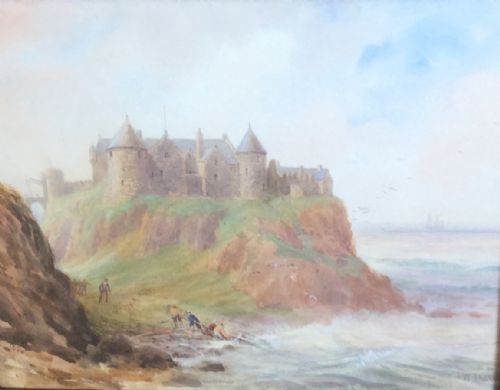


Irish Watercolour Painting
Irish watercolour painting brings coastal views, landscapes and portrait miniatures straight from the island into your home.
Irish Watercolour Painting
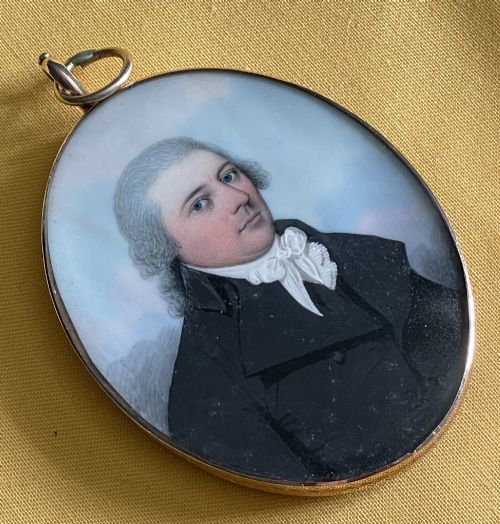
An irish watercolour painting is an original fine art piece executed on paper or linen, capturing scenes from across the island. The examples found here range from 18th-century portrait miniatures to mid-20th-century coastal views and mountain landscapes.
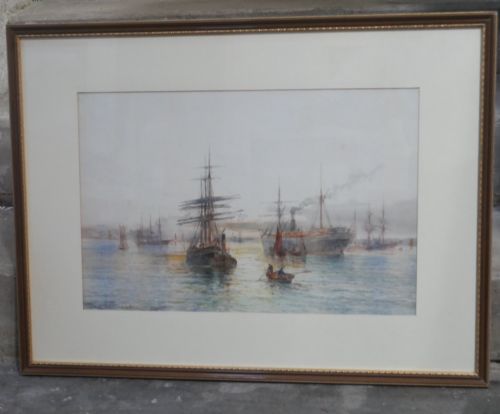
Buyers will encounter various forms, including framed artwork, wall art and detailed portrait miniatures. These pieces often depict specific locations such as Dublin Bay, County Wicklow, Ballyholme Bay and Dunluce Castle.
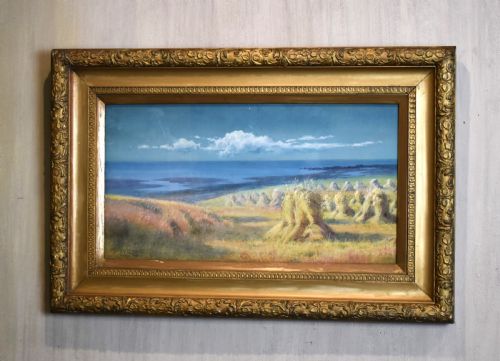
The periods represented span the Georgian, Victorian and 20th-century Irish school eras. Most works emerge from the 19th century and the early decades of the 20th century, reflecting both maritime subjects and rural genre scenes.
Materials and Technique
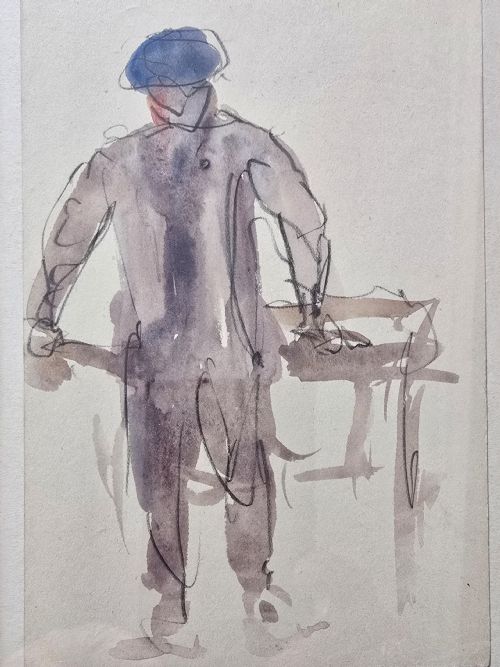
Artists painted primarily with watercolour pigment and ink on paper or linen surfaces. These materials allowed for delicate washes and fine details, particularly in portrait miniatures and landscape views.
Works are typically preserved behind glass within wooden frames, occasionally featuring gilt highlights. Original glazed wooden frames protect the fragile paper and pigment from atmospheric damage over the centuries.
Periods span the 18th century, Georgian, Victorian, 1900, 1910, 1920 and 1940.
Markers of Quality
Quality rests in the precision of the brushwork and the clarity of the composition, whether handling a bustling port scene or a quiet rural landscape. Skilled artists capture light and atmospheric depth on paper with remarkable control.
The condition of the watercolour pigment and the survival of the original wooden frame or glass influence the overall standing of a piece. Works by recorded members of the Royal Hibernian Academy or notable regional painters carry distinct artistic weight.
Frederick Buck·Sir Thomas Newenham Dean RHA·Alfred Grey RHA·Robert Richard Scanlan·Peter Ghent·Arthur Alfred Davis·John E Bosanquet·Markey Robinson·Joseph William Carey·John Syer·John Adair·John Skelton·Cecil Hodgkinson·Patrick Wybrant·James William Booth·George W Morrison·Francis William Topham
The Irish Watercolour Painting Glossary
- Watercolour pigment
- A colourant ground in a water-soluble binder, applied to paper or linen to create transparent washes of colour.
- Gilt
- A thin layer of gold leaf applied to wooden frames to provide a decorative metallic finish.
- Portrait miniature
- A small, highly detailed painting, often executed on ivory or paper, popular during the 18th and 19th centuries.
- Grisaille
- A painting executed entirely in shades of grey or neutral monochrome, often used to create a sculptural effect.
- RHA
- Abbreviation for the Royal Hibernian Academy, an institution of artists based in Dublin.
Irish Watercolour Painting: Frequently Asked Questions
How should I display my watercolour?
Keep watercolours away from direct sunlight to prevent the pigments from fading over time. Maintaining stable indoor humidity also protects the fragile paper and wooden frames.
Ensure the piece remains securely sealed behind glass to guard against dust and moisture accumulation.
What subjects are most common?
Coastal views, harbours, and dramatic landscapes dominate these works. Scenes featuring Dublin Bay, Antrim coasts, and western mountains appear frequently.
Portrait miniatures and rural genre scenes depicting local inhabitants also form a significant part of the available selection.
Are these paintings signed by the artist?
Many works bear visible signatures or initials from the artists who created them. Documentation on the reverse of the frame sometimes records additional provenance.
Unsigned pieces are often attributed to specific regional schools or periods based on technique and subject matter.