





Original Irish Artwork
Original irish artwork brings home centuries of landscape and genre painting, offering genuine character for your walls.
Original Irish Artwork
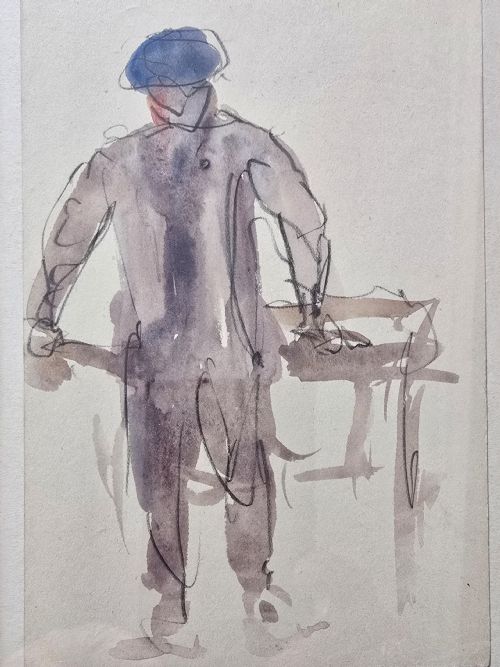
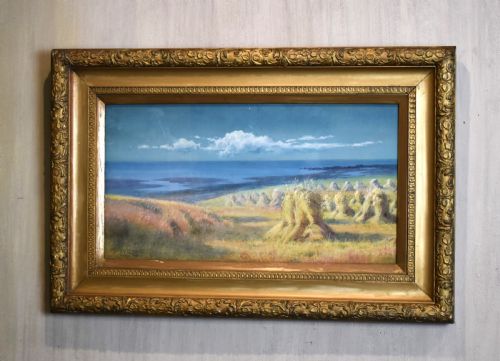
When you search for original irish artwork, you encounter a varied selection of paintings, watercolours, sketches, and prints spanning from the nineteenth century through the mid-twentieth century. The pieces you are most likely to meet on this page include landscape paintings of Connemara and coastal scenes, alongside townscape views and architectural studies executed by named artists.
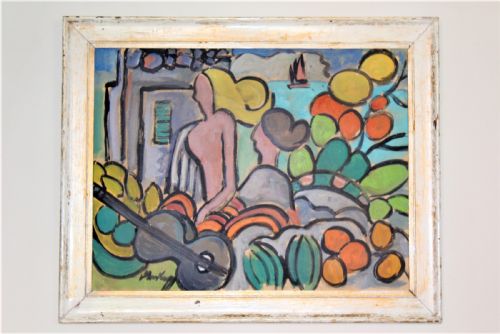
The objects take several forms, predominantly framed wall art rendered in oil on canvas, oil on board, and delicate watercolours on paper. Dating spans from the Georgian and Victorian eras into the 19th Century, 1900, 1910, 1920, 1930, 1940, and 1950 periods, reflecting distinct phases of the 20th Century Irish School and British School traditions.
Makers and painters represented range from regional watercolourists to notable figures associated with the Royal Hibernian Academy and British School. Subjects focus heavily on topographical views, country hills, and local scenes tied closely to specific localities across the island.
Materials and techniques
These works rely primarily on traditional supports such as paper and canvas, often stretched over wood frames and protected beneath glass. Artists applied watercolour pigment, ink, and oil paints using fine brushes, occasionally finishing pieces with gilt framing.
Pencil sketches and prints demonstrate precise draughtsmanship on paper, while oil paintings utilise heavier layering on canvas and board to build texture. Surviving examples often retain their period mountings and wooden surrounds that complement the medium.
Kilmainham Gaol makes an unexpected appearance as the subject of an early nineteenth-century pencil sketch.
Assessing quality and condition
Quality rests on the strength of the composition, the sureness of the brushwork, and the clarity of the artist's hand in capturing light and atmosphere. Stronger examples display confident handling of watercolour washes or rich application of oil pigment that brings depth to landscapes and figures.
Condition varies according to age, storage, and framing history, where clean paper free from heavy foxing and stable canvas surfaces command greater attention. The presence of clear signatures, artist stamps, and period frames further distinguishes finer pieces from anonymous works.
Michael Healy·Sir Thomas Newenham Dean RHA·C Caldwell·Sidney James Beer·Robert Richard Scanlan·Sir Francis Leggatt Chantrey·Peter Ghent·Markey Robinson·John E Bosanquet·Charles McAuley·Joseph William Carey·Letitia Marion Hamilton
The Original Irish Artwork Glossary
- Watercolour pigment
- A colour medium suspended in a water-soluble binder, applied to paper to create translucent washes of tone.
- Oil on canvas
- Pigment mixed with drying oil applied to a woven fabric surface stretched over a wooden frame, allowing rich blending and texture.
- Genre art
- Painting depicting scenes of everyday life, ordinary people, and familiar surroundings rather than elevated historical subjects.
- RHA
- Initials denoting a member of the Royal Hibernian Academy, an institution central to Irish fine art exhibition.
- Topographical study
- An accurate drawing or painting recording a specific real-world location, building, or landscape feature.
Original Irish Artwork: Frequently Asked Questions
How do I date an old Irish watercolour?
Dating typically relies on the paper type, framing style, artist biography, and any handwritten notes or signatures on the reverse.
Comparison with documented works from the same period helps narrow down the decade of creation.
What subjects are common in these paintings?
Landscapes featuring hills, bays, and coastal scenes dominate the selections, alongside townscapes and architectural studies.
Irish topography from counties such as Antrim and Wicklow appears frequently across the watercolours and oils.
How should I display antique paper artwork?
Watercolours and sketches on paper require conservation-grade framing with acid-free mounts to prevent deterioration over time.
Placement away from direct sunlight protects delicate pigments from fading.
Are these works signed by the artists?
Many examples bear artist signatures, initials, or studio stamps, often accompanied by period inscriptions naming the location depicted.
Unsigned pieces are attributed based on style, technique, and subject matter characteristic of particular schools.