


Irish Sterling Silver Flatware
Irish sterling silver flatware brings substantial Georgian and nineteenth-century craftsmanship to the table, offering distinct Dublin silver forms for daily service.
Irish Sterling Silver Flatware
Irish sterling silver flatware encompasses utilitarian and serving cutlery fashioned across the eighteenth and nineteenth centuries, including items from the Georgian and George IV periods. Buyers examining this category encounter various implements forged in Dublin workshops, reflecting the distinct regional assay practices of the era.
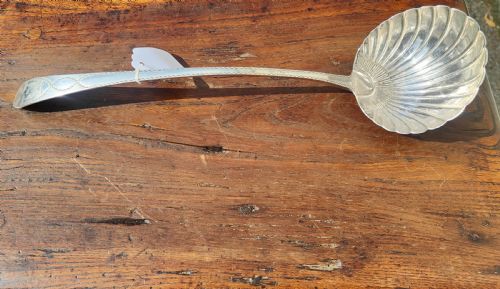
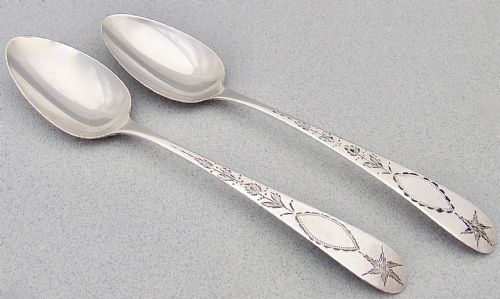
The selection centres on serving utensils, ladles, marrow scoops, caddy spoons, fish slices, and tablespoons. Pieces frequently demonstrate traditional regional patterns such as Celtic Point, Hookend, Old English, and Fiddle Pattern, alongside unornamented sterling silver forms designed for specific culinary tasks.
How They Were Made
Makers shaped these items from sterling silver using traditional smithing techniques, forming bowls, handles, and prongs by hand before applying decorative engraving or family crests. Selected cased sets incorporate fitted interiors lined with velvet and silk to protect the polished metal during storage.
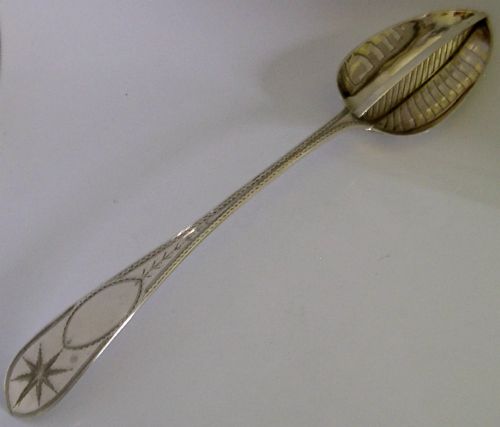
Dublin silversmiths utilised durable silver alloys suited to regular dining use, hammering ingots into blanks and filing them to shape. Individual components like marrow scoops and strainer spoons required specialist hollow work and piercing to achieve their specific functional designs.
Materials recorded across the available inventory include sterling silver complemented by historical fitted cases lined with velvet and silk.
What Varies in Quality
Quality in Irish sterling silver flatware rests upon the crispness of the Dublin hallmarks, the retention of original form without excessive thinning from polishing, and the clarity of engraved crests. Superior examples maintain balanced proportions and robust gauge weight, particularly evident in substantial items like soup ladles and basting spoons.
The distinction between standard service pieces and collector-grade items often involves the presence of documented makers and uncommon patterns like Celtic Point or Hookend. Finer pieces display careful finishing at joints and terminals, whereas lesser examples show wear or distortion from centuries of active service.
John Pittar·Edward Power·John Locker·Michael Smith
The Irish Sterling Silver Flatware Glossary
- Sterling silver
- A silver alloy containing 92.5 percent pure silver by mass, with the remainder composed of copper or other metals to improve durability. This standard metal forms the foundation of all authentic Irish flatware in this category.
- Hallmark
- An official stamp applied by an assay office to indicate the metal purity, maker, and year of manufacture. Irish pieces typically feature the Dublin stamp alongside specific duty and maker marks.
- Marrow scoop
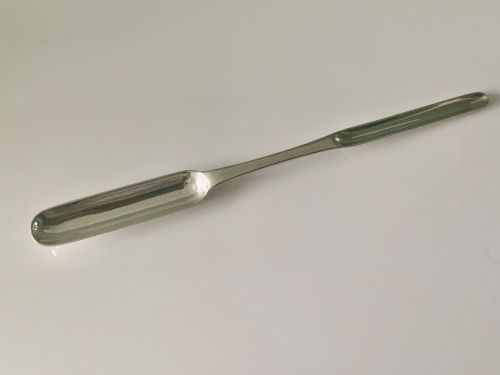
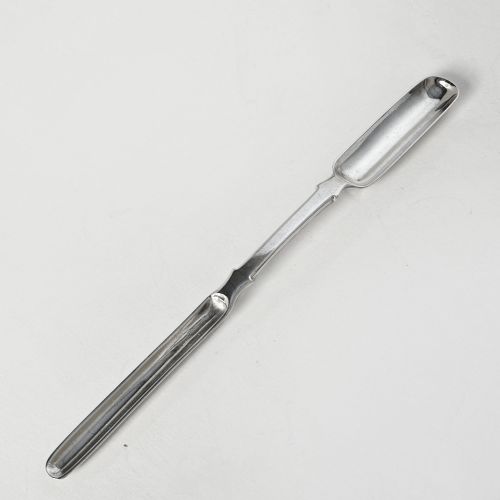
- A narrow, double-ended spoon designed for extracting marrow from animal bones during formal dining. These items represent specialised Georgian cutlery forms often found in Irish silver.
- Bastng spoon
- A large spoon utilised for gathering and pouring pan juices over meat during roasting. They measure considerably longer than standard tablespoons and frequently feature reinforced bowls.
- Caddy spoon
- A short-handled spoon created specifically for measuring loose tea leaves from a caddy into a teapot. These miniature implements often display intricate handle engraving or shell-shaped bowls.
- Fiddle pattern
- A flatware handle design featuring a narrow stem that widens towards the terminal into a shape resembling a fiddle. This style gained widespread popularity during the nineteenth century.
Irish Sterling Silver Flatware: Frequently Asked Questions
What is Irish sterling silver flatware?
Irish sterling silver flatware comprises functional dining implements and serving utensils produced in Ireland, predominantly during the eighteenth and nineteenth centuries. These pieces encompass spoons, ladles, scoops, and fish slices forged by Dublin silversmiths.
Items from this category reflect historical dining customs and feature regional design variations distinct from English silver of the same periods.
How do I identify Georgian Irish silver?
Georgian Irish silver is identified through official Dublin assay office hallmarks, specific date letters, and traditional styles characteristic of the reigns spanning the mid-eighteenth to early nineteenth centuries. Makers marked their pieces to guarantee the metal standard.
Form variations such as Celtic Point handles or specific crest engravings also point towards Irish provenance from the Georgian era.
How were marrow scoops used?
Marrow scoops were utilised during formal Georgian and Victorian dinners to extract edible marrow from animal bones. Guests or servants used the narrow trough end to reach inside long bones and the small spoon end for smaller cuts.
These implements represent specialised dining customs that required dedicated silver tools before the shift towards simpler table settings.
Can I use antique silver daily?
Antique silver flatware can be incorporated into daily dining provided it receives proper hand washing with mild soap and immediate drying. Avoiding dishwashers prevents chemical damage to the polished metal.
Regular use actually helps maintain a natural patina on the silver, though delicate items like strainer spoons require careful handling.