



Irish Card Table
An irish card table brings Dublin craftsmanship into the drawing room, offering rich timber and ingenious folding tops for evening play.
Irish Card Table
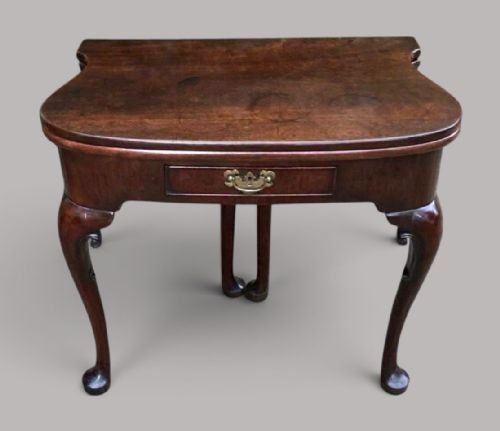
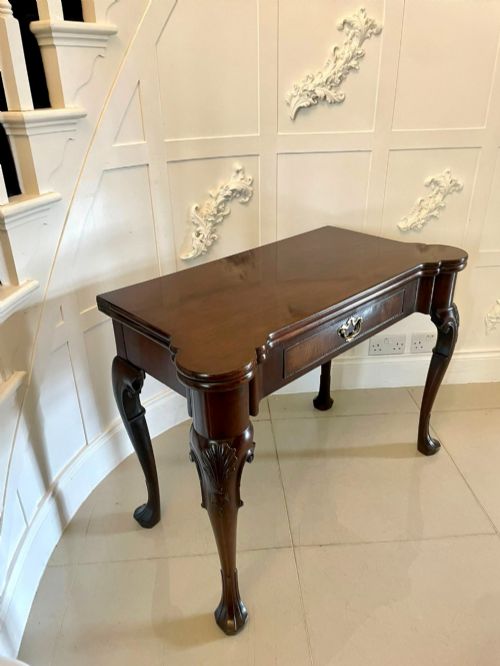
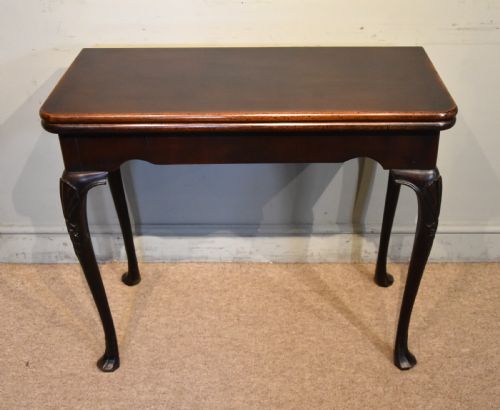
When you search for an irish card table, you encounter fold-over and concertina action surfaces designed for eighteenth and nineteenth century gaming. These pieces appear most frequently in mahogany and walnut, spanning Georgian, George II, George III, and Victorian periods.
Makers in Ireland shaped these tables as card tables, games tables, and tea tables, often employing double or triple top configurations. The form accommodates both card playing and general tea service within the formal entertaining spaces of country houses.
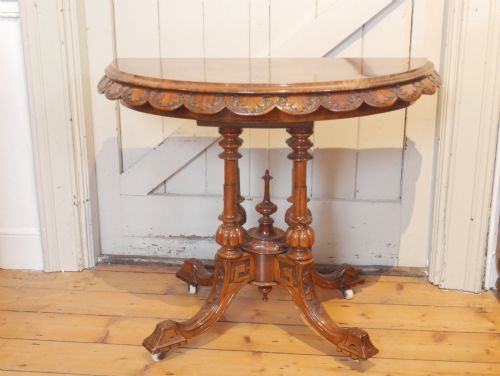
Examples on this page reflect the stylistic shifts from heavy carved mahogany of the mid eighteenth century to later burr walnut veneers. Regional Dublin cabinet makers infused British Regency and Chippendale idioms with local timber choices and robust proportions.
Distinguishing quality across examples
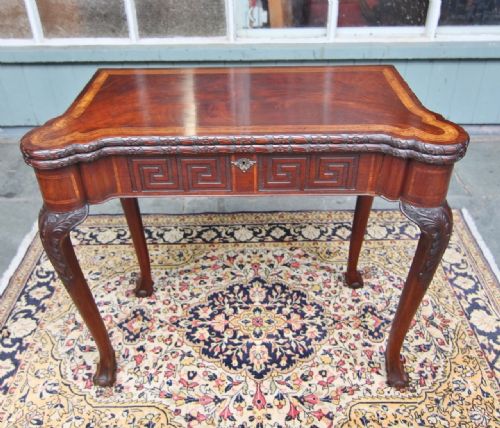
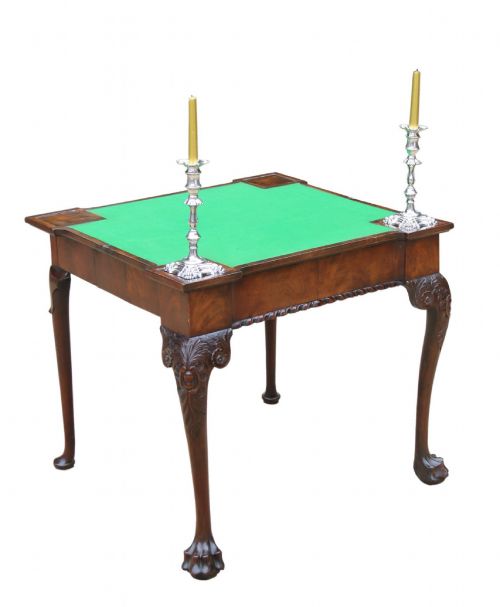
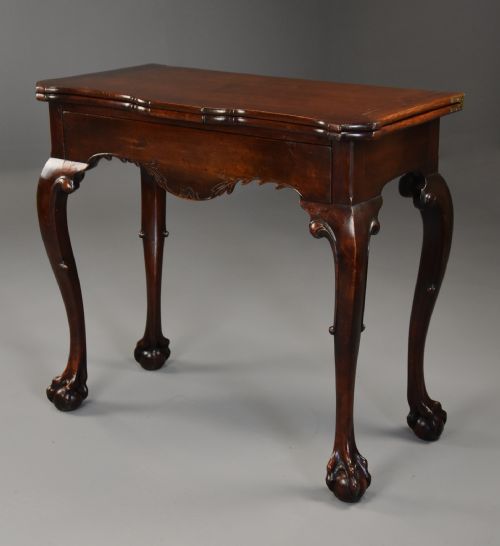
Quality rests in the crispness of the carving on the knees and frieze, the selection of figured mahogany or burr walnut veneers, and the mechanical integrity of the folding action. Concertina frames require sophisticated joinery that aligns the rear legs perfectly with the front when extended.
Proportion and timber choice set the finer pieces apart, particularly where makers incorporated secondary woods or detailed inlay without compromising structural stability. Pieces with unblemished original timber surfaces and smooth operating hinges command the upper tier.
Irish Card Table Retail Price Guide 2026
Typical asking prices for irish card table among the pieces listed under this phrase on Sellingantiques today, from the lower quarter to the upper quarter. They describe what is for sale here now, not the wider market.
Several tables retain subtle candle indentation marks on their corners, recording centuries of evening card games played by dim light.
Howard & Sons
The Irish Card Table Glossary
- Concertina action
- A frame construction that expands outward with the folding top, allowing all four legs to move into support positions. This design leaves the rear corners unobstructed.
- Demi-lune
- A half-moon shape used for table tops and frames. These semicircular tables fit flat against a wall when closed.
- Baize
- A coarse woollen fabric resembling felt, traditionally fitted to the interior playing surface of card tables. It provides a soft texture for dealing cards.
- Triple top
- A multi-layered table design that opens through three distinct surfaces. It serves different functions from a console to a gaming board.
- Frieze
- The horizontal band situated directly beneath the table top. Carvers often decorated this area with blind fretwork or carved wooden motifs.
Irish Card Table: Frequently Asked Questions
What is a concertina action card table?
A concertina action table utilises a specialised frame that extends outward alongside the folding top. This mechanism ensures that all four legs provide balanced support underneath the open playing surface.
Such construction represents superior cabinet making compared to simpler swing-leg designs, keeping the table steady during card games.
How do I use an irish card table today?
These tables function well as console or side tables against a hallway or living room wall when closed. Opening the top reveals a generous surface suitable for board games or display.
Their dual nature makes them practical for modern rooms that require adaptable furniture without sacrificing period character.
How can I tell George II from Victorian examples?
George II tables typically feature dense mahogany, vigorous carved details on the knees, and robust ball and claw feet. The timber exhibits deep patination developed over centuries.
Victorian pieces often showcase burr walnut veneers, lighter frames, and restrained inlay work. The wood grain on nineteenth-century examples tends to be more decorative and varied.
Did these tables only serve for playing cards?
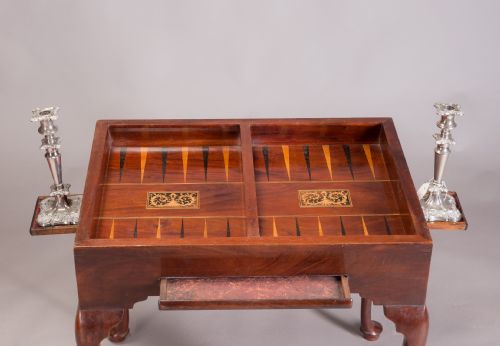
Many examples double as tea tables or general side tables due to their multi-layered top construction. Some triple top versions incorporate compartments for game pieces beneath the surface.
This versatility allowed eighteenth-century households to utilise a single piece of furniture for multiple domestic activities throughout the day.