



Irish Georgian Games Table
These Irish Georgian games table examples bring clever folding surfaces and rich mahogany grain into your home.
Irish Georgian Games Table
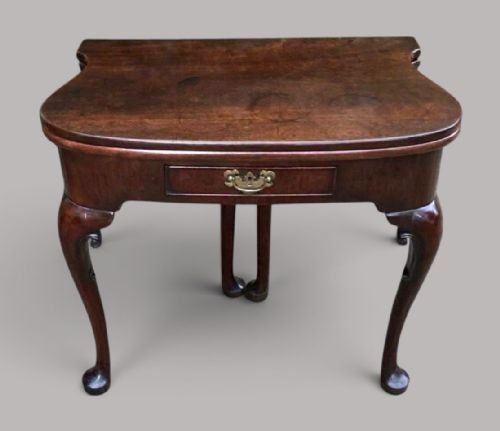
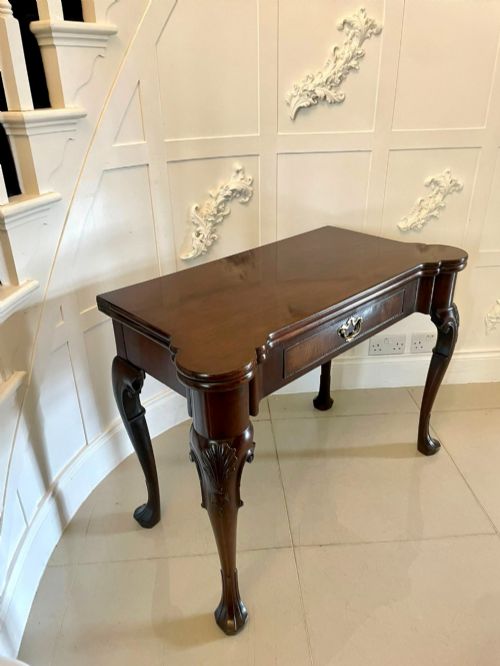
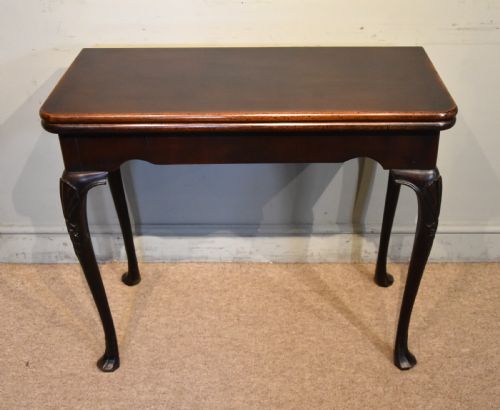
An Irish Georgian games table serves as a versatile piece designed for social pastimes and domestic display across the eighteenth and early nineteenth centuries. When you browse this selection, you encounter forms that fold, turn over, or expand using concertina actions to reveal specialised playing surfaces.
The pieces appearing on this page span the Georgian, George II, George III, and early nineteenth century eras. You will frequently find card tables, tea tables, and triple top variants alongside dedicated games tables constructed in Ireland.
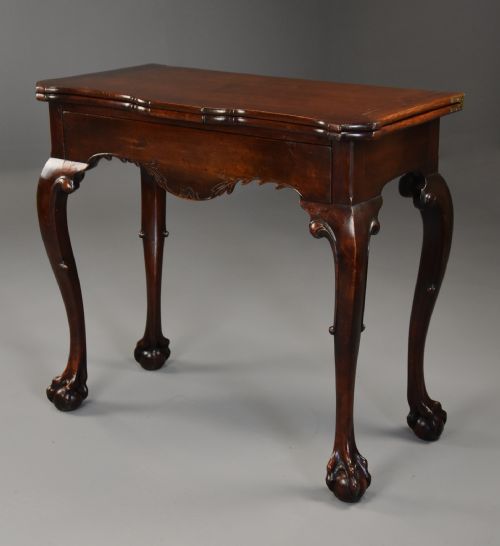
Makers shaped these items using dense timbers, often incorporating foldover leaves and demi lune configurations. They bridge the gap between functional furniture for cards and elegant side tables for the parlour.
How they were made
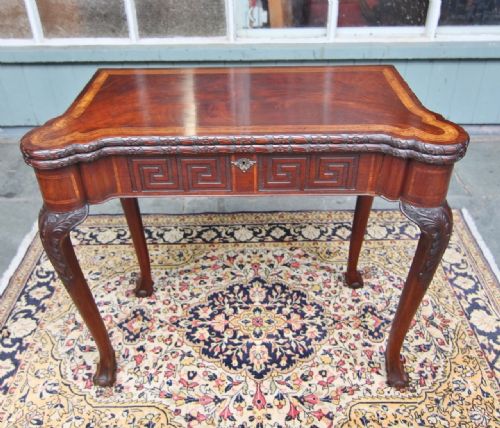
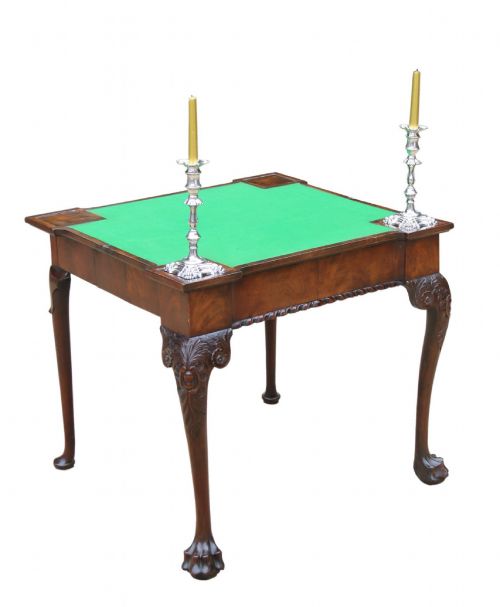
Cabinetmakers constructed these tables primarily from solid mahogany and American black walnut, paired with interior linings of baize for card playing. They incorporated structural elements like concertina actions to support extended leaves securely during use.
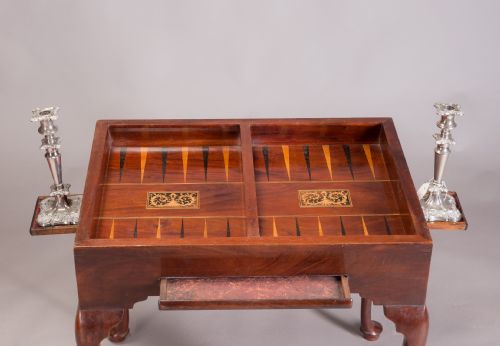
Surface decoration relies on fine craftsmanship rather than heavy ornamentation, utilising satinwood, boxwood, and ebony inlay. Brass fittings and carved details further define the construction methods recorded in the period.
Irish Georgian Games Table Retail Price Guide 2026
Typical asking prices for irish georgian games table among the pieces listed under this phrase on Sellingantiques today, from the lower quarter to the upper quarter. They describe what is for sale here now, not the wider market.
Object forms recorded across these records include dedicated games tables, card tables, tea tables, and versatile triple top variants.
What varies in quality
The distinction between standard examples and exceptional pieces rests in the depth of timber patina and the sophistication of the carving. Superior items display crisp detailing on the mahogany and imaginative inlay work featuring subjects like birds.
Mechanical complexity also separates the tiers, with concertina action frames commanding greater attention than simpler hinged designs. The integration of secondary woods and the preservation of original baize surfaces complete the hierarchy of worth.
The Irish Georgian Games Table Glossary
- Concertina action
- An expanding frame mechanism that allows a table top to pull forward and open fully while keeping four supporting legs at the corners. This clever engineering prevents the middle of the table from sagging when unfolded.
- Demi lune
- A half moon shape typical of folding tabletops from the period. It creates a compact console against the wall when closed.
- Baize
- A coarse woollen woven fabric used to line the playing surface of card and games tables. It provides a soft, non slip texture for shuffling cards.
- Triple top
- A multi layered table design that unfolds or rotates to serve as a tea table, a card table, and a plain side table.
- Patina
- The deep, lustrous surface sheen developed on old wood over centuries of handling and polishing. It marks the authentic age of the timber.
Irish Georgian Games Table: Frequently Asked Questions
What is a concertina action table?
A concertina action table uses an expandable wooden frame that pulls outward when you unfold the top. This design allows the rear legs to move outward in tandem, providing sturdy support right at the corners of the open square playing surface.
Master cabinetmakers favoured this mechanism because it kept the weight evenly distributed without needing a central swing leg to get in the players' way.
How were these tables used originally?
These tables served as the centrepiece for evening entertainment, hosting games of whist, quadrille, or chess by candlelight. During the day, owners folded the leaves down and pushed the tables against the parlour wall to hold decorative objects or tea canisters.
Their multi functional design meant a single piece of furniture could transition seamlessly from a formal console to a gaming hub within seconds.
What woods appear on these pieces?
Mahogany forms the primary structural timber for the vast majority of these tables, supplemented by American black walnut on select examples. Cabinetmakers also incorporated satinwood, boxwood, and ebony for delicate stringing and inlay motifs.
Interior framing often relied on sturdy secondary hardwoods to support the folding leaves and mechanical hinges over decades of heavy use.
How do I care for the baize?
Protect the woollen baize surface by keeping the table away from direct sunlight, which can fade the traditional green or red dye. Gentle vacuuming with a soft brush attachment will remove dust without snagging the woven fibres.
Avoid placing damp glasses or heavy metal objects directly onto the cloth to preserve the texture of the playing area.