

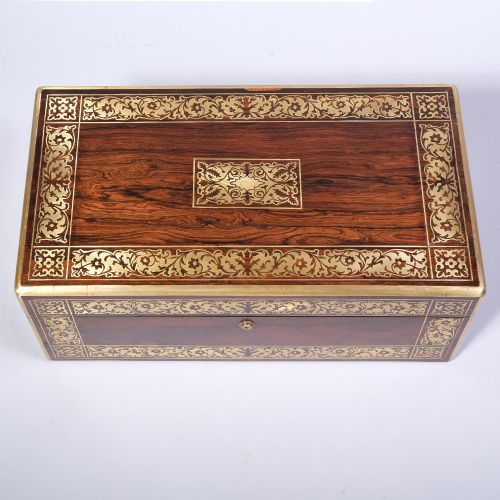
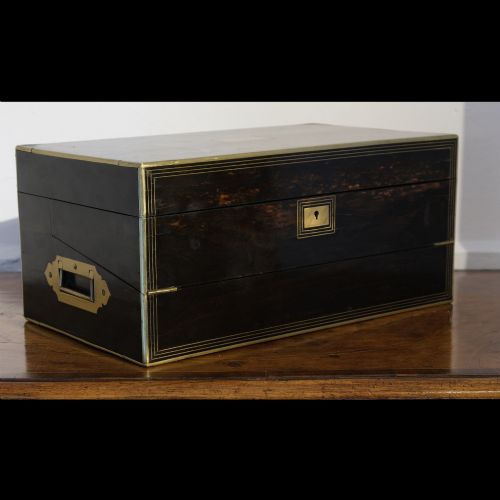
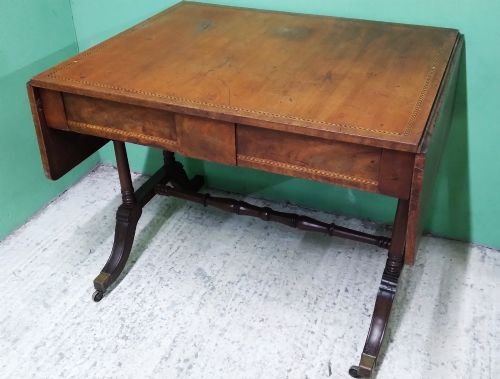
Inlaid Wooden Writing Desk
An inlaid wooden writing desk brings traditional craftsmanship into a study, offering fitted compartments and decorative surfaces designed for daily correspondence.
Inlaid Wooden Writing Desk
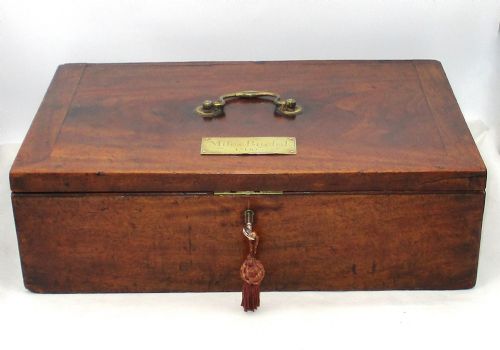
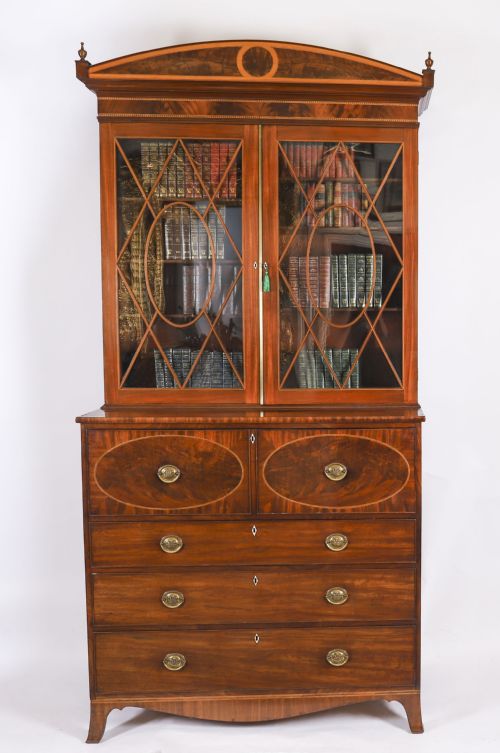
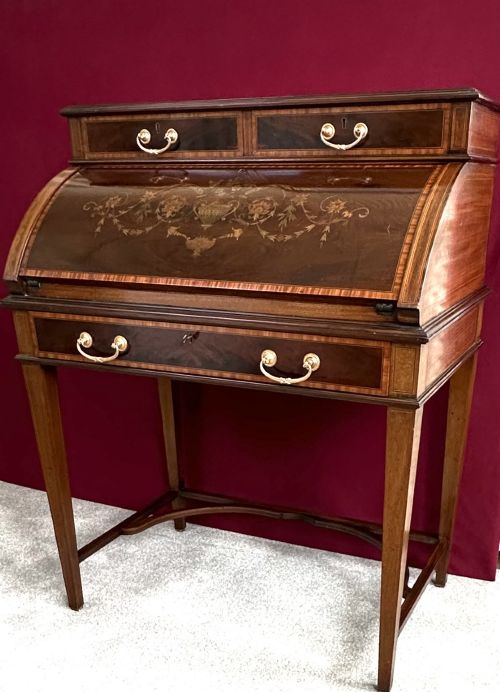
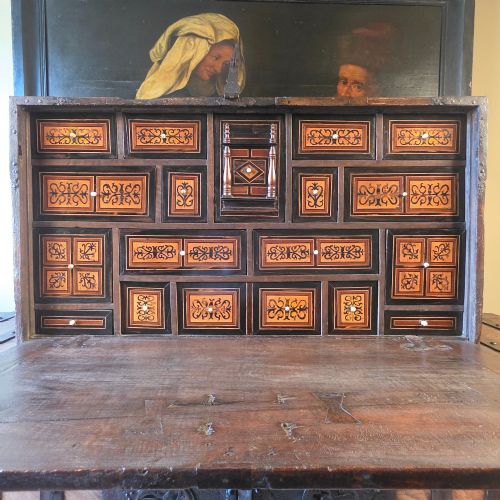
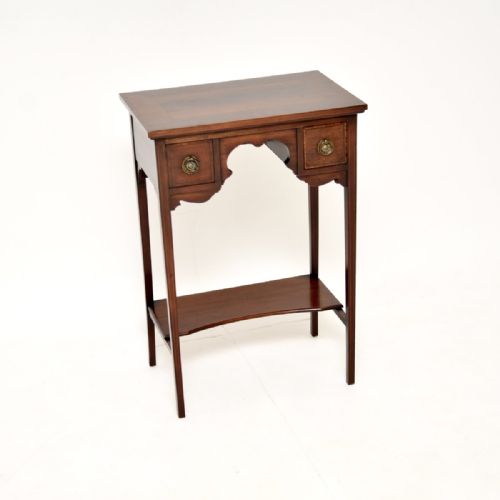
An inlaid wooden writing desk spans compact portable writing slopes and larger tables originating from the eighteenth, nineteenth, and early twentieth centuries.
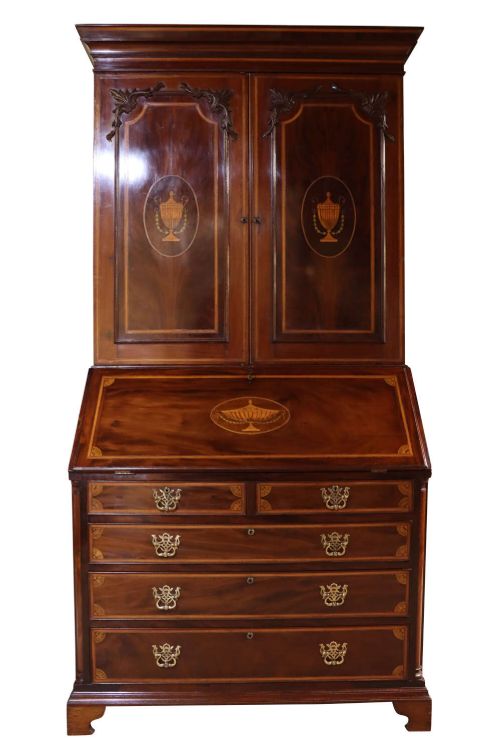
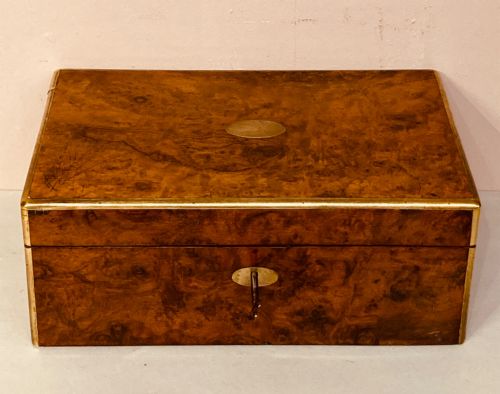
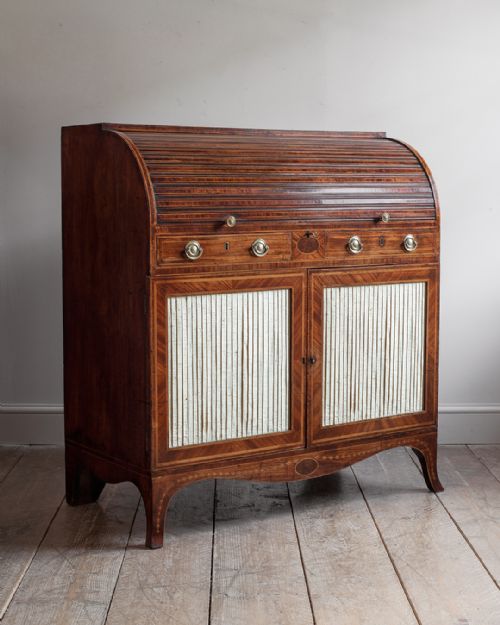
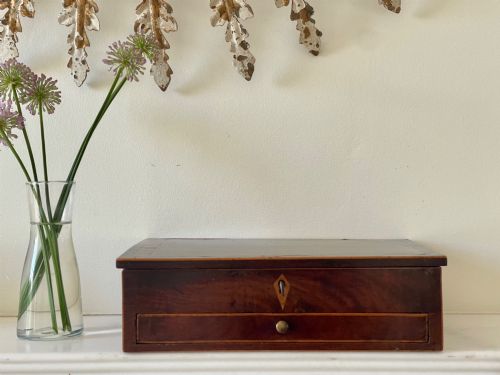
The selections on this page appear predominantly in Georgian, Victorian, and Edwardian styles, incorporating related forms such as bureau bookcases, secretaires, and stationery boxes.
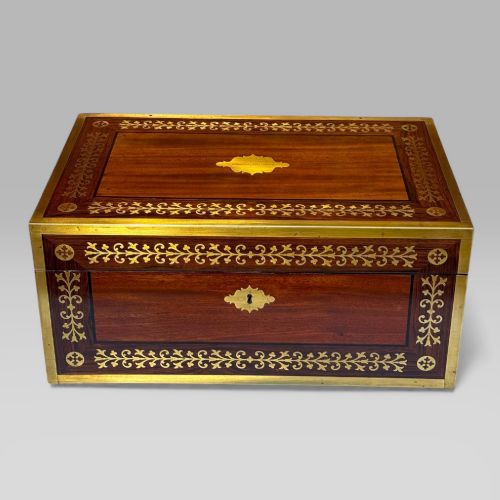
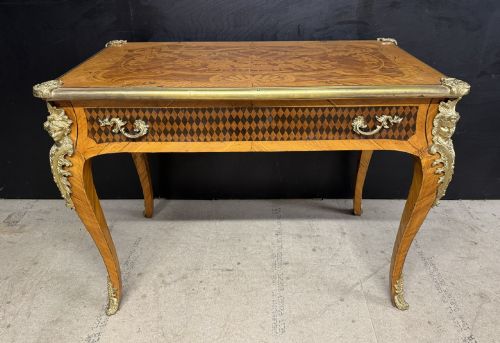
Makers utilised various regional designs, ranging from English mahogany frameworks to French marquetry and campaign boxes fitted with brass.
Materials and Technique
Carpenters constructed these pieces using dense timbers such as mahogany, rosewood, walnut, and satinwood, often applying burr veneers for decorative grain patterns.
Wood inlay and marquetry techniques integrate contrasting light and dark timbers to form geometric or floral motifs across the surface.
Many examples incorporate brass handles, escutcheons, and stringing to reinforce corners and outline drawers.
Listings feature items from the eighteenth, nineteenth, and early twentieth centuries, constructed in mahogany, walnut, rosewood, and satinwood.
Standards of Execution
Superior examples display precise, flush inlay work where contrasting woods sit entirely level with the primary timber without visible gaps.
The refinement of internal partitions, hidden compartments, and original brass hardware distinguishes standard utility pieces from finer cabinet work.
Edmund Nye
The Inlaid Wooden Writing Desk Glossary
- Marquetry
- Decorative veneer work arranged in pictorial or geometric patterns using various coloured woods. It requires meticulous hand-cutting and fitting.
- Writing slope
- A portable box with a slanted hinged lid designed for correspondence. These often contain velvet-lined writing surfaces and inkwell compartments.
- Stringing
- Thin lines of contrasting wood inlaid into channels cut into the surface of furniture. This technique defines borders and panels.
- Secretaire
- A desk or cabinet featuring a pull-down writing flap that conceals small drawers and pigeonholes. It combines storage with a functional writing space.
- Tunbridge ware
- Small wooden objects decorated with mosaic patterns formed from thousands of tiny tinted wood blocks. The method originated in Kent.
Inlaid Wooden Writing Desk: Frequently Asked Questions
How do I use a writing slope?
Place the portable box on a sturdy table and lift the hinged lid to access stored paper and writing implements. The sloping surface provides a comfortable angle for handwriting.
Fold the writing plane flat after use to secure correspondence inside the fitted internal compartments.
How do I care for antique wood surfaces?
Maintain the finish by dusting regularly with a soft dry cloth and applying natural beeswax periodically to nourish the timber. Avoid placing wooden pieces near direct heat sources or strong sunlight.
Keep humidity levels stable to prevent the wood or inlaid elements from warping and cracking over time.
How can I tell the period of a desk?
Examine the timber species, construction methods, and hardware styles to determine the likely era of manufacture. Georgian pieces often display heavy mahogany construction, while Edwardian versions frequently utilise lighter satinwood.
Look for tool marks inside drawers and check whether the brass fittings match the expected manufacturing techniques of the recorded century.