


Edwardian Slant Top Desk
When you search for an edwardian slant top desk, you encounter compact writing furniture that folds open for correspondence and closes away clutter.
Edwardian Slant Top Desk
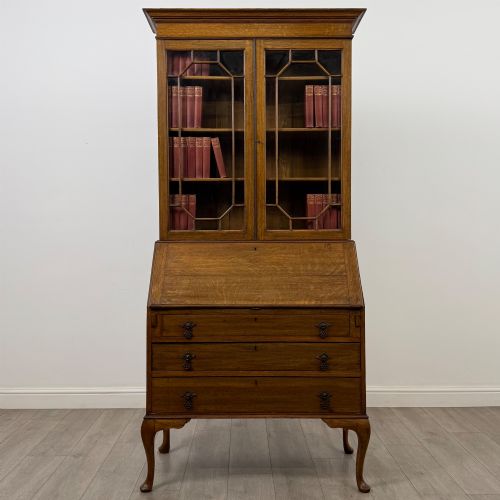
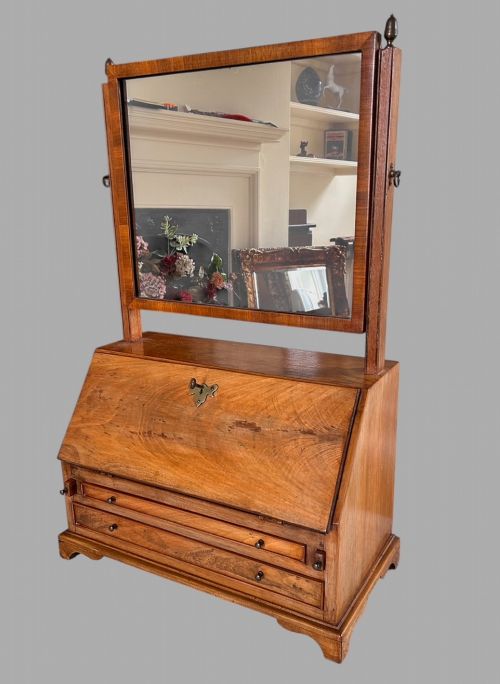
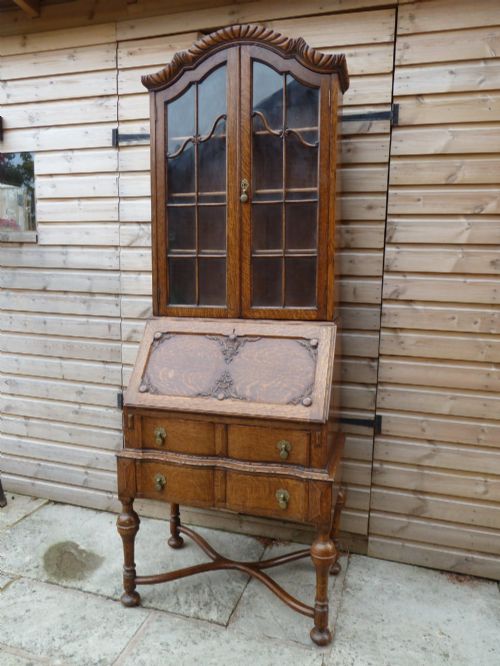
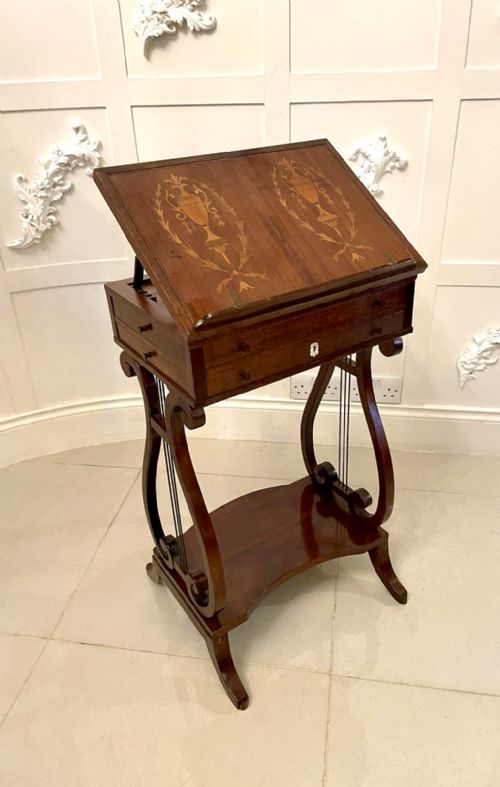
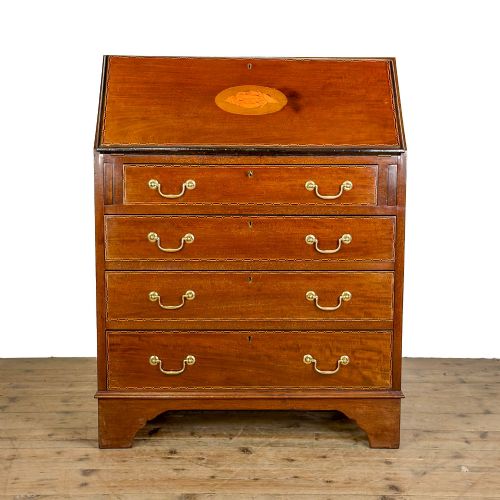
An edwardian slant top desk typically takes the form of a bureau or a compact Davenport, designed for home correspondence and paper storage. These pieces combine a sloping writing flap with internal pigeonholes and drawers beneath, resting on compact wooden pedestals or legs. The search phrase covers both standalone writing desks and taller bureau bookcases that integrate shelving above the writing surface.
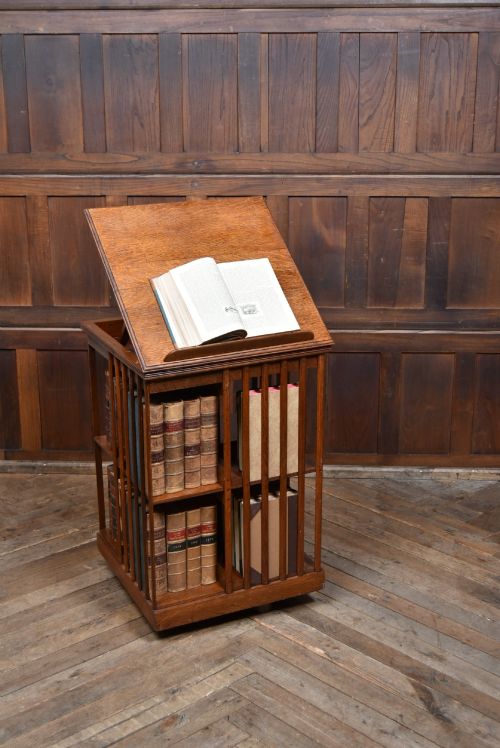
The material palette relies heavily on mahogany, oak, and walnut, often finished with satinwood inlay or marquetry details. Makers of the period drew on earlier Georgian and Sheraton design vocabularies while adapting proportions for smaller Edwardian domestic spaces. You frequently meet compact writing compartments alongside revolving bookcases or matching chairs.
While the label points to the Edwardian era, surviving examples span from the nineteenth century into the nineteen-twenties, incorporating Victorian antecedents and later utility variants. The core function remains identical across these decades: a private, sloping surface for penmanship that conceals documents when shut.
Materials and construction
Cabinetmakers utilised solid timbers and selected veneers, applying mahogany, oak, walnut, and satinwood over secondary woods. Burr walnut and amboyna appear on select writing surfaces to provide rich natural grain patterns, while brass hardware secures internal fittings and galleries.
Construction relies on traditional joinery methods, incorporating dovetailed drawer boxes and fitted writing compartments. Inlaid borders, stringing, and marquetry decorate the sloping lids and drawer fronts of finer examples.
The selection includes Davenport desks alongside larger bureau bookcases fitted with glass-fronted shelving.
Quality and craftsmanship
The standard of timber selection and veneer matching defines the visual weight of the piece, with burr walnut and figured mahogany sitting at the upper end. Finely executed stringing, marquetry, and crossbanding indicate greater workshop investment than plain surfaces.
Internal arrangement complexity separates standard items from finer productions. Fitted stationery compartments, secret drawers, and substantial brass mounts demonstrate superior attention to the internal architecture.
Gillows Designed·James Winter & Son·James Shoolbred
The Edwardian Slant Top Desk Glossary
- Buren
- A writing cabinet featuring a sloping lid that opens to reveal small drawers and pigeonholes. This form provides a concealed writing surface that locks shut.
- Davenport
- A compact form of writing desk featuring a sloped top above a pedestal of drawers. It typically incorporates a side-hinged pen box and small drawers.
- Marquetry
- Decorative patterns formed by fitting together thin slices of various wood veneers. Artisans use this technique to create floral or geometric motifs on writing flaps.
- Satinwood
- A pale, lustrous timber utilised for contrasting inlay work and borders. It brings a bright golden tone to mahogany and rosewood surfaces.
- Pigeonhole
- A small compartment within the desk interior designed for sorting letters and papers. These compartments sit above the main writing surface.
Edwardian Slant Top Desk: Frequently Asked Questions
What is an edwardian slant top desk?
An edwardian slant top desk is a piece of wooden furniture featuring an angled writing flap that conceals small drawers and letter slots. When closed, the sloping lid protects ongoing correspondence and keeps the room tidy.
These pieces range from small table-top versions to larger freestanding bureau cabinets and Davenport desks designed for domestic studies.
How do I use one today?
You use an edwardian slant top desk as a writing surface, a laptop station, or a decorative storage cabinet in a living room or study. The internal pigeonholes remain practical for holding stationery, notebooks, and modern mail.
Dropping the hinged flap provides a dedicated writing angle, while closing it hides everyday clutter out of sight.
How do I distinguish Edwardian from Victorian versions?
Edwardian versions tend to feature lighter timbers, satinwood inlay, and slender proportions influenced by Sheraton revival styles. They often appear less heavy than their Victorian predecessors.
Victorian pieces frequently utilise darker mahogany or walnut with heavier carvings, bolder mouldings, and more robust pedestal proportions.
What woods were commonly used?
Mahogany and oak form the primary structural timbers for the majority of surviving pieces. Walnut, satinwood, and rosewood appear frequently in veneers and decorative inlays.
Finer examples incorporate burr walnut or amboyna on the writing slopes to highlight natural grain patterns.