
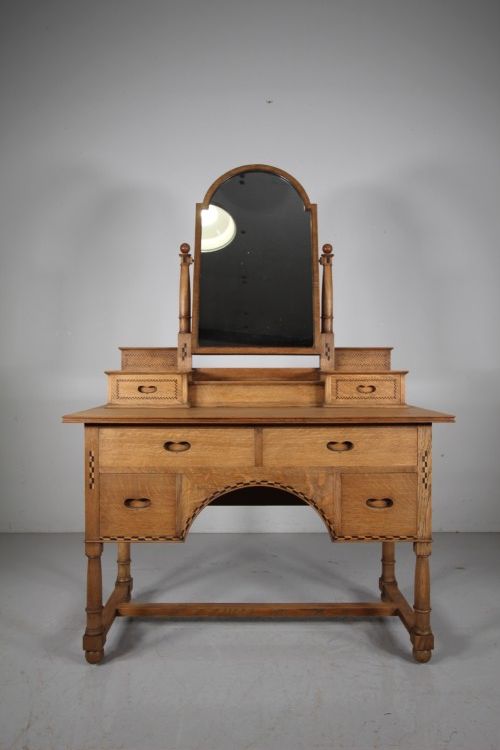


Inlaid Wooden Vanity Table
An inlaid wooden vanity table brings centuries of fine cabinet-making and intricate marquetry straight into a modern bedroom.
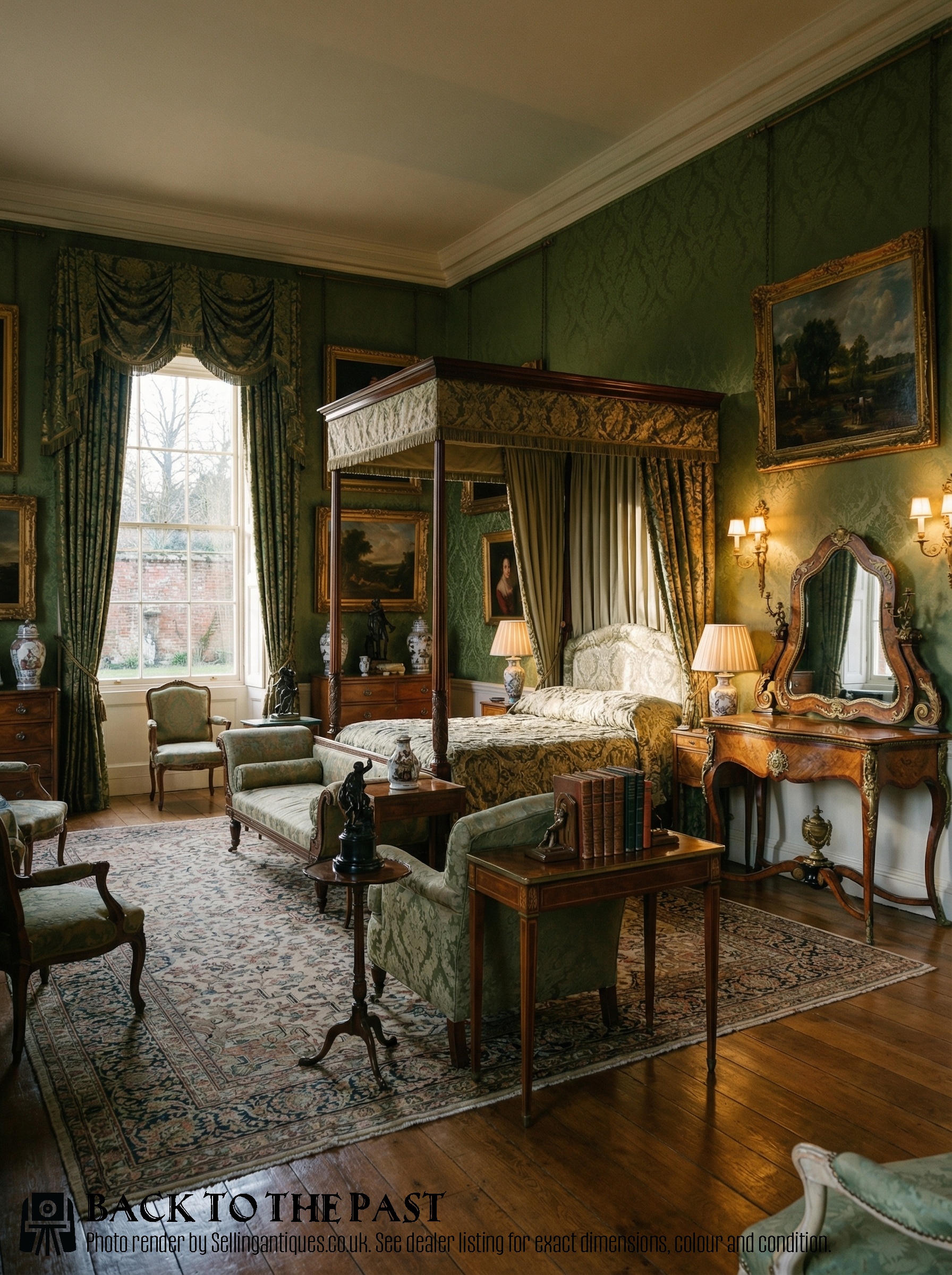
Inlaid Wooden Vanity Table
The inlaid wooden vanity table encompasses various forms designed for personal grooming and storage, from full dressing tables and lowboys to table-top dressing mirrors and jewellery boxes. Pieces spanning the Georgian, Victorian, and Edwardian eras dominate this selection, reflecting shifting tastes in domestic furniture over successive centuries. Makers utilised rich timbers such as mahogany, walnut, rosewood, and satinwood, often enhanced by contrasting boxwood or ebony details.
Buyers will encounter full-sized kneehole dressing tables alongside smaller toilet swing mirrors and portable vanity cases intended for travel. Dutch marquetry and French Revival influences appear frequently, bringing elaborate floral and pictorial inlays to dressing table mirrors and larger case pieces. Simpler examples rely on understated stringing and banding to accentuate the natural grain of the underlying wood.
Objects catalogued under this heading range from substantial architectural desks and wash stands to compact velvet-lined boxes fitted with compartments for trinkets. The grouping captures both utilitarian bedroom furniture and decorative luxury items intended to display craftsmanship and wealth. Each survivor demonstrates how past generations stored cosmetics, jewellery, and personal papers.
Materials and construction
Cabinet-makers constructed these pieces using solid and veneered hardwoods, laying decorative veneers over stable secondary woods to prevent warping. Woods such as mahogany, walnut, and satinwood formed the primary surfaces, while exotic timbers like coromandel, tulipwood, and kingwood added rich colour and striking grain patterns. Boxwood and ebony provided sharp contrast for geometric stringing and delicate banding.
Marquetry and inlay techniques transformed plain wooden surfaces into pictorial displays using contrasting veneers shaped by hand. Craftsmen also incorporated materials such as brass for edge bindings and locks, mother-of-pearl for decorative cartouches, and mirrored glass for swing toilet frames. Fitted interiors frequently relied on secondary softwoods and velvet linings to protect delicate personal items.
Judging quality and craftsmanship
Quality rests upon the precision of the marquetry and the crispness of the timber selection, where tightly figured veneers and harmonious colour combinations elevate a piece above standard production. The skill required to cut and fit intricate floral or geometric inlays without visible gaps separates superior workshop output from utilitarian manufacture. Original surface patination and untouched secondary timbers further distinguish exceptional survivals.
Structural integrity and the retention of original brass hardware, fitted interior trays, and tilting mirror frames indicate higher workshop standards. Pieces bearing traceable attribution to notable makers or documented retailers command greater interest among collectors. The complexity of the internal arrangements, such as secret drawers and multi-tier jewellery trays, demonstrates the ambition of the original commission.
Heals·H Mitchell·Gillows·Maison Pretot Paris
The Inlaid Wooden Vanity Table Glossary
- Marquetry
- A decorative technique where small pieces of veneer are assembled into pictorial or geometric patterns on a wooden ground. This method requires immense precision and was favoured by Dutch and French cabinet-makers.
- Stringing
- Thin, narrow strips of contrasting wood inlaid into channels cut into the primary surface. It creates delicate borders and frames panels on tabletops and drawer fronts.
- Toilet mirror
- A small mirror mounted on a pivoting frame, designed to sit atop a chest of drawers or a dedicated dressing table. These pieces often feature small box bases containing hidden compartments or tiny drawers.
- Lowboy
- A small side table with drawers, typically standing on four tall legs, used in the eighteenth century and later as a dressing or writing table. They provide compact surface space while displaying fine timber selection.
- Coromandel
- A dense, heavily figured exotic hardwood from Asia, featuring dark brown and black grain patterns with warm undertones. It was frequently selected for luxury nineteenth-century vanity boxes and cased goods.
Inlaid Wooden Vanity Table: Frequently Asked Questions
What is an inlaid wooden vanity table?
An inlaid wooden vanity table is a piece of antique furniture designed for grooming, featuring decorative wood veneers and contrasting details. These items range from large kneehole dressing tables to smaller portable vanity boxes and swing mirrors.
Craftsmen utilised timbers such as mahogany, walnut, and satinwood, embellishing them with intricate marquetry and boxwood stringing. They represent functional domestic items that doubled as displays of fine woodworking skill.
How do I date an antique vanity table?
Dating relies on stylistic clues, construction methods, and the specific woods popular during different periods. Georgian pieces often display restrained mahogany construction with subtle ebony stringing, while Victorian examples introduce heavy burr walnut and elaborate fitted interiors.
Later Edwardian items frequently return to lighter satinwood surfaces and delicate floral marquetry. Comparing the hardware, secondary woods, and overall proportions helps narrow the manufacturing era.
What are dressing table mirrors used for?
Dressing table mirrors served as functional accessories for personal grooming before full-length cheval glasses became common in bedrooms. Their pivoting frames allowed users to adjust the angle of reflection.
Many incorporated small drawers or lidded compartments at the base for storing jewellery and cosmetics. They functioned as versatile tabletop units placed upon chests of drawers or lowboys.
Are vanity boxes the same as vanity tables?
Vanity boxes are portable cases designed to hold grooming implements, bottles, and jewellery for travel or bedside use, whereas vanity tables are stationary items of furniture. Both share similar decorative treatments, such as coromandel exteriors, brass binding, and mother-of-pearl inlay.
Boxes often feature complex internal lifting trays and fitted compartments lined with velvet. They represent a smaller, self-contained scale of the craftsmanship found on full-sized dressing tables.