
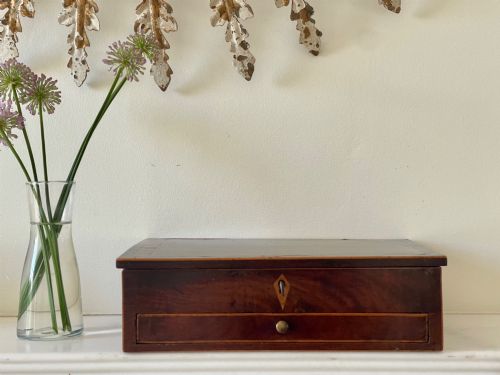
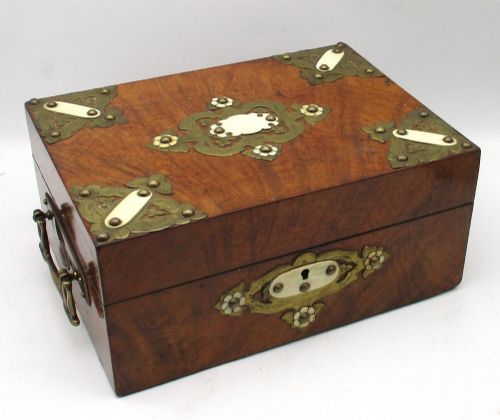
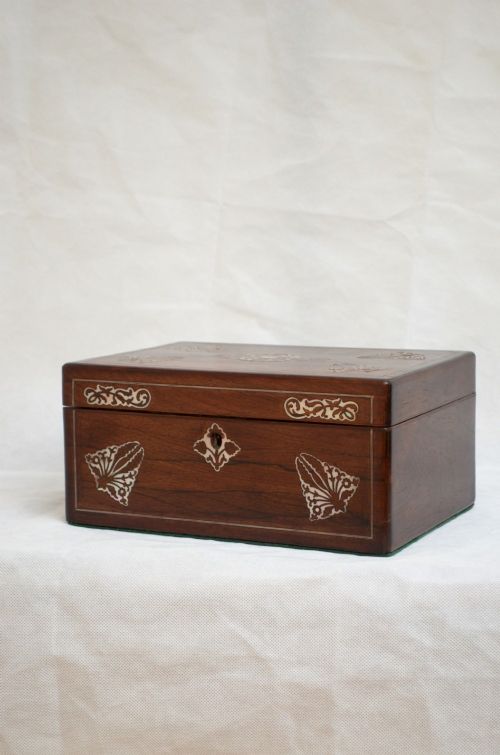


Inlaid Wooden Vanity Box
An inlaid wooden vanity box brings order to trinkets while showing off cabinet-maker geometry in rosewood, walnut and mother of pearl.
Inlaid Wooden Vanity Box
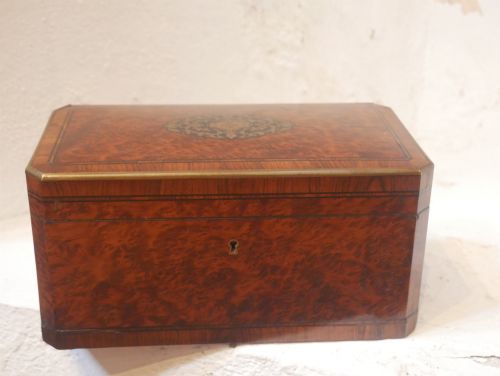
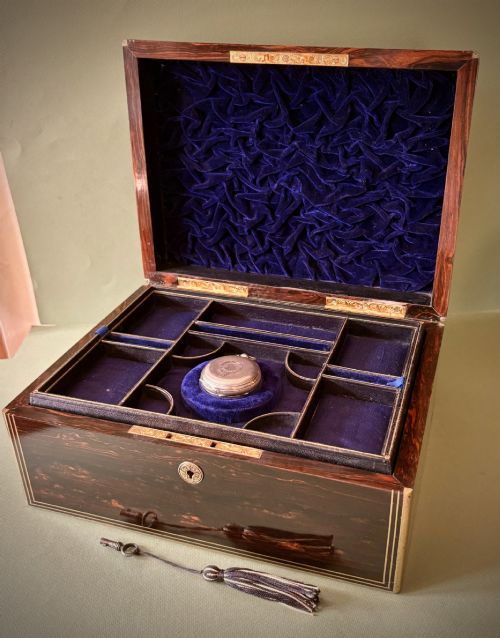
An inlaid wooden vanity box is a portable chest designed to hold cosmetics, writing materials, or jewellery, frequently encountered in this selection from the Victorian and Regency periods. These receptacles often arrive with fitted trays, secret compartments, and mirrors intended for dressing tables.
The assortment on this page spans solid woods such as coromandel, flame mahogany, and burr walnut, punctuated by contrasting veneers and metal mounts. Many examples incorporate specialised compartments for sewing implements or letters alongside the main dressing space.
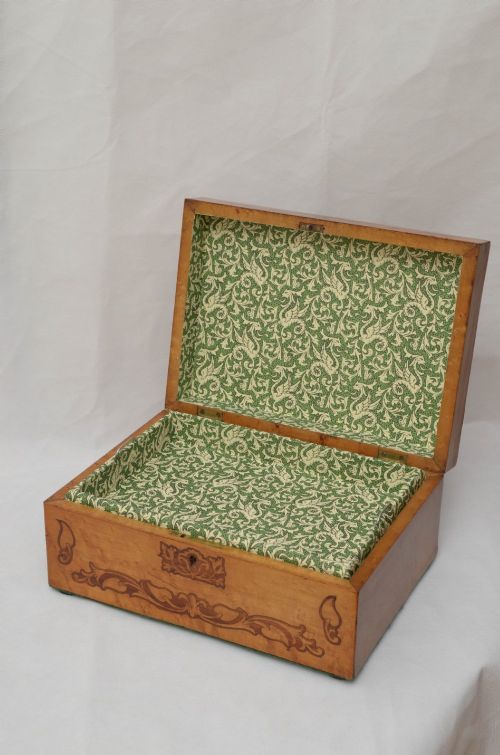
Originating predominantly from English and continental workshops, these containers range from plain travel cases to elaborately decorated receptacles with parquetry and Tunbridge Ware. Buyers searching for an inlaid wooden vanity box will find diverse forms including work boxes, document caskets, and travelling cases.
Materials and construction
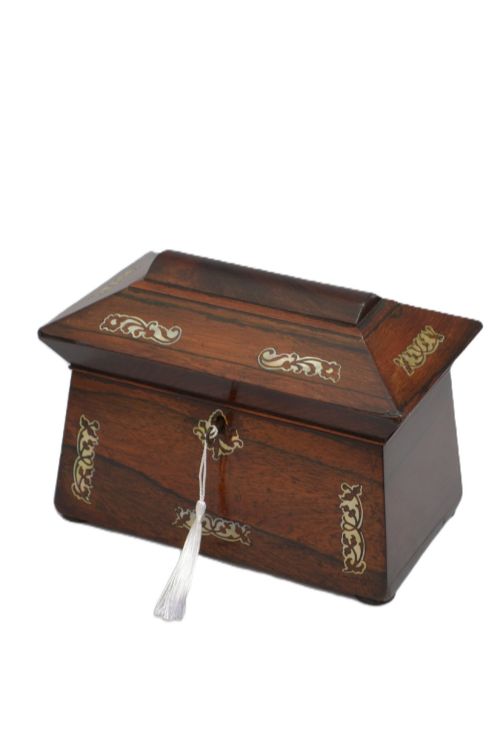
Cabinet-makers built the carcasses of these boxes using dense timbers like rosewood, walnut, and coromandel, often applying figured veneers over softer secondary woods. Mother of pearl, boxwood, and brass were inlaid into the surfaces to create geometric banding, floral motifs, or escutcheons.
Interiors typically relied on secret drawers, removable trays lined in velvet or silk, and fitted glass bottles with silver-plated caps. Structural integrity depended on precise mitre joints and dovetailed corners to withstand daily opening and transit.
Many Victorian boxes include concealed release buttons that pop open secret drawers when pressed in the correct sequence.
Markers of quality
Quality rests on the crispness of the parquetry inlay and the selection of timber veneers, where highly figured burr walnut or amboyna commands attention. Superior examples feature integrated brass locks with working keys, intact internal trays, and tightly fitted joints that show minimal shrinkage over time.
Finer boxes exhibit hand-cut brass stringing and meticulously aligned mother of pearl elements rather than stamped metal substitutes. The preservation of original lining materials and undamaged timber surfaces distinguishes superior specimens from altered or heavily restored pieces.
Tahan Paris·H Mitchell
The Inlaid Wooden Vanity Box Glossary
- Inlay
- A technique where pieces of contrasting material such as wood, brass, or mother of pearl are fitted into recesses flush with the surface. This method creates ornamental patterns across the lid and sides.
- Coromandel
- A dense, heavy timber featuring dark brown stripes, prized by nineteenth-century cabinet-makers for luxury dressing boxes. It provides a rich background for pearl and brass decoration.
- Parquetry
- Geometric mosaic woodwork formed by small veneer tiles arranged in repeating patterns. It appears frequently on the lids of Victorian keepsake boxes.
- Escutcheon
- A protective plate surrounding a keyhole, usually fashioned from brass or mother of pearl. It prevents the timber around the lock from splitting during use.
- Tunbridge Ware
- Woodware decorated with tiny mosaic tiles assembled from different coloured woods to form pictorial scenes or geometric bands. It originates from the spa town of Tunbridge Wells.
Inlaid Wooden Vanity Box: Frequently Asked Questions
What were inlaid wooden vanity boxes used for?
These boxes served as portable receptacles for personal grooming items, jewellery, letters, and needlework. Owners kept them on dressing tables or packed them for travel.
Inside, compartments held small bottles, brushes, and trinkets, keeping personal items secure and organised away from dust.
How do I tell a Victorian box from a Regency one?
Regency boxes often feature cleaner neoclassical lines with brass stringing and mahogany or rosewood timbers. They lean towards architectural simplicity and restraint.
Victorian examples frequently display heavier embellishments, including extensive mother of pearl inlay, coromandel wood, and elaborate fitted compartments with mirrors.
Are replacement interior linings acceptable?
Original silk and velvet linings frequently disintegrated through wear, so many surviving boxes feature sympathetic modern replacements. Fresh linings improve utility for holding modern jewellery.
Provided the exterior timber and inlay remain original, professional re-lining is standard practice among collectors and dealers.
How should I care for a wooden vanity box?
Keep these boxes away from direct sunlight and dramatic humidity shifts to prevent the timber veneers and mother of pearl inlay from lifting. A light application of microcrystalline wax helps protect the polished surface.
Avoid using liquid cleaners on the interior velvet or silk compartments to preserve the original paper or fabric backings.