


Inlaid Wooden Snuff Box
An inlaid wooden snuff box is a pocket-sized piece of personal history, prized for its intricate marquetry and tactile small scale.
Inlaid Wooden Snuff Box
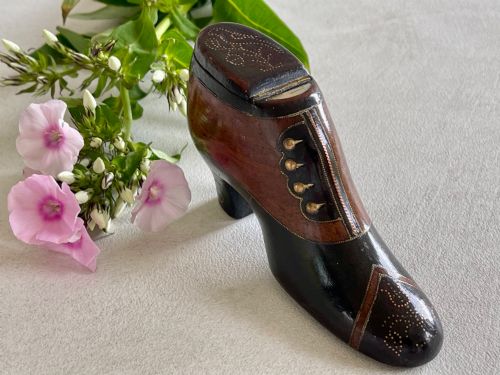
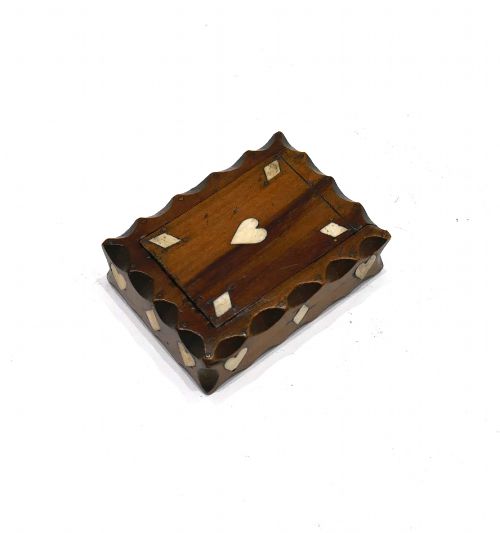
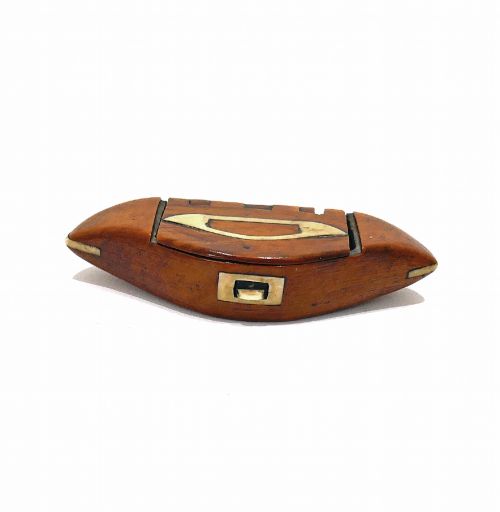
An inlaid wooden snuff box is a small receptacle designed to hold ground tobacco, shaped into rectangles, shoes, boots, books or shuttles. The examples on this page span the Georgian, 19th Century and Edwardian periods, reflecting both domestic folk art traditions and more formal workshop production.
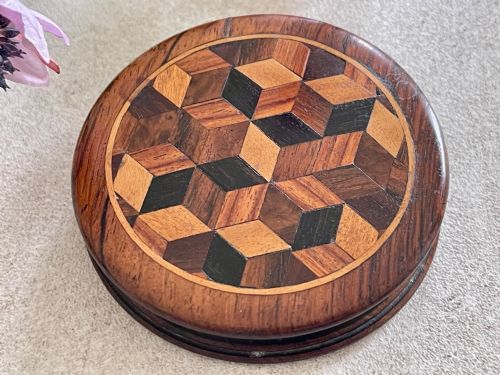
The buyer most frequently meets fruitwood, mahogany and other timbers embellished with contrasting materials. Common forms include shoe and boot shapes with double openings, alongside traditional oblong and circular pocket boxes.
How they were made
Maker-carpenters shaped these boxes from dense timbers such as fruitwood, walnut and hardwood, often utilising specialist treen techniques. Surfaces received decorative enrichment through the insertion of contrasting bone hearts, diamond shapes and specimen woods.
Detailing frequently involved intricate brass pique work and chip carving. Some pieces incorporated brass wire or multiple timber varieties to build geometric and floral motifs into the wooden body.
The selection spans Georgian, Edwardian and nineteenth-century periods, including traditional Welsh folk art and Middle Eastern work.
What varies in quality
Quality rests in the precision of the inlay work and the crispness of the carving. Boxes decorated with finely fitted bone hearts or intricate brass wire display greater workshop skill than simpler, purely utilitarian containers.
The complexity of the form also dictates standing, with sculptural shoe and shuttle shapes requiring far more joinery and turning expertise than standard rectangular or circular boxes.
The Inlaid Wooden Snuff Box Glossary
- Treen
- Small handmade wooden domestic objects. This encompasses everything from miniature household containers to turned pocket items.
- Pique work
- Inlay of tiny pins or wire into a solid base. Craftsmen tapped brass wire and points into the wood to form foliage and floral patterns.
- Specimen woods
- A collection of different natural timbers selected for contrasting colours and grain patterns. Makers arranged these pieces to create geometric designs across the lid.
- Chip carving
- A method of removing small triangles of wood from the surface with a knife. This creates recessed geometric patterns common in Welsh folk art pieces.
- Shuttle
- A boat-shaped weaving tool that inspired the profile of certain pocket boxes. The curved ends and slender waist translate neatly into a pocket-sized container.
Inlaid Wooden Snuff Box: Frequently Asked Questions
What is an inlaid wooden snuff box?
An inlaid wooden snuff box is a small pocket container used to hold powdered tobacco during the eighteenth and nineteenth centuries. Makers decorated the wooden bodies using contrasting materials like bone and brass.
These objects were carried daily by gentlemen and ladies alike. They combine practical storage with decorative folk art and specialist carpentry.
How were shoe snuff boxes used?
Shoe-shaped snuff boxes served as pocket containers for tobacco, often featuring sliding lids or double openings at the heel and toe. Their whimsical form made them popular conversation pieces in company.
Carved in the shape of ladies' boots or open-toed shoes, they often display elaborate bone inlay and metal pique work representing footwear fastenings.
How do I date a wooden snuff box?
Dating relies on identifying the prevailing timber, the style of the inlay work, and the structural form. Georgian pieces often show restrained mahogany or chip-carved decoration, while later nineteenth-century examples incorporate varied specimen woods and bone.
Folk art items frequently bear specific dates or initials carved directly into the wood. Comparing the joinery and decorative motifs helps narrow down the period of manufacture.
What is Tunbridge ware?
Tunbridge ware is a specialised form of woodworking involving tightly packed mosaics of many different natural timbers. These tiny wooden segments form pictorial or geometric designs on box lids.
This technique originated in Kent and produced highly detailed surfaces without the use of paint. Examples often feature characteristic geometric banding around the main design.