
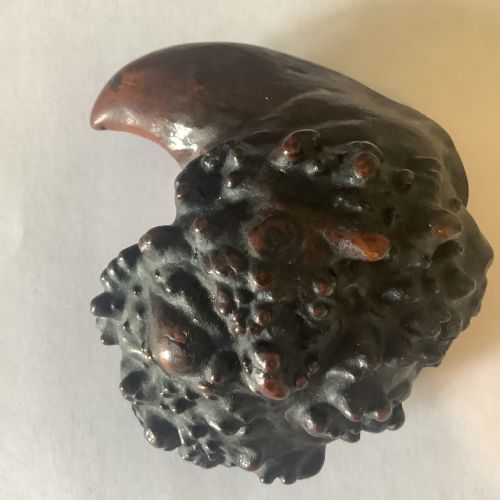


Carved Burr Wood Box
A carved burr wood box is a tactile table accessory that brings rich grain patterns and period craftsmanship into a room.
Carved Burr Wood Box
A carved burr wood box is a small storage piece defined by the swirling, knotty grain of the timber used in its construction. These items range from small pocket-sized snuff boxes formed from natural sections of wood to decorative table boxes and larger work tables that feature figured veneers.
The versions most commonly found here belong to the Victorian and Georgian eras, taking the form of snuff boxes, table cabinets, and sewing or work tables. They showcase the deep, mottled patterns characteristic of burr walnut, burr maple, and burr elm.
Makers often shaped these pieces to serve domestic functions, from holding tobacco to housing sewing implements or spirits. Their survival reflects the enduring appeal of figured wood grain paired with careful carving.
How they were made
These items rely on the use of burr timbers such as walnut, maple, and elm, valued for their intricate and irregular grain patterns. Artisans cut these woods into thin veneers to display the complex figuring across the surfaces of work tables and decorative boxes.
Inlaid details in boxwood and mounts in brass frequently accompany the primary timber to accent the form. Some smaller pieces, like folk art bird snuff boxes, are carved directly from natural sections of solid hardwood rather than built up from veneered carcases.
Listings on this site feature burr walnut, burr maple, and burr elm across Victorian and Georgian work tables, snuff boxes, and cellarettes.
What varies in quality
Quality in these pieces rests primarily on the density and movement of the burr grain across the visible surfaces. A stronger, more evenly distributed figure elevates the visual impact of a table or box significantly.
Waring & Gillow
The Carved Burr Wood Box Glossary
- Burr wood
- Timber taken from a tree growth where the grain has grown in a deformed, swirling manner. This produces highly decorative patterns of knots and rings.
- Treen
- Small handmade wooden household objects. These items often display folk art characteristics and everyday utility.
- Teapoy
- A small container or table designed to hold tea canisters. In later periods, the term sometimes describes a stand for glasses or spirits.
- Cellarette
- A lockable cabinet or box used to store bottles of wine or spirits. They frequently appear in Regency and Georgian rooms.
- Veneer
- A thin slice of figured wood applied over a secondary timber carcase. This technique allows makers to display expensive grain patterns economically.
Carved Burr Wood Box: Frequently Asked Questions
What is a burr wood box?
A burr wood box is a small container fashioned from timber with a knotty, swirling grain pattern. They were produced in various forms during the Georgian and Victorian periods.
Craftsmen utilised veneers of burr walnut, maple, or elm to cover the surfaces, creating decorative objects for domestic use.
How were work tables used?
Work tables served as functional pieces for ladies to store sewing equipment, threads, and small crafting tools. Many included fitted internal compartments and fabric bags suspended beneath.
They doubled as occasional tables in sitting rooms, combining storage utility with decorative figured wood veneers.
What is a snuff box?
A snuff box is a small lidded container designed to hold powdered tobacco. Owners carried them in pockets or kept them on tabletops for easy access.
Examples range from simple carved wooden pieces to folk art designs shaped like birds or natural growths.
How do I identify a Victorian piece?
Victorian pieces often display dark burr walnut veneers, boxwood inlay, and heavier proportions compared to earlier Georgian designs. Cabinetmakers utilised mechanical hinges and lockable compartments.
Dates can sometimes be inferred from the specific table forms and decorative motifs popular during the mid to late nineteenth century.