




Georgian Wooden Snuff Box
A georgian wooden snuff box is a pocket-sized container fashioned from fruitwood, walnut, or mahogany, designed to hold powdered tobacco for gentlemen of the period.
How They Were Made
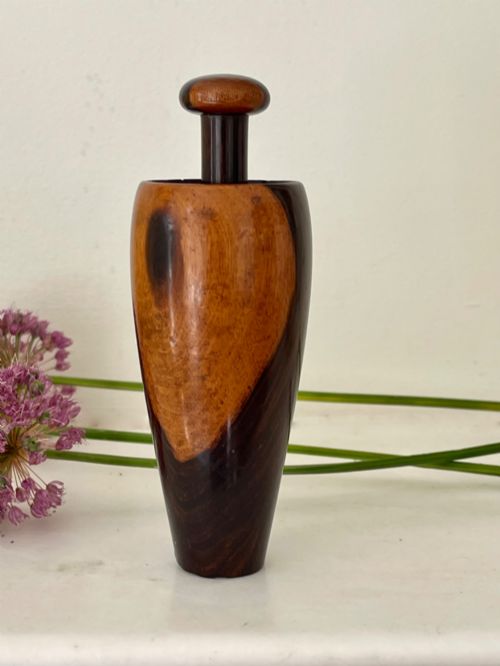
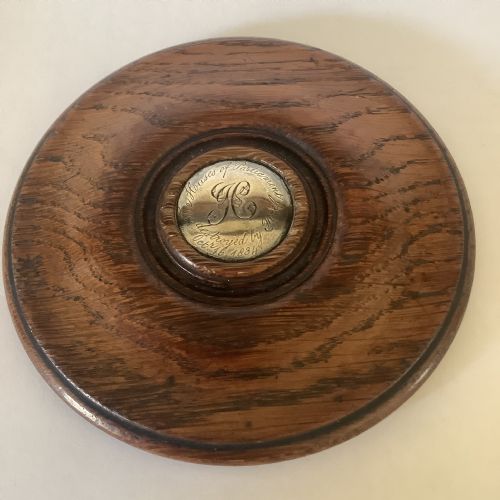
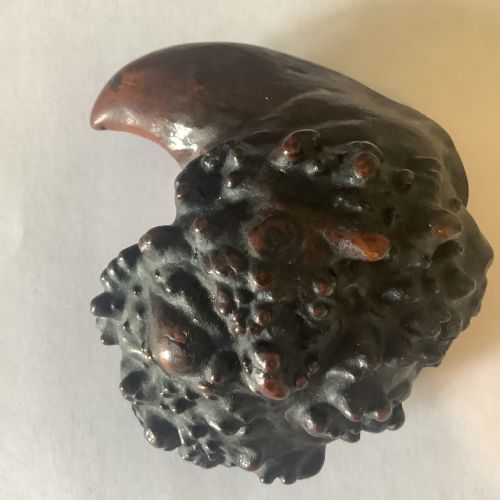
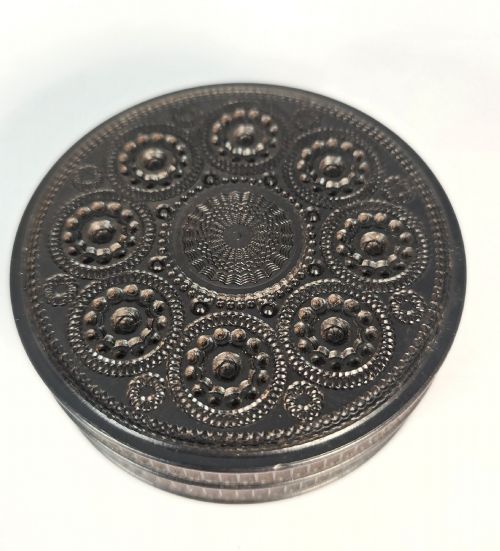
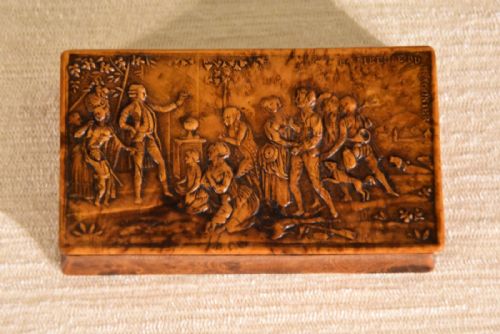
Woodworkers shaped fruitwood, walnut, mahogany, and oak using lathes for engine-turned patterns or carved them by hand from solid timber and natural burls like burr walnut. Artisans employed specialised techniques such as pen work, pressed maple production, and tunbridge ware to decorate the surfaces.
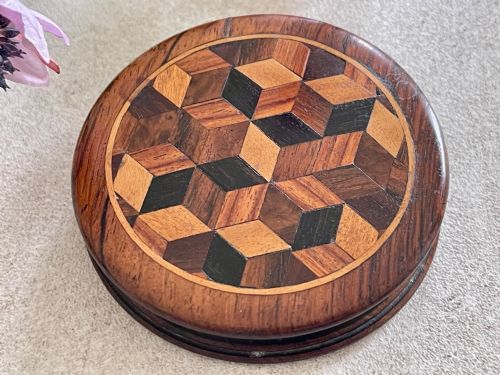
Inlayers applied brass pique work, foliage, and geometric diamond patterns directly into the hardwood bodies of shoe-shaped and circular boxes. A deep natural patina developed on many pieces through decades of handling and application of wax or oil.
What Varies in Quality
The crispness of the carving and the complexity of the inlaid brass pique work separate ordinary boxes from superior examples. Finely executed engine-turning and the intricate detail found in shoe-shaped or figural pieces indicate a higher standard of craftsmanship.
The condition of the wood surface and the depth of the natural patina dictate the desirability of a box. Examples retaining their original fitted lids and crisp edges command greater attention than those with heavy wear or replacement parts.
Listings feature fruitwood, walnut, mahogany, ebony, and oak, alongside specialist techniques like engine-turning and brass pique work.
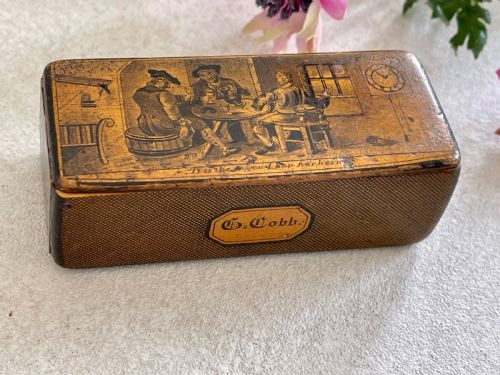
G Cobb
The Georgian Wooden Snuff Box Glossary
- Treen
- Small wooden domestic objects made before the widespread use of plastic. This category includes boxes, mortars, and small turned items.
- Pique work
- A method of decorating a surface by embedding tiny points or pins of gold, silver, or brass into wood or tortoiseshell. Artisans formed intricate floral and geometric motifs with this technique.
- Engine turning
- A mechanical method of engraving precise geometric patterns onto wood or metal using a lathe. This process creates repetitive, complex textures across the surface of a box.
- Specimen woods
- Furniture and box makers utilised numerous contrasting natural timbers together to create decorative mosaic patterns. Tunbridge ware boxes frequently display this detailed multi-wood technique.
Georgian Wooden Snuff Box: Frequently Asked Questions
What is a shoe snuff box?
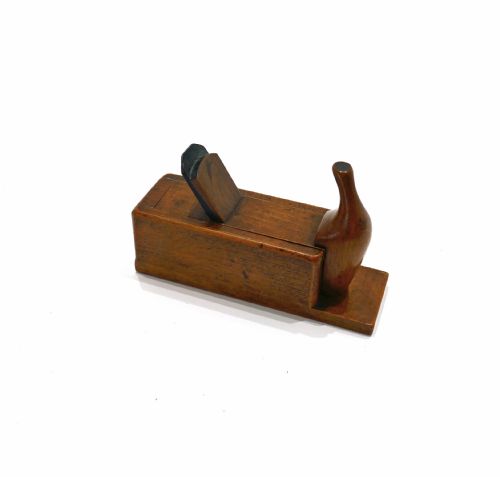
A shoe snuff box is a container carved or turned in the literal shape of a gentleman's shoe or boot. These whimsical objects often feature sliding lids at the heel or sole.
Craftsmen frequently decorated them with brass pique work and inlaid diamond patterns, making them popular pocket accessories during the georgian era.
How do I care for wooden snuff?
Keep wooden snuff containers away from direct sunlight and sources of extreme heat to prevent the timber from splitting or warping. Maintain the finish by occasionally applying a neutral beeswax.
Avoid using liquid cleaners or polishing agents that might damage the historical patina or soften delicate carved details.
Are all these boxes from the georgian era?
The pieces span multiple periods, including the eighteenth century, the georgian era, the victorian period, and the edwardian age. Styles evolved from plain turned treen into more decorative folk art and novelty shapes.
Check the individual listing details to identify the specific period and wood type for each separate box.
What was a snuff mortar used for?
A snuff mortar and pestle served to grind tobacco leaves or prepared mixtures down into a finer powder before consumption. These functional desk or table implements were turned from dense hardwoods.
They allowed users to adjust the consistency of their tobacco to personal preference prior to placing it in a pocket box.