


Inlaid Wooden Games Board
An inlaid wooden games board brings tactile history and classic parlour play together, offering timeless entertainment through beautifully crafted surfaces.
Inlaid Wooden Games Board
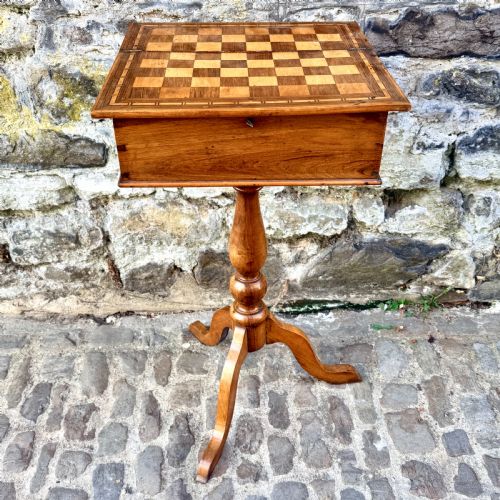
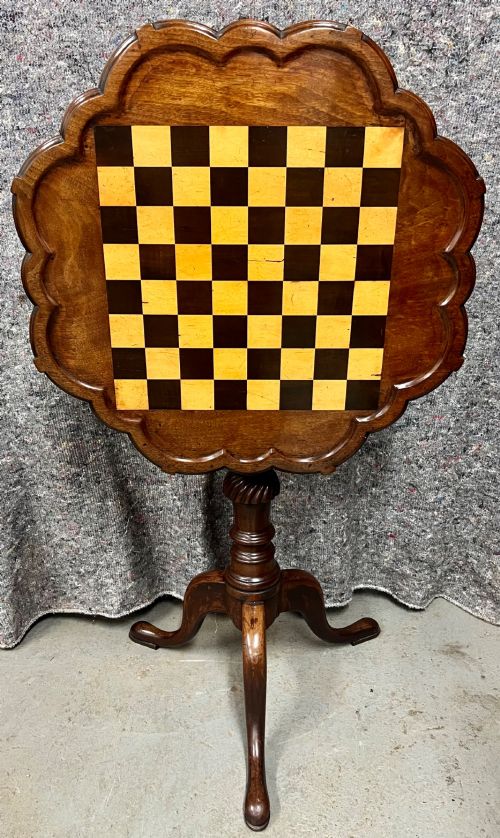
An inlaid wooden games board represents a dedicated surface for traditional pastimes such as chess, backgammon and cribbage, originating from periods spanning the Georgian era to the late Victorian years. These pieces appear in forms ranging from folding travel boards and fitted games boxes to substantial tripod tables and multi-functional compendiums.
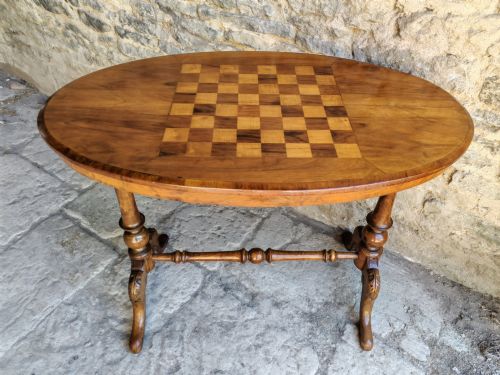
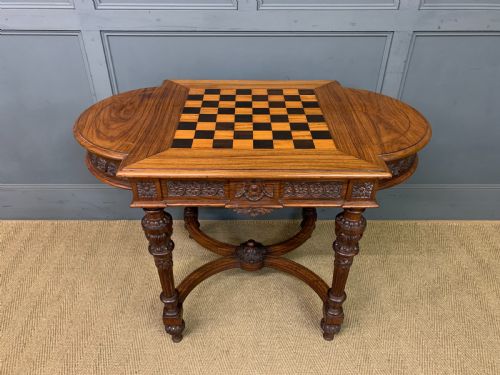
The most common formats met on this page include folding boards, portable boxes and occasional tables featuring contrasting wood squares or marquetry detailing. Origins stretch across English workshops, French provincial makers, Swedish Biedermeier studios and Anglo-Indian production centres.
Buyers look for these objects to serve both as functional play surfaces and as decorative items of furniture that reflect nineteenth-century social habits. Each piece demonstrates how craftsmanship was applied to leisure equipment during eras when parlour games formed a central part of domestic life.
How they were made
The construction of these boards relies on cabinet-making traditions utilising dense hardwoods like mahogany, walnut and rosewood as primary foundations. Artisans applied contrasting veneers such as boxwood, sycamore, ebony and birch to create the alternating squares and decorative borders essential for play.
Inlay techniques demanded precise geometric fitting of light and dark woods into recessed channels or onto solid panel bases, often complemented by satinwood, mother of pearl or bone elements. Folding variants required sturdy brass hinges and pin mechanisms to endure regular closure without disrupting the alignment of the playing grid.
The documented styles span Victorian, Georgian, Regency, Swedish Biedermeier, French Provincial and Anglo-Indian traditions.
What varies in quality
The degree of precision in the wood inlay dictates the standard of a board, where tight joints between contrasting squares demonstrate superior joinery. Timbers selected for their grain pattern and depth of natural colour elevate the visual weight of the piece.
Structural integrity in hinges, turning on tripod bases, and the preservation of original interior compartments for backgammon or pieces separate standard items from finer examples. Finer specimens maintain crisp geometric borders and balanced proportions across the entire playing surface.
A British Chess Company·Burroughes and Watts
The Inlaid Wooden Games Board Glossary
- Inlay
- A technique where pieces of contrasting material are inserted into a recessed wooden matrix to form a decorative surface. This method creates the sharp contrast required for chess and checkered boards.
- Tripod table
- A freestanding piece of furniture supported by a central pillar resting on three legs. These often feature tilt-top mechanisms or fixed chess-board tops.
- Compendium
- A multi-game box containing equipment for several pastimes housed within a single fitted case. These items often include dice, counters, cribbage boards and folding chess surfaces.
- Marquetry
- The art of applying decorative veneer pieces to a structure to form pictorial or geometric designs. It differs from simple inlay by covering the entire surface canvas.
Inlaid Wooden Games Board: Frequently Asked Questions
How do I care for a wooden games board?
Keep the wood nourished with appropriate wax polishes and protect the surface from direct sunlight and extreme humidity changes.
Avoid placing damp items directly onto antique veneers to prevent lifting or staining the delicate inlaid squares.
Were these boards meant for travel?
Many nineteenth-century examples were constructed specifically as folding travel sets with internal storage for playing pieces.
Larger tripod tables and heavy compendiums remained stationary furniture pieces designed for permanent parlour placement.
How can I tell the period of a board?
Examine the wood selection, hinge types, and joinery methods alongside any maker stamps or boxwood markings.
Georgian and Regency pieces often feature distinct mahogany or rosewood framing, while late Victorian items frequently utilise walnut or specialised box construction.
Can I still play games on these boards?
Most antique boards remain entirely functional for standard play provided the surface is flat and hinges are stable.
Collectors often pair them with period-appropriate chess sets or antique bone counters to maintain authenticity during use.