



Inlaid Wooden Bedside Tables
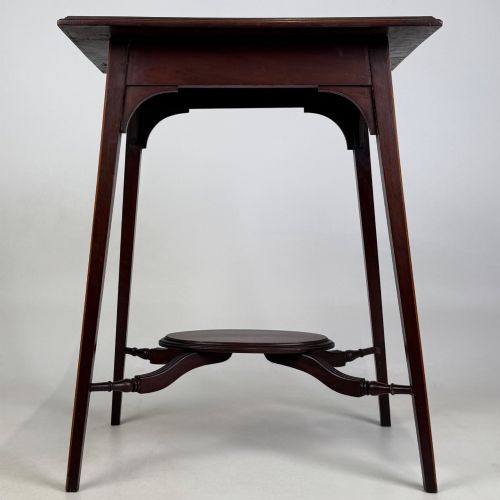
These inlaid wooden bedside tables bring practical surface space and subtle decoration to a bedroom, combining period woods with delicate contrasting lines.
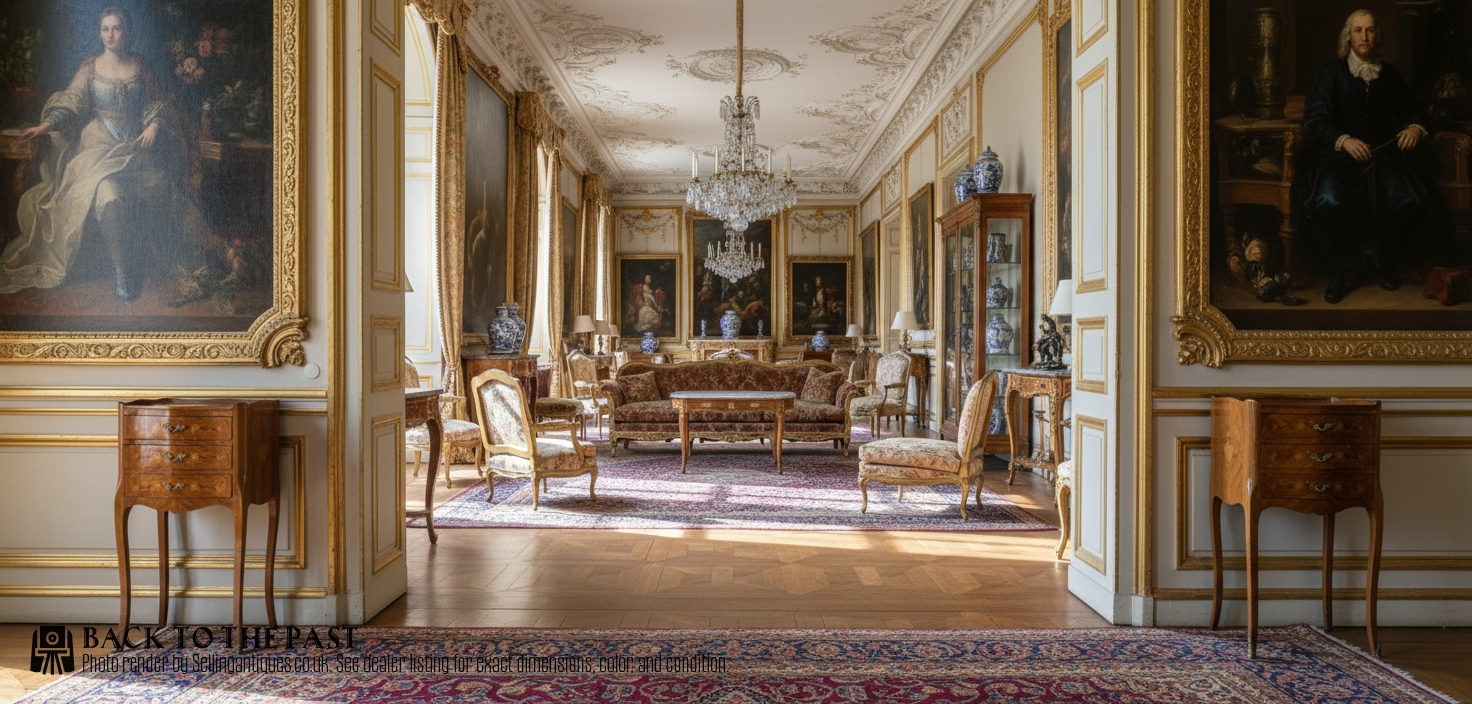
Inlaid Wooden Bedside Tables
When you search for inlaid wooden bedside tables, you are looking at functional small furniture designed to sit beside a bed to hold lamps, books, and nighttime essentials. These pieces span several decades from the late nineteenth century into the twentieth century, encompassing Edwardian, Victorian, and Art Deco periods.
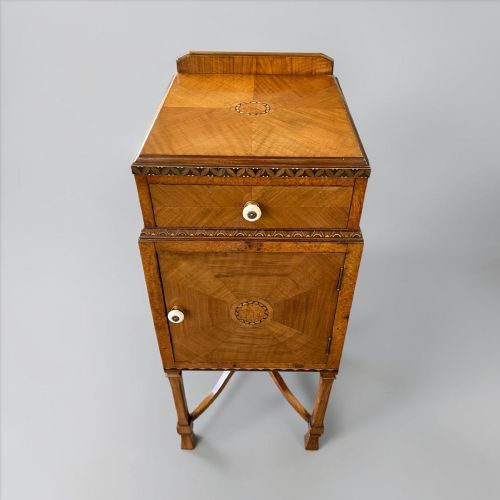
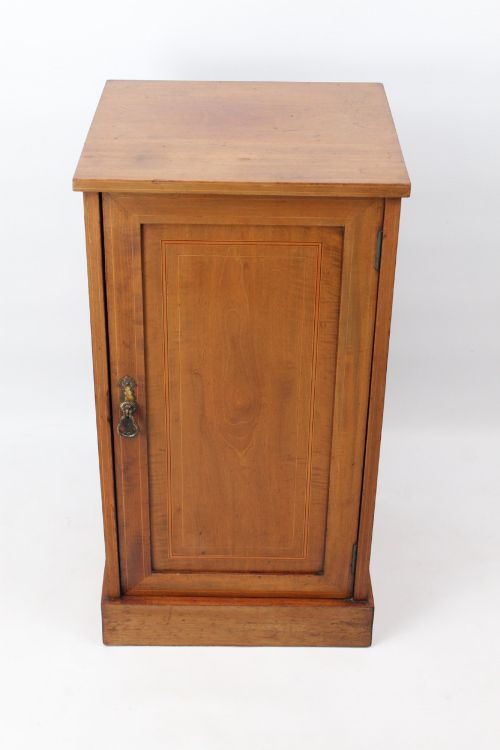
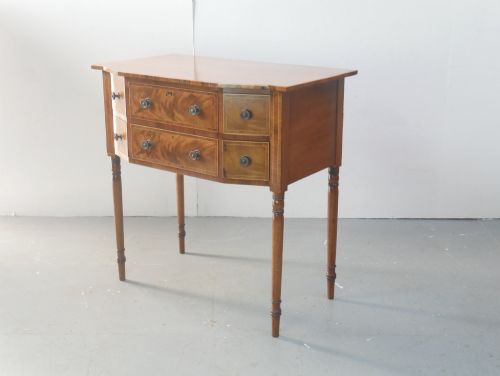
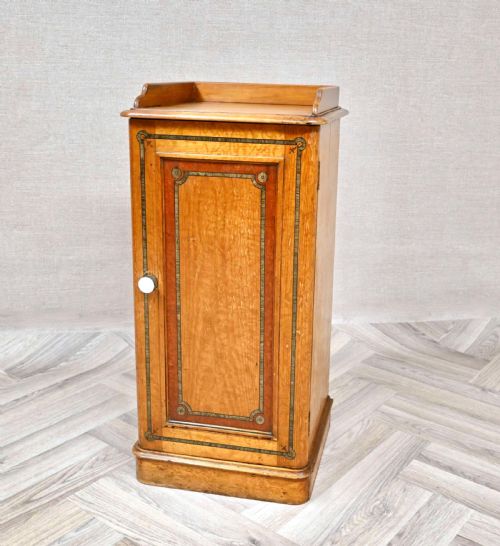
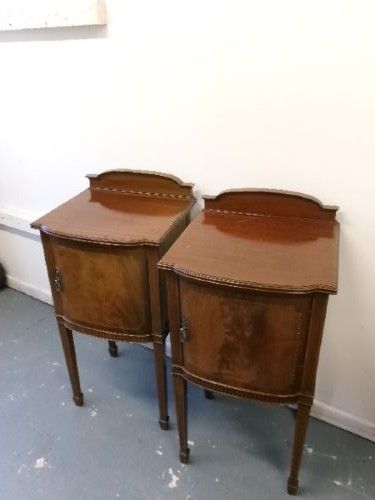
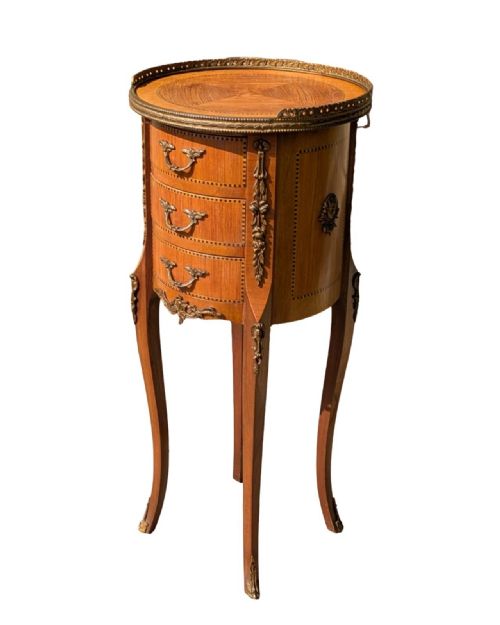
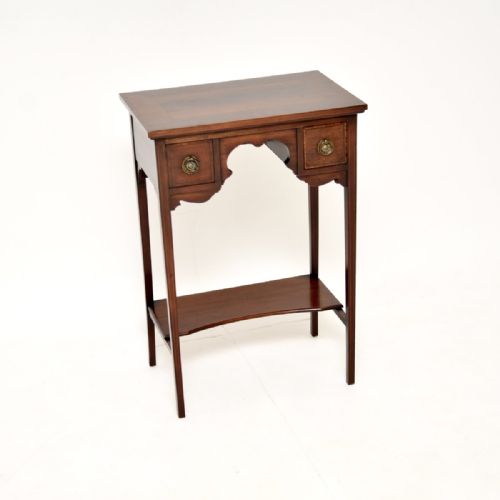
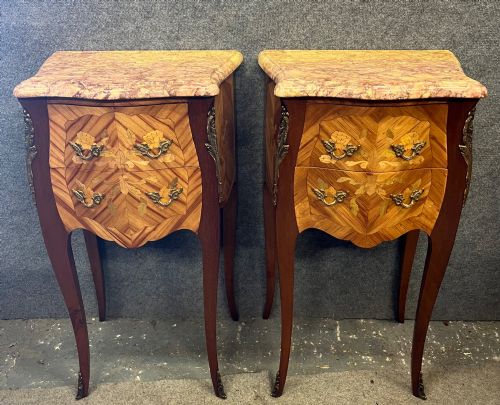
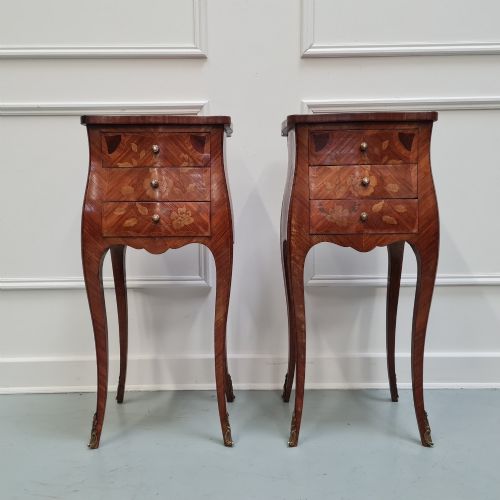
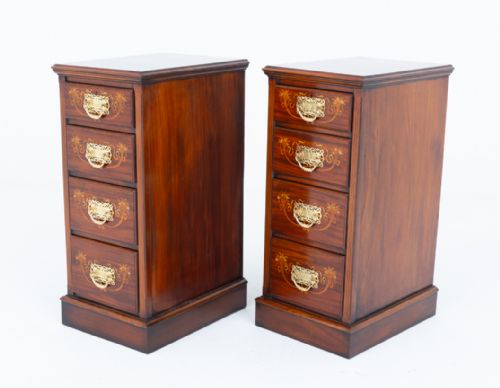
The version you are most likely to meet on this page is the Edwardian inlaid mahogany bedside cabinet or a French style marquetry table featuring a marble top. They appear as compact cupboards, small chests of drawers, and open lamp tables.
Makers and workshops of the past constructed these items from solid timbers and veneers, applying contrasting stringing or pictorial marquetry to the surfaces. Their origins range from English Edwardian workshops to French cabinet makers.
Materials and Construction Techniques
Cabinet makers built the carcass of these tables using primary woods such as mahogany, walnut, satinwood, and kingwood, often over a stable secondary timber. They applied thin veneers to flat surfaces, allowing for intricate grain patterns and geometric layouts.
Decoration relied heavily on marquetry and inlay, where contrasting materials like boxwood and satinwood were fitted into precision-cut recesses within the primary wood. Brass handles, hinges, and sometimes galleries provided functional metallic accents.
Many French examples incorporated fitted marble slabs into the top surface to provide a durable, heat-resistant shelf for nighttime lamps and water jugs.
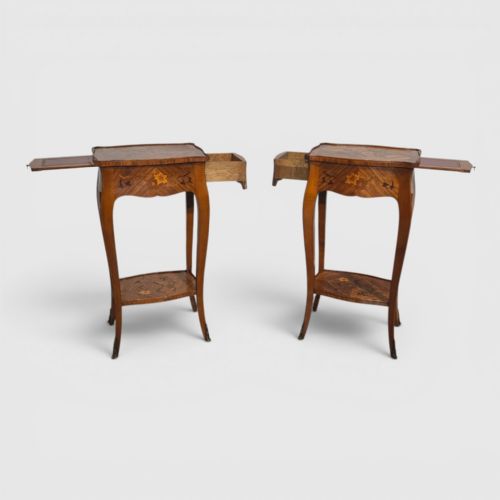
Some Edwardian bedside cabinets secretly hide pull-out slides designed to hold a pocket watch safely out of the way overnight.
Distinctions in Quality
The standard of timber selection largely dictates the caliber of a piece, with rich, highly figured mahogany or carefully matched kingwood veneer marking out superior examples. Lesser pieces rely on simpler, plain woods with minimal figuring.
The precision and complexity of the inlay work reveal the maker's skill. Crisp, tight joints in the contrasting boxwood or satinwood stringing separate fine craftsmanship from rushed production.
Hardware and internal construction also define the grade of the piece, seen in the use of solid secondary woods for drawer linings rather than cheap substitutes.
Maple & Co·Collinson & Lock·Gillows
The Inlaid Wooden Bedside Tables Glossary
- Inlay
- A technique where pieces of contrasting material are embedded into a recess in a solid wooden surface to form a pattern or border.
- Marquetry
- The art of applying pieces of veneer to a structure to form decorative patterns, pictures, or ornate designs across the whole surface.
- Satinwood
- A lustrous, hard timber native to Ceylon and India, prized for its pale yellow colour and natural sheen.
- Kingwood
- A dense, heavy tropical timber featuring rich brown tones with darker violet-brown streaks, popular in fine French cabinet making.
- Stringing
- Thin strips of contrasting wood inlay used to outline panels, drawers, or table tops for a refined linear border.
Inlaid Wooden Bedside Tables: Frequently Asked Questions
What periods do these bedside tables come from?
The pieces seen here date from the late nineteenth century through the Edwardian era up to the 1930s, encompassing Victorian and Art Deco designs.
Different decades brought distinct silhouettes, moving from dark Victorian satinwood and walnut to lighter Edwardian mahogany and French kingwood marquetry.
How were marble topped tables used?
Marble topped bedside cabinets served a practical purpose in period bedrooms by offering a cool, wipe-clean surface resistant to spills from water jugs and oil lamps.
This heavier top also added stability to taller, slender bedside cupboards.
How do I identify Sheraton Revival pieces?
Sheraton Revival furniture draws inspiration from eighteenth-century neoclassical designs, typically featuring symmetrical forms, tapering legs, and delicate satinwood inlay.
These Edwardian interpretations often combine mahogany carcases with fine boxwood stringing and classical motifs.
Where should I place a marquetry lamp table?
These decorative tables suit rooms where their detailed wood veneers can catch natural light, functioning well beside a bed or as an accent piece in a sitting room.
Their compact footprints allow them to fit into smaller spaces while providing a useful surface for lighting.