




Inlaid Wooden Bedside Cabinets
Inlaid wooden bedside cabinets bring warmth and precise detail to a bedroom, combining functional storage with decorative marquetry.
Inlaid Wooden Bedside Cabinets
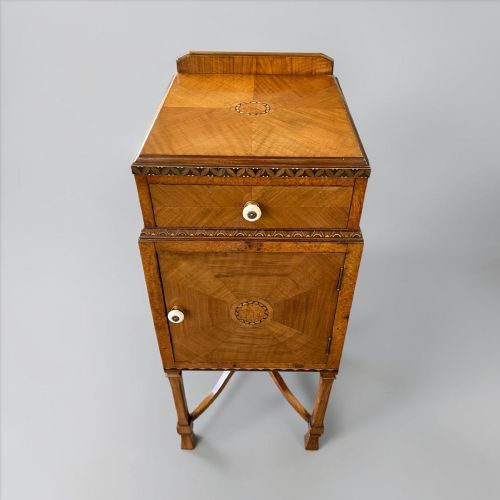
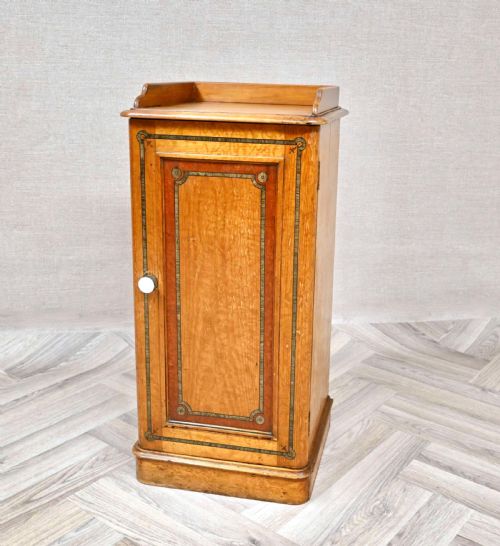
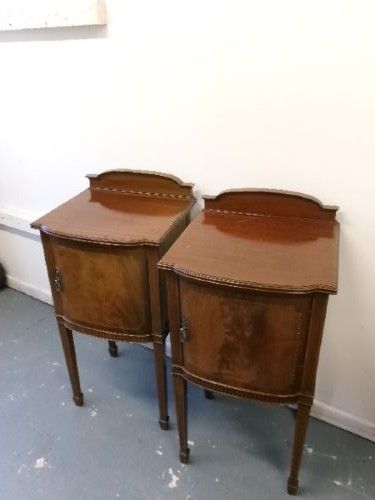
Inlaid wooden bedside cabinets are small storage pieces designed to sit beside a bed, frequently featuring contrasting veneers and decorative banding. Buyers searching for inlaid wooden bedside cabinets will find many examples originating from the Edwardian era and the early twentieth century, alongside nineteenth-century French and Georgian precedents.
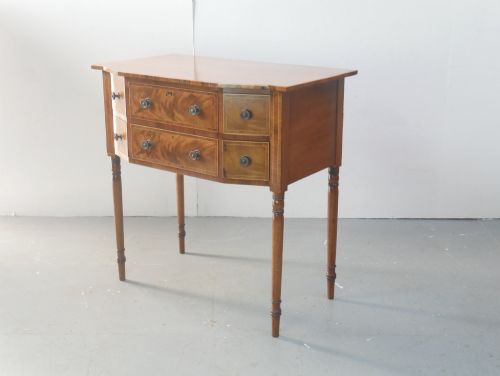
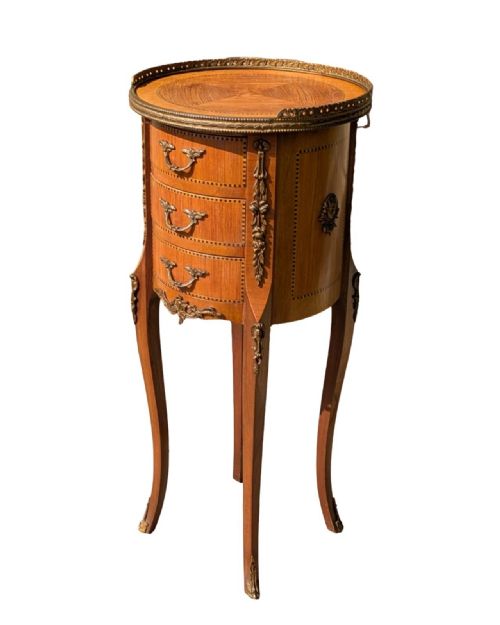
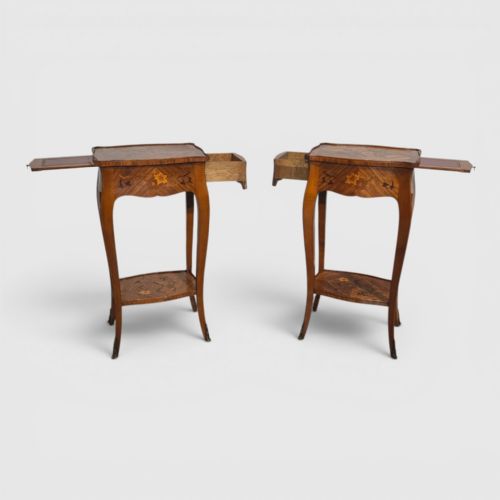
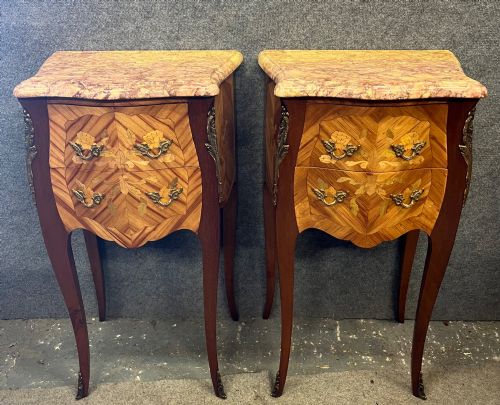
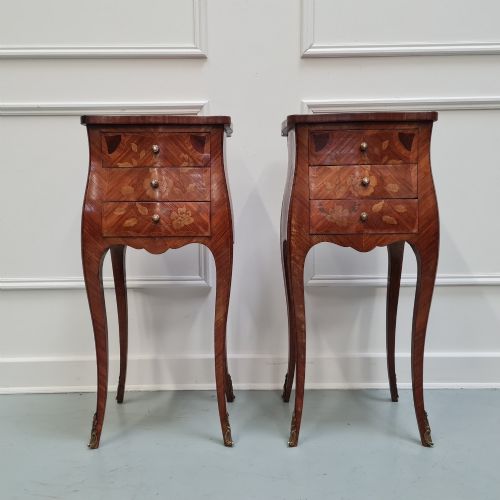
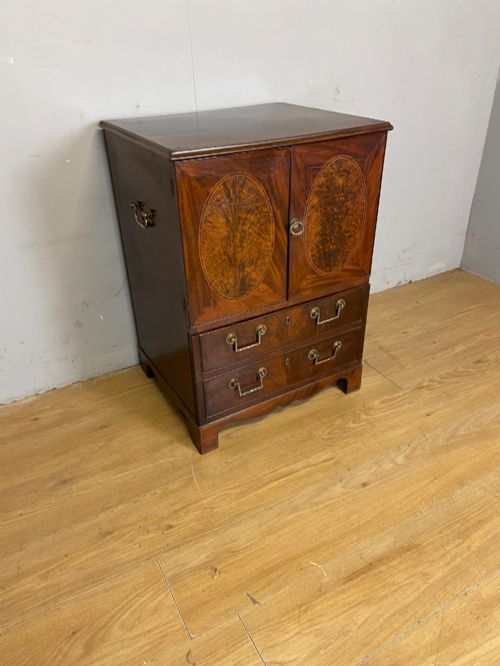
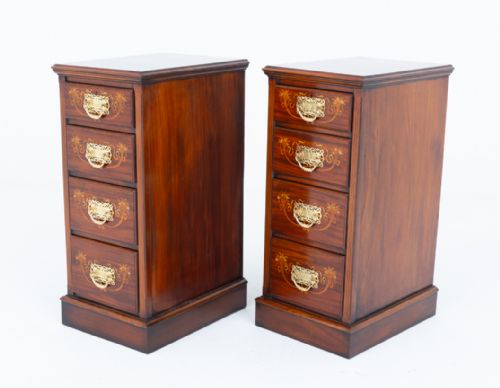
The primary forms on this page include compact cupboards, small chests of drawers, and open lamp tables with marquetry details. Woods such as mahogany, satinwood, and walnut form the structural carcases, while boxwood and brass provide linear stringing and geometric motifs.
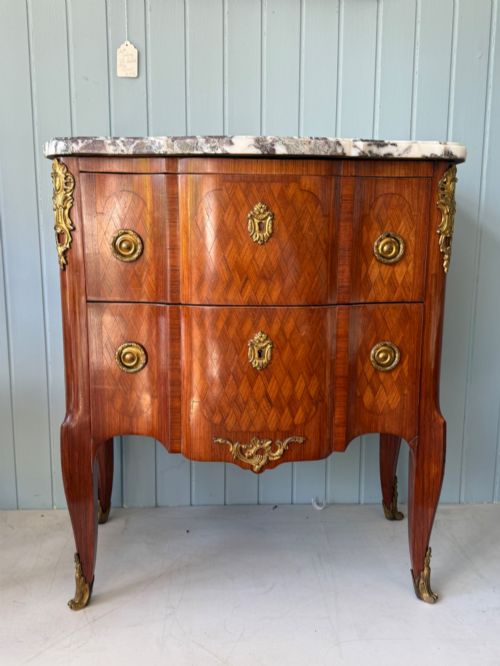
Originating in domestic settings to hold chamber pots, night accessories, or lamps, these cabinets span multiple stylistic revivals. Pieces range from Sheraton Revival satinwood models to French Louis XV style commodes with marble tops.
How they were made
Cabinet makers built the primary carcases using dense timbers such as mahogany, walnut, and pine, often applying figured veneers to the external surfaces. Mahogany and satinwood provided stable bases for intricate surface decoration.
Marquetry and inlay techniques involved cutting delicate pieces of contrasting wood, such as boxwood or kingwood, and fitting them flush into recesses carved into the primary timber. Brass handles, mounts, and ormolu details completed the construction on finer continental pieces.
Marble slabs were frequently fitted to the tops of French commodes and bedside chests to provide a durable, heat-resistant surface for lamps and water jugs.
Listings feature bedside cabinets spanning from the Victorian period through the Edwardian era and up to 1930.
What varies in quality
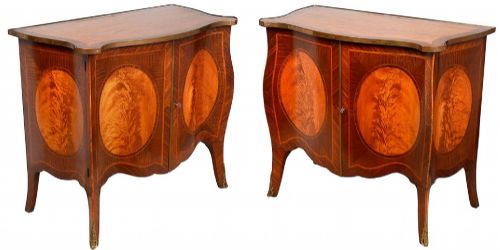
The refinement of the timber selection and the precision of the marquetry define the upper tier of these pieces. Cabinets utilising highly figured flame mahogany or choice satinwood with crisp, tight botanical inlays demand greater attention than plain, utilitarian versions.
Construction methods also distinguish standard production from superior craftsmanship. Dovetailed drawer linings, substantial carcase timbers, and original marble tops that sit flush without modern replacements indicate better original manufacture.
Continental pieces show variance through the integration of cast ormolu mounts and carefully matched book-veneer patterns across curved serpentine fronts.
Maple and Co·Gillows
The Inlaid Wooden Bedside Cabinets Glossary
- Marquetry
- Decorative patterns formed by fitting small pieces of veneer into a wood foundation to create pictorial or geometric designs. This technique appeared frequently on Edwardian and French bedside pieces.
- Stringing
- Thin lines of contrasting wood or light-coloured inlay set into grooves on the surface of a cabinet. It outlines drawers and panels on Sheraton Revival furniture.
- Ormolu
- Gilded bronze used for decorative mounts and furniture hardware. It appears on French commodes and lamp tables from the nineteenth and early twentieth centuries.
- Commode
- A low piece of furniture with drawers or doors, originally used as a cupboard or chest. In nineteenth-century French pieces, it often doubles as a bedside cabinet.
- Bowfront
- A convex curved cabinet front that projects outward in the centre. This shape requires specialised joinery and veneer work to maintain clean lines.
Inlaid Wooden Bedside Cabinets: Frequently Asked Questions
What were bedside cabinets used for?
Bedside cabinets originally served to conceal chamber pots and store nighttime essentials before modern indoor plumbing became standard. Over time, their utility shifted toward holding lamps, books, and personal items within arm's reach of the bed.
Today, they function as practical accent furniture that brings enclosed storage and display space to smaller bedroom layouts.
How do I date an inlaid cabinet?
Dating relies on examining the secondary timbers used inside the drawers, the style of the hardware, and the specific veneer combinations. Edwardian and Sheraton Revival pieces often feature bright satinwood with delicate boxwood stringing, while nineteenth-century French commodes utilise walnut or kingwood over heavier carcases.
Hardware styles, dovetail construction, and the presence of original marble tops also help narrow down the period of manufacture.
Are marble tops original?
Marble tops on French and Edwardian bedside cabinets were commonly fitted at the time of manufacture to protect the wood from spilled water and lamp oil. Original marble slabs typically fit snugly within the wooden frame and show appropriate edge profiling matching the period.
Replacements are usually apparent if the stone lacks natural edge wear or sits incorrectly upon the timber rebate.
How do I clean inlaid wood?
Inlaid wooden surfaces require gentle care to avoid loosening the delicate veneers and stringing. Dusting with a soft, dry cloth is sufficient for routine maintenance, avoiding excessive moisture or harsh commercial cleaners.
Applying a traditional beeswax polish periodically helps nourish the timber and protect the old polish without harming the fine inlay work.