



Inlaid Wood Writing Bureau
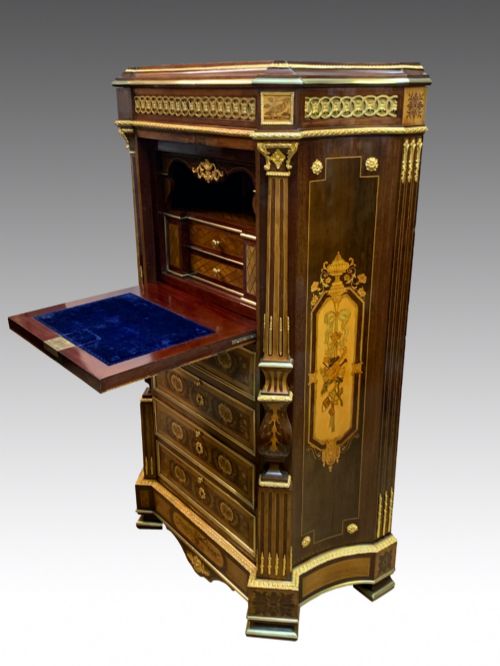
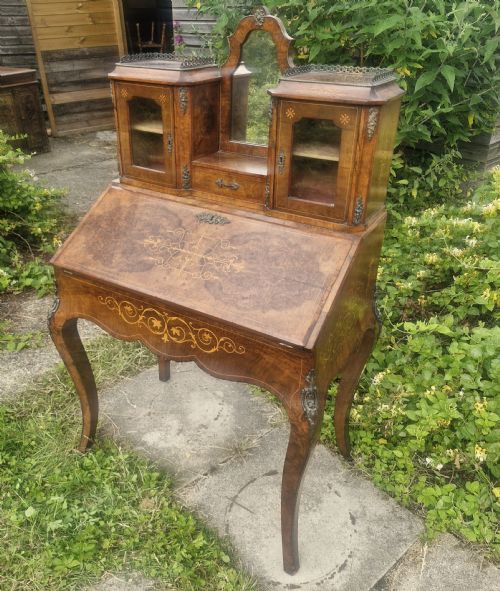
An inlaid wood writing bureau brings together fitted stationery drawers and a drop-front writing slope decorated with contrasting timber details.
Inlaid Wood Writing Bureau
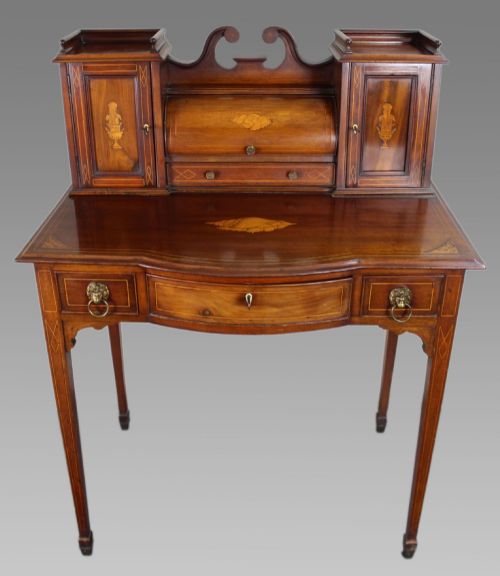
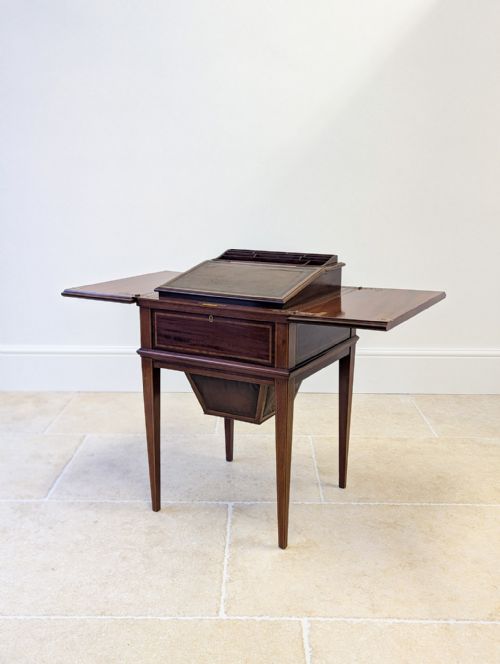
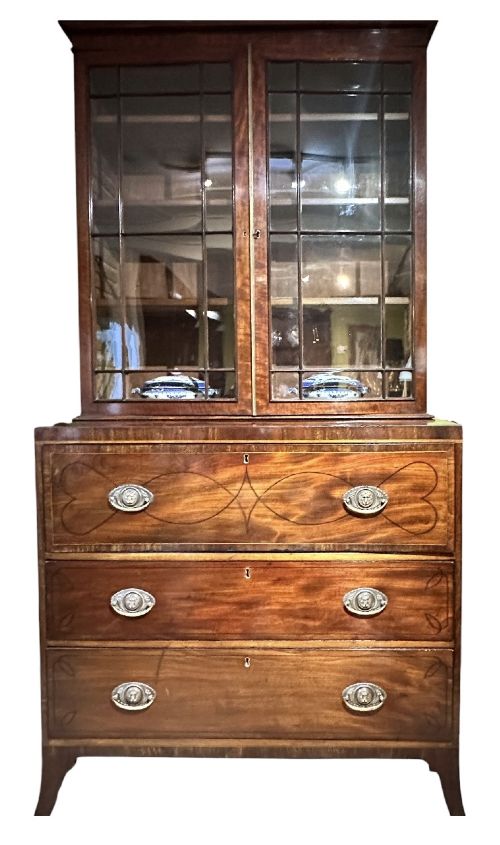
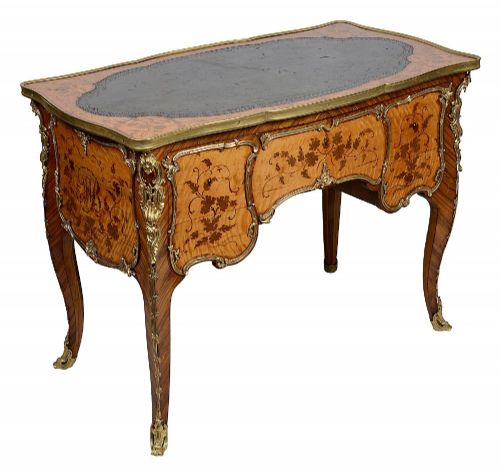
An inlaid wood writing bureau typically appears as a fall-front desk opening to reveal pigeonholes and small drawers, alongside taller bureau bookcases that combine upper shelving with a lower writing compartment. The pieces span Georgian, Regency, and Victorian eras through to Edwardian interpretations, alongside continental marquetry pieces.
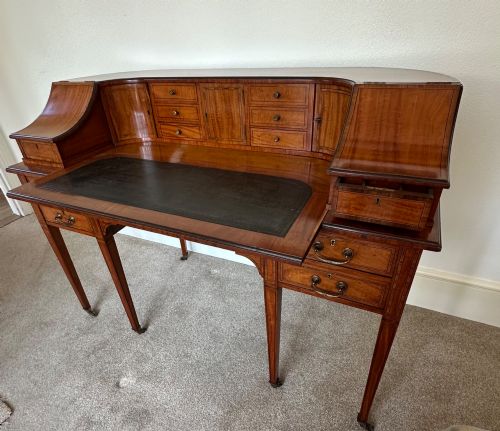
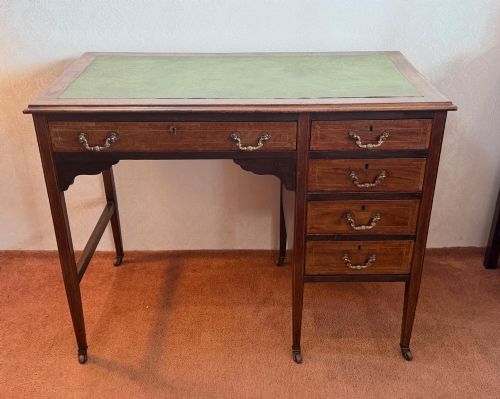
Edwardian mahogany examples with satinwood inlay and rosewood variations dominate the selections on this page, often built as compact ladies' writing tables or davenports. Georgian pieces lean towards solid proportions in mahogany with subtle line inlay, while later Victorian and Edwardian iterations utilise richer marquetry or Sheraton Revival motifs.
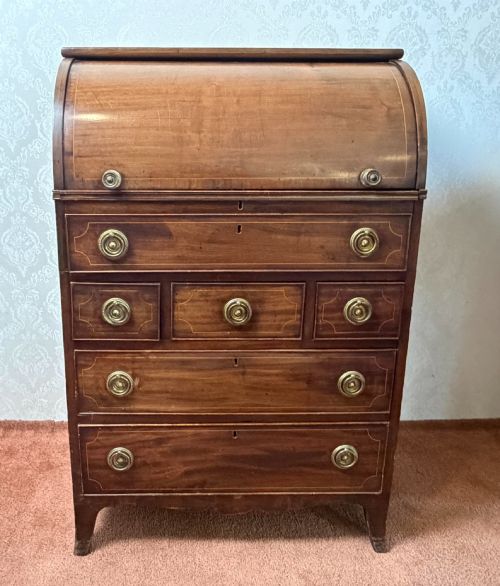
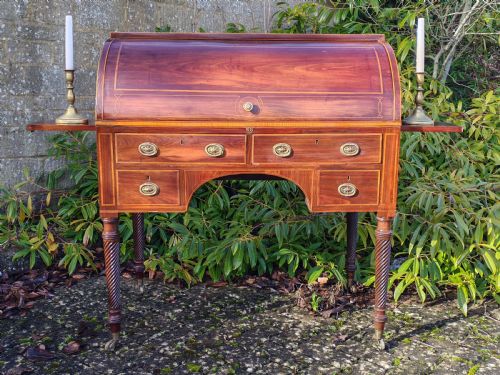
Buyers encounter everything from simple four-drawer fall-front desks to elaborate cylinder tops, bureau de dame forms, and monumental secretaire bookcases. Each variant serves the same fundamental purpose of concealing correspondence behind a decorative wooden facade.
Materials and construction
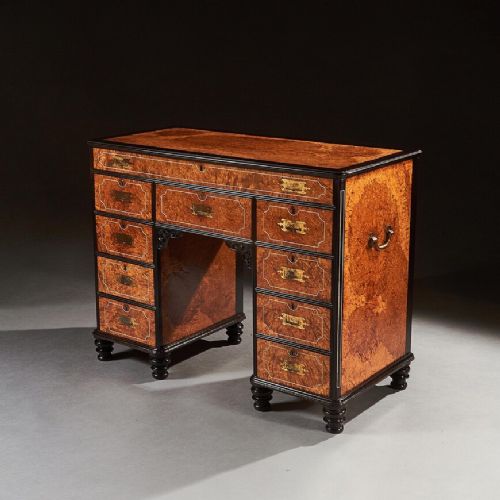
Cabinet makers constructed these pieces primarily using carcases of mahogany, walnut, or rosewood, frequently veneered with finely figured timber to provide a smooth canvas for decoration. Satinwood, boxwood, and ebony were cut into thin threads and motifs to create contrasting inlaid geometric borders or floral sprays.
Brass fittings, including drop handles, escutcheons, and occasional ormolu mounts, added functional and visual accents to the woodwork. Many pieces incorporated fitted leather writing surfaces tooled with gold leaf, set into the fall-front flap or the top of the desk.
Listings feature mahogany, rosewood, walnut, and satinwood among primary woods, paired with brass and leather.
Craftsmanship and design
The distinction between standard production and exceptional work lies in the precision of the timber matching and the sharpness of the inlay cut. Superior examples show meticulous hand-cut marquetry where different woods fit flush without heavy filler, while lesser pieces rely on printed or crudely stamped motifs.
Internal secondary timbers and drawer construction reveal the maker's hand, where oak-lined drawers and hand-cut dovetails separate superior desks from later, hastily assembled counterparts.
Maison Krieger·James Shoolbred
The Inlaid Wood Writing Bureau Glossary
- Bureau
- A desk featuring a sloping hinged lid that drops down to form a writing surface, concealing an interior arrangement of small drawers and pigeonholes. Most examples stand on a chest of drawers or a dedicated frame.
- Marquetry
- The art of applying thin veneers of different coloured woods, shells, or ivories to a structural panel to create pictorial or decorative patterns. This technique requires immense skill to ensure tight joints between each contrasting piece.
- Secretaire
- A piece of furniture containing a concealed writing drawer or a drop-front compartment designed for correspondence. These often disguised utilitarian writing spaces within the facade of a bookcase or tallboy.
- Tambour
- A sliding door or shutter made of narrow vertical strips of wood glued to a canvas backing, allowing it to curve around corners. It operates smoothly within tracks to conceal the writing surface of specialised desks.
- Satinwood
- A lustrous, yellow-toned timber harvested from tropical trees, prized for its reflective grain. Cabinet makers used it extensively for contrasting inlay borders and light-toned panels.
Inlaid Wood Writing Bureau: Frequently Asked Questions
How do I use a bureau desk?
Lower the hinged wooden flap to create a flat writing surface supported by integrated wooden arms. This action exposes small interior drawers and vertical slots designed for storing letters and stationery.
When writing is finished, fold the flap back up and secure it with a key to conceal the working area. The internal compartments remain safely enclosed behind the locked slope.
What is a bureau bookcase?
A bureau bookcase combines a lower writing desk with an upper shelving cabinet enclosed by glass or wooden panel doors. This dual-purpose furniture piece maximised floor space in historical homes by housing a personal library alongside a working desk.
The lower section provides the standard drop-front writing surface and internal pigeonholes, while the upper portion holds books or display items.
How do I date an inlaid bureau?
Examine the secondary timbers inside the drawers, such as oak or pine, alongside the style of the brass hardware and the complexity of the inlay. Georgian pieces usually feature hand-cut dovetails and understated string inlay, whereas Edwardian and Sheraton Revival pieces often display lighter satinwood banding and machine-made elements.
Continental pieces from the nineteenth century frequently incorporate elaborate floral marquetry and kingwood veneers. Comparing these construction methods and decorative motifs against known historical periods clarifies the approximate age.
Where should I place a writing desk?
Position the desk near a natural light source, such as a window, to illuminate the writing surface and highlight the wood grain. Freestanding variants with finished backs look effective placed away from walls in the centre of a room.
Ensure there is sufficient clearance behind the piece for a chair when the drop-front flap is open. Maintaining moderate indoor humidity protects the timber veneers and prevents the wood from warping.