
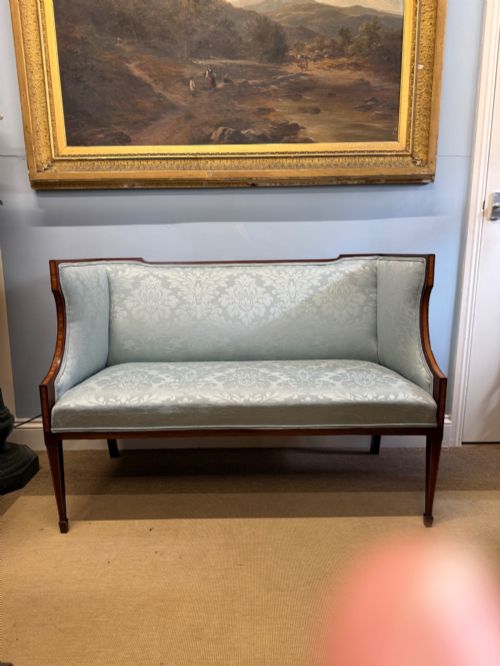
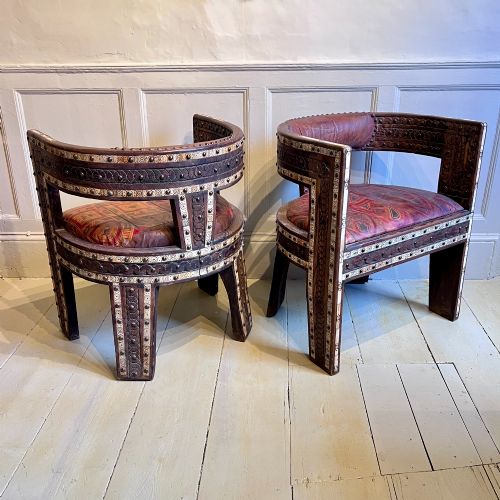
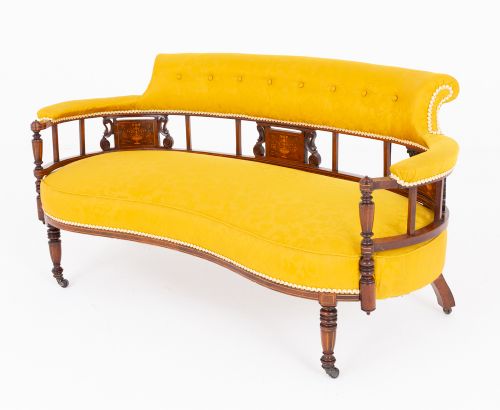


Inlaid Wood Settee
An inlaid wood settee brings refined nineteenth and early twentieth century cabinet work directly into a modern sitting room.
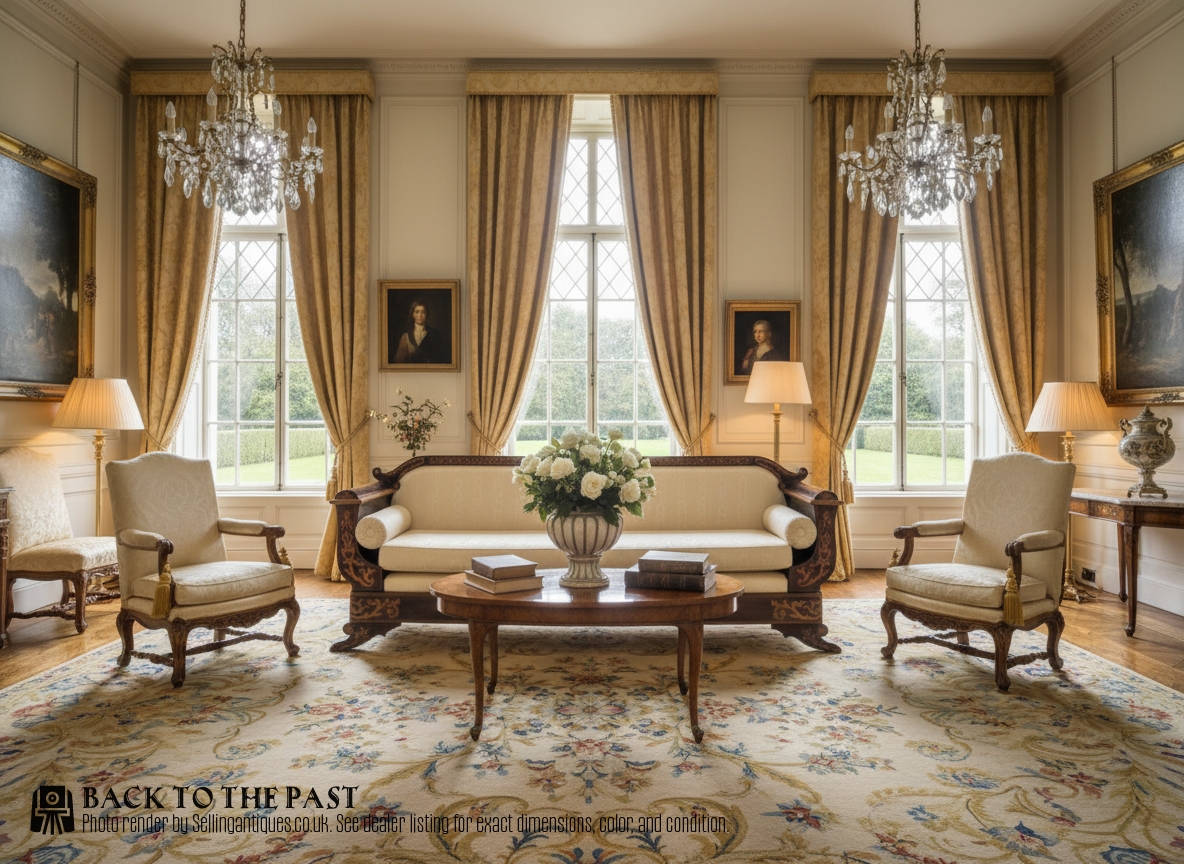
Inlaid Wood Settee
An inlaid wood settee is a formal two or three seater seat built with decorative timber framing, most frequently appearing in Edwardian and Victorian forms. These seating pieces range from compact salon couches and window seats to substantial parlour suites complete with matching armchairs.
The most common examples encountered here are Edwardian and late Victorian variations constructed from rosewood or mahogany, often enhanced with contrasting satinwood or marquetry details. They serve both as functional household furniture and as focal points within reception rooms.
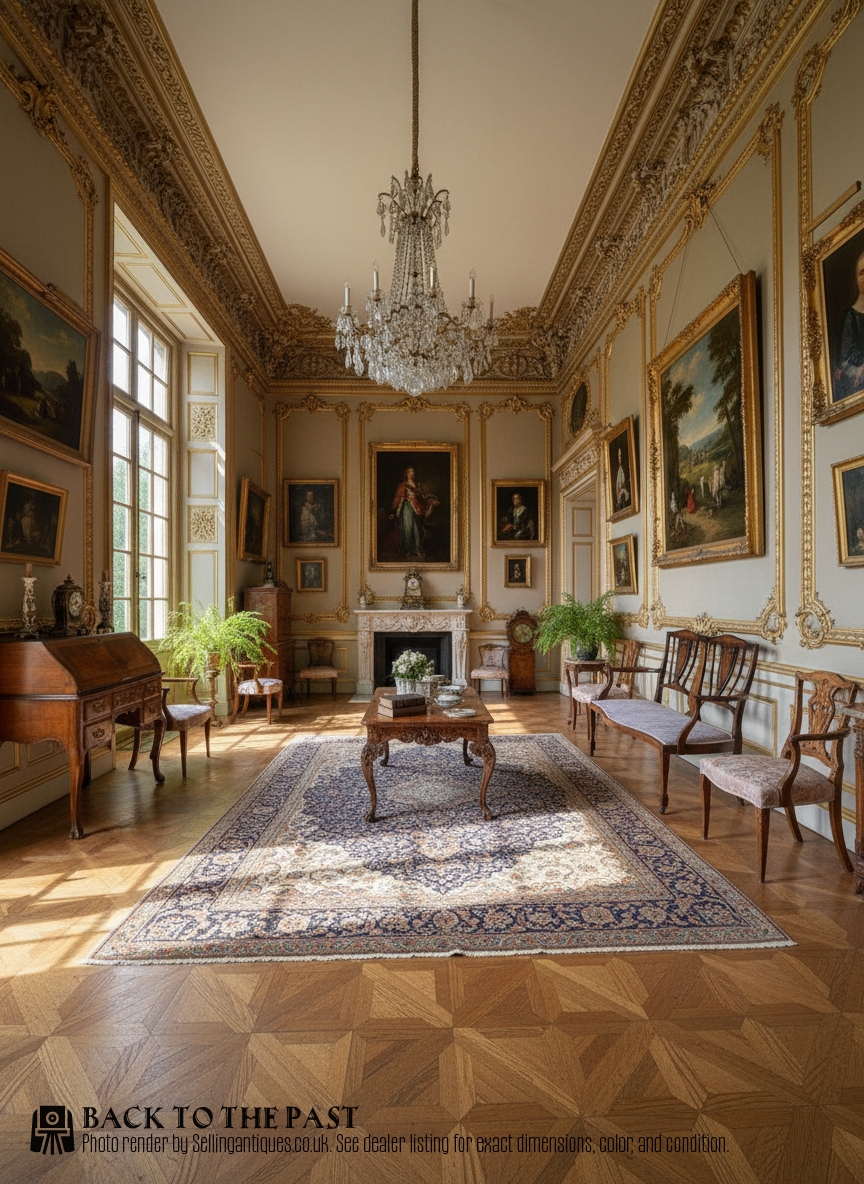
How they were made
Cabinet makers constructed the foundational frames using dense hardwoods like mahogany and rosewood, ensuring structural integrity for daily use. These timbers provided a stable dark ground for decorative work.
Craftsmen applied fine veneers, marquetry, and contrasting timbers such as satinwood and boxwood into recessed channels within the wood. Specialised additions like bone, brass, and damask upholstery completed the decorative scheme.
Listings feature Edwardian, Victorian, and nineteenth century eras, utilising mahogany, rosewood, satinwood, and damask upholstery.
What varies in quality
The distinction between ordinary and superior pieces lies in the precision of the cabinet work and the crispness of the timber inlay. Master makers ensured that contrasting woods sat flush within the primary frame without visible gaps or filler.
Selection of the base timber dictates overall visual weight, with tightly grained rosewood and figured mahogany commanding higher regard. The complexity of the marquetry and the retention of original upholstery textiles further distinguish exceptional examples.
The Inlaid Wood Settee Glossary
- Marquetry
- A decorative technique where pieces of veneer are assembled into pictorial or geometric patterns on a wooden ground. This method differs from simple inlay by covering the entire surface of the furniture element.
- Satinwood
- A pale, lustrous timber imported from the tropics, utilised extensively for contrasting stringing and detailed inlay motifs. Its golden hue provides high visual contrast against dark rosewood and mahogany frames.
- Show-wood
- Exposed wooden framing around a sofa or settee that displays polished grain rather than being entirely covered in fabric. This timber border defines the silhouette of the seating piece.
- Stringing
- Thin lines of contrasting timber inlaid into shallow channels to outline panels, legs, and crest rails. It creates geometric definition across flat wooden surfaces.
Inlaid Wood Settee: Frequently Asked Questions
How do I care for an inlaid settee?
Keep the timber clean with a soft dry cloth and feed the wood periodically with traditional wax polish to prevent drying. Avoid placing the settee near direct heat sources or strong sunlight to protect the delicate veneer and upholstery.
Check the joints gently over time and use professional help for any upholstery repairs to preserve the original structure of the frame.
Are these settees comfortable for daily use?
Edwardian and Victorian settees were built for formal parlour entertaining rather than lounging, offering a firm and upright sit. Many examples feature traditional horsehair stuffing and supportive sprung seats designed for polite company.
For casual daily lounging, add supportive cushions while respecting the antique frame and original fabric integrity.
How do I distinguish Edwardian from Victorian pieces?
Victorian settees generally display heavier proportions, darker rosewood or mahogany frames, and dense carved details with rich upholstery. They often lean towards heavier revival styles.
Edwardian examples tend to be lighter in scale, favouring satinwood inlay, airier frames, and brighter satinwood or mahogany surfaces inspired by earlier neoclassical designs.
Can I reupholster an antique settee safely?
Traditional upholstery methods using webbing, springs, and horsehair can be renewed by a skilled conservator who respects the age of the frame. Modern foam and synthetic tacks should be avoided on older pieces to maintain historical integrity.
Choose damask or silk fabrics that match the period aesthetic of the wood inlay and frame style.