



Inlaid Wood Secretary
An inlaid wood secretary combines a drop-front writing surface with concealed compartments and display shelving, offering a practical workspace wrapped in decorative cabinetwork.
Inlaid Wood Secretary
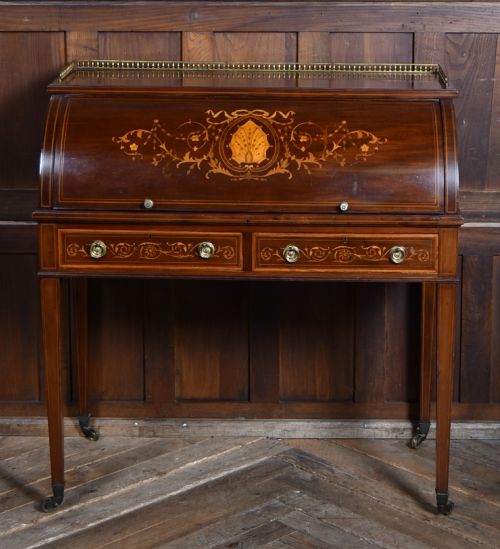
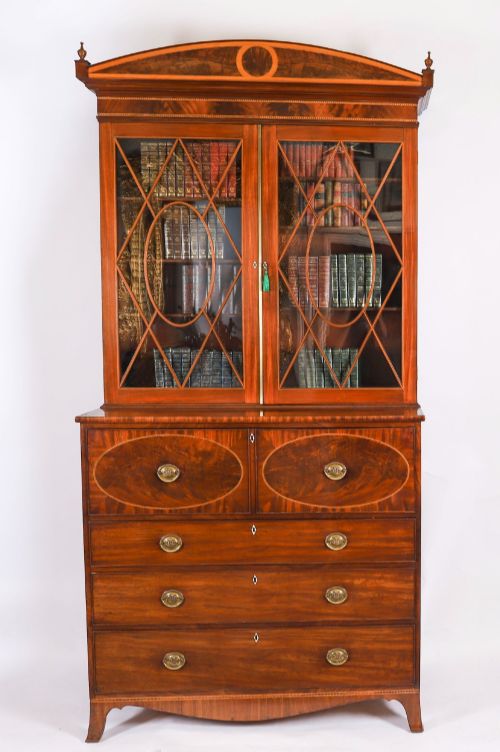
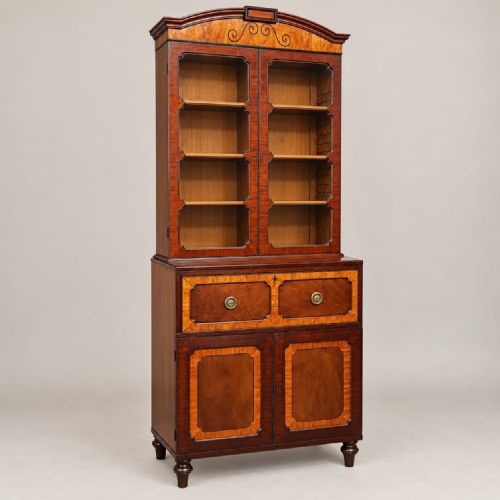
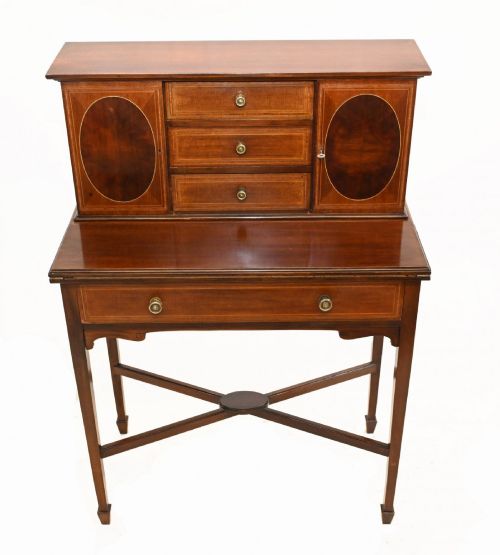
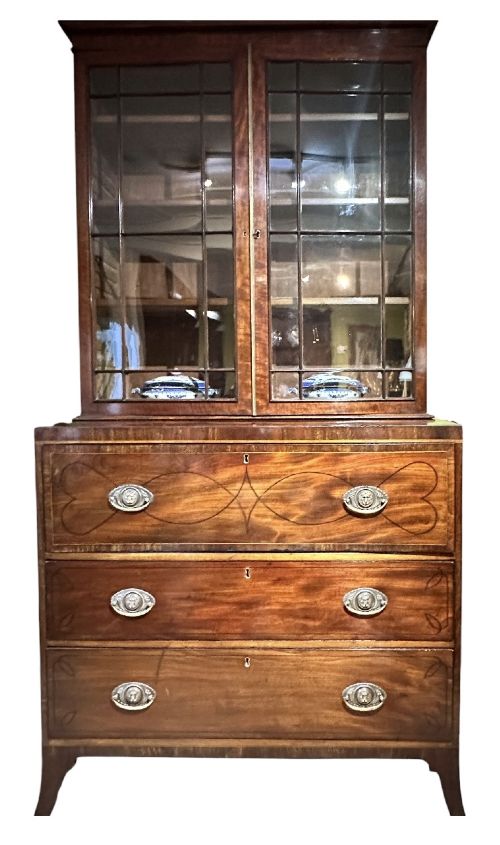
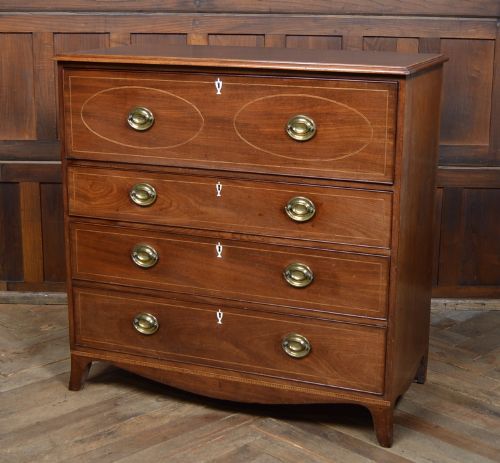
When you search for an inlaid wood secretary, you encounter a variety of multi-functional writing furniture designed to conceal papers behind a fall-front panel or sloping lid. These pieces frequently appear as tall bureau bookcases with glazed upper doors or as compact writing chests fitted with drawers.
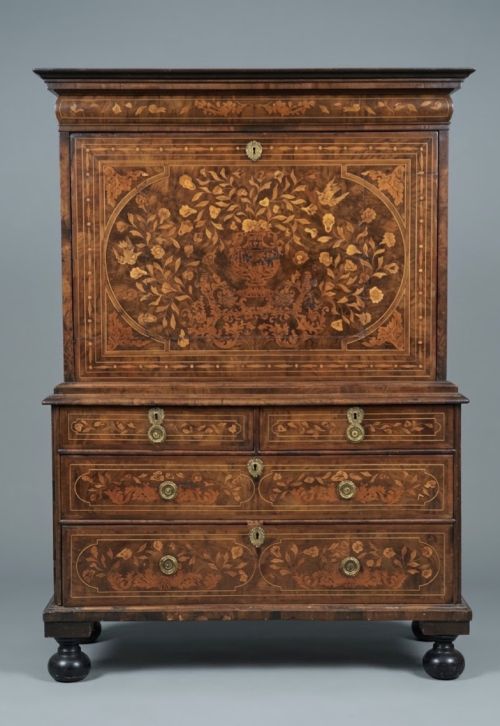
The selection ranges widely across stylistic traditions, including Georgian and Regency mahogany models alongside Dutch marquetry designs executed in walnut or floral veneers. Edwardian interpretations in satinwood and mahogany also feature prominently among these listings.
Makers adapted these forms across centuries to suit domestic writing needs, resulting in variations from simple fall-front desks to elaborate cabinets featuring tambour shutters and fitted interior pigeonholes.
Materials and Construction Techniques
Cabinetmakers utilised dense primary timbers such as mahogany, walnut, rosewood, and yew, often constructing internal components from secondary woods like oak. Surfaces received decorative enrichment through contrasting stringing and banding in satinwood, boxwood, and various dyed veneers.
Detailing often incorporated fine brass hardware, including escutcheons and handles, alongside glass panels set within astragal frames for upper bookcase sections. Marquetry techniques involved cutting intricate floral or pictorial motifs from contrasting wood veneers and embedding them directly into the primary surface.
Inlaid Wood Secretary Retail Price Guide 2026
Typical asking prices for inlaid wood secretary among the pieces listed under this phrase on Sellingantiques today, from the lower quarter to the upper quarter. They describe what is for sale here now, not the wider market.
Many writing desks harbour hidden drawers and secret spring-release compartments designed to keep private letters safe from prying eyes.
Assessing Quality and Execution
The distinction between ordinary and superior pieces rests on the precision of the cabinetwork and the complexity of the veneer selection. Finely executed examples display seamless matching of wood grain across drawer fronts and crisp execution of inlaid motifs.
Internal secondary timbers and drawer construction reveal the standard of workshop practice, where hand-cut dovetails and solid wood linings separate standard utility pieces from master cabinetwork. The sophistication of the fitted interior, including secret compartments and well-turned small drawers, marks the upper tier of production.
The Inlaid Wood Secretary Glossary
- Secretaire
- A desk or cabinet featuring a pull-out or drop-front writing drawer that conceals smaller drawers and pigeonholes.
- Marquetry
- The art of forming decorative patterns by fitting together contrasting pieces of veneer.
- Astragal
- A small convex moulding used to divide glass panes within cabinet doors.
- Tambour
- A sliding shutter constructed from narrow strips of wood glued to a canvas backing.
- Escutcheon
- A flat plate of metal surrounding a keyhole to protect the surrounding wood.
Inlaid Wood Secretary: Frequently Asked Questions
How do I identify a Georgian secretary?
Georgian secretaries usually display classic proportions executed in dense timbers like mahogany with restrained brass hardware.
Decoration relies on figured wood veneers and subtle stringing rather than heavy pictorial marquetry.
Where were Dutch marquetry secretaries made?
These pieces originated in the Netherlands and feature elaborate floral or figural inlay work across curved bombe surfaces.
Cabinetmakers utilised walnut and various exotic woods to create highly decorative contrasting panels.
What woods were used for inlay?
Craftsmen utilised lighter contrasting timbers such as satinwood and boxwood to create geometric lines and pictorial motifs.
These light woods stood out sharply against darker primary surfaces like mahogany and rosewood.