

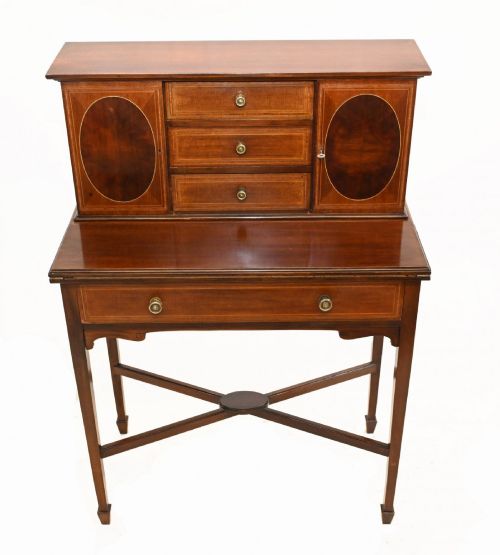
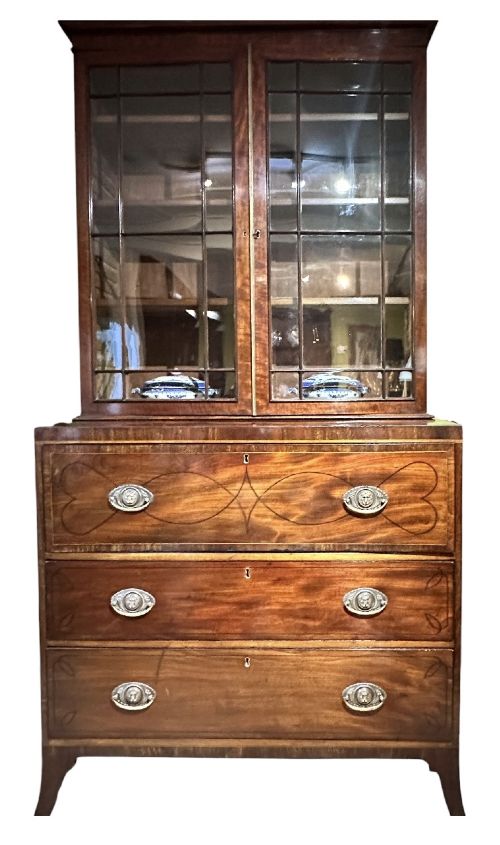
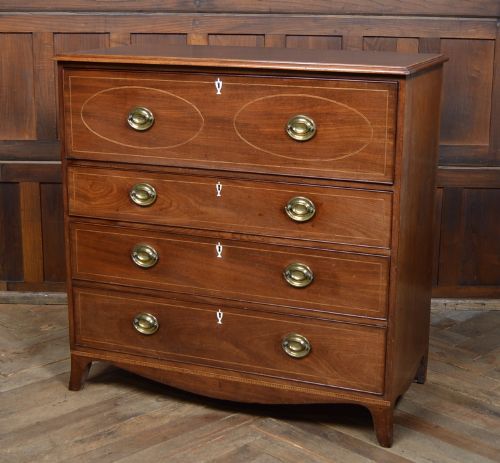


Inlaid Wood Secretary Desk
An inlaid wood secretary desk combines a private writing surface with hidden compartments, offering functional storage alongside decorative cabinetwork.
Inlaid Wood Secretary Desk
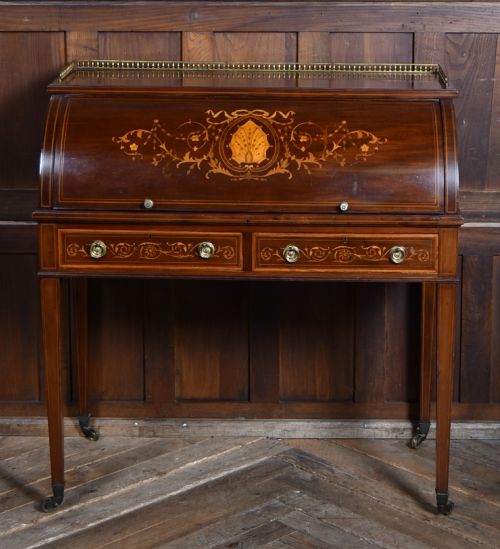
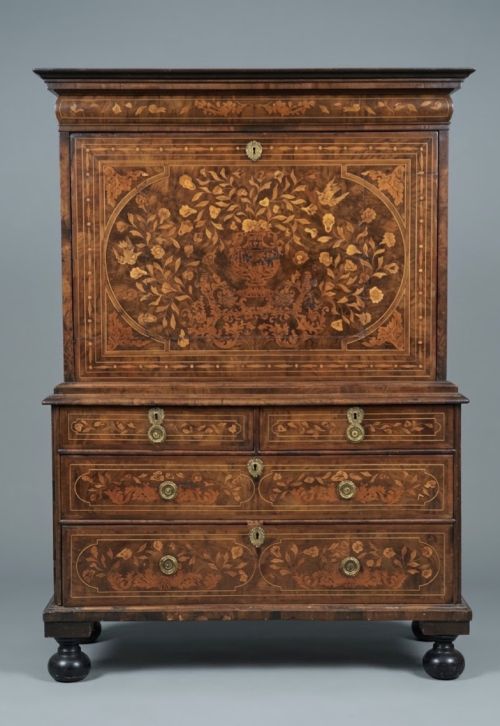
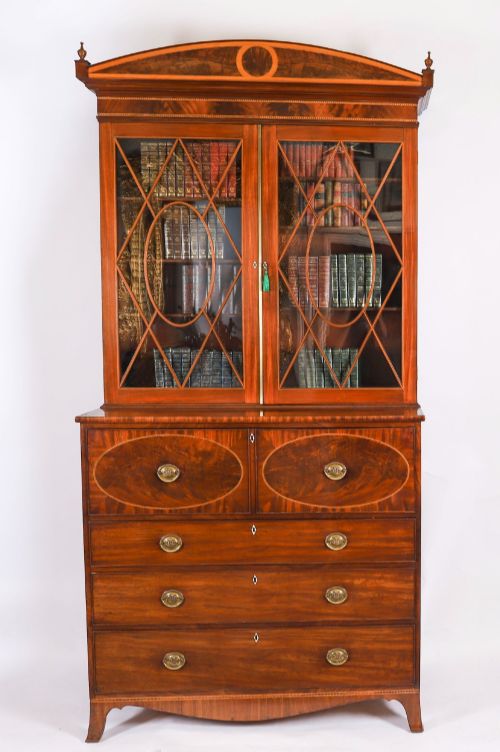
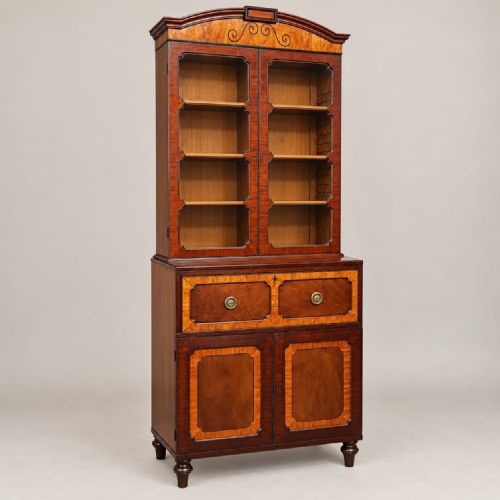
An inlaid wood secretary desk encompasses bureau bookcases, secretaire chests, and writing bureaux originating from periods spanning the eighteenth century through the Edwardian era. These pieces generally feature a drop-down or sloping writing flap that conceals fitted interior drawers and pigeonholes.
The variations on this page range from tall bureau bookcases with glazed upper cabinets to compact writing desks and bombe-shaped forms. Mahogany, walnut, and yew wood serve as the primary carcase timbers for these domestic writing pieces.
Georgian and Regency examples sit alongside Dutch marquetry designs and Edwardian satinwood pieces. Buyers most frequently encounter mahogany bureau bookcases and inlaid writing desks from the eighteenth and nineteenth centuries.
Materials and Construction
Cabinetmakers constructed these writing pieces using solid timber carcases faced with mahogany, walnut, or rosewood veneers. Structural elements often incorporate secondary woods such as oak, while surface ornamentation relies on contrasting timber inlays.
Satinwood, boxwood, and floral marquetry provide decorative detail across the writing flaps and drawer fronts. Brass hardware, including drop handles, escutcheons, and occasional inlay lines, finishes the structural composition.
Inlaid Wood Secretary Desk Retail Price Guide 2026
Typical asking prices for inlaid wood secretary desk among the pieces listed under this phrase on Sellingantiques today, from the lower quarter to the upper quarter. They describe what is for sale here now, not the wider market.
Secret spring-loaded catches inside some bureau compartments require pressing hidden wooden pins to release tiny diary drawers.
Distinguishing Craftsmanship
Quality in an inlaid wood secretary desk depends upon the precision of the cabinetwork and the complexity of the marquetry. Crisp detailing in the floral inlay and well-fitted interior stationery compartments separate superior examples from simpler production.
The integrity of the timber veneers and the smooth mechanical action of the drop-front writing surface indicate the level of original workshop skill. Well-preserved secondary timbers and original brass mounts further define the better pieces in this range.
Hepplewhite·Chippendale
The Inlaid Wood Secretary Desk Glossary
- Secretaire
- A piece of furniture containing a concealed writing drawer or a fold-down flap that reveals a writing surface and pigeonholes. This term frequently interchanges with bureau in British furniture terminology.
- Marquetry
- Decorative patterns formed by fitting together thin veneers of various coloured woods and other materials onto a carcase. Floral and geometric designs appear commonly on Dutch and Georgian examples.
- Bombe
- A swelling, convex curved contour found on the front and sides of eighteenth-century case furniture. This profile demands advanced woodworking skill to shape the timber carcase and matching drawers.
- Bureau Bookcase
- A two-part storage item combining a lower writing desk with an upper enclosed shelving or cabinet section. Glass doors typically protect the upper bookcase component.
- Escritoire
- A specialised writing cabinet equipped with a fall-front writing flap. The term often describes French or Regency examples designed specifically for correspondence.
Inlaid Wood Secretary Desk: Frequently Asked Questions
What is a secretary desk?
A secretary desk is a form of fall-front or sloping-flap writing furniture that conceals small drawers and pigeonholes inside. It combines a compact workspace with enclosed storage for papers and books.
Most versions include a lower section of drawers beneath the writing surface, while taller variations add upper cabinet shelving behind glazed doors.
How do I date an inlaid desk?
Dating relies on examining the secondary timbers, construction methods, and cabinet styles relative to known periods like the Georgian era or Edwardian times. Details such as dovetailing techniques and veneer thicknesses offer clear chronological clues.
Inlay styles also shift from the geometric satinwood lines of the eighteenth century to the lighter marquetry patterns seen in later Edwardian revivals.
Where were these desks placed?
These pieces traditionally stood in private drawing rooms, libraries, or master bedrooms where correspondence and household accounts were managed. Their dual function allowed owners to write letters privately and lock away sensitive documents.
Because they combined a bookcase with a writing surface, they served as principal room furniture in homes without dedicated studies.
How do I maintain the wood?
Maintaining antique wood surfaces requires keeping the pieces away from direct heat sources and fluctuating humidity that can split veneers. Regular gentle dusting preserves the polished finish of mahogany, walnut, and satinwood.
Periodic application of appropriate wax feeds the timber without building up heavy chemical layers over the marquetry and brass mounts.