
Inlaid Wood Furniture
Inlaid wood furniture combines rich cabinet timbers with contrasting veneers and metals to create functional surfaces of lasting character.
Inlaid Wood Furniture
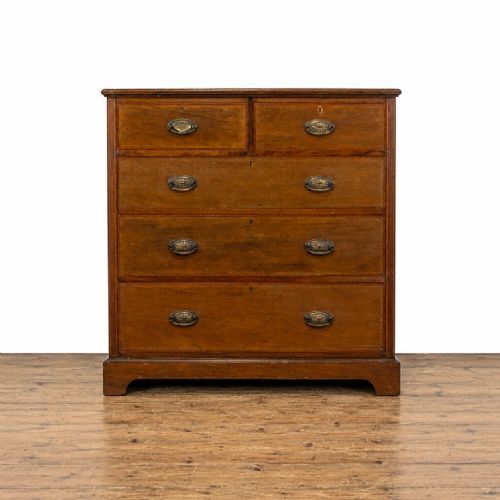
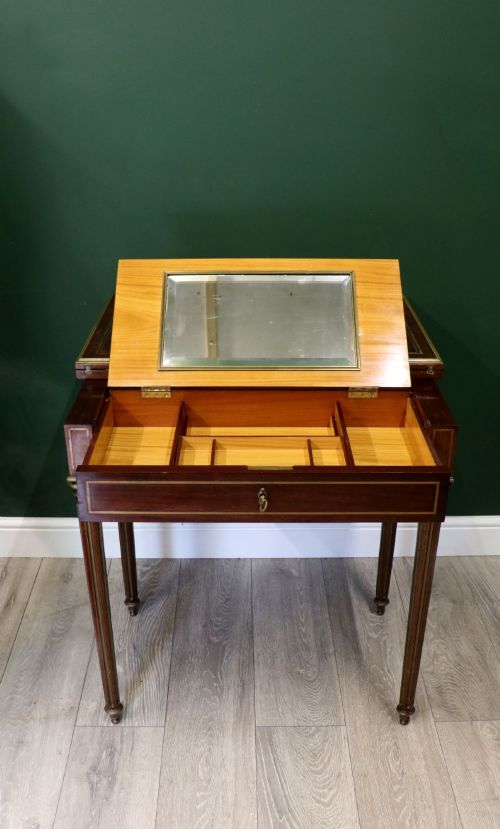
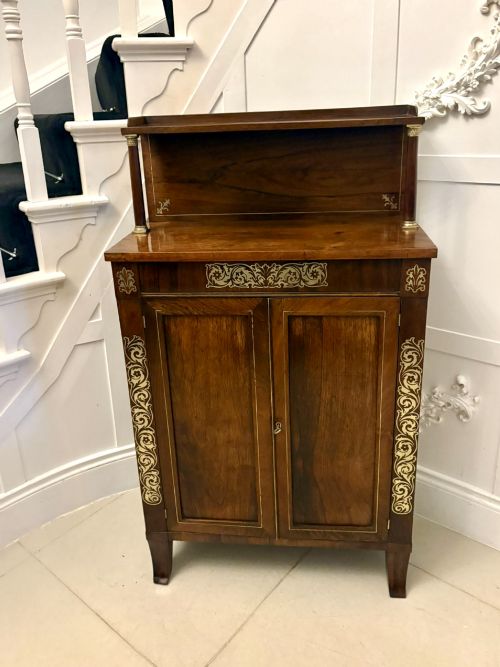
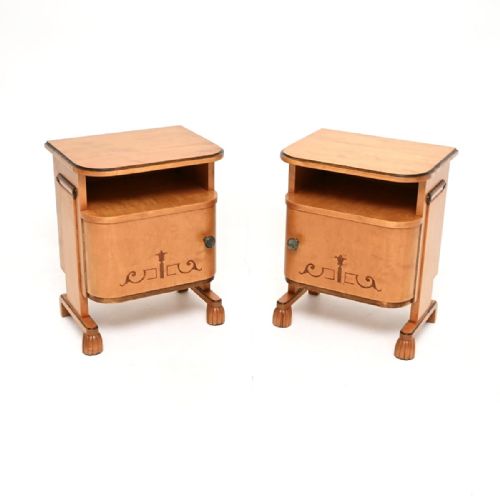
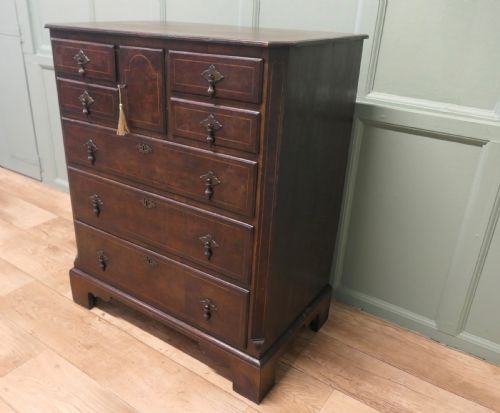
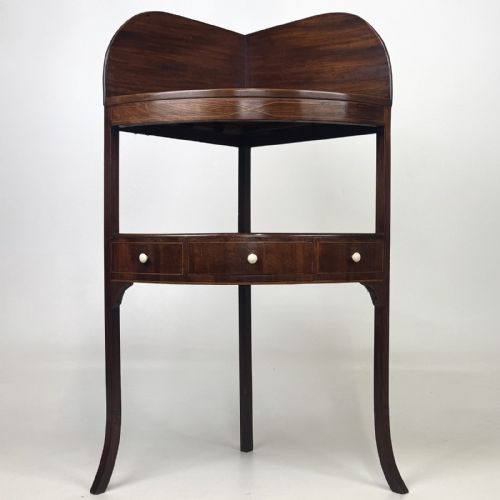
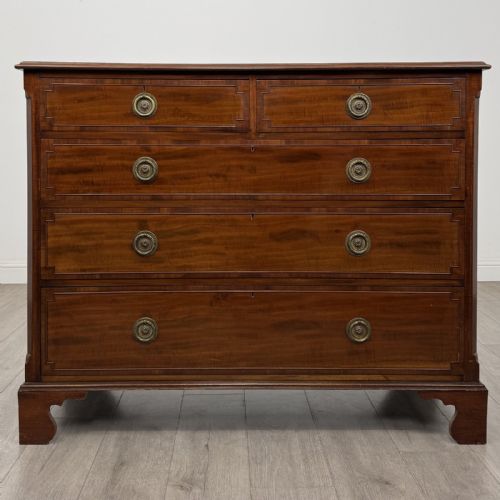
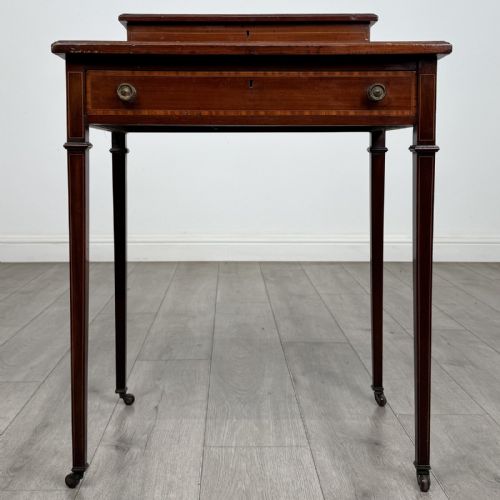
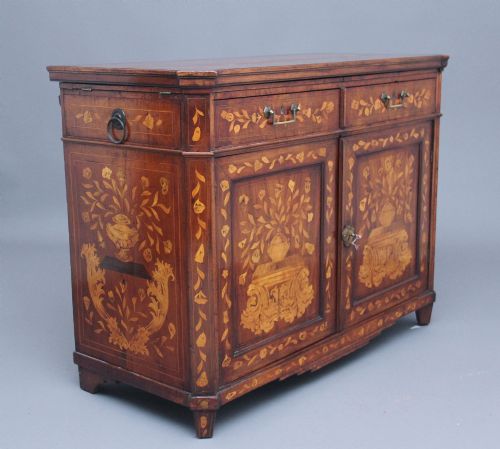
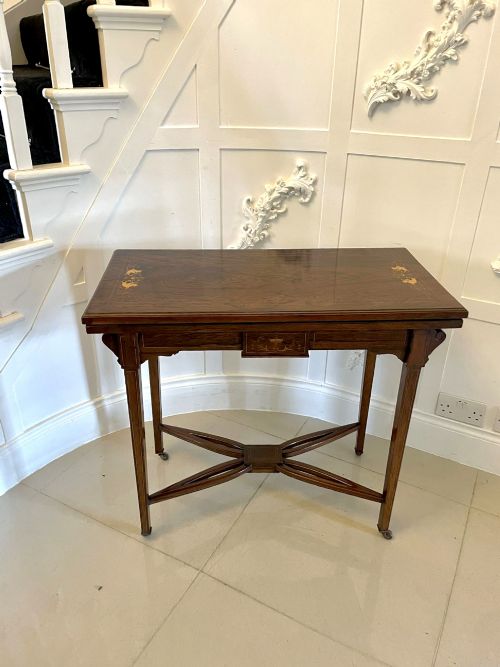
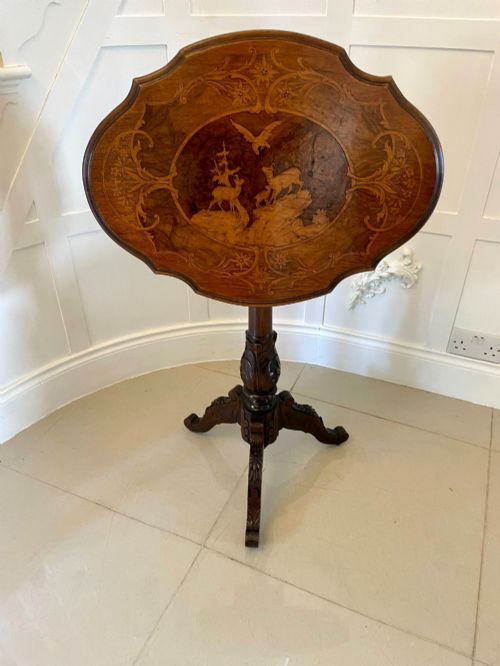
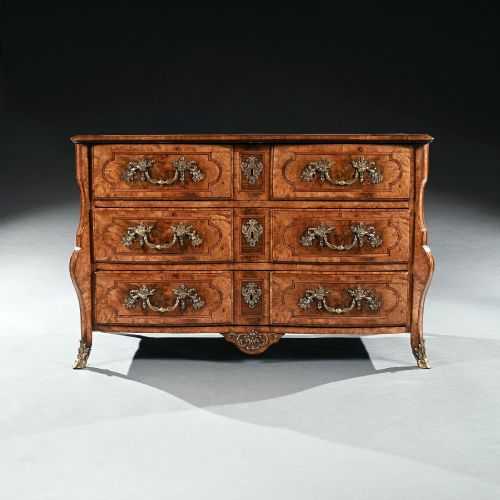
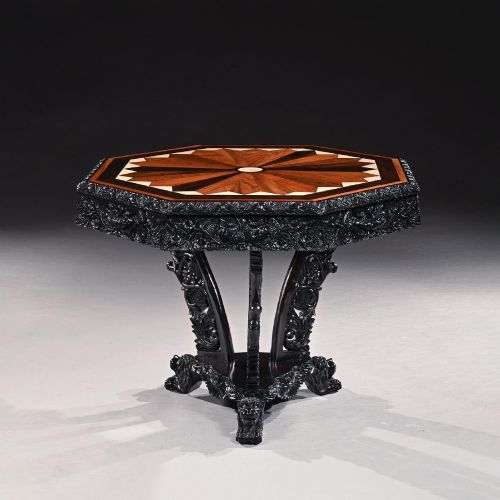
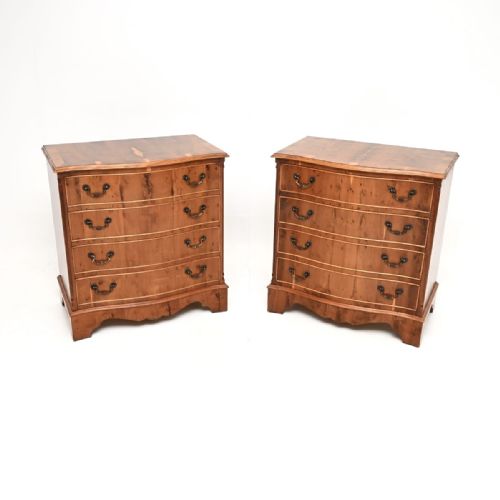
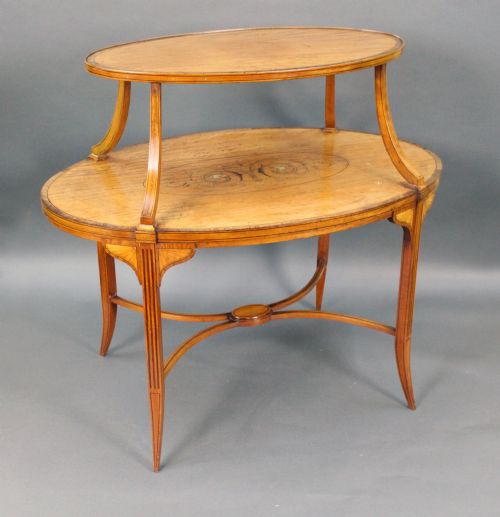
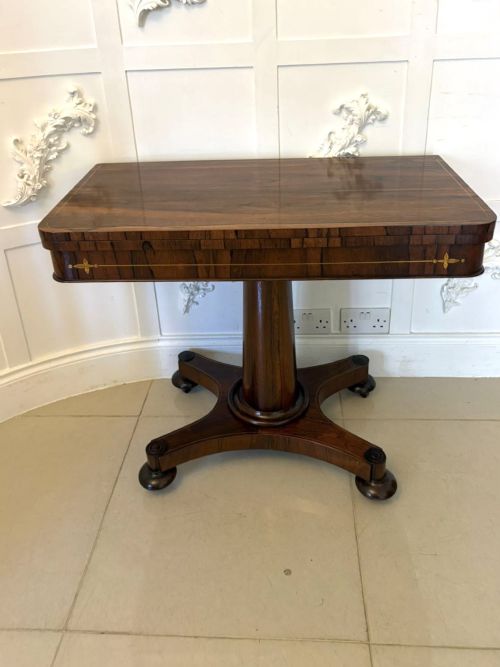
Inlaid wood furniture encompasses a broad spectrum of functional household items designed with decorative surface ornamentation, of which this selection consists largely of occasional tables, card tables, chests of drawers, and cabinets.
Buyers exploring this category will frequently encounter pieces originating from the eighteenth and nineteenth centuries, spanning Georgian, Regency, Victorian, and Edwardian periods.
The assortment reflects diverse regional traditions, including English mahogany craftsmanship, Dutch marquetry, Anglo-Indian work, and French-influenced styles utilising varied timbers.
How they were made
Cabinet makers constructed carcass frames from foundational timbers such as oak, pine, or mahogany before applying fine veneers and contrasting details.
Surface ornamentation relied on meticulous hand-cutting of materials like satinwood, rosewood, walnut, boxwood, ebony, and brass to form floral, geometric, or pictorial motifs.
Inlayers set these contrasting elements directly into recesses carved into the primary wood surface, securing the design with animal hide glue before scraping and polishing the panel flat.
Materials span eight types of wood alongside brass, mother-of-pearl, bone, and tortoise-shell elements.
What varies in quality
The standard of an inlaid piece depends upon the precision of the fit between the contrasting inserts and the surrounding timber, where superior examples display virtually invisible joints without excessive filler.
Excellence is also visible in the choice and figuring of the primary veneers and the intricacy of the botanical or geometric composition rather than mere surface complexity alone.
Structural integrity of the underlying carcase, the retention of original brass hardware, and the depth of the hand-applied polish separate ordinary production from workshop masterpieces.
Thomas Hache of Grenoble·Trevor Page and Co·Hewetsons London·GM Elwood for JS Henry·George Bullock
The Inlaid Wood Furniture Glossary
- Marquetry
- An elaborate form of inlay where pieces of veneer are assembled to form pictorial or decorative patterns across a whole surface, rather than simple geometric lines. This technique allows cabinet makers to depict floral sprays, urns, or landscapes using contrasting woods.
- Satinwood
- A durable tropical hardwood prized for its luminous, golden-yellow sheen and smooth grain. It frequently serves as a primary veneer on late eighteenth and nineteenth-century tables and cabinets.
- Ormolu
- Gilded bronze mounts and feet applied to the corners and aprons of fine cabinets and commodes. Makers used these cast metal additions to protect vulnerable edges and enhance the decorative scheme.
- Carcass
- The underlying structural framework or body of a piece of furniture onto which veneers and inlay are applied. Solid construction here ensures the stability of the decorative outer surfaces over centuries.
- Gallery
- A raised wooden, brass, or pierced border running along the edge of a tabletop or shelf. Its original purpose was to prevent small items from rolling off the surface.
Inlaid Wood Furniture: Frequently Asked Questions
How do I clean inlaid wood furniture?
Dust surfaces regularly with a soft, dry cloth to prevent abrasive particles from settling into the fine joints of the inlay. Avoid using silicone sprays, modern household detergents, or excessive water, which can degrade old polish and loosen historic glues.
Apply a microcrystalline wax sparingly once or twice a year to nourish the timber and protect the contrasting veneers. Buff the surface gently with a clean cotton cloth after application to maintain a soft, natural sheen without creating a greasy build-up.
Where should I place these tables?
Position inlaid tables away from direct sunlight, heating vents, and fireplaces to prevent the underlying timbers from drying out, shrinking, or cracking. Rapid temperature and humidity fluctuations cause wood and inlay materials to expand and contract at different rates, which weakens the joints.
Select interior spaces with stable environmental conditions where the detailed surface patterns catch ambient light. Freestanding card tables and occasional tables function best as accent pieces in sitting rooms or hallways where their decorative tops remain visible.
How do I identify a Georgian piece?
Examine the timber selection and construction methods, as Georgian cabinet makers typically relied on solid mahogany, oak, or walnut framed with precise, understated geometric banding rather than heavy, crowded floral motifs. Drawers on genuine pieces often feature hand-cut dovetails and lining timbers appropriate to the eighteenth century.
Check for proportion, weight, and the character of the secondary woods used inside the carcass. Authentic examples display the tool marks and ageing patterns characteristic of eighteenth-century workshop production rather than later revival methods.
What is the difference between inlay and marquetry?
Inlay involves cutting recesses directly into a solid wood surface or a single veneer layer and inserting contrasting materials such as wood, brass, mother-of-pearl, or bone to form simple lines or geometric borders. The surrounding timber remains the dominant visual element of the panel.
Marquetry creates a complete picture or pattern by assembling an entire jigsaw of different veneer pieces on a paper backing before gluing the whole composite sheet onto the furniture carcass. This technique covers the primary surface entirely with pictorial designs.