



Inlaid Wood Bookshelf
An inlaid wood bookshelf brings warmth and refined detail to a room, offering practical display space through centuries of cabinetmaking tradition.
Inlaid Wood Bookshelf
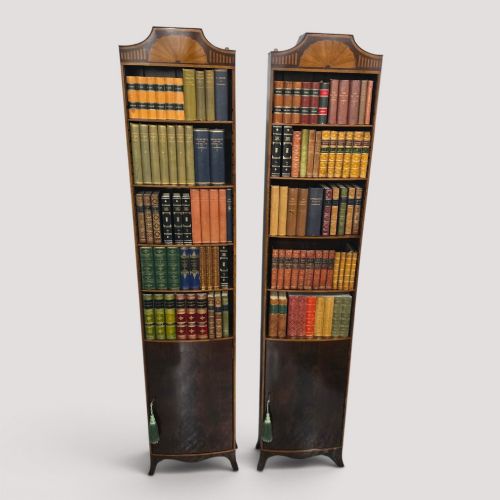
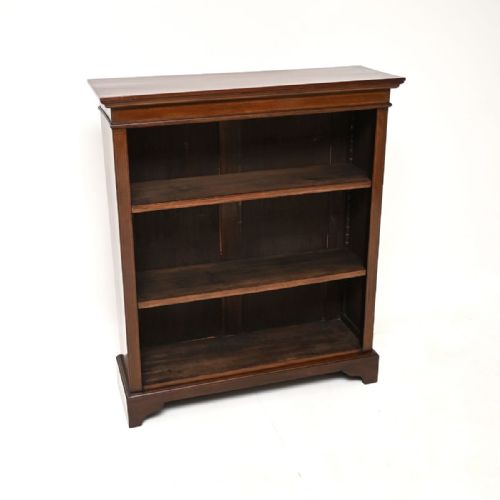
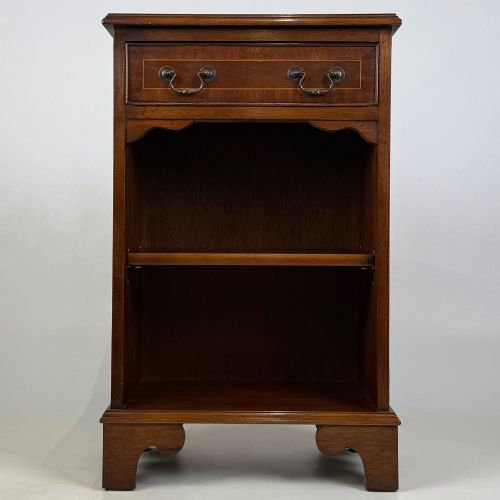
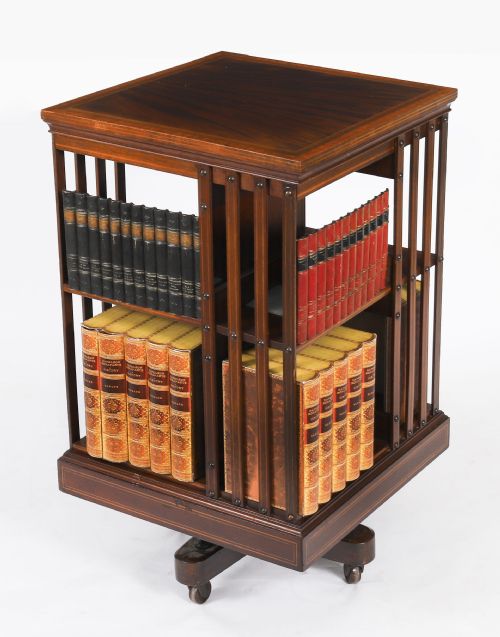
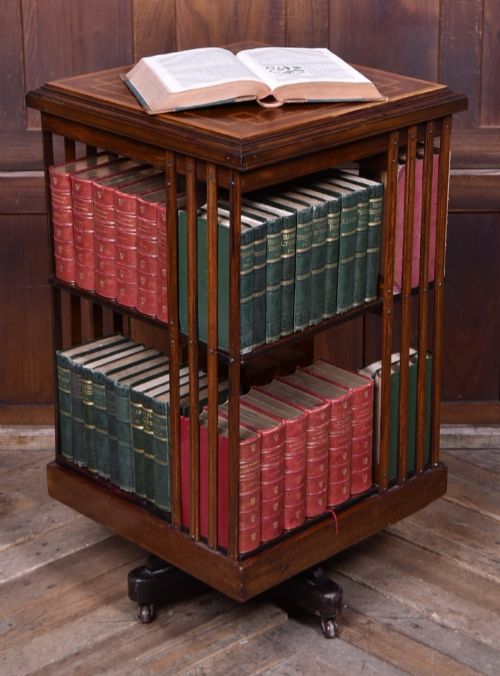
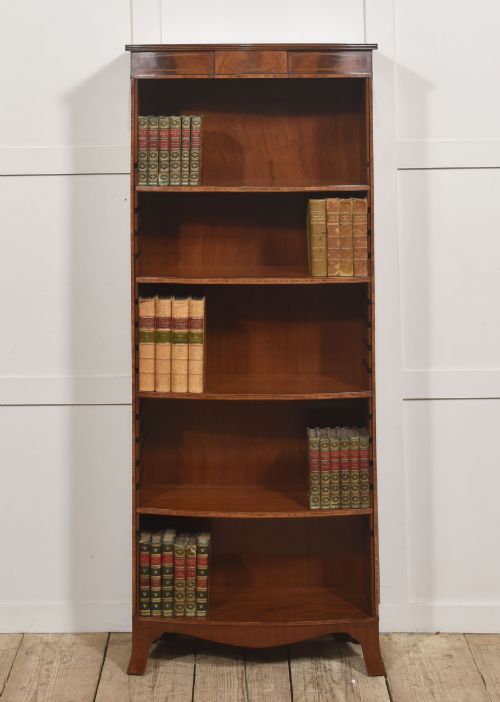
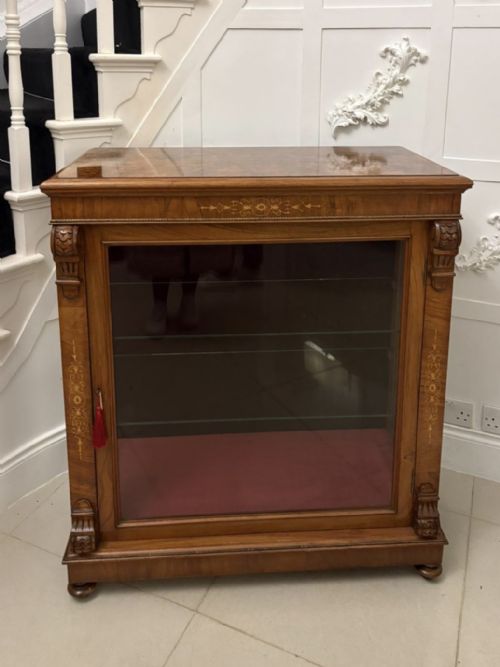
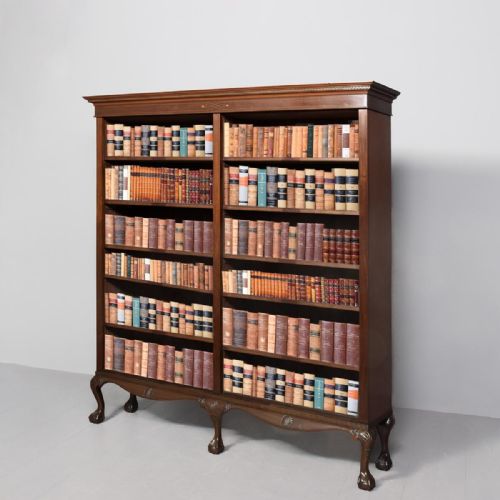
An inlaid wood bookshelf brings together functional storage and decorative craftsmanship, spanning periods from the early nineteenth century through the Edwardian era. You will encounter various forms on this page, including open bookcases, revolving designs, and corner cabinets suited for different domestic spaces.
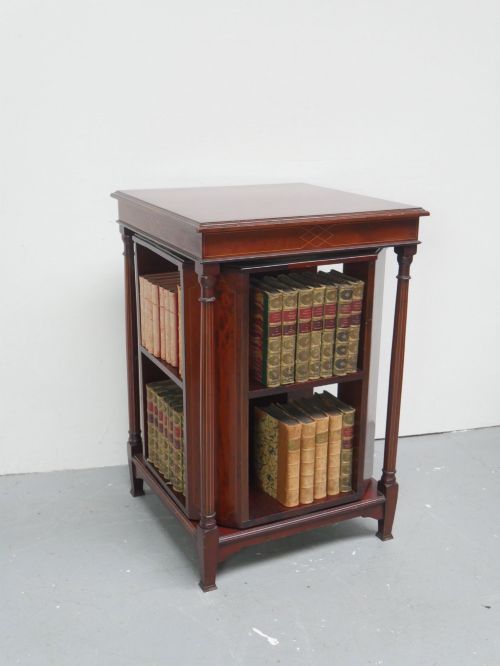
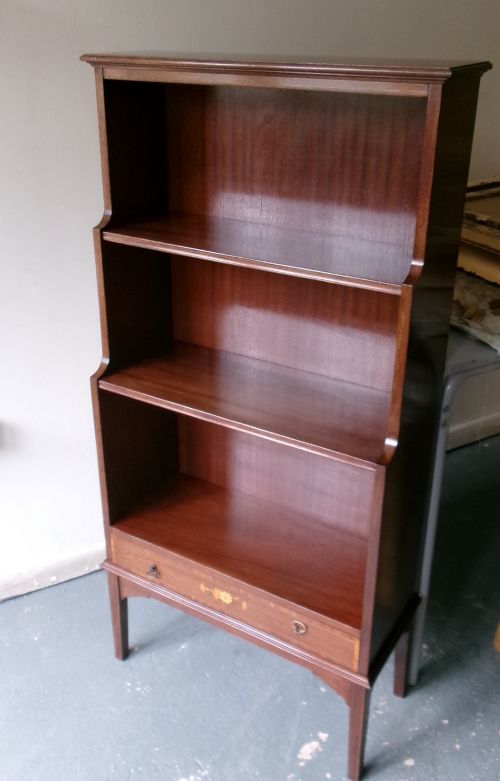
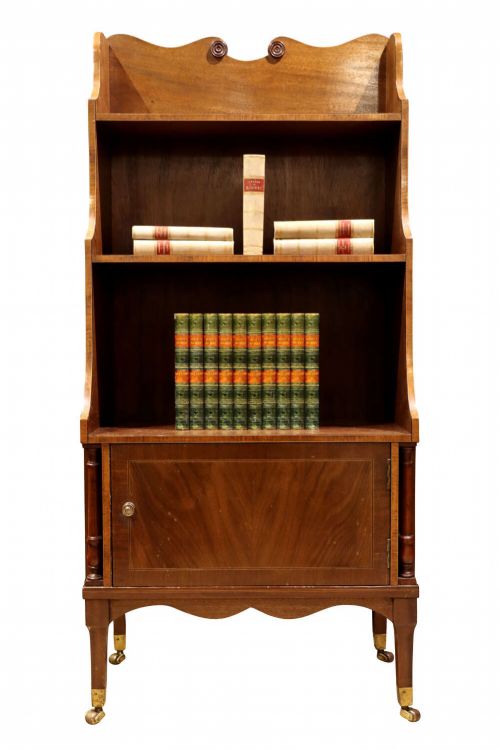
The Edwardian period and the late nineteenth century provide the largest number of examples here, predominantly fashioned in mahogany with delicate contrasting inlays. Buyers most frequently meet open shelves alongside revolving bookcases and waterfall tiers designed to hold modest volumes.
Several pieces incorporate glazed doors or lower cupboards beneath open shelving, whilst others adopt corner formats to maximise awkward spaces. Mahogany remains the dominant timber across these examples, often complemented by satinwood inlay and brass mounts.
Materials and construction
Cabinetmakers constructed these pieces primarily using solid and veneered mahogany, frequently selecting rosewood for more elaborate or compact examples. Timber panels received careful preparation before contrasting lines of satinwood inlay were hand-cut and fitted into recessed channels.
Metal components such as brass castors and decorative mounts support the mobility and structural detail of revolving and freestanding bookcases. Joinery relies on traditional techniques like dovetailing for drawers and secure housing joints for fixed or adjustable shelves.
Listings feature mahogany, rosewood, and satinwood timbers across Edwardian, Victorian, and Regency periods.
Assessing quality and execution
The crispness of the inlay work and the selection of timber grain distinguish standard production from finer examples. Uniformity in the satinwood stringing and the neatness of the mitred corners indicate the skill of the original workshop.
Proportion and stability matter greatly, particularly in revolving or taller waterfall formats where balanced weight distribution ensures smooth rotation and safe daily use. Superior pieces retain original brass hardware, uncompromised timber patination, and structurally sound joints.
The Inlaid Wood Bookshelf Glossary
- Inlay
- A decorative technique where pieces of contrasting timber or metal are inserted into recessed cavities in the primary wood surface to create flat patterns.
- Waterfall bookcase
- A tiered shelving unit where each successive shelf steps back from the one below it, creating a cascading profile popular in the nineteenth century.
- Revolving bookcase
- A compact shelving unit mounted on a concealed rotating pivot, allowing easy access to books from a stationary seating position.
- Satinwood
- A durable, lustrous tropical timber with a golden yellow colour, frequently utilised for contrasting stringing and banding on dark wood furniture.
- Stringing
- Thin lines of contrasting wood inlay used to outline panels, drawers, and shelves on cabinet furniture.
Inlaid Wood Bookshelf: Frequently Asked Questions
How do I date an Edwardian revolving bookcase?
Edwardian revolving bookcases typically date between the late nineteenth century and 1910, often displaying simpler satinwood inlay and lighter mahogany frames than their Victorian predecessors.
Examination of the turning mechanism beneath and the construction of the slatted sides helps confirm the period of manufacture.
Are these bookcases suitable for heavy books?
Open mahogany and rosewood bookcases provide sturdy shelving for standard volumes, though fixed shelf heights should be checked against larger volumes.
Revolving and waterfall variants suit lighter collections, paperbacks, and display items rather than heavy encyclopaedias.
What is the difference between an open bookcase and a cabinet?
Open bookcases provide direct, unhindered access to shelves from the front, whereas cabinet variants incorporate doors, glazed panels, or lower cupboards.
Many examples on this page combine open shelving above with enclosed cupboard space below for concealed storage.
How should I maintain inlaid wood surfaces?
Maintain inlaid wood surfaces by dusting regularly with a soft, dry cloth and avoiding placement near direct heat sources or strong sunlight.
Occasional application of appropriate wax polish preserves the lustre of the mahogany and protects delicate satinwood inlay.
Do corner cabinets fit standard room layouts?
Corner cabinets utilise unused wall junctions efficiently, making them practical for smaller rooms or dining spaces where floor space is limited.
Measuring the precise angle and depth ensures the cabinet sits flush against both intersecting walls.