




Inlaid Walnut Wall Mirrors
These inlaid walnut wall mirrors combine rich timbers with intricate marquetry to bring warmth and decorative depth to any room.
Inlaid Walnut Wall Mirrors
Inlaid walnut wall mirrors span several centuries of design, with Victorian and nineteenth-century examples appearing most frequently on this page. Pieces range from large overmantel mirrors to hanging wall mirrors and pier mirrors.
The selection includes specific regional and stylistic revivals such as William and Mary, George II style, Empire, and Aesthetic Movement designs. Makers utilised boxwood, mother-of-pearl, and varied wood veneers to create striking surface patterns.
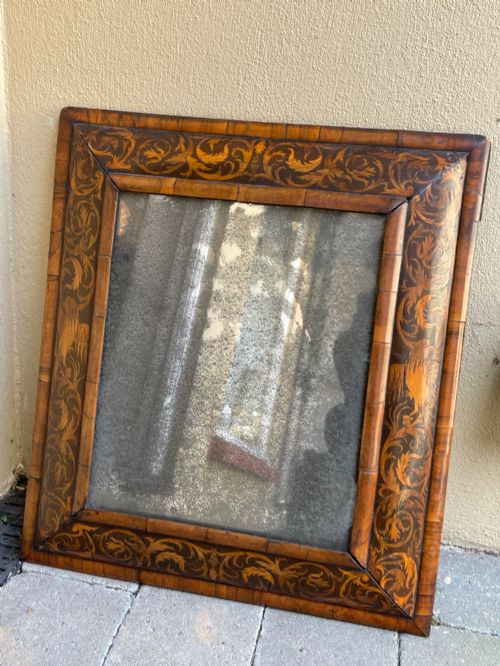
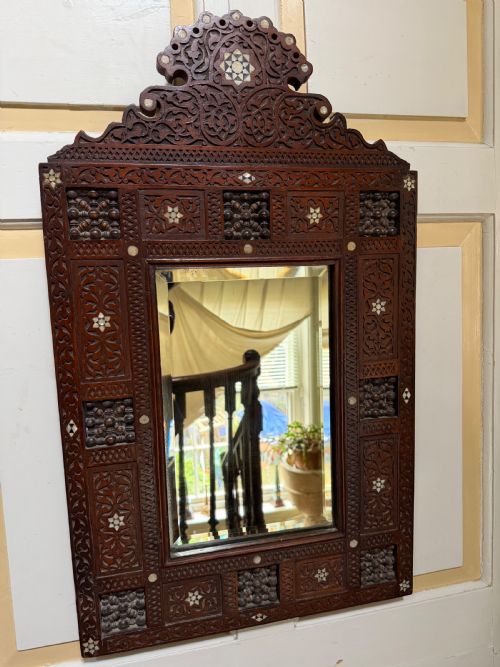
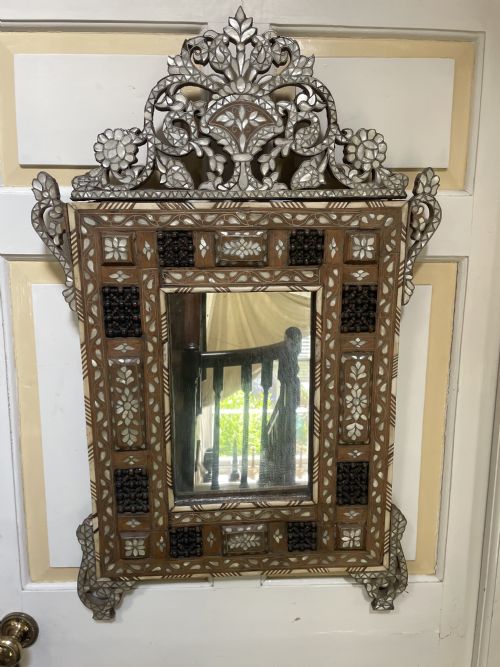
Earlier seventeenth-century examples showcase cushion frames and detailed marquetry work, whilst later nineteenth-century pieces incorporate brass detailing or burr walnut. Buyers frequently encounter diverse forms reflecting Ottoman, Islamic, and Dutch influences.
Materials and construction methods
Craftsmen built these mirrors using solid walnut and wood veneers applied to a secondary timber base. Wood inlay and boxwood elements were precisely cut and fitted into the surface to form geometric or floral marquetry.
Giltwood, gilt wood, and brass detailing frequently accent the walnut frames, while mother-of-pearl provides contrasting highlights on specific Victorian and Dutch pieces. Glass plates are set within these constructed frames, often accompanied by marble or ebonised components.
Some Victorian mirrors incorporate tiny wooden mosaics from Tunbridge Wells, turning small geometric scraps into miniature woodland artistry.
Markers of quality and craftsmanship
The fineness of the wood inlay and the complexity of the marquetry distinguish superior pieces from simpler utilitarian items. Crisp execution in the boxwood and veneer work reflects high technical skill by the maker.
The choice of timber grain, particularly burr walnut, and the integration of secondary materials like brass or mother-of-pearl dictate the visual richness of the frame. Original glass and well-preserved surface patination complete the assessment of a piece's standing.
The Inlaid Walnut Wall Mirrors Glossary
- Marquetry
- Decorative veneer work arranged in intricate patterns or pictures across the surface of the wood. This technique allows artisans to use different coloured woods and materials like boxwood to create detailed pictorial designs.
- Overmantel mirror
- A large wall mirror designed specifically to be hung above a fireplace mantel. These pieces often feature wider proportions to span the width of the fireplace surround.
- Burr walnut
- Wood taken from a walnut tree outgrowth, prized for its swirling, highly figured grain patterns. It provides exceptional visual texture when used as a veneer on mirror frames.
- Tunbridge ware
- Small-scale wooden mosaic woodwork produced in Kent, featuring tiny geometric tiles made from different natural woods. Victorian examples integrate this meticulous craft into the mirror frames.
Inlaid Walnut Wall Mirrors: Frequently Asked Questions
Where should I hang an overmantel mirror?
These large mirrors traditionally sit directly above a fireplace mantel to reflect light and anchor the room's proportions.
Ensure the wall fixings safely support the substantial weight of the timber and glass frame before installation.
How do I identify William and Mary mirrors?
William and Mary period pieces often feature cushion-moulded frames decorated with elaborate floral marquetry in walnut and boxwood.
They typically date from around the turn of the eighteenth century and display exceptional attention to veneer detail.
What is the difference between pier and wall mirrors?
Pier mirrors are specifically proportioned to hang on the narrow wall space situated between two windows or large architectural openings.
Standard wall mirrors have more flexible proportions and serve general decorative functions across any room.
How do I care for antique walnut frames?
Maintain the timber by keeping the mirror away from direct sunlight and sudden fluctuations in room temperature.
Apply suitable wax polish sparingly to nourish the walnut veneer and preserve the historic surface finish.
Are these mirrors suitable for modern interiors?
The rich tones of walnut and the intricate detail of wood inlay complement contemporary schemes by adding historical texture.
Their varied styles range from austere geometric designs to ornate Victorian overmantels that suit diverse domestic settings.