

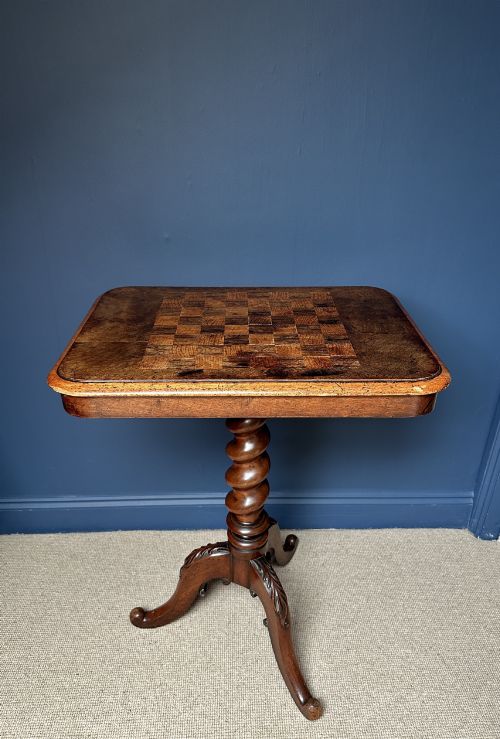


Inlaid Walnut Sewing Table
An inlaid walnut sewing table brings together domestic needlework and refined timber, built to serve as a functional piece of furniture and a decorative centrepiece.
Inlaid Walnut Sewing Table
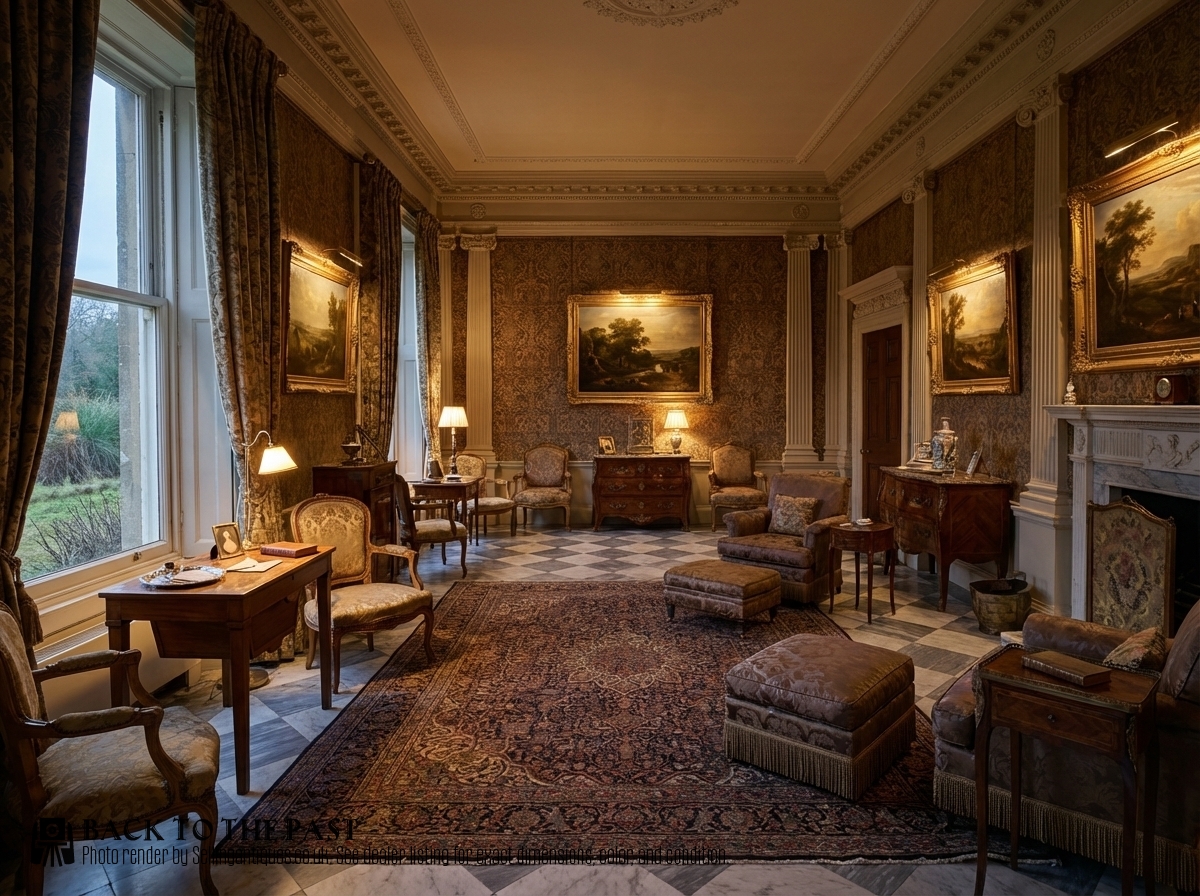
When searching for an inlaid walnut sewing table, buyers encounter multi-functional furniture designed primarily during the Victorian and Edwardian periods. These pieces frequently combine the functions of a work table, games table, and occasional surface.
The most common examples on this page date from the mid-to-late nineteenth century and utilise walnut or burr walnut timber. Many feature fitted interiors, folding tops for chess or backgammon, and drop bags for sewing materials.
How they were made
Cabinet makers constructed the carcases using walnut and highly figured burr walnut veneers over secondary timbers. Surfaces were frequently embellished with wood inlay, marquetry, and Tunbridge work detailing.
Metal mounts in brass and ormolu often accented key areas such as hinges, escutcheons, and borders. Boxwood was regularly employed for contrasting stringing and geometric inlay patterns.
What varies in quality
The sophistication of the marquetry and wood inlay sets the finer examples apart from standard production pieces. Crisp execution in floral or geometric motifs indicates superior craftsmanship.
The figuring of the burr walnut veneer and the complexity of the internal fittings, such as partitioned work boxes and integrated games boards, define the higher tiers of the range.
Waring and Gillow
The Inlaid Walnut Sewing Table Glossary
- Burr walnut
- Timber taken from a tree growth where the grain has swirled into intricate patterns. It produces highly decorative veneers used on the main surfaces of these tables.
- Marquetry
- The art of applying pieces of veneer to a structure to form decorative designs and pictures. It differs from simple inlay by covering the entire surface in a mosaic.
- Trumpet table
- A form of sewing table featuring an octagonal or cone-shaped body widening towards the base, resembling the bell of a musical instrument. They often stand on carved tripod legs.
- Tunbridge work
- A form of woodworking involving small mosaic tiles made from different coloured woods to create geometric or floral motifs. It is frequently found on nineteenth-century work boxes.
- Poudreuse
- A type of French dressing or vanity table equipped with a mirror and internal compartments. These pieces occasionally overlap in form with nineteenth-century work tables.
Inlaid Walnut Sewing Table: Frequently Asked Questions
What is inside an inlaid walnut sewing table?
These tables typically contain fitted compartments, small wooden lidded boxes, and shallow trays designed to hold cottons, needles, and pins. Many also include a hanging fabric bag beneath for wool and unfinished needlework.
More elaborate examples incorporate folding lids that reveal integrated boards for chess, backgammon, or card games, combining utilitarian needlework storage with leisure activities.
How do I date an inlaid walnut sewing table?
Dating relies heavily on stylistic markers, timber choice, and construction methods. The vast majority originate from the Victorian period, spanning from the eighteen-fifties through to the eighteen-eighties, marked by the use of burr walnut and marquetry.
Edwardian examples tend to feature lighter satin walnut and simpler inlaid borders. French pieces from the same eras often adopt Louis XV or Louis XVI revival styles with distinct ormolu mounts.
Were these tables only used for sewing?
Despite their primary designation as work or sewing tables, Victorians utilised them for multiple purposes. The folding tops frequently doubled as writing surfaces or tables for board games.
Smaller octagonal and trumpet forms also functioned successfully as occasional lamp tables or decorative side pieces in nineteenth-century sitting rooms.
What is the difference between inlay and marquetry?
Inlay involves inserting pieces of contrasting wood into recessed cavities carved directly into the solid timber or veneer background. It is often seen as simple geometric lines or stringing.
Marquetry covers the entire surface with assembled veneer pieces forming pictorial or scrollwork designs. Both techniques appear frequently on walnut sewing tables from this era.