
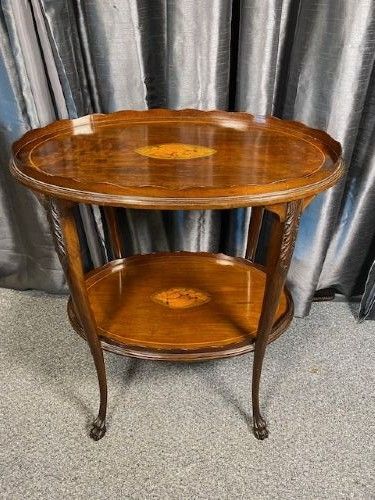


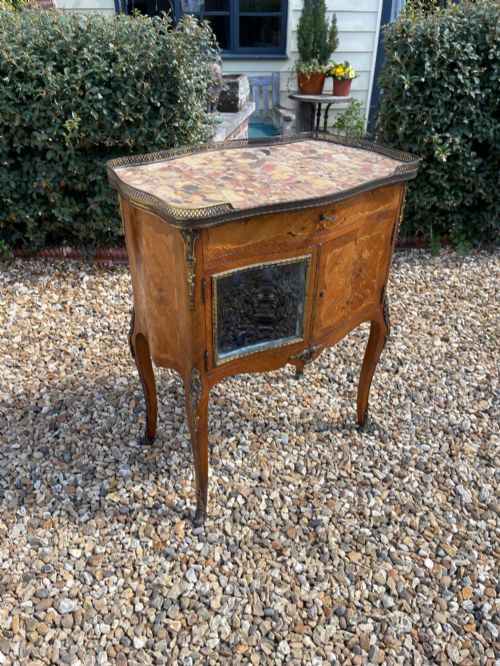


Inlaid Walnut Display Table
These inlaid walnut display table pieces combine timber and glass to show off small treasures in the drawing room.
Inlaid Walnut Display Table
An inlaid walnut display table brings together glazed surfaces and rich timber work designed for showing off cherished objects. When you search for an inlaid walnut display table, you encounter forms from the Victorian and Edwardian eras, spanning occasional tables, etageres, and cabinets.
The pieces on this page lean heavily towards French Rococo Revival, Napoleon III, and Italian influences alongside British Victorian examples. They appear as octagonal bijouterie tables, oval window tables, and multi-tiered étagères intended for parlour display.
Materials and construction
Makers built these tables using walnut and burr walnut as the primary timber, often enhanced by satinwood and other exotic wood veneers. Marquetry inlay creates floral and geometric patterns across the top surfaces and tiers.
Brass mounts, ormolu, and gilt metal enrich the structural lines, while glass panels protect the contents of the display sections. Joinery combines traditional cabinet-making methods with decorative metalwork to support multi-tiered étagères and glazed cabinets.
Listings feature Victorian and Edwardian pieces, utilising walnut, brass, marquetry inlay, satinwood, glass, burr walnut, and ormolu.
Markers of quality
Quality rests in the crispness of the marquetry inlay and the selection of figured burr walnut veneers. Superior examples display precise brass or ormolu mounts that integrate smoothly with the timber frame.
The sophistication of the silhouette defines the upper tier of these pieces, from shaped octagonal tops to multi-tiered étagères with balanced proportions. Attention to detail on secondary woods and interior glazing further separates standard production from finer workshop output.
The Inlaid Walnut Display Table Glossary
- Marquetry Inlay
- Decorative patterns formed by fitting small pieces of veneer into a prepared wood surface. This technique creates the intricate floral and geometric designs seen across the tabletops.
- Burr Walnut
- Wood taken from a walnut tree growth featuring swirling, knotted grain patterns. It provides a highly decorative surface for table tops and cabinet fronts.
- Ormolu
- Gilded bronze ornamentation applied to furniture mounts and feet. It adds metallic contrast to the dark walnut timber.
- Étagère
- A piece of furniture consisting of open shelves for displaying small objects. These tiered stands appear frequently in French and Victorian designs.
- Bijouterie Table
- A glass-topped table specifically designed for displaying jewellery and small trinkets. The glazed compartment keeps items visible while protected.
Inlaid Walnut Display Table: Frequently Asked Questions
What is an inlaid walnut display table used for?
These pieces served in nineteenth-century drawing rooms to exhibit small collections of porcelain, medals, and jewellery beneath glass tops or upon open tiers.
They allowed hosts to display their refined taste and conversational curiosities to visiting guests.
How do I date an inlaid walnut display table?
Dating relies on identifying stylistic markers such as Victorian proportions, Edwardian revival details, or French Napoleon III influences recorded in the piece.
Construction methods, timber selection, and the style of brass or ormolu mounts also point towards specific decades between the mid nineteenth and early twentieth centuries.
Where should I place this table at home?
An inlaid walnut display table suits a drawing room, hallway, or study where natural light highlights the marquetry and glass.
Keep them away from direct sunlight and heat sources to protect the delicate wood veneers and historic finishes.