


Inlaid Walnut Dining Table
An inlaid walnut dining table brings warmth and intricate pattern into a room, joining nineteenth-century craftsmanship with enduring utility.
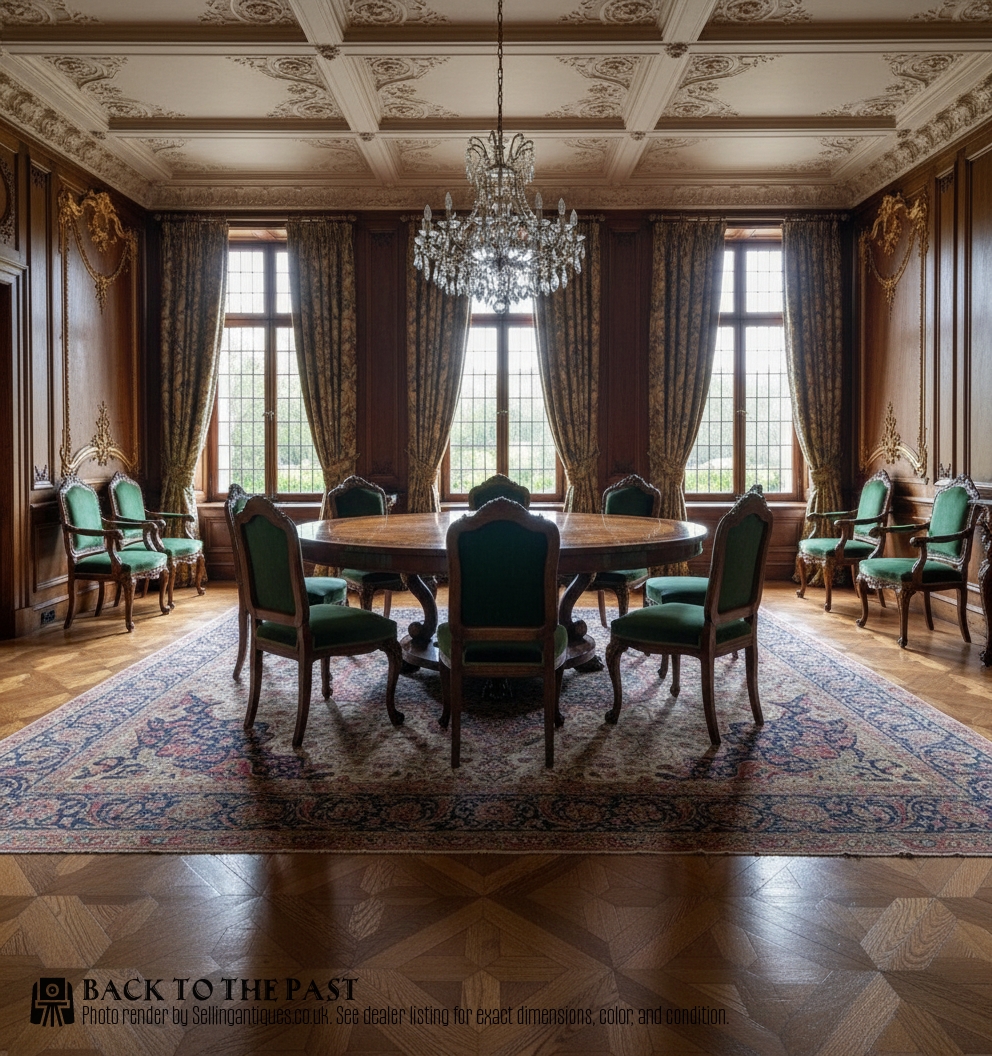
Inlaid Walnut Dining Table
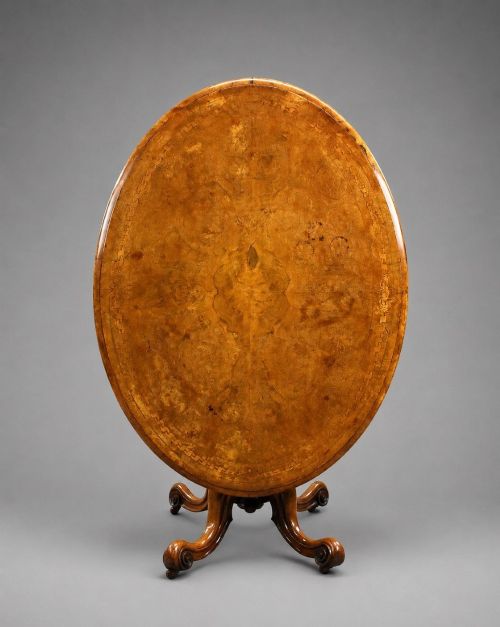
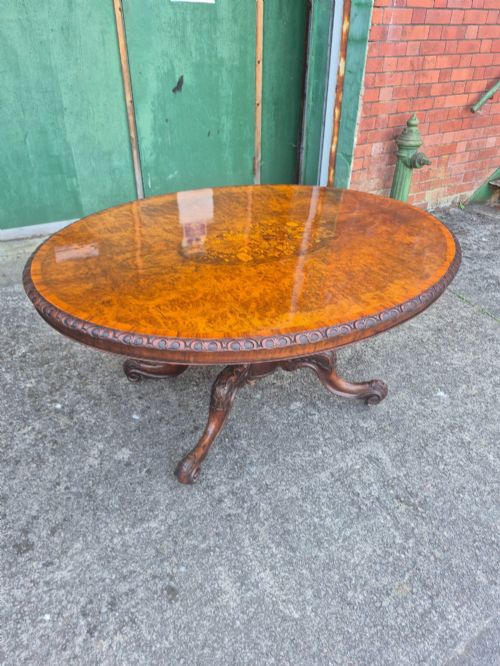
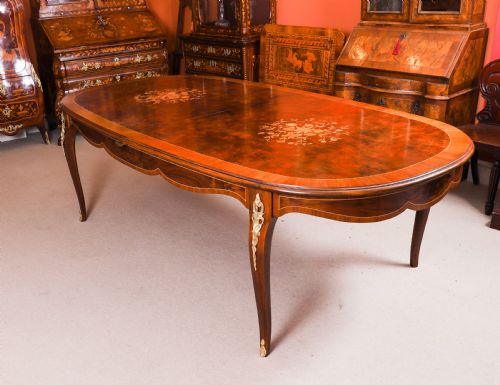
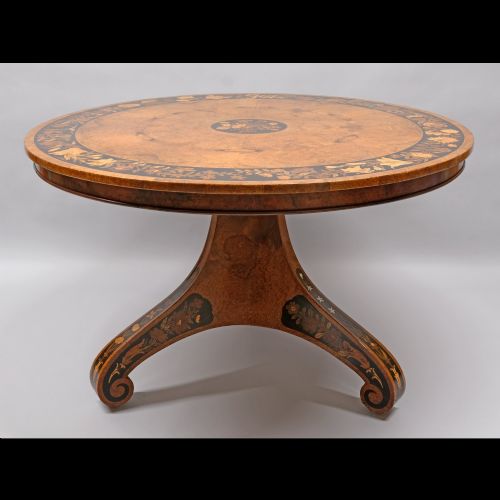
An inlaid walnut dining table unites rich timber grounds with decorative floral or geometric motifs, serving as both a functional surface and a focal point. Buyers seeking an inlaid walnut dining table will frequently encounter nineteenth-century Victorian examples, often configured as loo tables, breakfast tables, or large oval formats.
The surviving pieces bridge formal dining and drawing room display, frequently incorporating tilt mechanisms or pedestal bases. Many items recorded in the evidence cross over between centre tables and dining tables, reflecting the adaptable room layouts of the period.
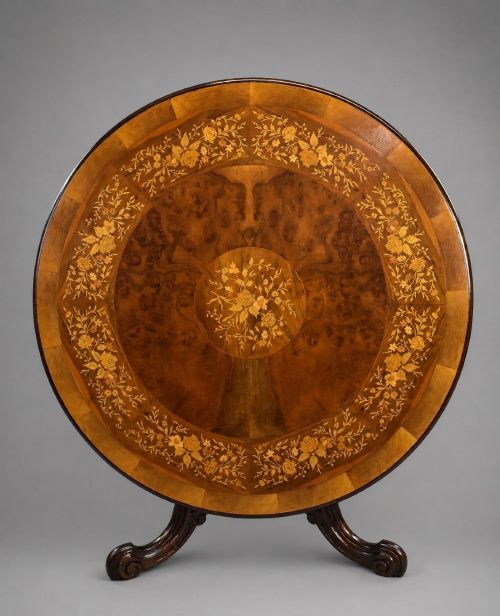
Originating predominantly from Victorian and Edwardian workshops, these tables demonstrate the era's preference for figured woods and ornamental surface decoration. The typical form encountered on this page combines a walnut or burr walnut primary timber with contrasting lighter woods arranged in intricate marquetry.
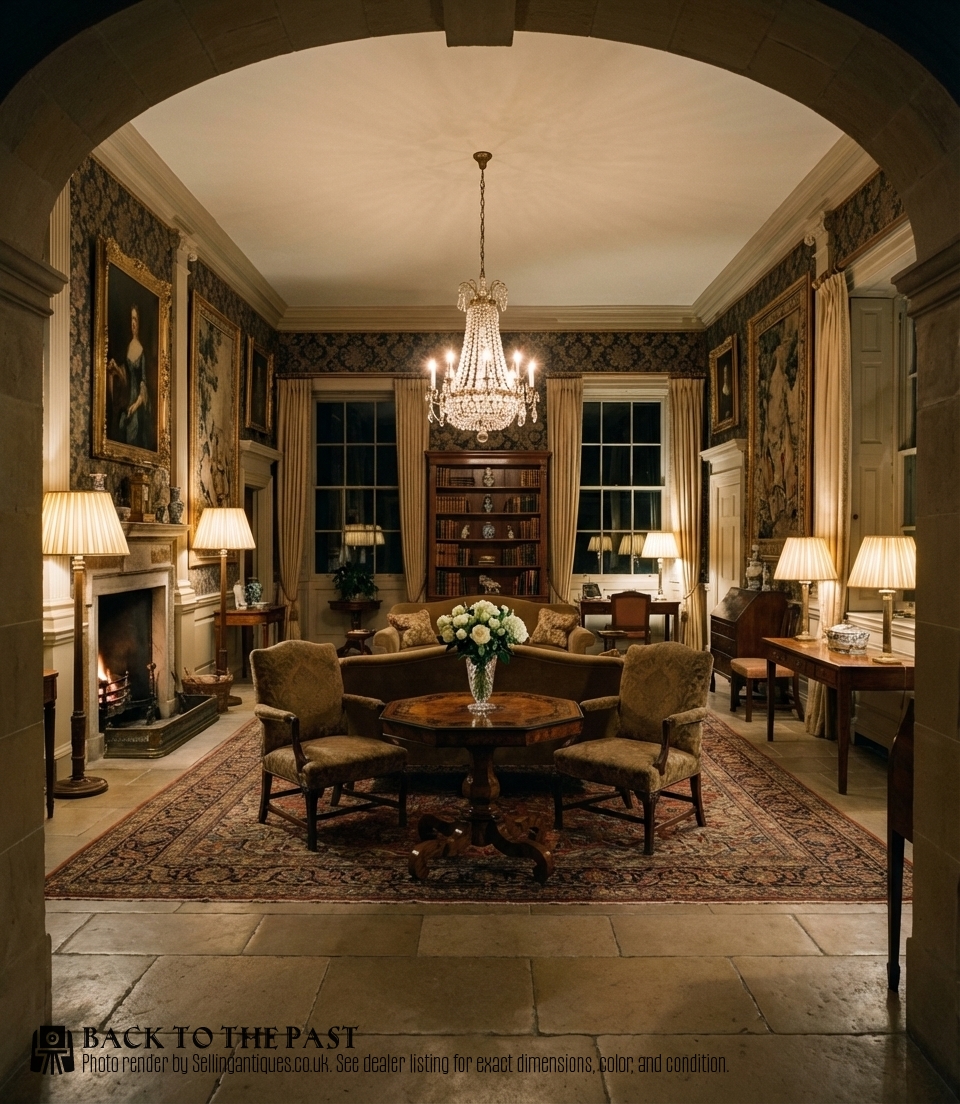
How They Were Made
Cabinet makers utilised figured walnut and burr walnut veneers applied over solid secondary timbers to create highly decorative top surfaces. The distinct swirling grain patterns of burr walnut formed the primary field for detailed ornamental work.
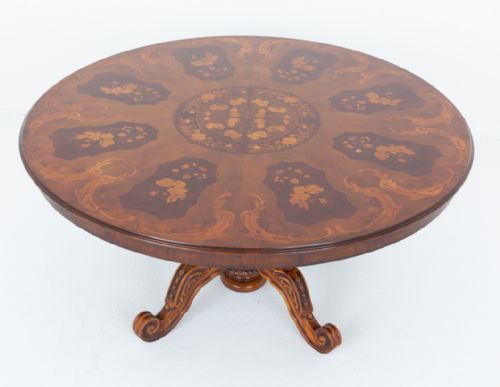
Surface decoration relies on marquetry inlay and boxwood or fruitwood inlay, often combined with brass accents or ormolu mounts on more ornate revival pieces. Craftsmen cut contrasting timbers precisely into the veneer to form floral scrolls, musical themes, and geometric banding.
Structural stability was achieved through substantial timber framing beneath the veneered top, supporting tilt-top mechanisms, snap-top action, or central pedestal columns. Joinery techniques from the nineteenth century ensured that large timber panels could expand and contract without splitting the delicate inlay work.
Inlaid Walnut Dining Table Retail Price Guide 2026
Typical asking prices for inlaid walnut dining table among the pieces listed under this phrase on Sellingantiques today, from the lower quarter to the upper quarter. They describe what is for sale here now, not the wider market.
Object forms span centre tables, breakfast tables, tilt-top tables, and large extendable dining formats.
What Varies in Quality
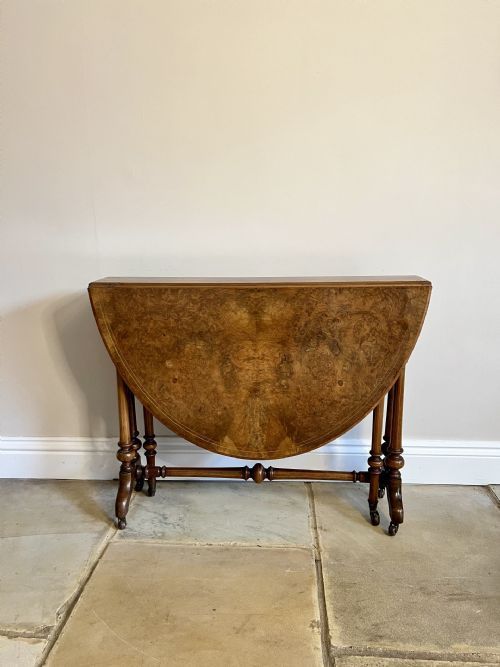
The visual impact of an inlaid walnut dining table depends heavily on the choice and matching of the burr walnut veneer across the top. Finer examples display symmetrical grain patterns and dense, crisply executed marquetry rather than sparse or mechanically stamped decoration.
Execution of the inlay distinguishes workshop output, with superior pieces showing tight joints between the contrasting woods and delicate shading achieved through hot sand scorching. The complexity of the design, such as elaborate musical or floral motifs, points directly to the ambition of the maker.
Substructural integrity and original mechanisms, including tilt-top catches and pedestal carving, determine the overall execution standard. Tables retaining crisp carved details on the walnut bases alongside well-preserved marquetry represent the upper tier of surviving stock.
Holmes Baldock·John Kendal·Holland Sons
The Inlaid Walnut Dining Table Glossary
- Burr Walnut
- A specialised veneer sliced from the woody growths on walnut trees, prized for its swirling, highly figured grain patterns. It forms the primary visual field for many nineteenth-century table tops.
- Marquetry Inlay
- The art of applying pieces of veneer to a structural panel to form decorative patterns, pictures, or ornamental scrolls. Craftsmen use contrasting timbers like boxwood and fruitwood against the dark walnut background.
- Loo Table
- A nineteenth-century round or oval table designed for the card game loo, featuring a tilt-top mechanism for convenient storage when not in use. These versatile tables frequently double as dining surfaces in modern homes.
- Tilt Top Table
- A table constructed with a hinged mechanism allowing the top to pivot vertically against the pedestal base. This innovation saved valuable floor space in Victorian interiors.
- Cross Banding
- A border technique where veneer strips are laid perpendicular to the grain of the main table top, framing the central marquetry panel. This adds a refined architectural boundary to the design.
Inlaid Walnut Dining Table: Frequently Asked Questions
Can I use an antique inlaid table every day?
These tables were built for daily domestic life in the nineteenth century and remain sturdy enough for regular use today. Simple precautions like using heat mats and coasters will protect the French polished surface from marks.
The underlying construction of solid timber and secure pedestals ensures structural reliability. Treating the walnut with appropriate care preserves the delicate inlay for future generations.
How do I care for burr walnut veneer?
Burr walnut requires stable indoor humidity levels to prevent the timber and its underlying veneers from drying out or shifting. Routine dusting with a soft, dry cloth is sufficient for daily maintenance.
Occasional application of traditional beeswax helps nourish the wood and maintain the lustre of the polish. Direct sunlight should be avoided to prevent the walnut tones from fading over time.
How do I distinguish Victorian from Edwardian examples?
Victorian tables typically exhibit heavier proportions, darker walnut tones, and rich, densely packed marquetry or burr walnut surfaces. They frequently incorporate elaborate pedestal carvings and functional tilt-top mechanisms.
Edwardian pieces often display lighter wood tones, more restrained inlay work, and slightly more delicate structural lines. Examining the construction methods and the specific style of the marquetry helps confirm the period of manufacture.