







Inlaid Walnut Breakfast Table
An inlaid walnut breakfast table combines rich timber figuring with precise decorative detail, offering a striking centrepiece for any room.
Inlaid Walnut Breakfast Table
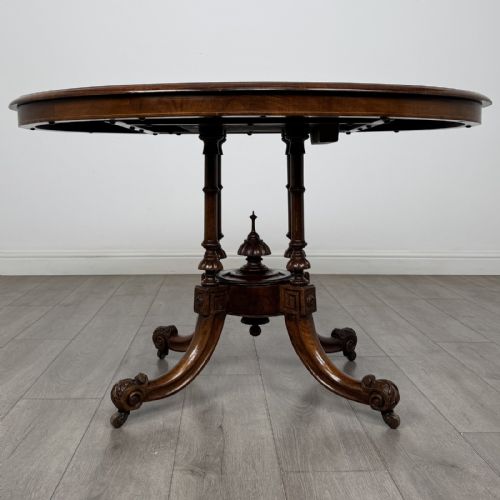
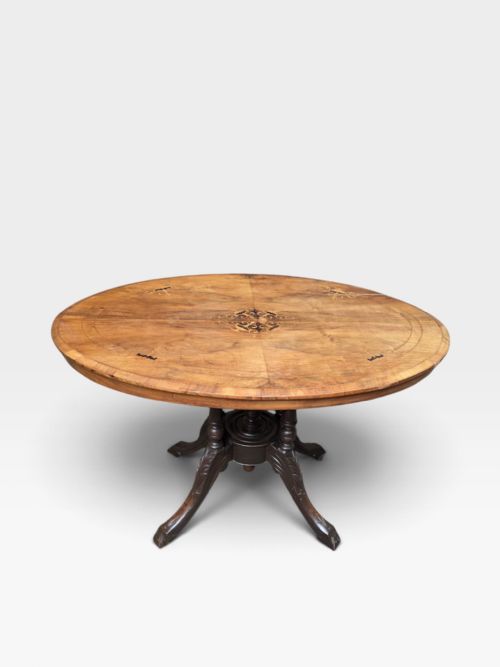
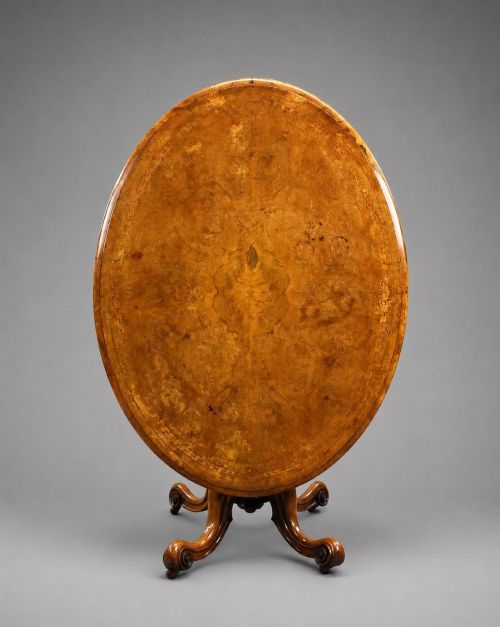
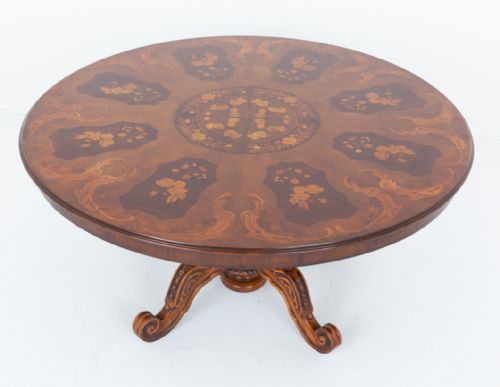
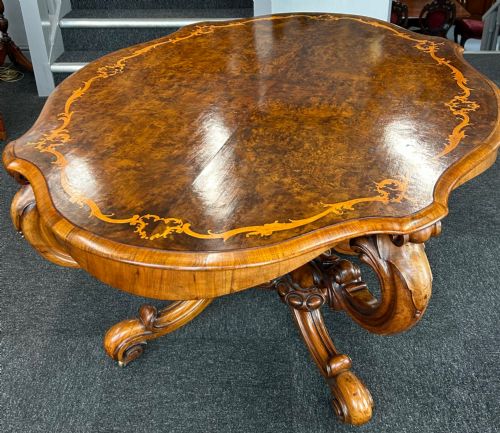
An inlaid walnut breakfast table is typically encountered as a Victorian piece, spanning periods from the mid-nineteenth century to the early twentieth century. These tables appear in round and oval forms, frequently incorporating tilt-top or snap-top mechanisms designed to save space when not in use. Buyers most often meet examples constructed during the 1860s, a decade well represented by both current inventory and archive records.
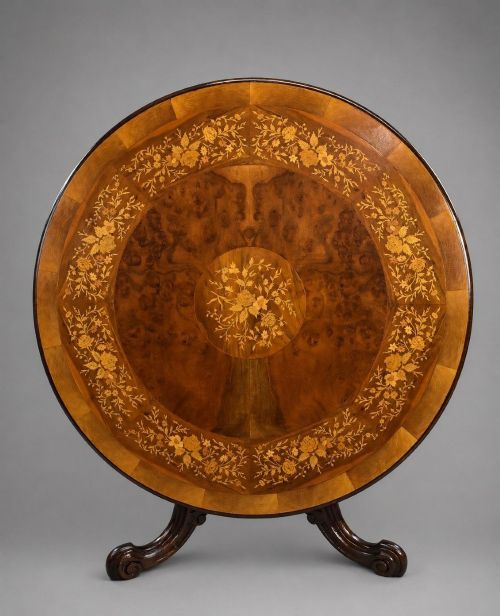
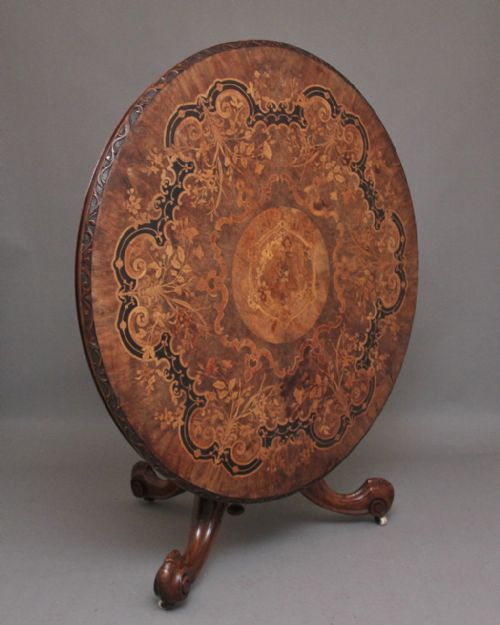
The selection here encompasses related forms such as loo tables, centre tables, and dining tables alongside traditional breakfast tables. Makers utilised pedestals, sometimes carved, to support the substantial timber tops. The inclusion of marquetry and wood inlay distinguishes these functional domestic pieces from plain timber alternatives.
Judging quality and execution
The distinction between standard examples and the finest pieces lies in the precision of the marquetry and the depth of the timber figuring. Superior tables exhibit tightly fitted boxwood and fruitwood inlays with sharp lines and minimal filler. The choice of burr walnut veneer also dictates the visual impact, with richly patterned surfaces commanding greater appreciation.
Underpinning the top, the stability of the tilt mechanism and the carving work on the central pedestal reveal the maker's competence. Higher quality tables maintain rigid alignment when locked flat, whereas lesser pieces may show looseness in the pivot hardware.
Inlaid Walnut Breakfast Table Retail Price Guide 2026
Typical asking prices for inlaid walnut breakfast table among the pieces listed under this phrase on Sellingantiques today, from the lower quarter to the upper quarter. They describe what is for sale here now, not the wider market.
Some tilt mechanisms still tilt slightly to one side, reminding you that human hands shaped the pivot over a century ago.
John Kendal
The Inlaid Walnut Breakfast Table Glossary
- Burr walnut
- A specialised timber veneer harvested from tree growths, producing intricate and swirling grain patterns. It forms the primary visual surface on many Victorian tables.
- Marquetry
- The art of applying pieces of veneer to a structure to form decorative patterns and pictures. Craftsmen used various woods to achieve tonal contrast.
- Tilt-top
- A mechanical arrangement allowing the table surface to swivel from horizontal to vertical. This function allowed tables to be stored against walls when not in use.
- Crossbanding
- A border of veneer laid around the perimeter of a table top so that the grain runs perpendicular to the centre. This technique frames the central marquetry or figuring.
- Loo table
- A large nineteenth-century round or oval table originally used for card games such as loo. These share similar pedestal and tilt-top construction with breakfast tables.
Inlaid Walnut Breakfast Table: Frequently Asked Questions
How do I distinguish a breakfast table from a loo table?
Breakfast tables and loo tables share very similar forms, including pedestal bases and tilting mechanisms, often making them functionally interchangeable today. Historically, loo tables were sized specifically for evening card games.
Both types appear frequently in nineteenth-century walnut with inlaid decoration, serving as versatile centre tables in modern interiors.
How do I care for burr walnut veneer?
Burr walnut veneer requires protection from direct sunlight and extreme humidity changes to prevent the timber from drying and the glue from failing. Regular dusting with a soft, dry cloth maintains the finish without moisture damage.
Avoid placing hot items or liquids directly onto the polished surface to preserve the delicate boxwood and fruitwood inlay.
What period do these tables come from?
The majority of these tables date from the Victorian era, particularly around the 1860s when burr walnut and marquetry reached peak popularity. Edwardian examples from the late nineteenth and early twentieth centuries also appear.
Identifying marks, construction methods, and hardware styles help confirm these nineteenth-century origins.