




Floral Inlay Round Table
A floral inlay round table brings warmth and intricate botanical detail into a room, offering a versatile surface shaped by Victorian, Edwardian, and later makers.
Floral Inlay Round Table
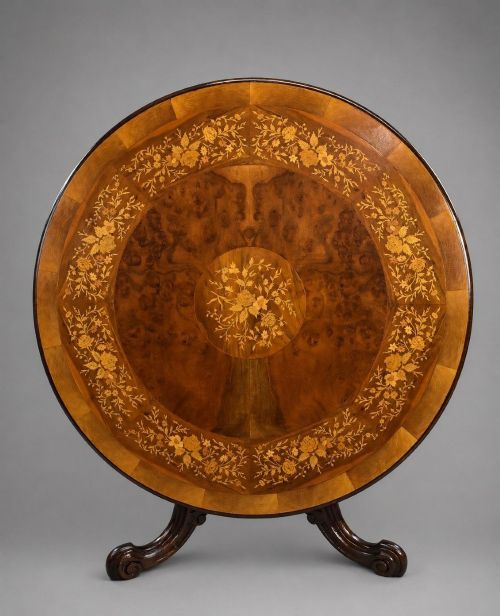
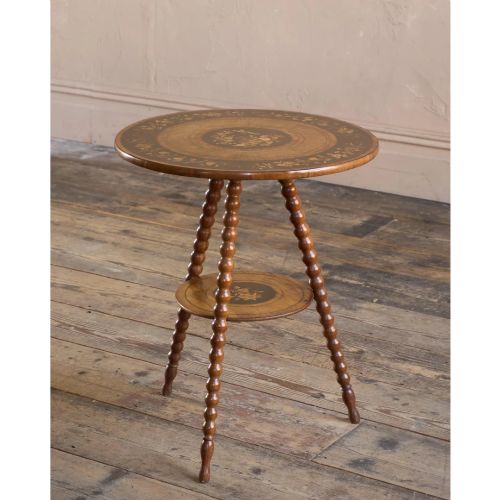
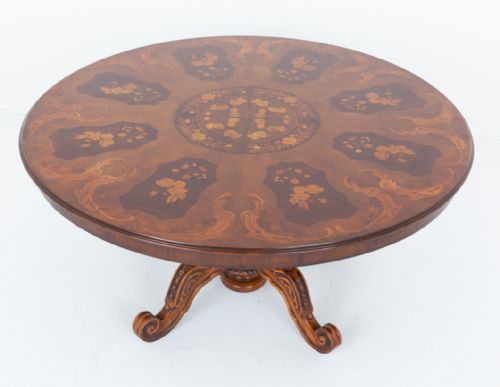
A floral inlay round table brings together circular wooden tops and detailed botanical decoration across various historical periods. These pieces appear most frequently as Victorian or Edwardian centre tables, occasional tables, and breakfast tables.
Makers shaped these tables in forms ranging from compact occasional pieces to large dining and breakfast tables. The selection on this page shows walnut, burr walnut, and rosewood foundations built for central placement in a room.
The design spans straightforward nineteenth-century examples and ornate continental revivals such as Louis XVI style gueridons. Buyers encounter variations in proportion and timber choice while exploring these circular formats.
Construction and Materials
Cabinet makers constructed these tables using solid timber frames and applied veneers of walnut, burr walnut, rosewood, and kingwood. These rich timbers provided stable background surfaces for decorative work.
Craftsmen created the characteristic floral motifs using marquetry and wood inlay techniques, often incorporating boxwood and brass details. These contrasting elements formed detailed botanical patterns across the circular tops.
Floral Inlay Round Table Retail Price Guide 2026
Typical asking prices for floral inlay round table among the pieces listed under this phrase on Sellingantiques today, from the lower quarter to the upper quarter. They describe what is for sale here now, not the wider market.
Periods represented on this page range from Victorian and Edwardian eras back to the wider nineteenth century.
Evaluating Quality
The quality of a floral inlay round table depends upon the precision of the marquetry and the choice of underlying timber. Burr walnut and rosewood foundations with crisp, finely cut floral motifs represent the higher end of the range.
Construction methods and timber selection determine structural integrity over time. Pieces that maintain flush surfaces and tightly fitted veneers demonstrate superior craftsmanship compared to simpler or more utilitarian builds.
The Floral Inlay Round Table Glossary
- Marquetry inlay
- Decorative patterns formed by fitting small pieces of veneer into a prepared wooden ground to create pictorial designs.
- Burr walnut
- Timber taken from the gnarled growths of walnut trees, prized for its swirling, highly figured grain patterns.
- Centre table
- A freestanding table designed to be viewed from all sides and placed in the middle of a room.
- Gueridon
- A small ornamental table, often French in origin, dating back to the seventeenth century and revived in later periods.
- Occasional table
- A small, light table intended for general use in sitting rooms and halls.
Floral Inlay Round Table: Frequently Asked Questions
Where do you place a round centre table?
These tables find their traditional home in the middle of a room where they can be viewed from all sides. They work effectively as focal points in large hallways or drawing rooms.
Smaller occasional versions fit easily beside seating areas or against walls while retaining their decorative circular top.
How do I identify a Victorian table?
Victorian examples often feature rich timbers like burr walnut or rosewood combined with dense marquetry floral patterns. Construction dates typically span the mid to late nineteenth century.
Stylistic cues include turned legs, substantial centre pedestals, and revival influences such as Louis XVI details.
What is the difference between inlay and marquetry?
Inlay involves fitting pieces of wood into cavities carved directly into a solid timber base. This creates a recessed design flush with the surrounding surface.
Marquetry assembles entire pictures or patterns from veneers on a paper backing before gluing the complete sheet to the table top.
Can these tables be used for dining?
Larger circular examples, particularly those designated as breakfast or dining tables, offer generous surface area for meals. Their pedestal bases provide ample legroom around the perimeter.
Occasional and centre tables are generally built lighter and lower, making them better suited for display rather than dining.