




Inlaid Timber Cabinet
An inlaid timber cabinet brings warmth and intricate detail to a room, combining fine joinery with decorative surface patterns.
Inlaid Timber Cabinet
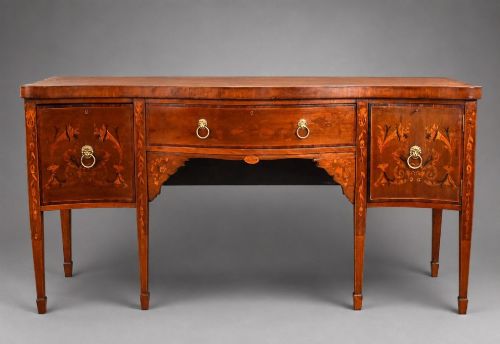
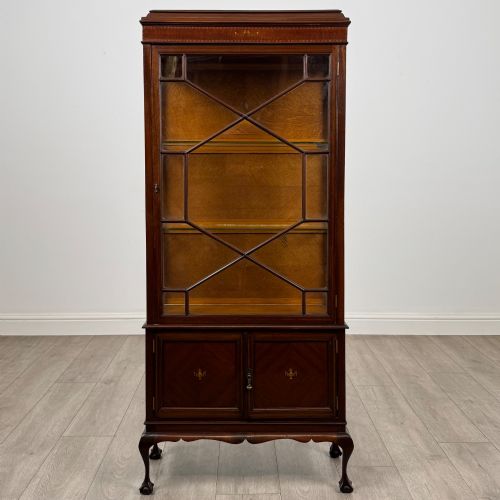
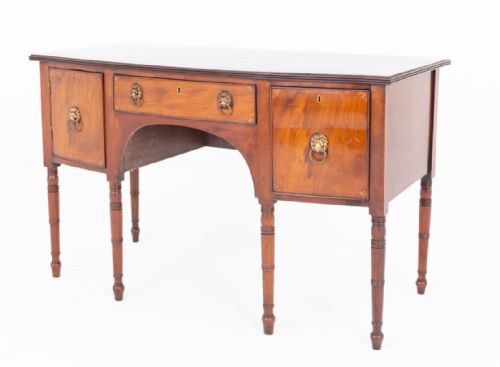
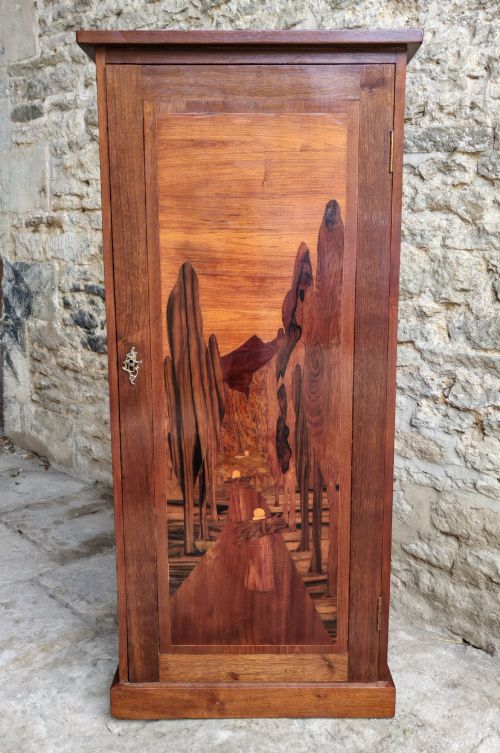
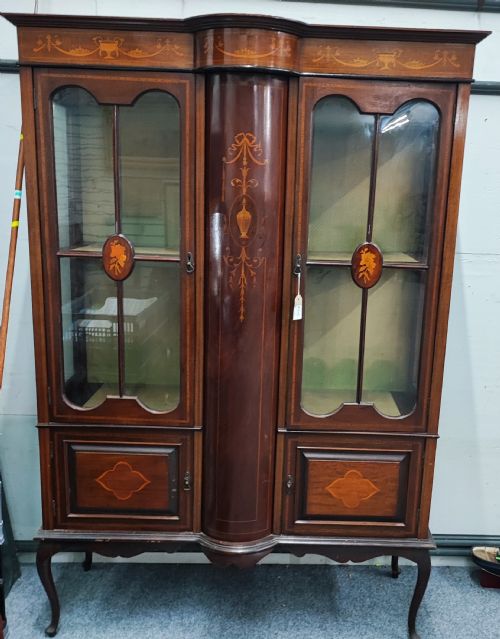
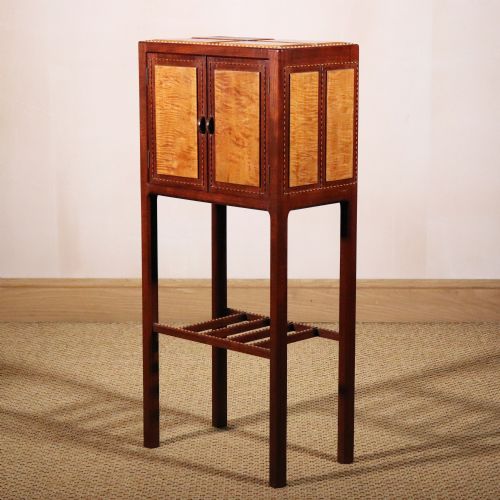
An inlaid timber cabinet is a piece of case furniture adorned with contrasting woods, brass, or other materials set into the primary surface. When searching for an inlaid timber cabinet, buyers encounter forms ranging from compact bedside cupboards and display cabinets to large Georgian and Victorian sideboards.
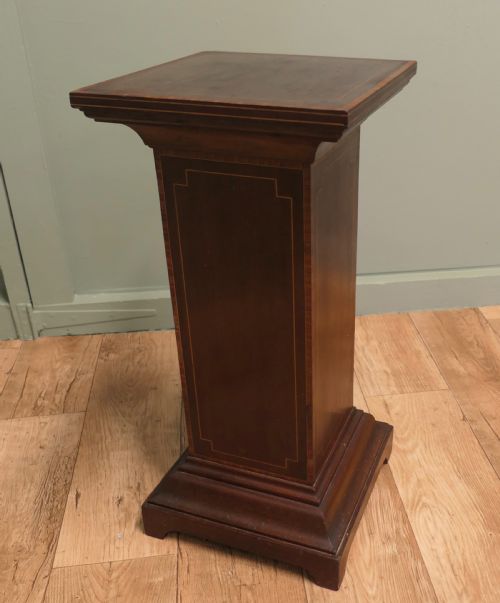
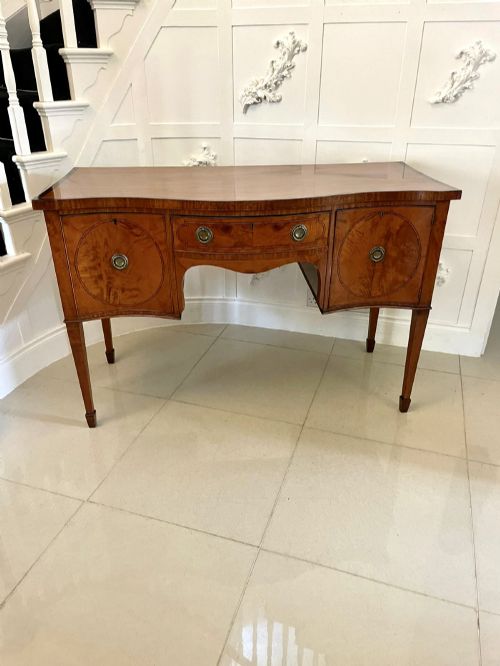
The pieces appearing on this page span several centuries, including Georgian, Victorian, and Edwardian periods. Sideboards, side cabinets, and display cabinets dominate the selection, often utilising traditional timbers such as mahogany, satinwood, and walnut.
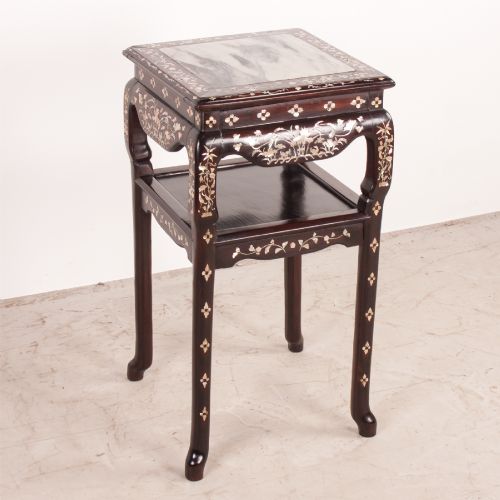
Origins vary across English, French, Chinese, and Dutch workshops, showing regional preferences for specific inlay motifs and wood types. Buyers frequently find serpentine fronts, satinwood banding, and marquetry panels among these diverse examples.
Materials and Construction
Cabinet makers built these pieces using solid and veneered timbers such as mahogany, rosewood, satinwood, and kingwood over sturdy carcases. Woods like boxwood and ebony provided sharp colour contrast for fine stringing and geometric borders.
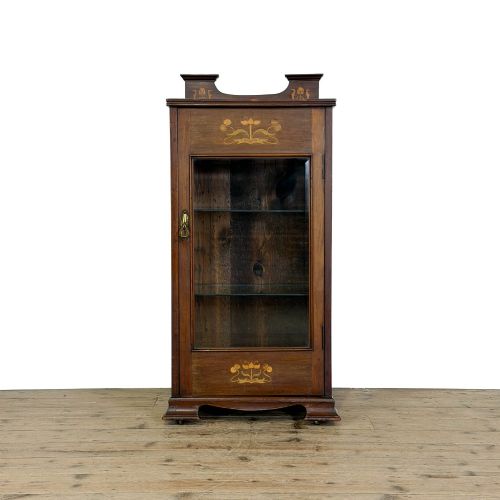
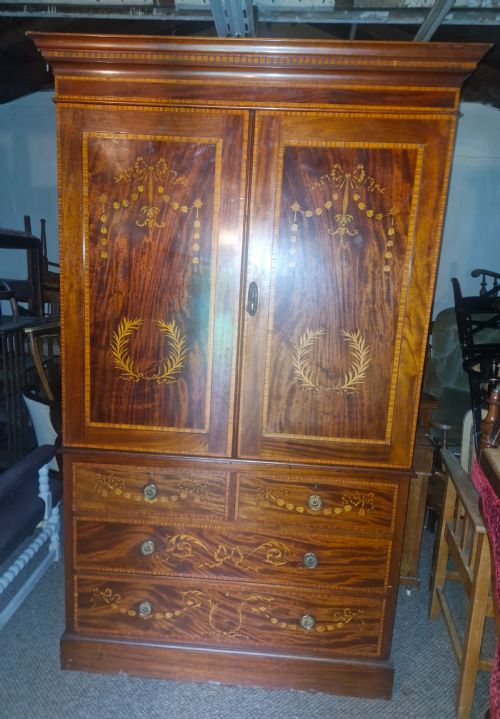
Inlay techniques included marquetry for pictorial and floral designs, and bandings that framed drawer fronts and cupboard doors. Craftsmen also integrated brass mounts, glass panels, and occasionally marble tops to finish the construction of these storage pieces.
Form categories range from large serpentine sideboards and linen presses down to compact bedside cupboards and wall-hanging corner units.
Assessing Quality
Quality rests heavily on the precision of the cabinet work and the crispness of the inlay. Tight joints, well-fitted drawers, and intact timber without excessive shrinkage separate superior pieces from simpler utilitarian items.
The choice of primary wood and the complexity of the decorative marquetry or banding also distinguish standard production from exceptional examples. Finer pieces demonstrate careful grain matching and harmonious integration of contrasting timbers across the entire facade.
Druce & Co.·Gillows
The Inlaid Timber Cabinet Glossary
- Marquetry
- A decorative technique where pieces of veneer are assembled to form pictorial or geometric patterns on a wooden surface. This method creates intricate designs across cabinet doors and tabletops.
- Satinwood
- A durable tropical hardwood with a lustrous yellowish sheen frequently used for contrasting bands and inlays on darker timbers. It gained widespread popularity during the Georgian and Edwardian periods.
- Serpentine
- A curved shape featuring a convex centre flanked by concave curves, commonly seen on the fronts of sideboards and commodes. This undulating profile requires advanced woodworking skill.
- Stringing
- Thin lines of contrasting wood or light-coloured material embedded into grooves on furniture surfaces to create borders. It defines the edges of panels and drawers on many 19th-century cabinets.
- Vitrine
- A glass-sided display cabinet designed to exhibit porcelain, glassware, or curiosities. These pieces often incorporate delicate timber framing and inlaid details.
Inlaid Timber Cabinet: Frequently Asked Questions
What is an inlaid timber cabinet?
An inlaid timber cabinet is a storage item featuring decorative patterns formed by embedding contrasting woods or materials into the surface.
These pieces include sideboards, display cabinets, and corner cupboards produced across various historical periods.
How do I date an inlaid cabinet?
Dating relies on observing the primary timber, construction methods, and stylistic cues such as hardware and inlay motifs. Georgian pieces often display restrained mahogany and satinwood banding, while Edwardian examples might show lighter frames and diverse floral marquetry.
Comparing the secondary woods and overall proportions helps confirm the manufacturing era.
Where should I place a cabinet?
These cabinets suit dining rooms, living areas, or hallways depending on their size and internal configuration. Sideboards serve dining spaces, while display cabinets and wall-hanging corners fit smaller reception rooms.
Positioning them away from direct sunlight protects vulnerable veneers and timber polishes.
How do I care for antique timber?
Maintenance involves keeping the wood away from extreme temperature shifts and high humidity to prevent veneer lifting. Regular dusting with a soft, dry cloth preserves the finish without building up heavy wax residues.
Applying specialised furniture wax sparingly maintains the lustre of the timber.