


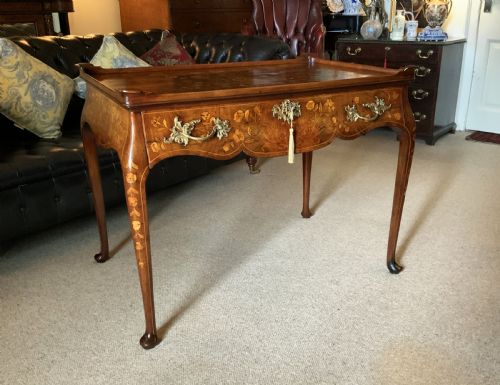
Inlaid Tea Tray
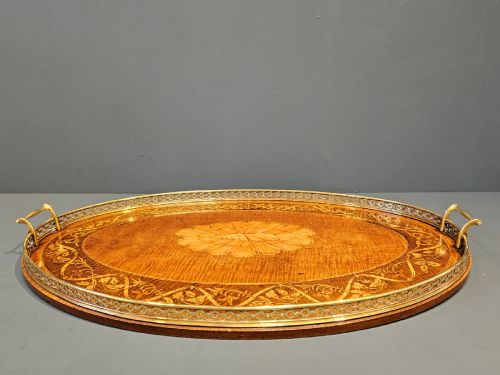
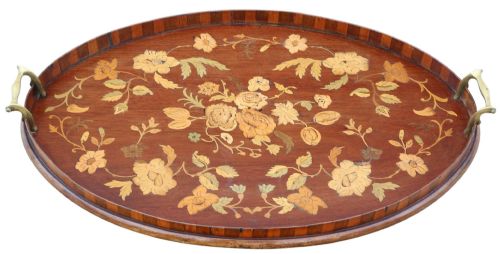
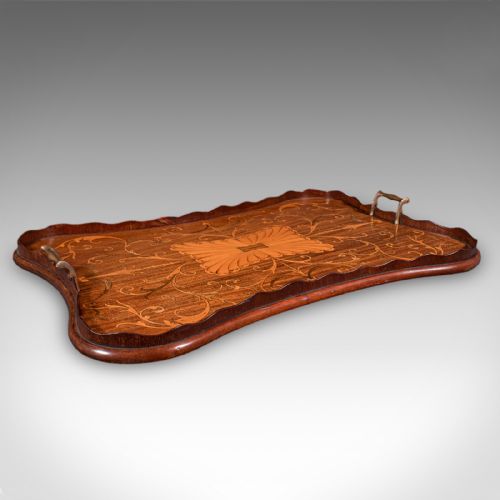
An inlaid tea tray brings structured mahogany, satinwood and brass handles to a formal afternoon spread.
Inlaid Tea Tray
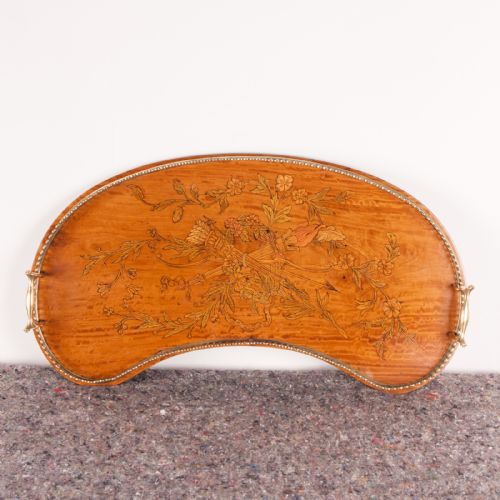
An inlaid tea tray is a domestic serving piece designed for carrying china or presenting refreshment, rendered in timber and marquetry. You will find them most commonly originating from the Georgian, Victorian and Edwardian eras, spanning oval, rectangular and kidney shapes.
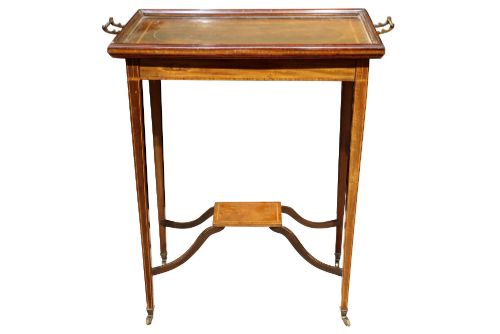
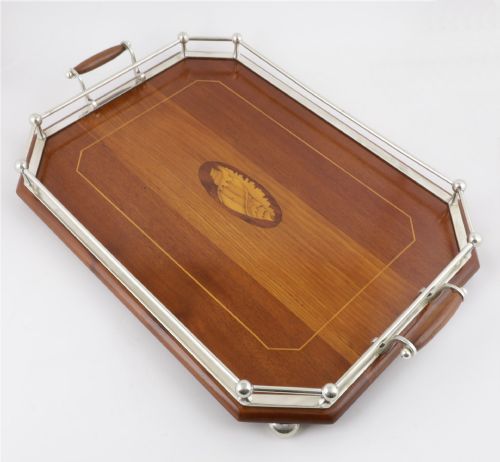
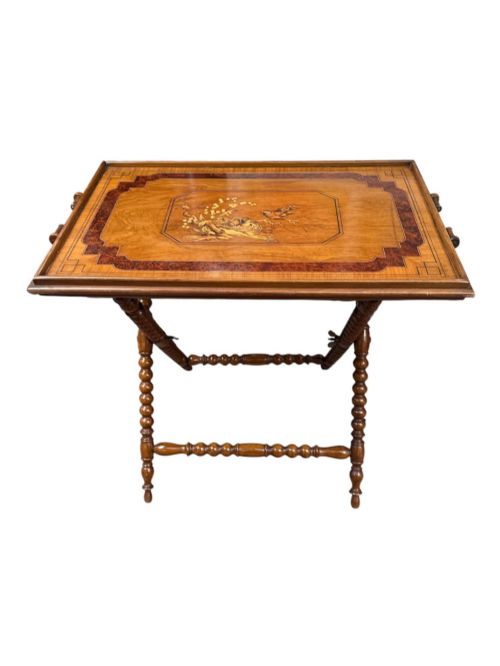
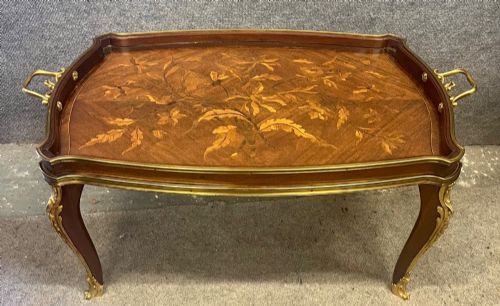
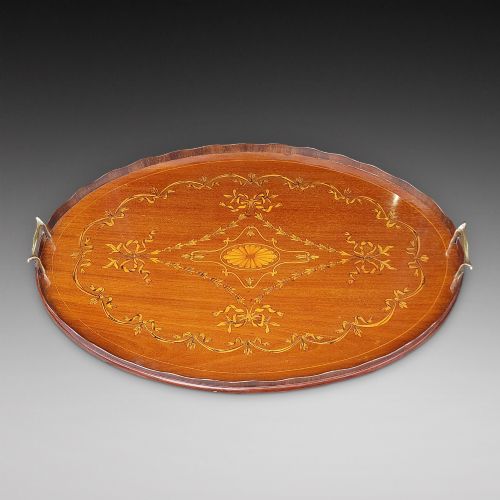
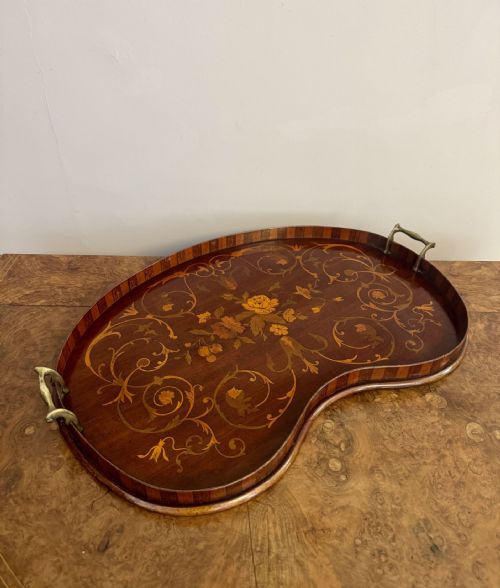
The prevailing format on this page is the mahogany oval tray, frequently edged with satinwood stringing or brass galleries. Alongside standalone service pieces, the selection includes butler's trays adapted onto folding stands and low coffee tables.
Materials and construction
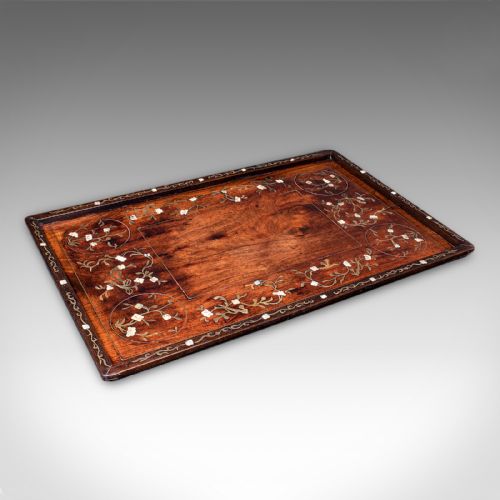
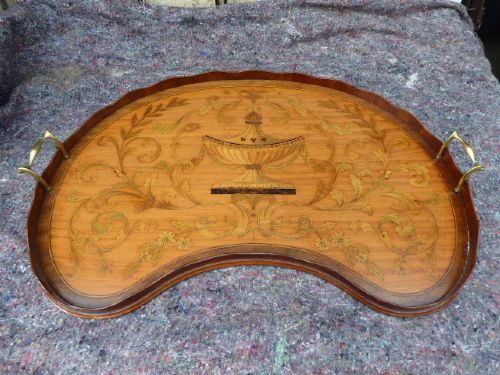
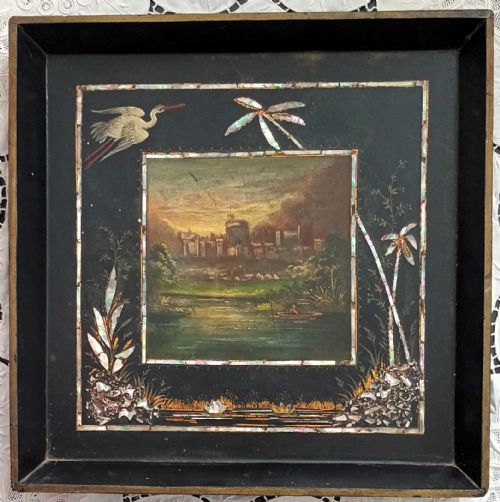
Makers built the foundational body using dense timbers like mahogany, walnut and teak, often applying contrasting veneers of satinwood, boxwood and rosewood for pictorial marquetry. Inlays of shell, brass and varied coloured woods form symmetrical floral motifs, fans and classical urns across the surface.
Structural rigidity relied on solid framing joined at the corners, sometimes augmented by brass carrying handles and pierced metal galleries bolted to the rim. Surfaces received French polishing to seal the grain and accentuate the tonal contrasts of the natural woods.
One exceptional tray preserves an intricate marquetry portrait of a domestic cat supervising the afternoon tea service.
Judging the work
Quality rests upon the precision of the marquetry and the crispness of the timber selection, where tightly grained mahogany and meticulously cut satinwood create sharp visual depth. Lesser examples display blurred veneer joints or printed decorative substitutes rather than genuine individual wood inlay.
The hand-cut fit of the contrasting stringing and the integrity of the brass handles separate standard utility items from refined parlour pieces. A superior tray maintains a flat, stable base without warping despite centuries of atmospheric change.
Edwards and Roberts
The Inlaid Tea Tray Glossary
- Marquetry
- Decorative veneer work arranged in pictorial patterns using different tinted woods and shells. This technique creates complex floral or geometric scenes across the centre of the tray.
- Gallery
- A raised rim around the edge of a tray, fashioned from pierced brass, silver-plate or shaped wood. It prevents cups from sliding off during service.
- Stringing
- Thin lines of contrasting timber inlaid into channels cut into the main surface. It outlines the perimeter and panels of the tray.
- Etagere
- A set of open shelves for displaying small objects, sometimes constructed with a removable tray top. These multi-tiered pieces combine utility with formal parlour display.
Inlaid Tea Tray: Frequently Asked Questions
How were inlaid tea trays used originally?
These trays served domestic gatherings, carried by staff to present afternoon tea service in the drawing room. They moved teapots, cups and saucers from the kitchen to guests without marking polished furniture.
Beyond formal service, smaller trays remained on side tables to hold calling cards, decanters or letters. Their decorative surfaces meant they sat openly on display when not in active use.
How do I clean an antique wood tray?
Dust the surface regularly with a soft, dry cloth to prevent grit from scratching the polished mahogany or satinwood veneer. Avoid liquid polishes containing silicone, which can penetrate hairline cracks in aged varnish.
Treat the timber occasionally with microcrystalline wax to nourish the grain and protect the delicate marquetry. Keep the tray away from direct sunlight and radiators to stop the wood from drying and warping.
How can I tell a Georgian tray from an Edwardian one?
Georgian trays, particularly from the late eighteenth century, tend to feature restrained neoclassical motifs like satinwood shell medallions and simple linear stringing. Their timber selection focuses on dark, rich mahogany with understated elegance.
Edwardian revivals often present lighter satinwood grounds, highly complex floral marquetry, and sometimes brass galleries or handles. They reflect a late Victorian enthusiasm for ornate, decorative household furnishings.
Can I still use an antique tray for serving?
Historic trays handle light dry items safely, provided the structure remains stable and the joints are secure. Placing hot teapots directly on the antique polish can cause heat rings and damage the finish.
Protect the surface with a linen cloth or coaster if you plan to serve liquids. Many owners prefer to use them as decorative coffee table centrepieces rather than active serving ware.