
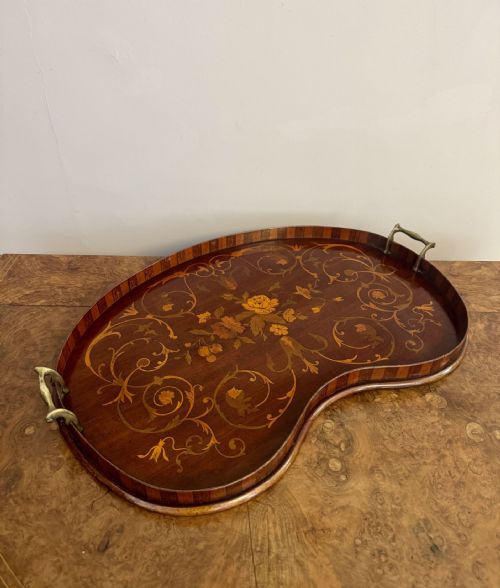


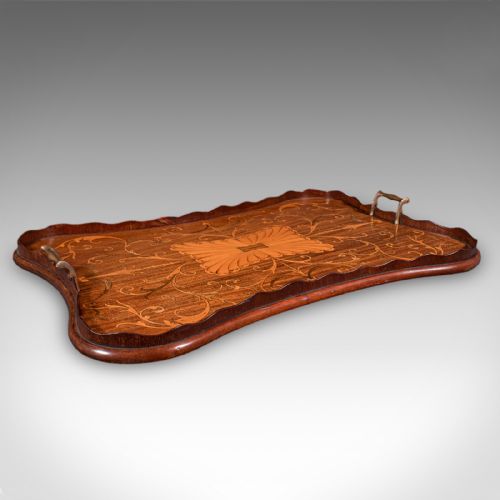
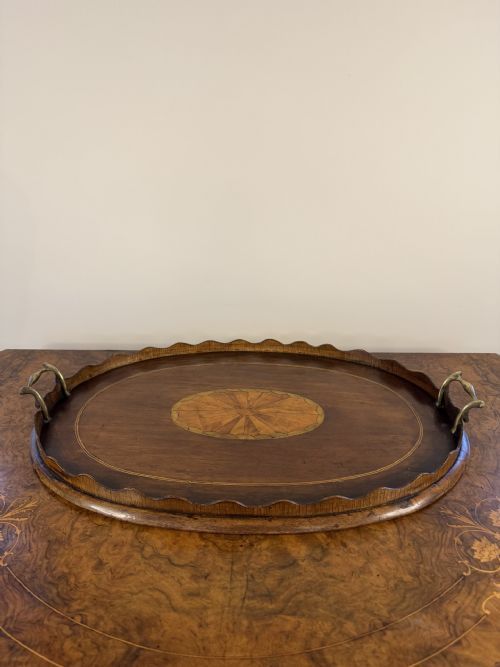
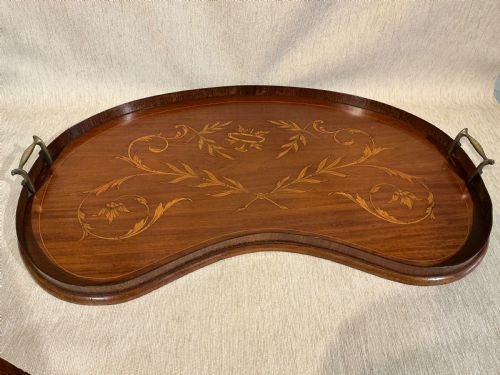


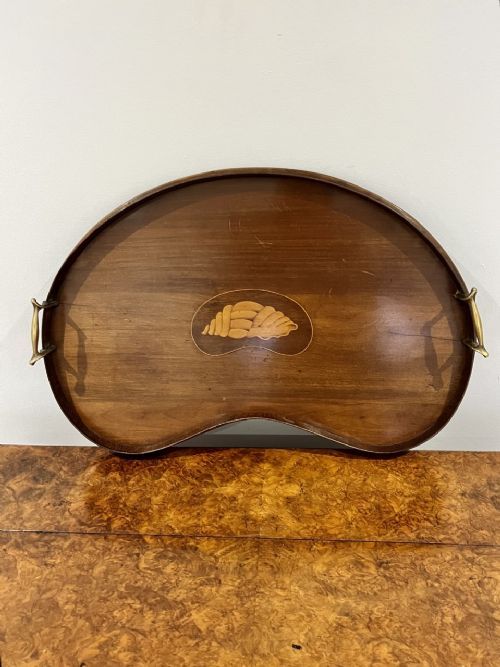


Edwardian Inlaid Mahogany Tray
An edwardian inlaid mahogany tray brings formal hospitality into daily life, offering deep timber grounds framed by careful bandings.
Edwardian Inlaid Mahogany Tray
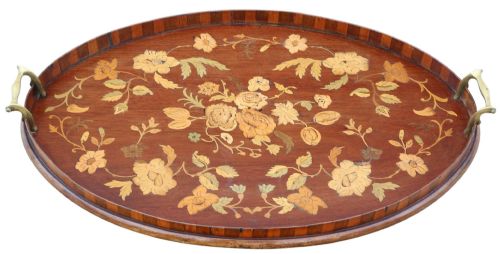
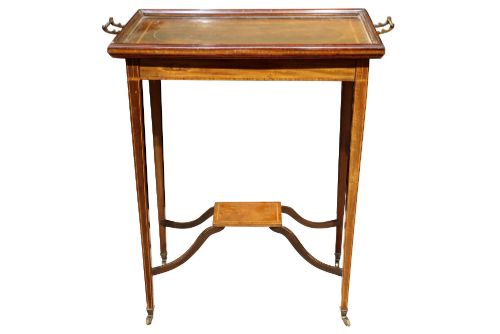
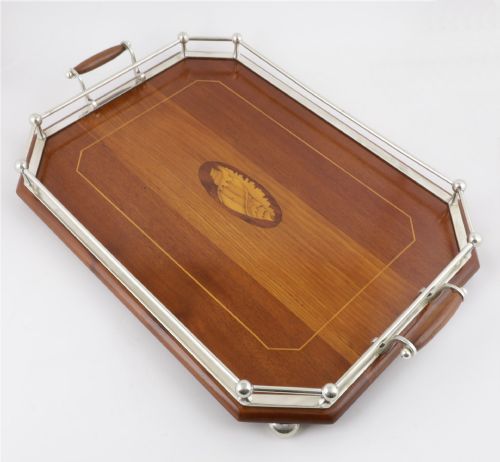
When you search for an edwardian inlaid mahogany tray, you encounter pieces built for domestic service and afternoon hospitality during the early twentieth century. These objects appear as flat serving platters, two-handled tea trays, and occasional pieces fitted with removable glass panels or raised galleries.
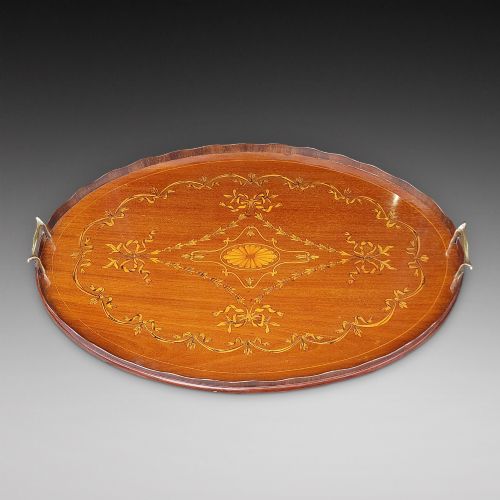
The pieces on this page lean heavily towards the Edwardian period and the Sheraton Revival style, frequently taking oval or kidney shapes alongside traditional rectangular forms. Makers also adapted the timber form into tray-top tables, etageres, and small side stands where the surface lifts clear of its frame.
While most examples date from around nineteen hundred, the archive records show related items spanning from the late nineteenth century into earlier Georgian revivals. Collectors use them for display, drinks service, or as standalone decorative accents on side tables.
How They Were Made
Workshops constructed these pieces using solid or veneered mahogany timbers as a base, selected for a rich grain and stable surface. Cabinetmakers then added contrasting details using boxwood and satinwood lines, creating delicate stringing and geometric borders.
Marquetry and shell motifs frequently form the central decoration, combining different natural woods to picture urns, paterae, or floral sprays. Brass handles and pierced wood galleries secure the edges, while older examples rely on solid raised mouldings carved directly from the timber base.
Some trays include drop-out floors that double as lap desks, proving that Edwardian snackers loved paperwork just as much as tea.
What Varies in Quality
Quality rests upon the crispness of the inlay work and the depth of the timber figuring. Superior examples display tightly cut satinwood and boxwood banding without gaps, whereas simpler items rely on painted lines or sparse decoration.
The weight and balance of the tray also signal distinction, particularly on kidney-shaped and oval formats where ergonomic curves demand precise carpentry. Original brass hardware and intact, unblemished gallery rails elevate a piece far above standard utilitarian production.
The Edwardian Inlaid Mahogany Tray Glossary
- Inlay
- The technique of fitting contrasting strips of wood into recessed channels on a timber surface. This creates sharp geometric patterns and decorative borders.
- Marquetry
- The art of arranging thin veneer slices to form pictorial designs such as shells, urns, or floral motifs. Craftsmen assemble these elements like a puzzle before pressing them onto the main board.
- Gallery
- A raised wooden or metal rim running around the edge of a tray to prevent items from sliding off. These can be pierced with openwork slats or left solid.
- Etagere
- A piece of furniture consisting of multiple open shelves for display. In this context, the top tier often doubles as a removable serving tray.
Edwardian Inlaid Mahogany Tray: Frequently Asked Questions
How were these trays used?
These pieces served primarily for carrying tea sets, afternoon refreshments, and decanters across drawing rooms. Households also utilised them on side tables to corral smaller decorative objects.
Over time, many transitioned into permanent display surfaces or coffee table tops, prized for their decorative timber patterns rather than heavy service duties.
How do I spot a fake?
Examine the timber colour, surface wear, and the precision of the inlay work under good light. Period pieces show natural ageing, mellow patination, and minor shrinkage cracks that modern reproductions struggle to replicate.
Laser-cut modern stringing often appears too uniform, whereas genuine Edwardian and Victorian workshops relied on hand-cut joints and subtle irregularities.
Are they safe for daily use?
Most antique examples tolerate gentle handling, but moisture and heat can damage vulnerable French polished finishes. Using coasters and protective cloths preserves the antique surface against rings and spills.
Trays fitted with glass panels offer greater practicality for serving drinks, protecting the delicate marquetry inlay underneath from liquid damage.
How do I clean the wood?
Dust the surface regularly with a soft, dry cloth to prevent grit accumulation in the grain and inlay crevices. Avoid modern chemical sprays and excessive water, which strip historic polishes.
Apply a traditional beeswax paste occasionally to nourish the dry mahogany and maintain a soft, protective sheen across the timber.