




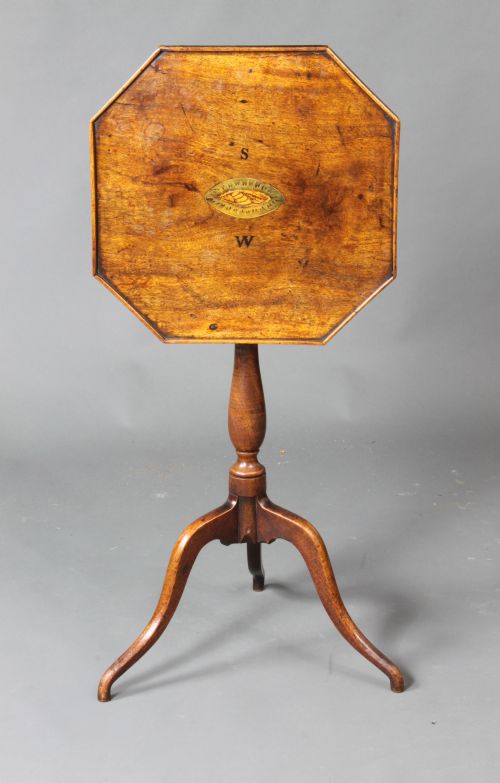
Inlaid Snap Table
These inlaid snap table examples combine a clever tipping mechanism with decorative surface work, offering a compact surface that folds away neatly when not in use.
Inlaid Snap Table
An inlaid snap table serves as a flexible surface designed for occasional use, dining or display in traditional interiors. When you search for an inlaid snap table, you encounter pieces that feature a hinged top allowing the surface to tilt into a vertical position for storage.
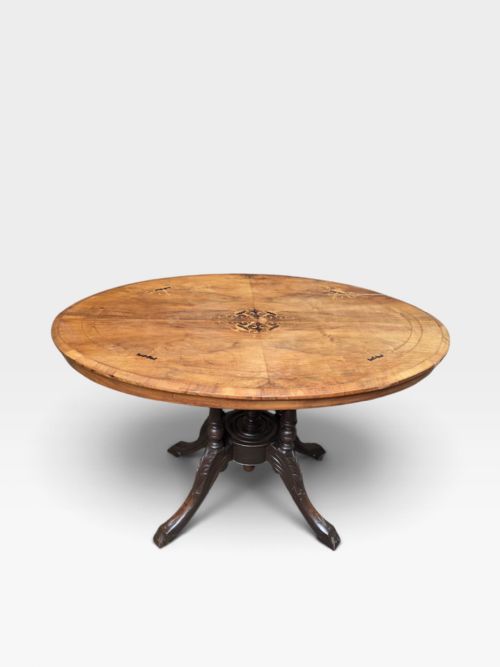
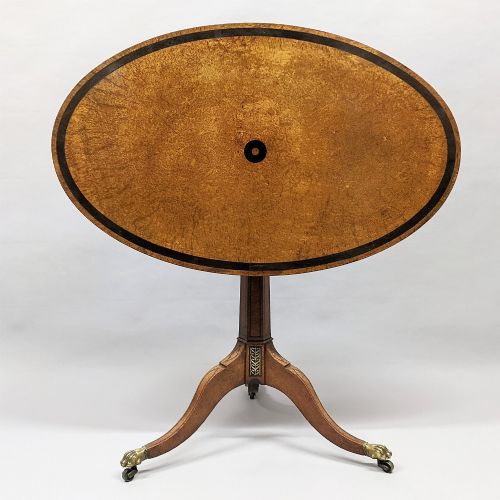
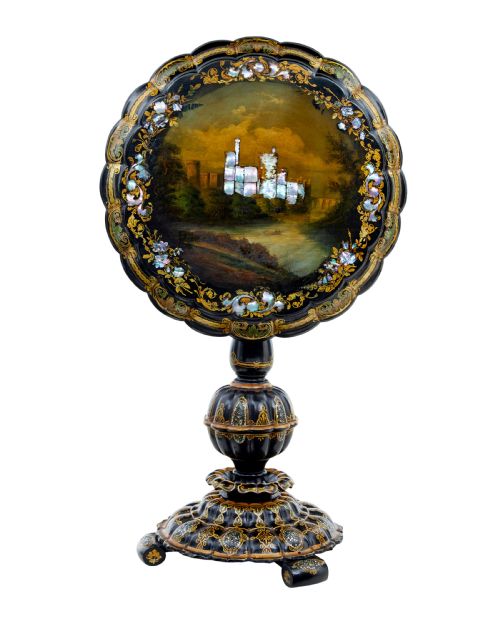
The selections span the 18th century, Regency period and Victorian era, bringing together forms previously catalogued as occasional tables, centre tables and tilt-top tables. Walnut, mahogany, amboyna and papier-mache appear across these examples alongside distinctive surface embellishments.
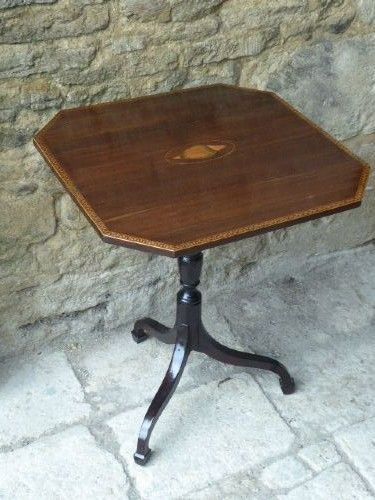
You meet variations ranging from George III mahogany and brass inlay to Victorian walnut and marquetry inlaid Swiss Black Forest designs. The format typically rests on a central pillar supported by tripod feet, making it both practical and decorative.
How they were made
Cabinet makers constructed these surfaces using hardwoods such as mahogany, walnut and amboyna, often applying contrasting veneers and elaborate wood inlay or marquetry patterns. Brass components frequently reinforced structural joints and decorative borders.
Papier-mache versions incorporated painted finishes and mother of pearl inlay to achieve a smooth, glossy top suitable for the tilt mechanism. The tipping catch relied on precise carpentry to lock the top securely in both horizontal and vertical positions.
Inlaid Snap Table Retail Price Guide 2026
Typical asking prices for inlaid snap table among the pieces listed under this phrase on Sellingantiques today, from the lower quarter to the upper quarter. They describe what is for sale here now, not the wider market.
The listings show pieces spanning the 18th century, Regency period and Victorian era, utilising walnut, mahogany, amboyna and papier-mache.
What varies in quality
Quality rests in the precision of the timber selection and the complexity of the marquetry inlay. Superior examples display finely figured grain patterns and intricate floral or geometric motifs executed in contrasting woods.
The engineering of the snap mechanism and tripod base dictates the stability of the table when upright and flat. Finer specimens maintain a seamless fit at the hinge without wobble or excessive play in the pillar support.
The Inlaid Snap Table Glossary
- Snap top
- A tabletop fitted with a hinged catch that tilts vertically to save space when the piece is not in use.
- Marquetry inlay
- Decorative patterns formed by fitting small pieces of veneer into a contrasting wooden background.
- Tripod table
- A small freestanding table supported by a central pillar and three spreading feet.
- Tilt top table
- An alternative term for a snap table where the surface pivots on a central block.
- Amboyna
- A highly prized burr timber known for its rich colour and intricate swirling grain patterns.
Inlaid Snap Table: Frequently Asked Questions
How does the snap mechanism work?
The tabletop attaches to a block via a hinge and a spring-loaded metal catch. Pulling the catch releases the top so it pivots upright against the central column.
When pressed back down, the catch engages automatically to lock the surface firmly in place for daily use.
Where were these tables placed originally?
These pieces sat in parlours, drawing rooms and libraries as flexible furniture for serving tea or holding books. Their ability to fold flat meant servants could clear them away quickly.
Today they function effectively as lamp tables or decorative focal points in sitting rooms.
How do I care for inlaid wood surfaces?
Keep wooden surfaces away from direct sunlight and heat sources to prevent the veneers and inlay from drying out. Regular dusting with a soft dry cloth protects the polished finish.
Apply a traditional wax polish occasionally to nourish the timber and maintain the lustre of the grain.