

Inlaid Side Desk
An inlaid side desk brings together compact writing utility and precise decorative veneer work, making it a versatile choice for any room.
Inlaid Side Desk
When searching for an inlaid side desk, buyers encounter forms that bridge the gap between occasional tables and dedicated writing furniture. These pieces combine compact writing surfaces with decorative surface ornamentation, serving both practical study needs and ornamental display.
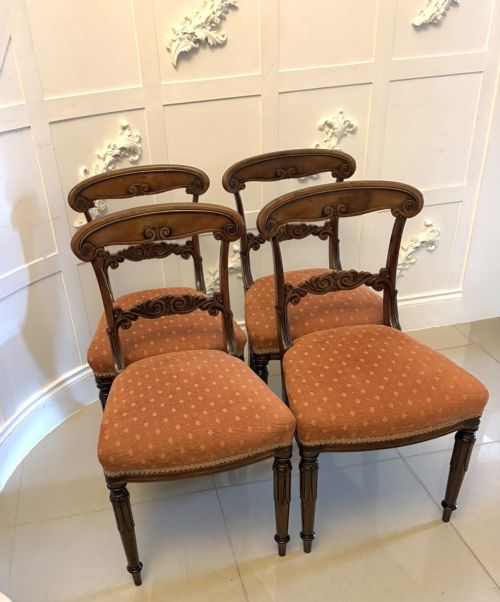
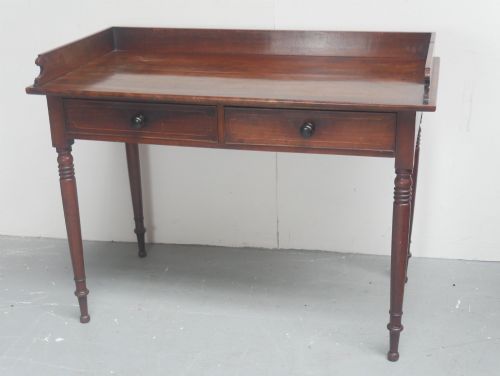
The selections span several distinct periods, with Edwardian satinwood and mahogany versions appearing frequently alongside Georgian and nineteenth-century examples. Alongside standard writing tables, the evidence includes related forms like Davenport desks, bureau plat desks, and sofa tables.
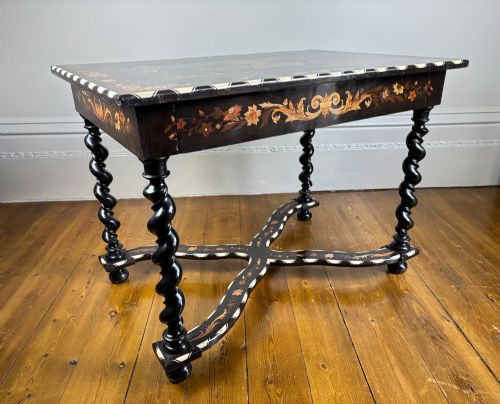
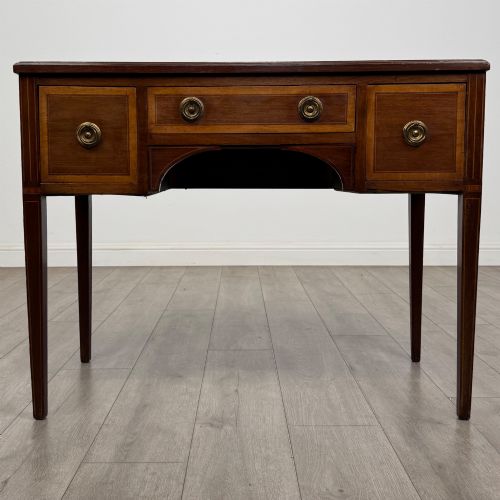
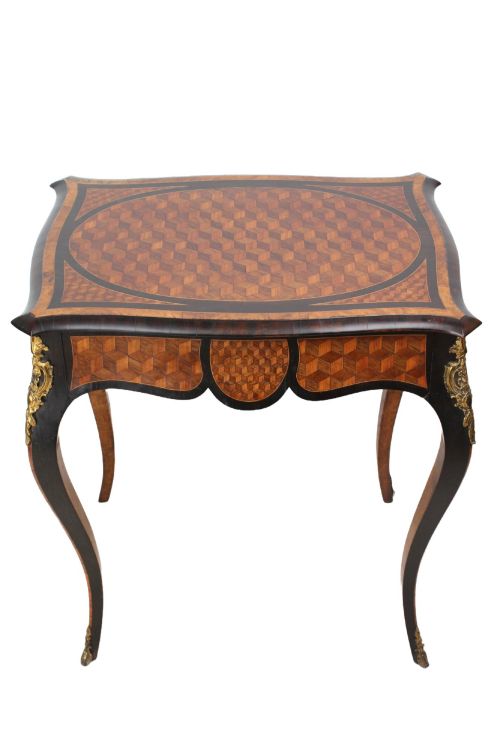
Origins vary from English Sheraton and Regency workshops to French Louis XV revival makers and Dutch marquetry traditions. Buyers are most likely to meet Edwardian mahogany pieces featuring delicate stringing or Victorian rosewood models with richer parquetry.
Materials and construction
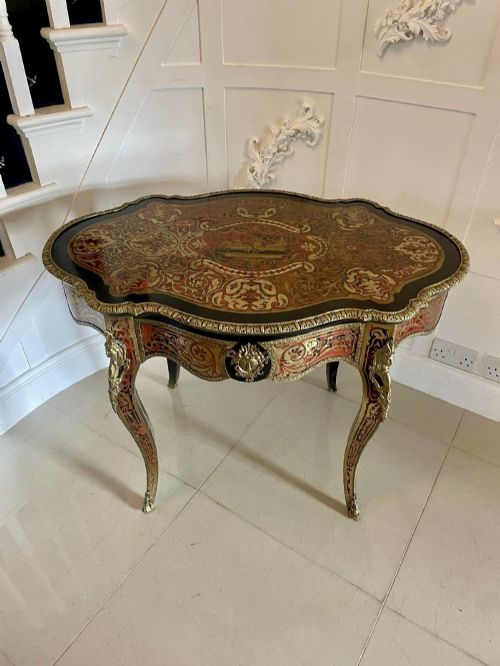
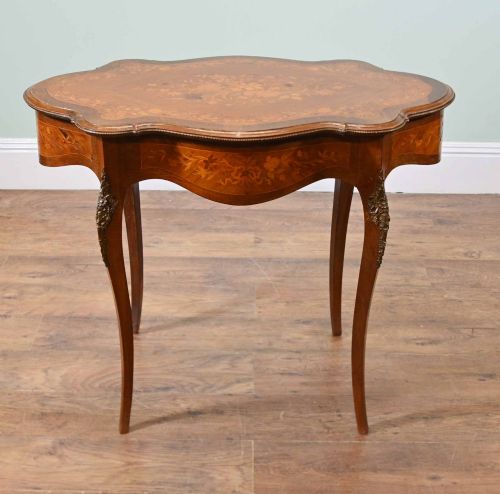
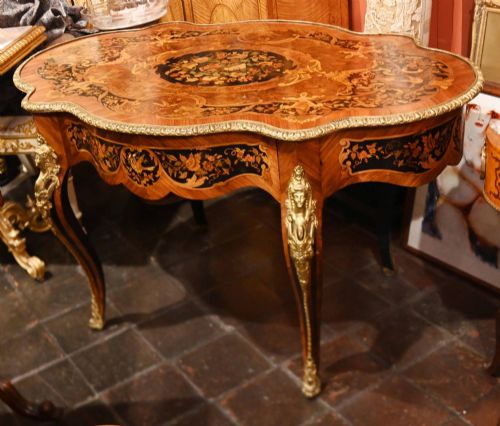
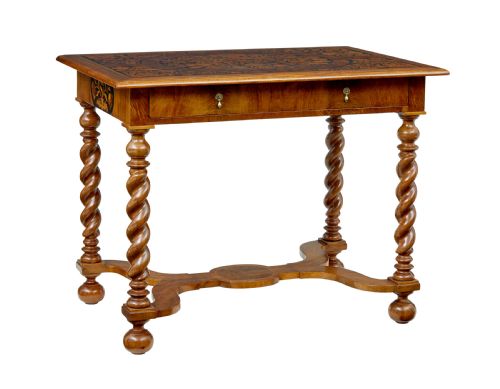
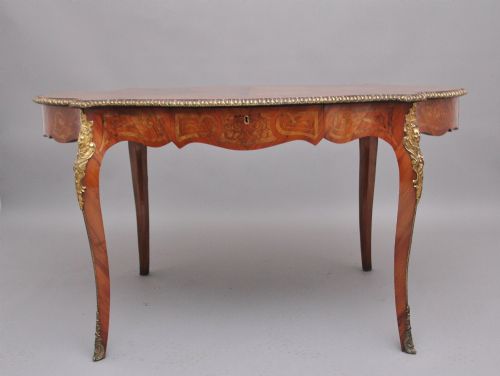
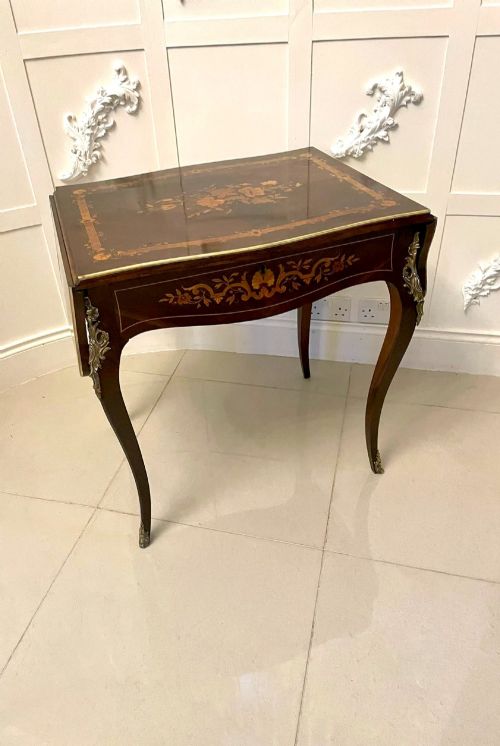
Cabinetmakers constructed these desks using solid structural carcases of mahogany, walnut, or oak, faced with finely figured veneers of satinwood, rosewood, or kingwood. Surface decoration relied heavily on contrasting timber stringing, marquetry pictorial scenes, or geometric parquetry patterns.
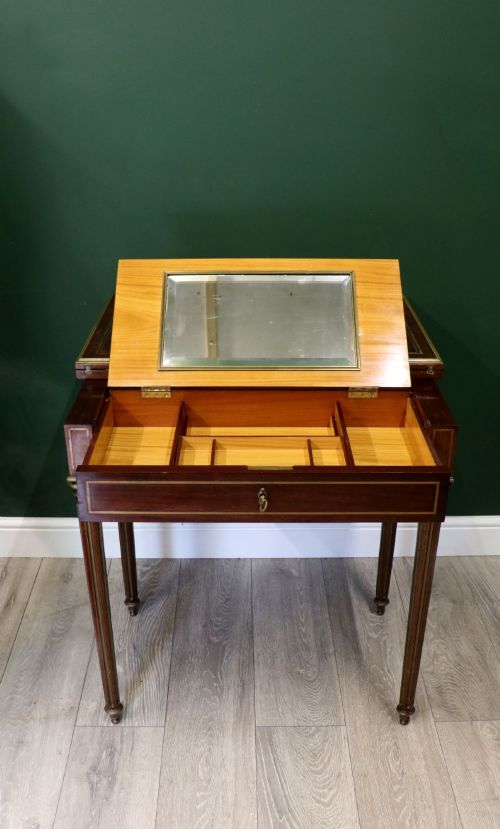
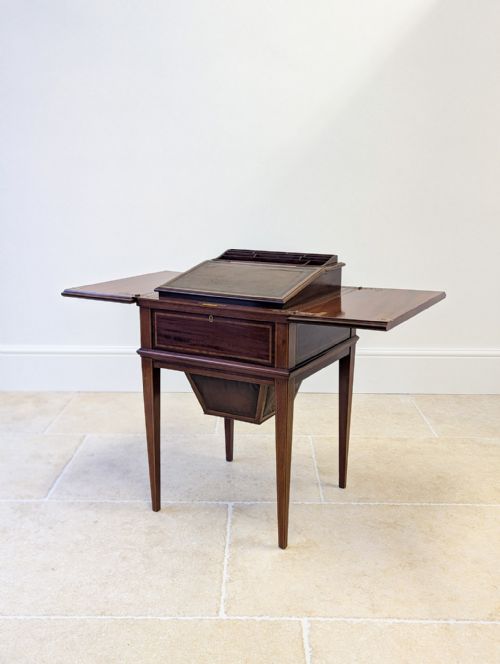
Secondary detailing often incorporated cast brass mounts, ormolu accents, and inset leather writing surfaces. Specialised forms utilised clever internal mechanisms, such as envelope folds or metamorphic reading actions, executed with precise joinery.
The inventory spans the eighteenth century through the Edwardian period, utilising mahogany, satinwood, rosewood, and walnut.
Assessing craftsmanship and finish
Quality rests primarily on the crispness and precision of the veneer work, where superior pieces exhibit seamless joints and harmonious timber selection without lifting or shrinkage. The complexity and depth of the marquetry or parquetry separate standard production from exceptional examples.
Hardware integrity and internal craftsmanship further distinguish the range, as fine desks feature original brass fittings, well-fitted drawers, and carefully finished secondary woods. The overall proportions and structural stability, particularly in slender leg forms, dictate the piece's enduring success.
JAS Shoolbred
The Inlaid Side Desk Glossary
- Marquetry
- Decorative veneer work arranged in pictorial or floral patterns across a surface. It uses contrasting woods to create detailed designs.
- Parquetry
- Geometric mosaic woodwork forming repeating patterns like cubes or herringbone. This technique frequently covers the tops of French writing tables.
- Satinwood
- A lustrous, hard timber with a golden yellow colour used extensively in eighteenth and Edwardian pieces. It provides a bright background for darker inlay.
- Bureau plat
- A freestanding double-sided writing desk featuring drawers within the frieze. Originating in France, it typically stands on slender cabriole or tapered legs.
- Ormolu
- Gilt bronze mounts applied to furniture for decorative effect. It appears frequently on nineteenth-century revival pieces.
Inlaid Side Desk: Frequently Asked Questions
How do I identify an Edwardian inlaid side desk?
Edwardian examples usually feature light mahogany or satinwood timbers combined with delicate floral stringing and polished brass hardware.
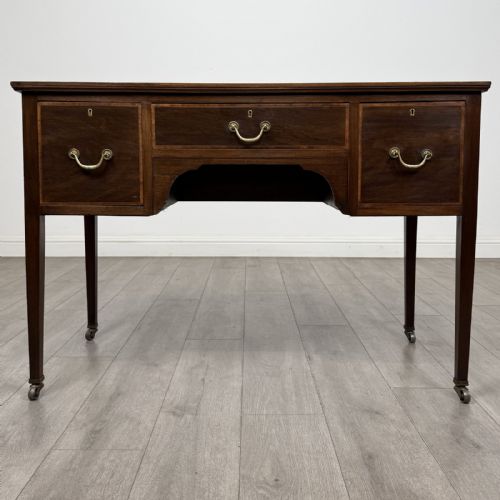
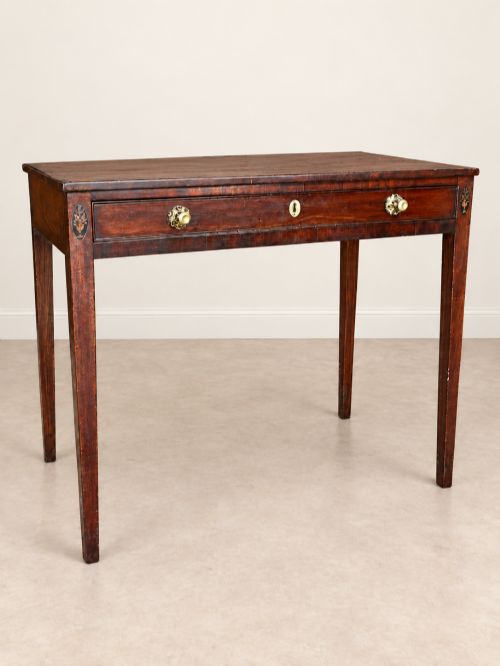
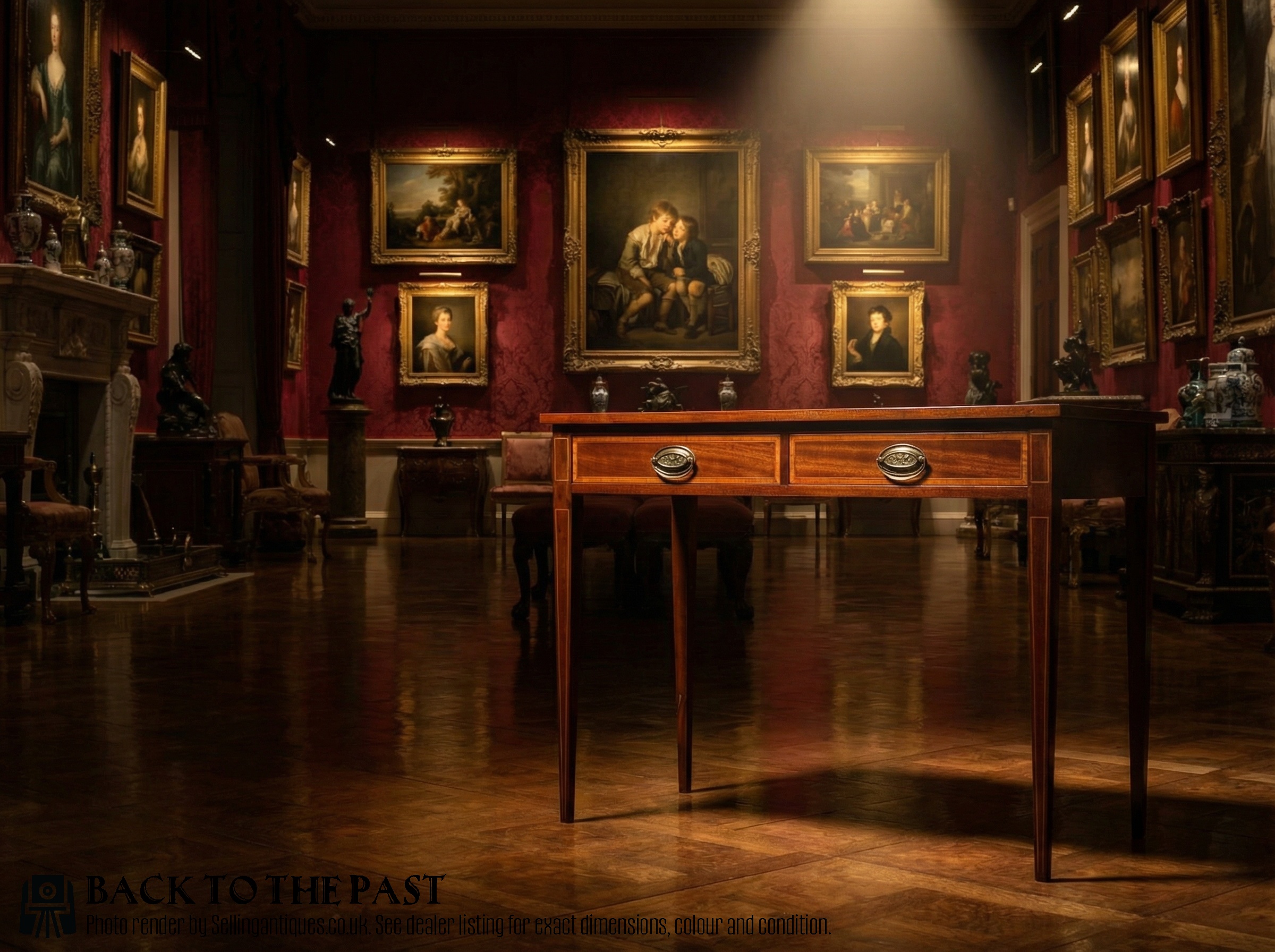
They often present slender tapered legs and lighter proportions compared to heavier Victorian counterparts.
Where were these desks placed historically?
These versatile pieces served in drawing rooms, private libraries, and bedrooms for correspondence and light reading.
Because many feature finished backs, they sat away from walls as freestanding centre tables.
What is the difference between marquetry and parquetry?
Marquetry creates pictorial, floral, or scrollwork designs using various coloured veneers to form a picture.
Parquetry relies strictly on geometric and symmetrical shapes like squares and cubes to form abstract repeating patterns.
How should I care for an antique writing surface?
Protect leather inserts and polished wood veneers from direct sunlight and excessive heat to prevent drying and cracking.
Apply high-quality beeswax periodically and avoid placing damp items directly onto the polished timber.