

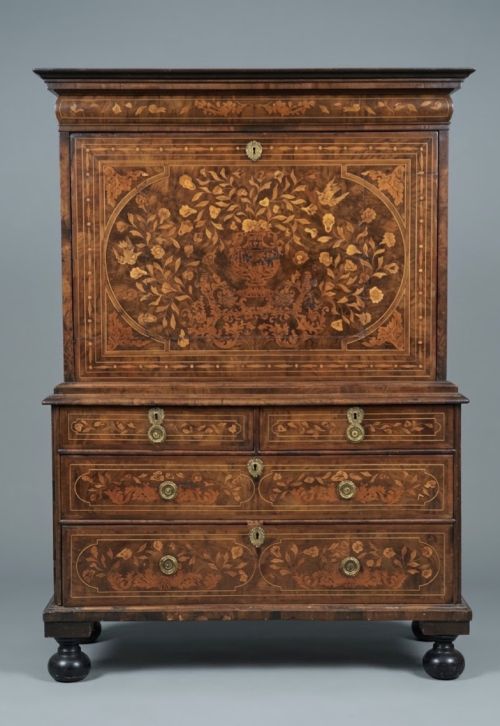
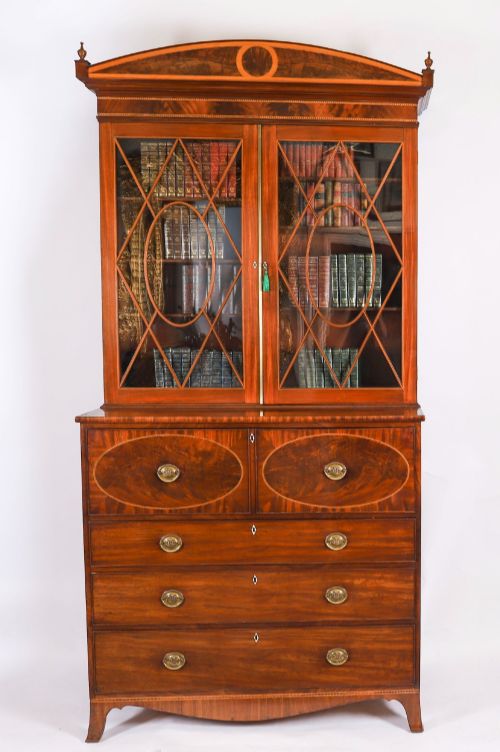
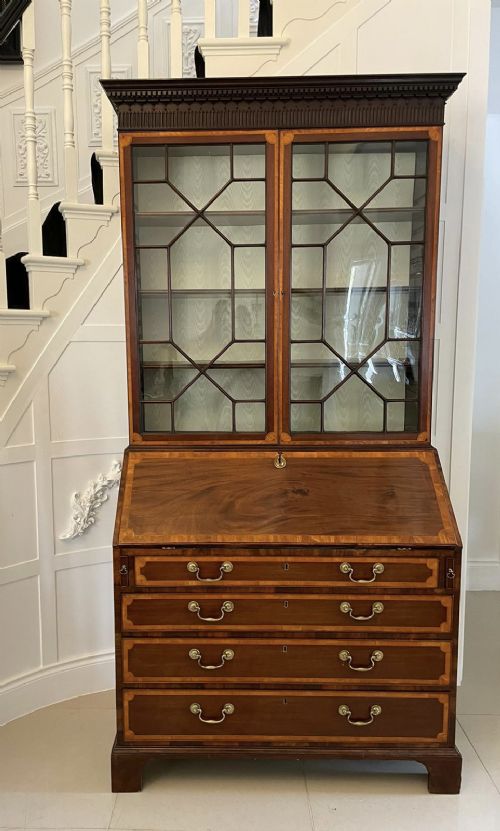
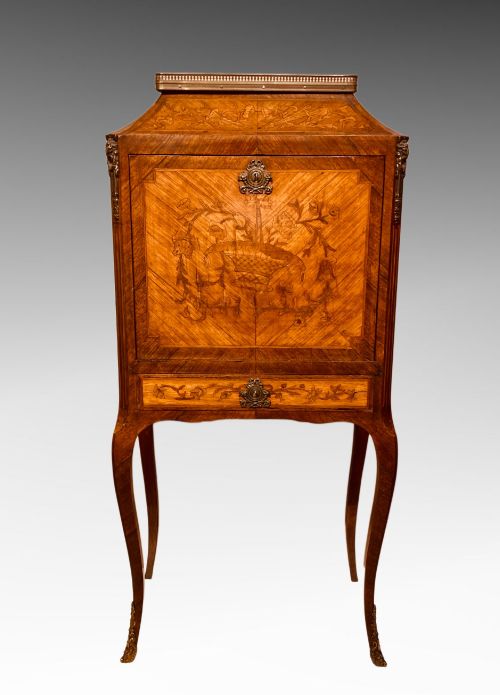

Inlaid Secretary Cabinet
When you handle an inlaid secretary cabinet, you hold a piece of furniture designed for private correspondence and storage.
Inlaid Secretary Cabinet
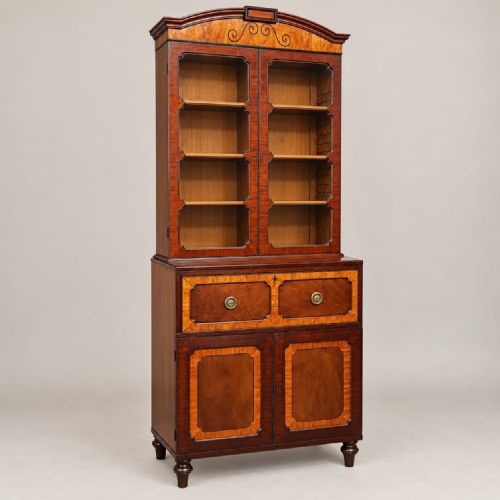
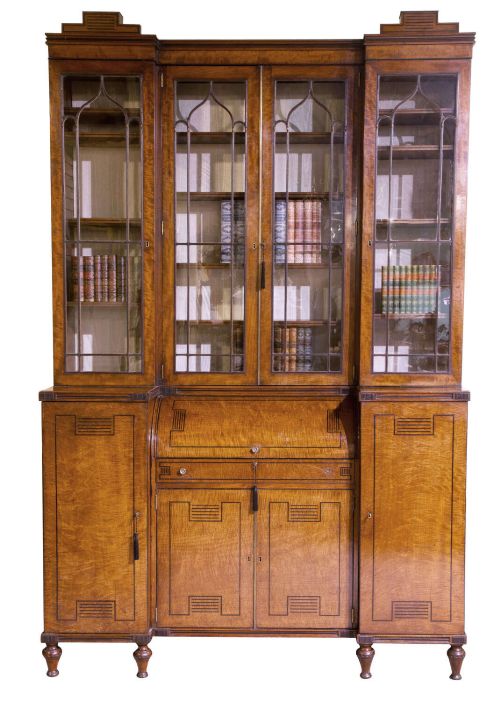
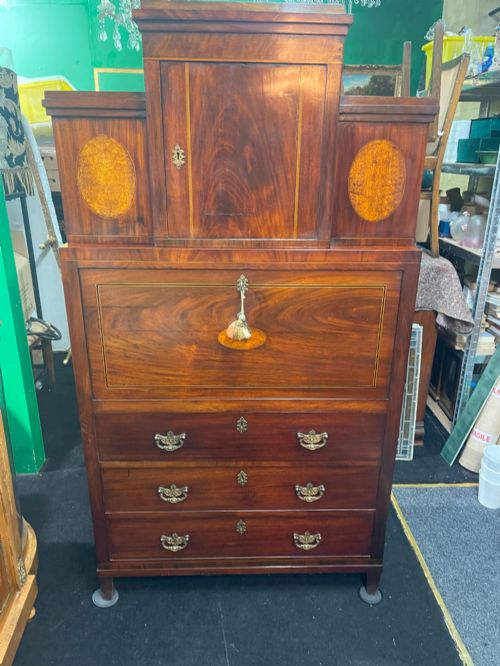
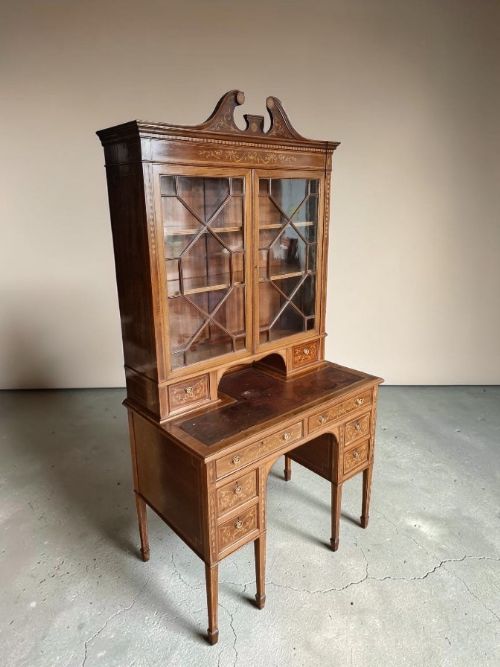
An inlaid secretary cabinet combines a writing surface with enclosed shelving, serving as a dual-purpose piece for study and display. These items appear across multiple periods, including the Georgian, Regency, and Edwardian eras, taking the form of bureau bookcases, secretaire cabinets, and bonheur du jour writing desks.
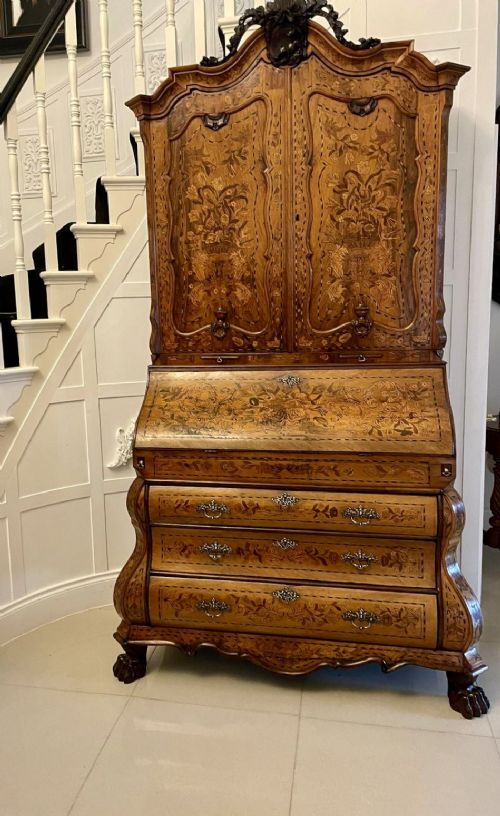
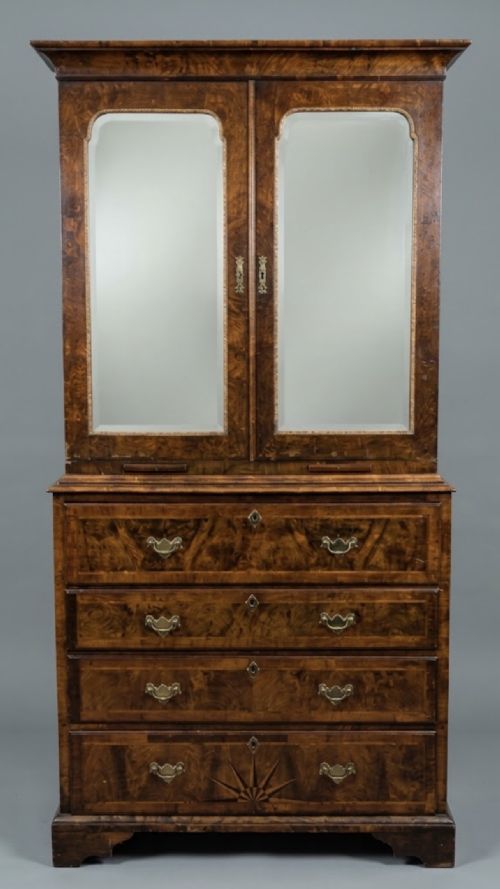
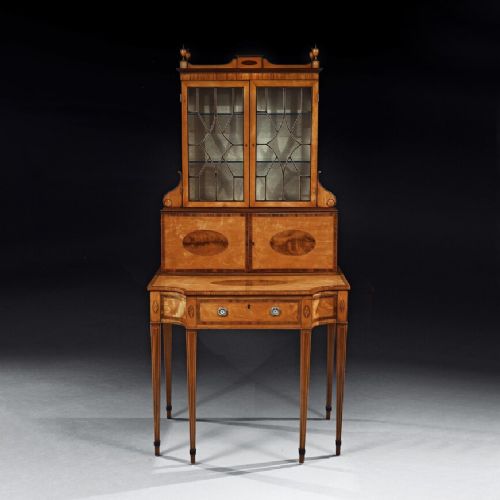
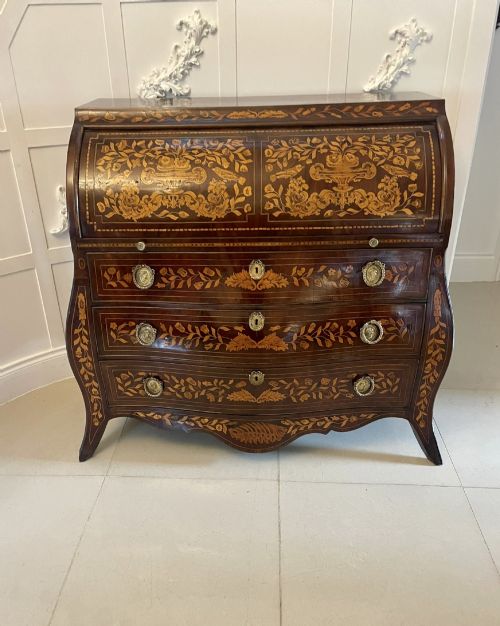
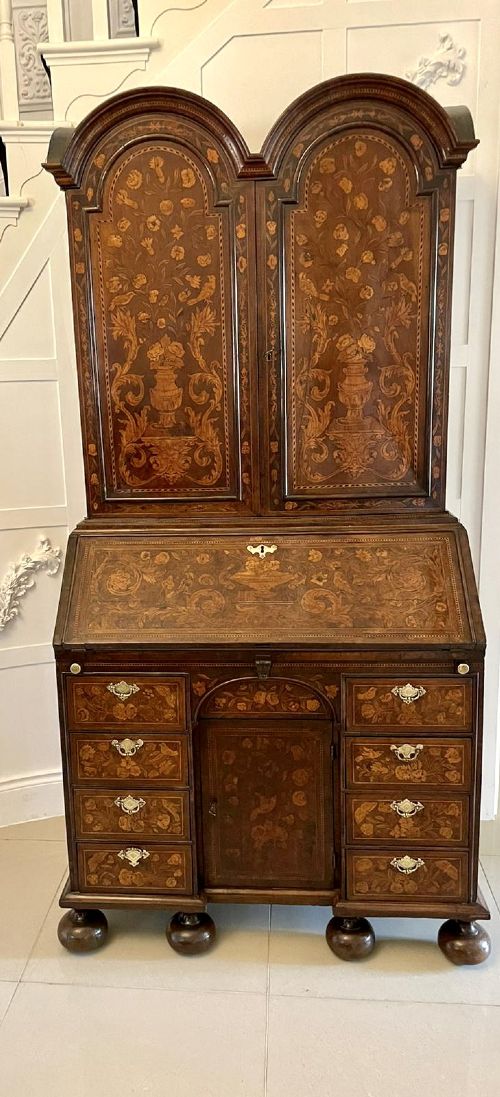
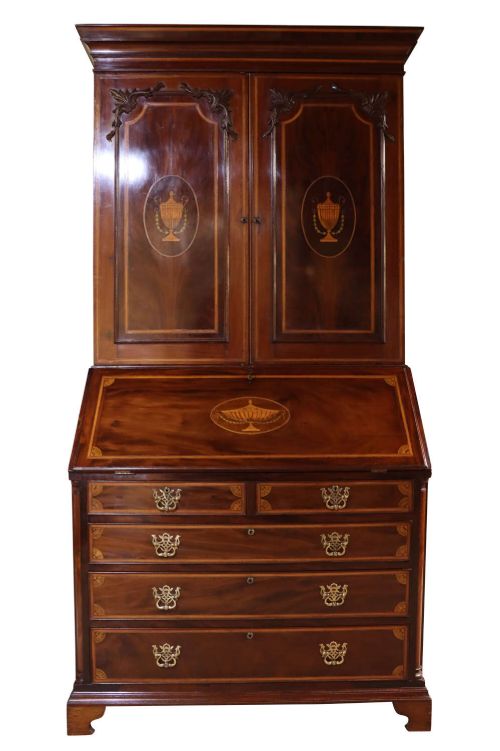
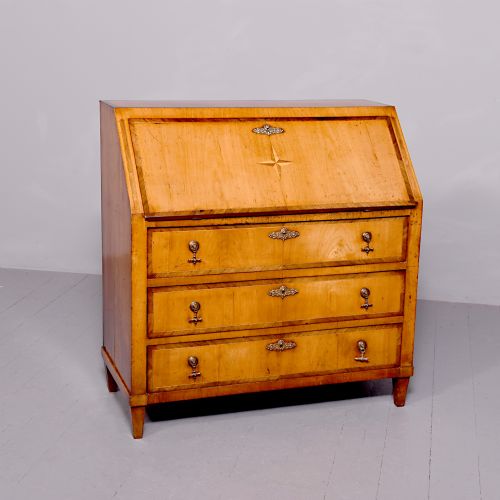
The version most commonly met on this page is the bureau bookcase in mahogany, often featuring glazed upper doors and a fall-front desk section. Alongside these stand Continental examples in burr walnut and satinwood, displaying diverse marquetry patterns from Dutch Baroque and Sheraton Revival styles.
How they were made
Cabinet makers constructed these pieces using solid timbers and veneers of mahogany, walnut, rosewood, and satinwood over secondary woods. Flame mahogany and burr walnut provided heavily figured surfaces chosen for prominent drawer fronts and fall-front panels.
Marquetry and inlay techniques incorporated contrasting woods, brass, and tulipwood to create floral motifs and geometric banding. Specialised mechanics included tambour shutters, cylinder lids, and drop-front desk boards supported by internal pigeonholes and small drawers.
Inlaid Secretary Cabinet Retail Price Guide 2026
Typical asking prices for inlaid secretary cabinet among the pieces listed under this phrase on Sellingantiques today, from the lower quarter to the upper quarter. They describe what is for sale here now, not the wider market.
Listings span from the 18th century to the Edwardian period, incorporating mahogany, satinwood, burr walnut, and rosewood.
What varies in quality
The standard of timber selection and the precision of the marquetry dictate the distinction between workshops. Grain matching across large surfaces and the crispness of floral or geometric inlay reveal the skill of the original maker.
Internal complexity also separates standard items from superior commissions. Fitted interiors with secret compartments, well-figured secondary timbers, and original brass hardware indicate higher execution.
Edwards & Roberts·Lamb & Co
The Inlaid Secretary Cabinet Glossary
- Secretaire
- A desk or cabinet featuring a pull-down or drop-front writing drawer that conceals small compartments and pigeonholes.
- Marquetry
- Decorative veneer work formed by fitting together contrasting pieces of wood, shell, or ivory to create pictorial designs.
- Cylinder bureau
- A desk enclosed by a quarter-circle rotating wooden cylinder that covers the writing surface when closed.
- Bonheur du jour
- A light writing desk fitted with small drawers and shelves on top, popular during the Edwardian period.
- Tambour
- A flexible sliding shutter made of narrow vertical strips of wood glued to a canvas backing.
Inlaid Secretary Cabinet: Frequently Asked Questions
What is a secretary cabinet?
A secretary cabinet is a multipurpose item of furniture combining a writing desk with a bookcase or enclosed storage. The writing surface typically folds down or pulls out to reveal compartments for letters and stationery.
These pieces developed to serve private correspondence and record-keeping in domestic interiors. They range from compact writing desks to large architectural bookcases.
How do I use one today?
You can use an inlaid secretary cabinet as a functional home desk by utilising the drop-front writing surface for laptops or paperwork. The interior pigeonholes remain practical for organising post and small office supplies.
The upper bookcase section provides display space for books and decorative objects. Closing the fall-front conceals working materials when the desk is not in use.
How do I tell George III from Edwardian pieces?
George III pieces date from the late 18th century and rely on solid craftsmanship, dense timbers like flame mahogany, and restrained satinwood inlay. Their proportions follow classical architectural lines.
Edwardian examples date from around 1900 and often feature lighter satinwood, delicate painted or inlaid floral marquetry, and Sheraton Revival influences. Their construction uses lighter framing and softer secondary woods.
What woods were used for inlay?
Cabinet makers utilised satinwood, tulipwood, and burr walnut to provide contrast against dark mahogany and rosewood grounds. These timbers created varied tones for floral marquetry and geometric stringing lines.
Brass and exotic fruitwoods also appeared in specific regional styles, particularly in Dutch Baroque and Regency pieces.