
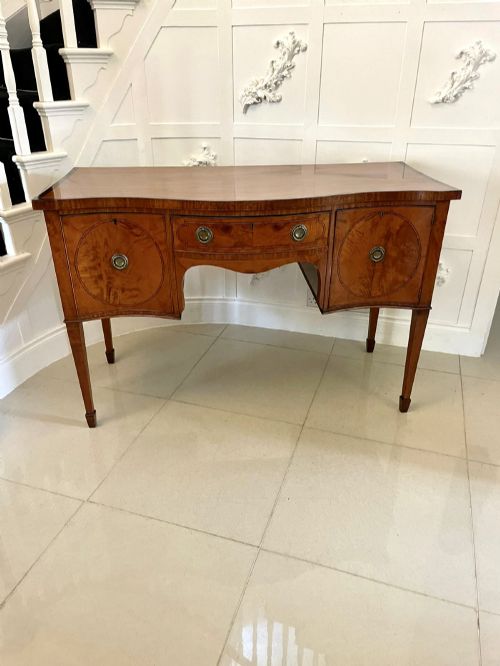
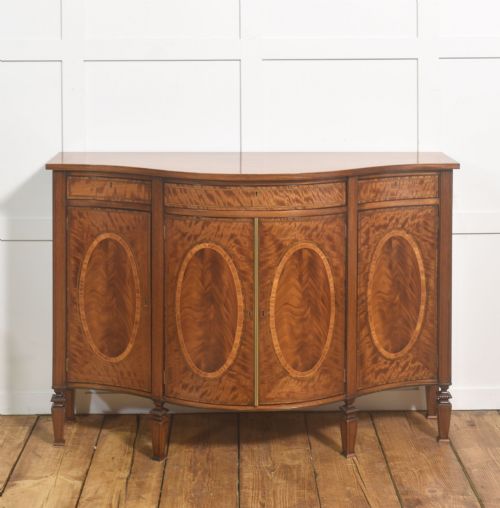
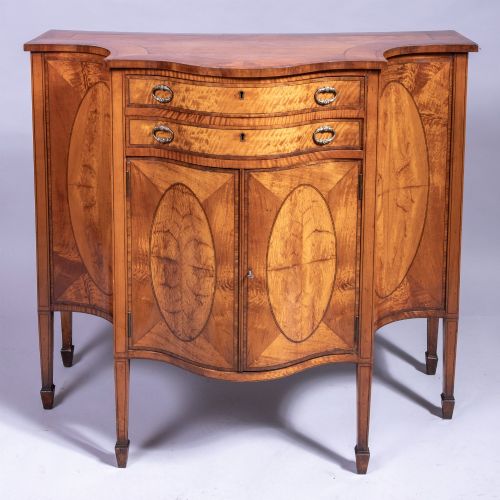

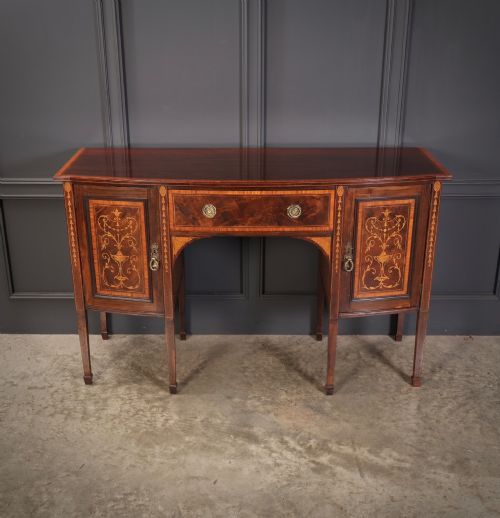
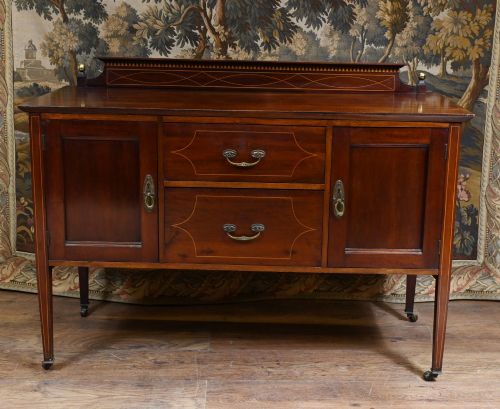

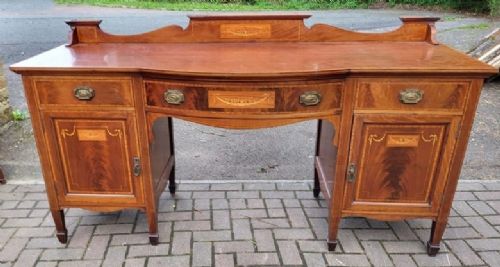


Inlaid Satinwood Buffet
An inlaid satinwood buffet brings rich golden timber and delicate stringing into a dining room, offering both generous storage and distinct architectural elegance.
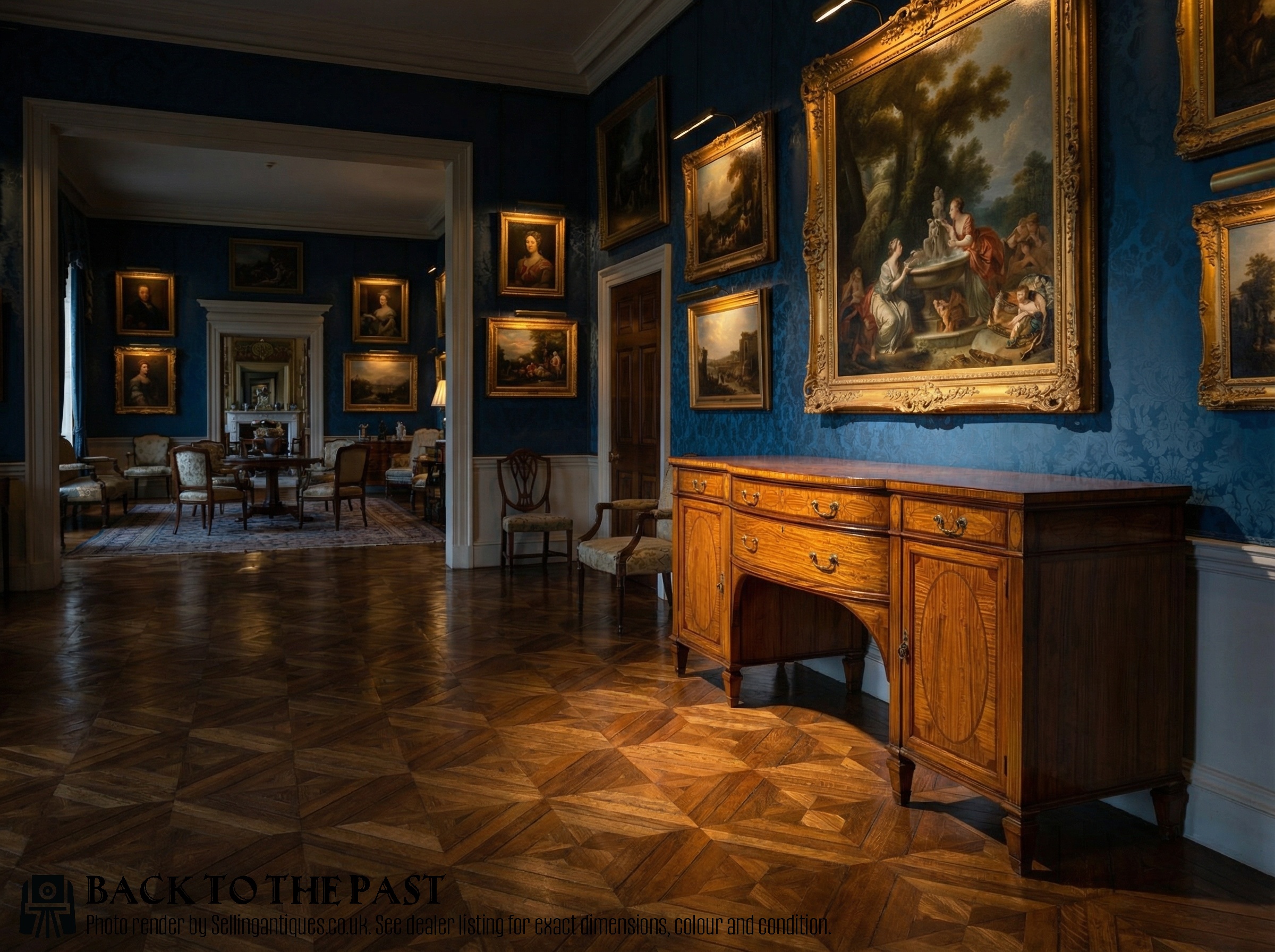
Inlaid Satinwood Buffet
An inlaid satinwood buffet serves as a formal dining room storage piece, appearing in forms such as sideboards, side cabinets, serving tables, and credenzas. These items emerge across several periods, most frequently during the Edwardian era, the Victorian period, and the nineteenth century, alongside George III and Georgian iterations.
The pieces on this page span diverse revivals and regional interpretations, including Sheraton Revival designs and George III styles. Buyers encounter serpentine shapes, bow-front silhouettes, and breakfront carcases designed to anchor a formal interior.
Makers and workshops of the nineteenth and early twentieth centuries utilised pale satinwood veneers, often complemented by contrasting timbers, to create striking focal points for the home.
How they were made
Craftsmen built carcases from primary timbers such as mahogany and satinwood, applying carefully sliced veneers to curved and flat surfaces alike. Crossbanding in contrasting woods frames the drawer fronts and top surfaces.
Intricate wood inlay, boxwood stringing, ebony details, and rosewood marquetry form delicate floral or geometric motifs across the facades. Brass handles and mounts complete the construction of these refined dining room pieces.
Some Edwardian buffets hide secret cellaret drawers lined in brass, designed specifically for cooling wine bottles beside the dining table.
What varies in quality
The precision of the marquetry and the crispness of the boxwood or ebony stringing separate standard production from finer examples. Artisans who aligned grain patterns with care achieved a more harmonious visual balance across serpentine and bow-front drawers.
The choice of primary timber and the depth of the satinwood figure dictate the overall presence of the cabinet. Substantial proportions combined with intact original brass hardware elevate the status of a buffet.
Edwards and Roberts
The Inlaid Satinwood Buffet Glossary
- Satinwood
- A dense, lustrous tropical timber with a natural golden sheen. It provides a bright surface for intricate inlay and veneering.
- Crossbanding
- A border of veneer laid with the grain running perpendicular to the surrounding wood. This technique creates a distinct visual frame on drawer fronts and tabletops.
- Marquetry
- Elaborate decorative patterns formed by fitting together thin pieces of various coloured woods and other materials. It frequently depicts floral or classical motifs.
- Stringing
- Thin, narrow lines of contrasting wood inlaid into channels in the furniture surface. It defines edges and outlines panels with geometric precision.
- Breakfront
- A cabinet design where the central section projects forward from the flanking wings. This architectural arrangement adds depth and shadow to large sideboards.
Inlaid Satinwood Buffet: Frequently Asked Questions
Where does an inlaid satinwood buffet fit best?
These pieces traditionally anchor dining rooms or grand hallways, serving as a surface for serving food or displaying silver and glassware during gatherings.
Their refined proportions and warm golden tones also allow them to function as statement storage units in drawing rooms or living spaces.
How do I identify a Sheraton Revival piece?
Sheraton Revival furniture draws inspiration from late eighteenth-century neoclassical designs, featuring slender tapered legs, balanced proportions, and symmetrical marquetry.
Pieces from this movement often date from the Edwardian era or the late nineteenth century rather than the Georgian period itself.
What is the difference between a buffet and a sideboard?
While these terms often describe similar dining room storage furniture, buffets historically focus on serving and holding food, whereas sideboards frequently include cupboards and drawers for tableware.
In marketplace listings, these categorisation labels frequently overlap across various nineteenth- and twentieth-century forms.
How should I care for satinwood surfaces?
Satinwood benefits from placement away from direct sunlight and heat sources, which can dry out the delicate veneers and fade the golden colour over time.
Routine maintenance involves gentle dusting with a soft, dry cloth and occasional application of appropriate furniture wax to nourish the wood.