


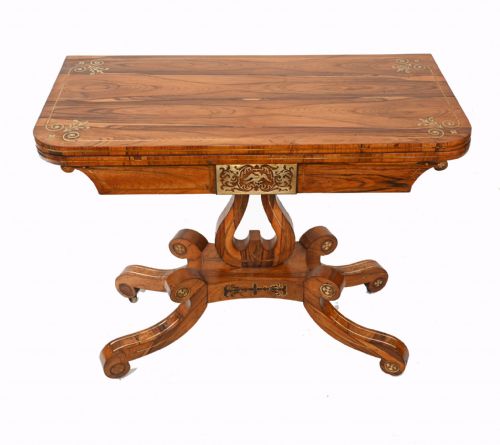
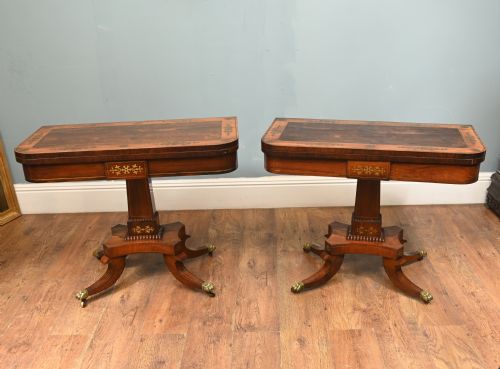


Inlaid Rosewood Card Table
An inlaid rosewood card table brings a rich, dark timber and delicate contrasting decoration to a room, designed to fold open for evening gaming.
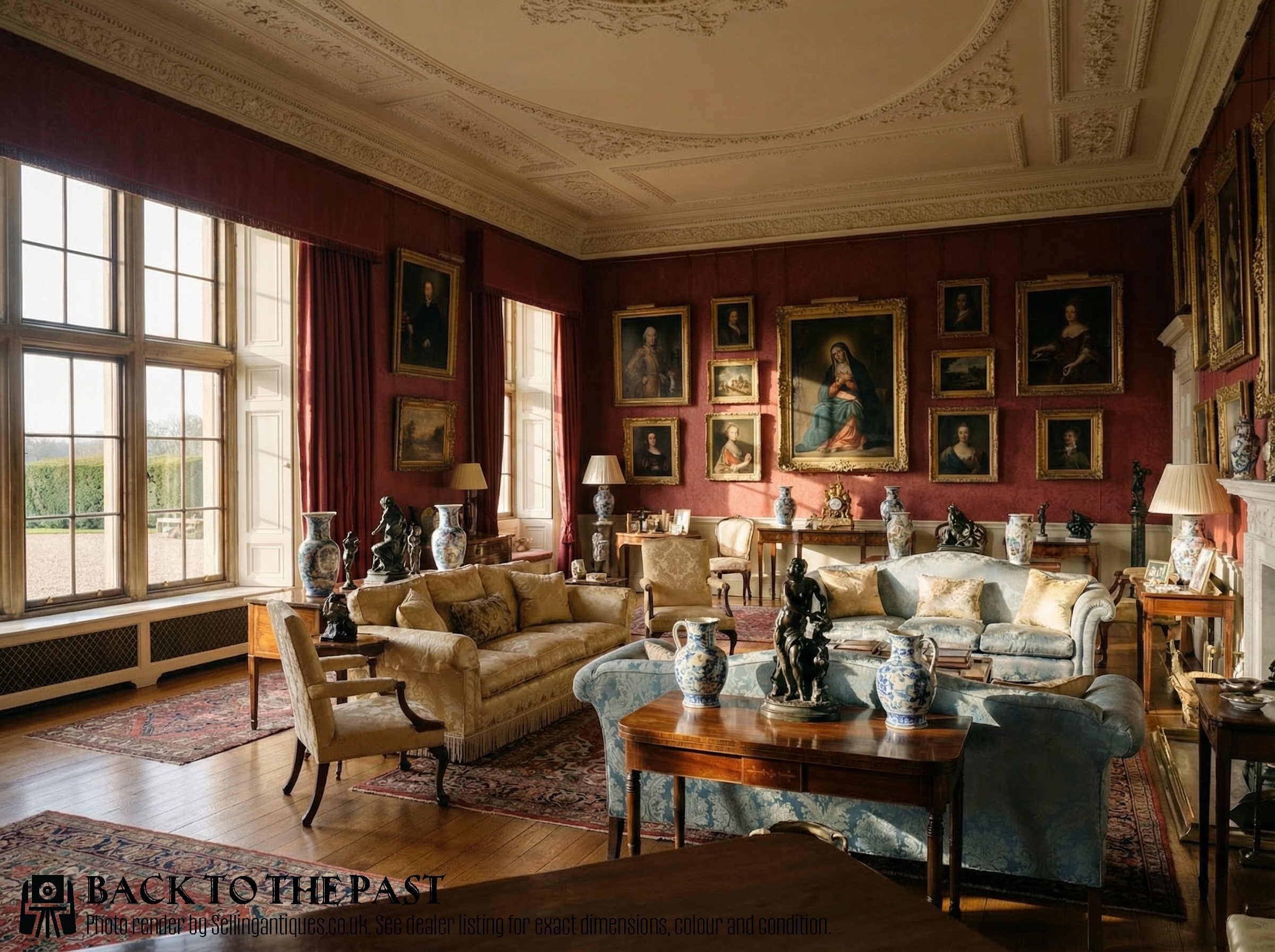
Inlaid Rosewood Card Table
An inlaid rosewood card table is a folding or swivel-top piece of furniture designed for parlour games and card playing. The search phrase covers several distinct forms, from early Georgian and George III examples to Regency pedestal tables and later Edwardian envelope tops.
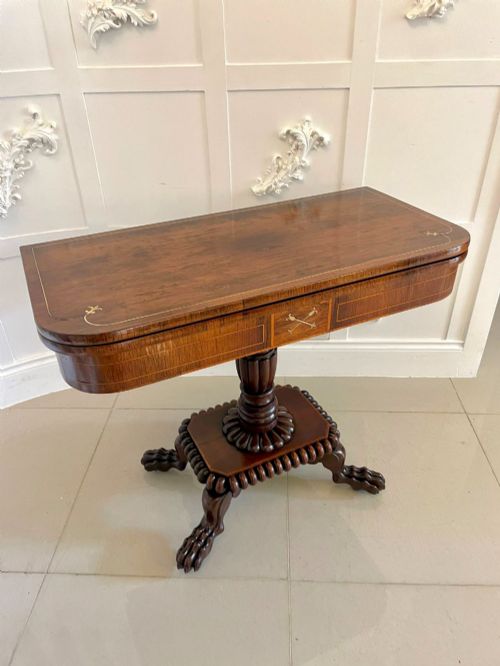
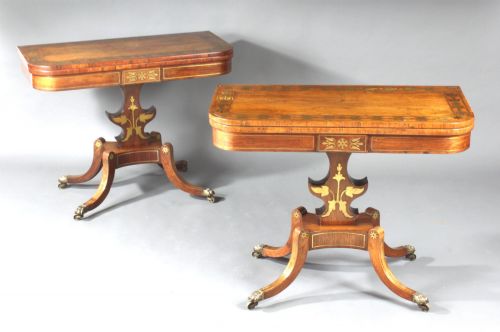
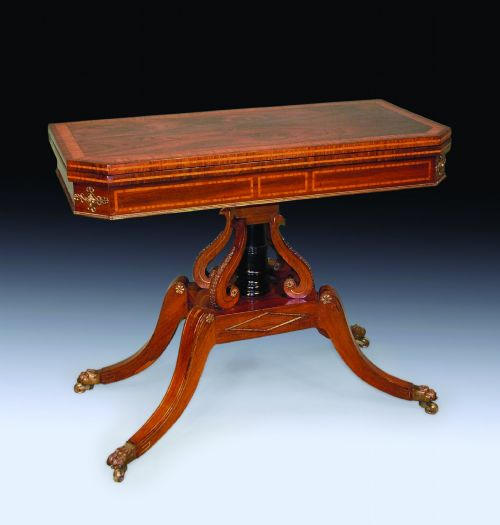
The most common version met on this page dates from the Regency period, featuring a fold-over top supported by a central pillar or scroll pedestal base. These tables often incorporate brass inlay and are designed to stand against a wall when closed.
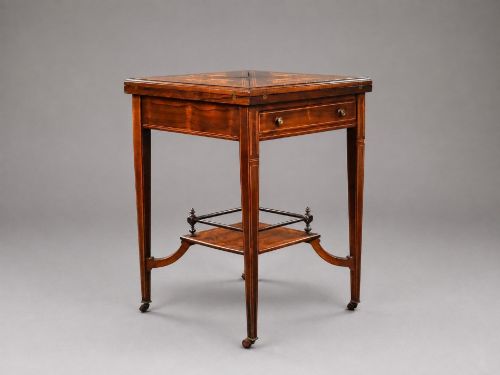
Later variants from the Edwardian era adopt the envelope design, where the square top folds open diagonally to reveal a baize-lined playing surface. Alongside these, demilune and side table formats appear, spanning the eighteenth to the late nineteenth centuries.
How they were made
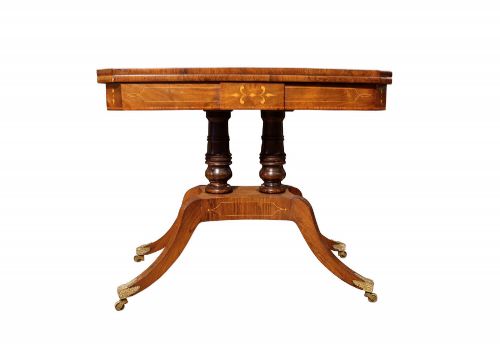
Makers built the primary carcase and tops using rosewood veneers applied to a secondary timber base, frequently accented with contrasting satinwood or boxwood inlay. Brass strips, stringing, and elaborate marquetry motifs were set directly into the wood surface to create geometric and floral patterns.
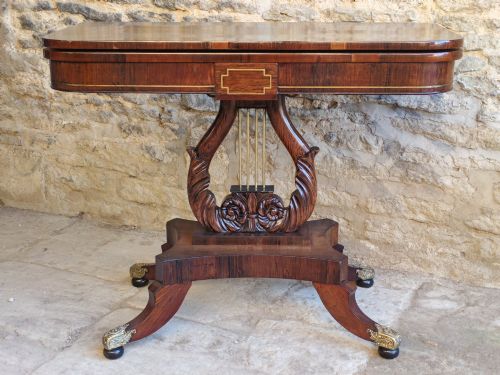
Structural stability relied on clever joinery, particularly for the pivoting and folding mechanisms of the top. Regency examples often employed substantial turned or carved pedestals resting on platform bases fitted with brass sabots and castors for mobility.
Listings feature rosewood card tables spanning the Georgian, Regency, Victorian, and Edwardian periods, with brass inlay and satinwood accents appearing frequently.
What varies in quality
The distinction between standard examples and the finest pieces lies in the precision and complexity of the inlay work. Finer items display meticulous hand-cut brass stringing and detailed satinwood or boxwood motifs that integrate seamlessly into the dense rosewood grain.
Proportion and the handling of secondary materials also separate the tiers of craftsmanship. Superior pieces feature well-figured timber, finely cast or chased ormolu mounts, and robust pivoting mechanisms that operate without binding or sagging.
George Bullock·Maple and Co·Shoolbred and Co·John McLean·George Oakley
The Inlaid Rosewood Card Table Glossary
- Envelope card table
- A square card table with a four-flap folding top that opens like an envelope to expose the playing surface. This design became particularly popular during the Edwardian period.
- Demilune
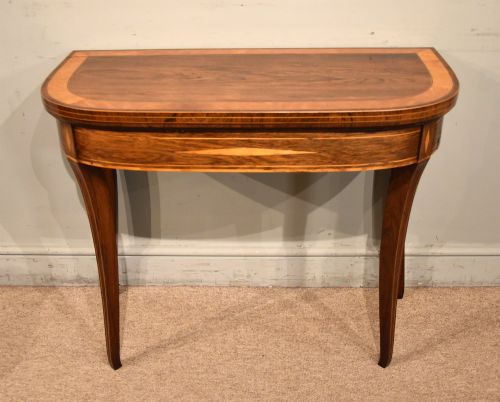
- A half-moon shape utilised for console and card tables designed to sit flush against a wall. These tables often feature fold-over tops supported by hinged rear legs.
- Sabot
- A metal sleeve or mount fitted to the foot of a table leg, frequently cast in brass. It protects the timber base and adds a decorative finish.
- Marquetry
- The art of applying pieces of veneer to a structure to form decorative patterns and pictures. It differs from simple inlay by assembling a complete veneer mosaic before application.
- Lyre pedestal
- A furniture support shaped in the form of an ancient Greek lyre instrument. This form appears frequently on Regency rosewood tables.
Inlaid Rosewood Card Table: Frequently Asked Questions
What is an envelope card table?
An envelope card table is a compact square table with four triangular flaps that fold inward and outward over the playing surface. When closed, it serves as an occasional or side table in a drawing room.
This form emerged strongly in the Edwardian period, often incorporating satinwood inlay and delicate tapering legs. The clever folding mechanism allows the baize-lined interior to remain concealed until needed for evening games.
How do you open a fold over card table?
A fold-over card table operates by lifting the hinged upper leaf and rotating or swinging the top ninety degrees to reveal a concealed compartment or support the extended leaf. Regency and Georgian versions rely on a pivoting action supported by the frame.
Care must be taken when operating the mechanism on older pieces to avoid straining the original wooden hinges and pivot pins. Once turned, the top rests securely over the frame to provide a stable surface for cards.
Where were card tables placed in a home?
Card tables stood against the walls of drawing rooms and parlours when closed, serving as decorative side or console tables. Their finished backs and compact profiles allowed them to occupy hallway spaces or unused wall areas without obstructing movement.
When evening arrived, servants or residents moved the tables into the centre of the room for gaming. The fold-over or envelope tops expanded the surface area instantly for guests.
How do I date a rosewood card table?
Dating a rosewood card table involves examining the overall silhouette, the style of the pedestal, and the specific type of inlay work. Regency examples typically feature heavy brass stringing, scroll pedestals, and platform bases with castors, while Edwardian pieces lean towards lighter envelope tops and satinwood banding.
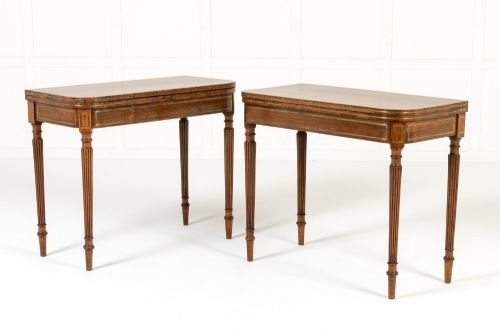
Construction methods inside the frieze drawer and the species of secondary timbers also provide clues to age. Eighteenth-century and George III variants display simpler, straight-legged profiles compared to nineteenth-century pedestal designs.