

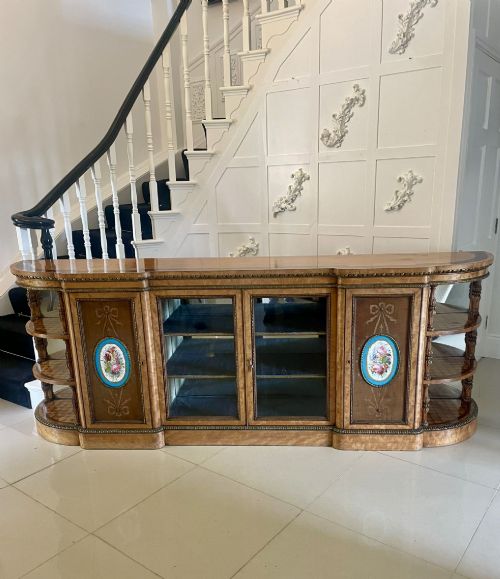


Inlaid Porcelain Credenza
An inlaid porcelain credenza brings heavy Victorian timber and gleaming plaques together in a piece built to anchor a formal room.
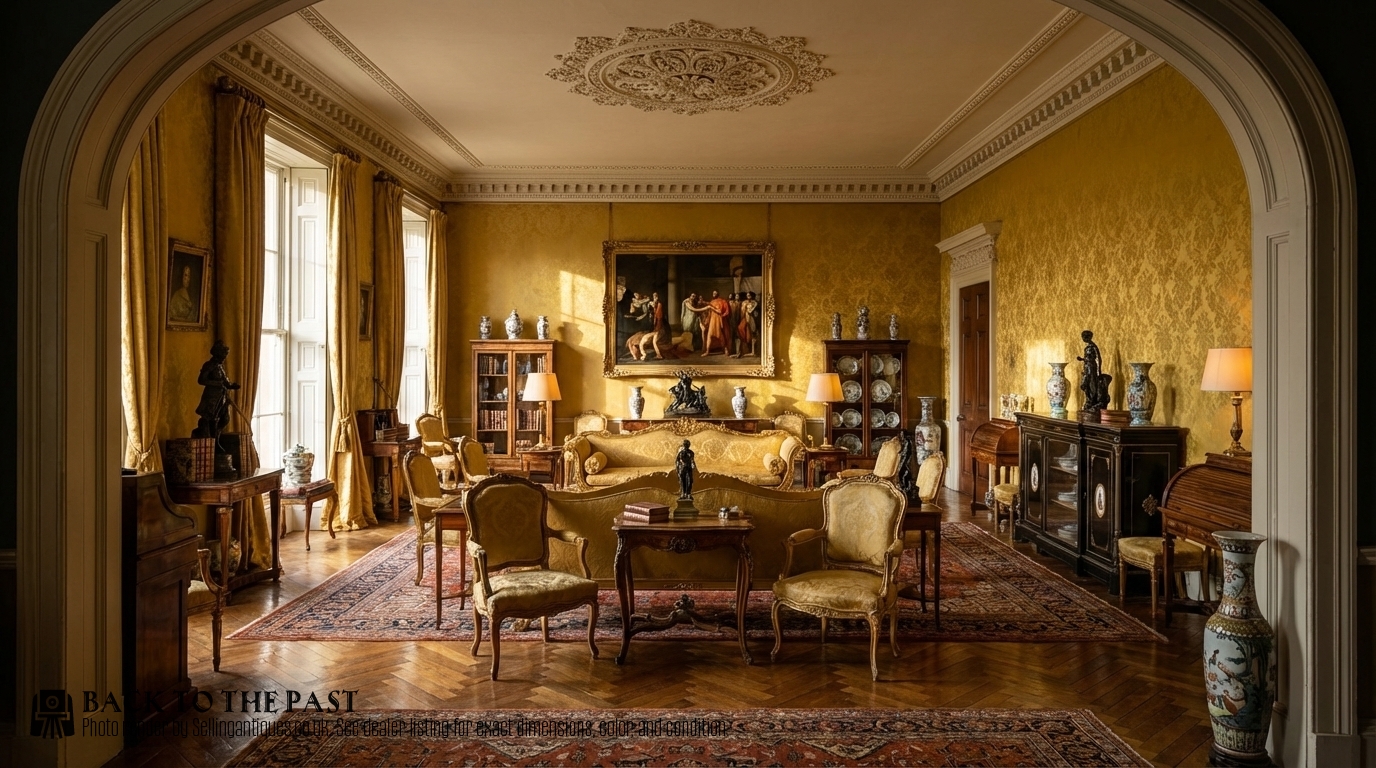
Inlaid Porcelain Credenza
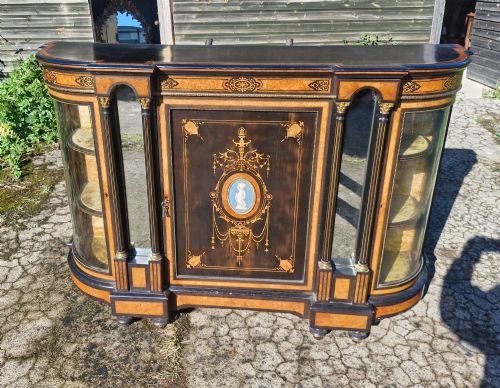
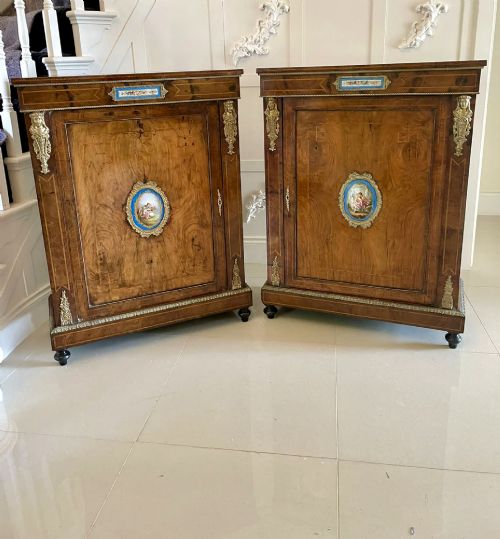
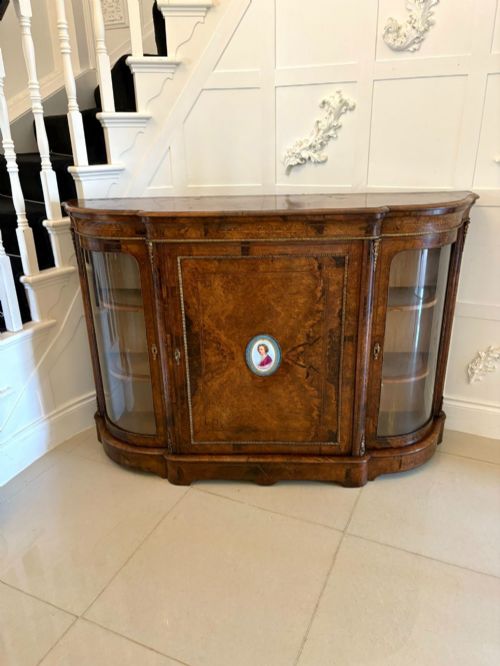
An inlaid porcelain credenza is a substantial cabinet designed for display and storage, appearing mostly in Victorian forms from the mid-nineteenth century. These items include credenzas, side cabinets, and pier cabinets that combine timber framing with inset ceramic plaques.
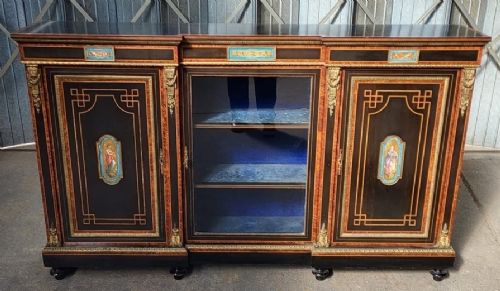
The pieces on this page span the 1850s to the 1870s, drawing heavily on Victorian and French Second Empire styles. Buyers encounter burr walnut, ebonised wood, and satinwood constructions enriched with marquetry and decorative metal mounts.
Most examples rely on glazed doors for interior display, flanked by curved or straight cabinets. The integration of painted ceramic elements defines the group, setting them apart from plain sideboards of the same era.
Construction and materials
Cabinet makers built these frames using dense hardwoods like burr walnut, ebonised wood, and satinwood, often applying intricate marquetry patterns across the surfaces. Fine stringing and contrasting timbers define the outer panels.
Porcelain plaques, occasionally identified as Sevres, are set directly into the wooden doors and friezes. Ormolu mounts frame these ceramic panels and edge the structural corners of the cabinet.
Glass panels are fitted to central and side doors to create display space for porcelain or silver. Heavy timber carcasses support the weight of both the stone and metal components without warping.
Inlaid Porcelain Credenza Retail Price Guide 2026
Typical asking prices for inlaid porcelain credenza among the pieces listed under this phrase on Sellingantiques today, from the lower quarter to the upper quarter. They describe what is for sale here now, not the wider market.
Every credenza needs a place to hide the tea caddy key.
Judging the work
Quality rests in the depth of the timber grain and the precision of the marquetry inlay. Burr walnut with a rich, swirling figure sits at the higher end of the scale compared to plain walnut grounds.
The execution of the painted porcelain plaques and the weight of the ormolu mounts signal the original cost of the piece. Finely chased metalwork and detailed ceramic painting separate standard production from exceptional examples.
The Inlaid Porcelain Credenza Glossary
- Credenza
- A low cabinet for the dining room or parlour, typically featuring cupboards and glazed display sections. This form serves as the primary shape for mounted porcelain pieces.
- Ormolu
- Gilt bronze mounts applied to furniture edges and panels for decorative effect. The metalwork catches the light and frames the ceramic plaques.
- Marquetry
- Fitted wood veneers arranged in pictorial or geometric patterns across a surface. Craftsmen use contrasting timbers to create depth within the cabinet doors.
- Burr walnut
- Timber taken from the warted growth of a walnut tree, yielding a heavily patterned grain. It forms the primary decorative surface for many Victorian cabinets.
- Pier cabinet
- A narrow cabinet designed to stand against the wall space between windows. These tall, single-door pieces often incorporate porcelain mounts.
Inlaid Porcelain Credenza: Frequently Asked Questions
What is a porcelain credenza?
A porcelain credenza is a nineteenth-century low cabinet built from timbers like burr walnut or ebonised wood and decorated with painted ceramic plaques. These pieces combine display shelving behind glass doors with solid wooden storage.
Craftsmen mounted painted plaques onto the doors and central friezes, framing them with marquetry work and ormolu mounts. They served as focal points in Victorian reception rooms.
How do I date these cabinets?
Dating relies on timber choices, construction methods, and stylistic markers recorded across the Victorian period. Most examples on this page date from the 1850s to the 1870s, reflecting Victorian and French Second Empire tastes.
Ebonised finishes and heavy ormolu mounts frequently point toward the middle decades of the nineteenth century. Burr walnut veneers with elaborate marquetry align with the height of Victorian cabinet making.
Where were they placed originally?
These cabinets stood against the main walls of Victorian drawing rooms and formal parlours. Their low profile allowed the top surface to hold decorative objects or lamps.
Glased doors allowed owners to display collections of ceramics and glassware away from dust. The inclusion of pier cabinets and side cabinets offered matching storage for adjacent wall spaces.
How do I care for the wood?
Maintaining the finish requires keeping the cabinet away from direct sunlight and steady heat sources that dry out walnut and satinwood. Regular dusting with a soft, dry cloth protects the delicate marquetry and stringing.
Polished ormolu mounts and porcelain plaques need gentle cleaning without harsh chemical agents. Natural wax feeds the timber grain and preserves the depth of the burr walnut surfaces.