


Inlaid Octagonal Work Table
An inlaid octagonal work table combines practical utility with decorative surface patterns, offering a charming focal point for any traditional room.
Inlaid Octagonal Work Table
An inlaid octagonal work table is a multi-functional piece designed for sewing, games, and occasional use, distinguished by its eight-sided top. The versions found here span the Regency, Victorian, and Edwardian periods, capturing the evolving tastes of the nineteenth and early twentieth centuries.
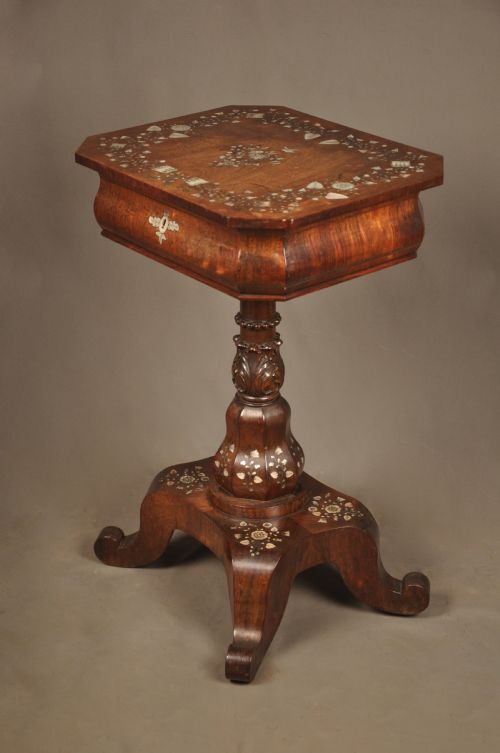
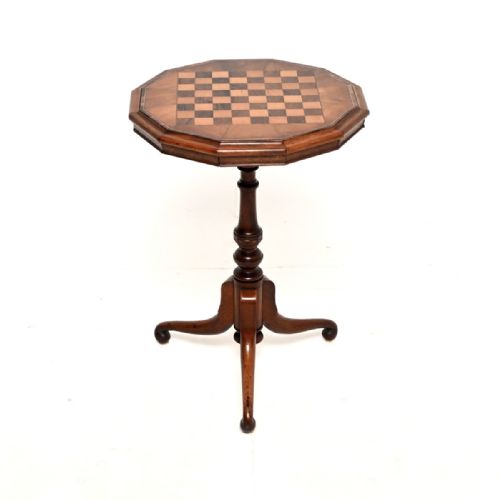
Most examples function as sewing or needlework tables equipped with internal compartments or silk baskets, though some double as chess or games tables. Their distinctive shape allows them to sit comfortably in corners or beside chairs without dominating the floor space.
How they were made
Cabinet makers utilised dense timbers such as mahogany, walnut, and rosewood to construct the foundational frames of these tables. These sturdy woods provided a stable canvas for the intricate surface decoration.
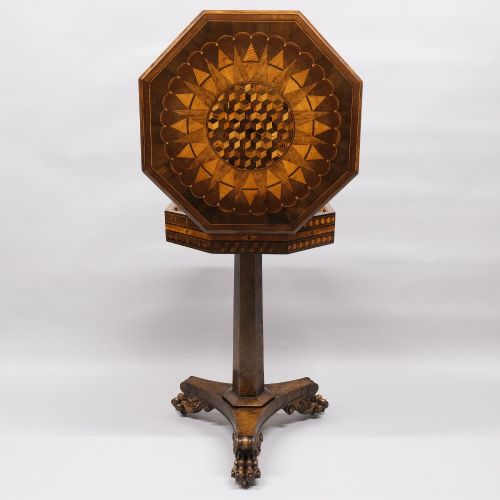
Makers embellished the surfaces using contrasting materials like satinwood, boxwood, brass, and mixed wood inlay to create geometric patterns, floral motifs, and chequer-boards. Skilled carpentry ensured that the lids, compartments, and tripod bases remained durable through daily domestic use.
Some sewing tables still conceal their original silk baskets, designed to catch loose threads and stray fabric scraps from Victorian sewing circles.
What varies in quality
The refinement of the surface decoration largely dictates the quality of an inlaid octagonal work table, distinguishing simple production from finer craftsmanship. Crisp, precise marquetry and parquetry utilising diverse timbers indicate a higher level of artisan skill.
Internal arrangement and hardware also set pieces apart, with superior examples featuring fitted compartments, original silk baskets, and intact brass mountings. The integrity of the timber joints and the balance of the tripod or pedestal bases further reflect the original maker's standard.
Ralph Turnbull
The Inlaid Octagonal Work Table Glossary
- Parquetry
- Geometric wood inlay laid down in a mosaic pattern to form decorative surfaces. This technique frequently appears on the tops of nineteenth-century tables.
- Marquetry
- The art of applying pieces of veneer to a structure to form decorative pictures or designs. It often incorporates varied timbers to achieve tonal contrast.
- Satinwood
- A durable, yellowish timber prized for its lustrous sheen and smooth texture. Cabinet makers utilised it extensively during the Sheraton Revival and Edwardian periods.
- Trumpet table
- A form of work table featuring an octagonal or flared body resembling a trumpet shape, often standing on a tripod base. These typically house internal sewing compartments.
- Killarney ware
- Distinctive ornamental woodwork originating in Ireland, usually decorated with detailed marquetry using native woods like arbutus. Pieces often incorporate local motifs.
Inlaid Octagonal Work Table: Frequently Asked Questions
What is an inlaid octagonal work table used for?
These tables served primarily as compact desks or sewing stations for needlework, holding threads, pins, and fabric inside dedicated compartments or suspended silk baskets.
Over time, many adapted to general domestic use as lamp tables, side tables, or occasional surfaces for holding small decorative objects in sitting rooms.
How do I identify a Victorian work table?
Victorian examples often feature rich timbers like walnut and rosewood, paired with trumpet-shaped bodies, heavy turned pedestals, and elaborate marquetry inlay. The inclusion of fitted internal trays and velvet-lined compartments points directly to mid-nineteenth-century domestic habits.
Construction methods from this era rely on solid framing combined with early machine-sawn veneers, marking a shift towards more accessible decorative furniture.
Are these tables suitable for modern rooms?
Their modest proportions and flat octagonal tops make them practical for modern living spaces, fitting easily beside sofas or armchairs as side tables.
The internal storage compartments remain useful for keeping small everyday items out of sight while adding historical character to a room.
What distinguishes Edwardian tables from earlier periods?
Edwardian versions typically employ lighter timbers such as satinwood and mahogany, reflecting a preference for brighter, airier interiors at the turn of the twentieth century. The inlay work on these pieces often feels more delicate and refined compared to heavier Victorian designs.
Proportions also tend to be slender, with slender legs and subtle brass mounts replacing the robust pedestals of the previous century.