
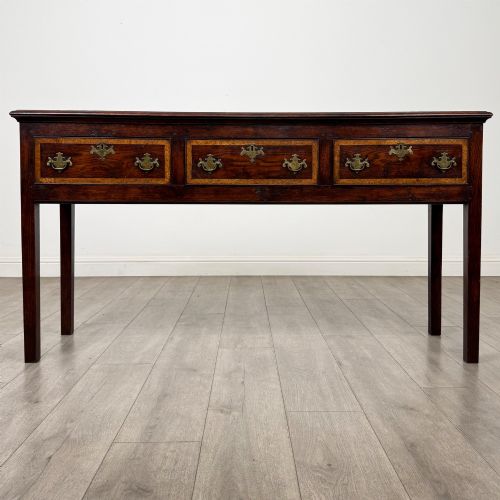
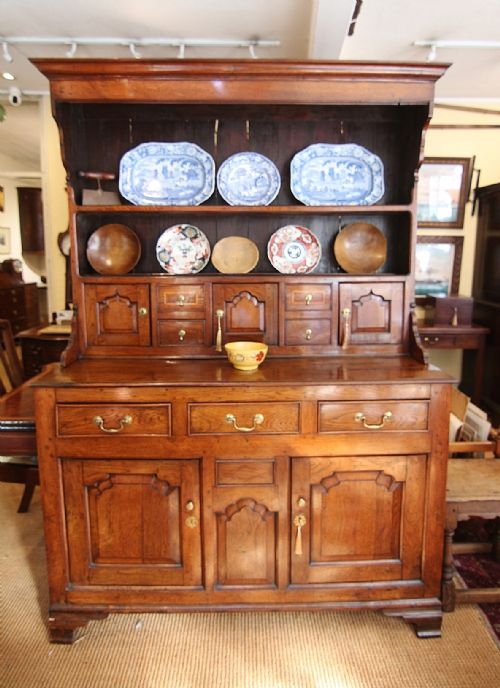
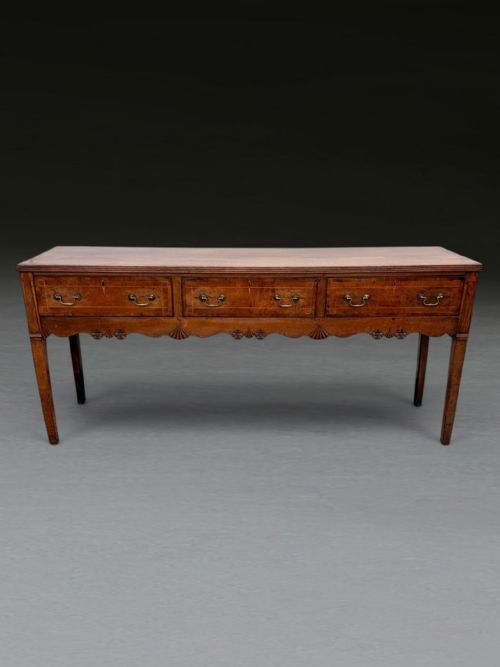
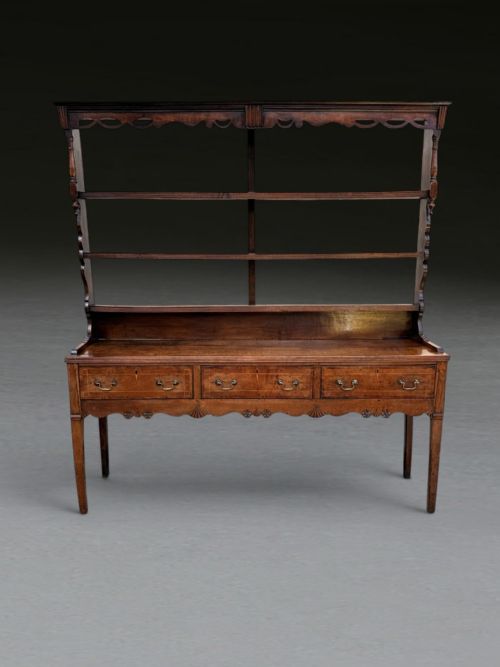

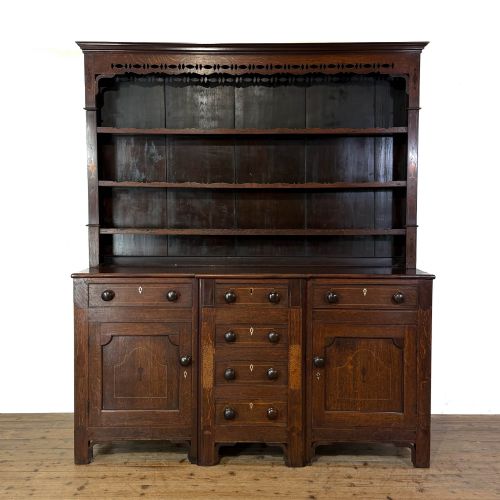


Inlaid Oak Country Dresser
An inlaid oak country dresser brings rustic warmth and practical storage to a room, combining solid timber with decorative detail.
Inlaid Oak Country Dresser
An inlaid oak country dresser provides substantial storage with a rustic character derived from regional cabinetmaking traditions. These pieces combine utilitarian design with decorative accents.
The examples found here range across the Georgian and Edwardian periods, including pieces from Welsh and Swedish traditions. Sideboards, dresser bases, and chests of drawers appear alongside traditional Welsh dressers.
Georgian and 18th Century examples sit alongside 19th Century and Edwardian pieces. Oak forms the primary structure, often accented with contrasting timbers and brass details.
How they were made
Cabinetmakers utilised solid oak for the primary carcass and structural elements of each dresser. Traditional joinery methods ensured stability and longevity for pieces intended for daily kitchen and dining use.
Inlay work incorporated mahogany, burr elm, and other inlay timbers to create contrasting geometric patterns or decorative motifs. Bone occasionally appears in the decorative details alongside wood marquetry.
Brass hardware, including handles and escutcheons, complemented the natural grain of the timber. Drawer construction relied on hand-cut joints built to withstand heavy domestic demands.
Listings span the 18th Century, Georgian period, 19th Century, and Edwardian era, constructed in oak with mahogany, burr elm, and brass.
What varies in quality
The refinement of the inlay work distinguishes individual pieces, ranging from simple geometric banding to intricate marquetry scenes. Precision in the matching of timber grains marks out superior cabinetmaking.
Proportions and regional vernacular styles influence the visual balance of the piece. Subtle differences in cornices, drawer arrangements, and foot styles reflect the skill of the original workshop.
The Inlaid Oak Country Dresser Glossary
- Dresser base
- The lower section of a full dresser, functioning as a sideboard with cupboards and drawers. These pieces offer surface space and enclosed storage.
- Marquetry
- The art of applying pieces of veneer to a structure to form decorative patterns and pictures. Craftsmen used contrasting timbers to achieve visual depth.
- Escutcheon
- A flat brass plate surrounding a keyhole to protect the surrounding wood from wear. These fittings contribute to the decorative appearance of the drawers and doors.
- Vernacular
- Furniture designed and built by local craftsmen for everyday use rather than following metropolitan court styles. These pieces display regional characteristics unique to areas like Snowdonia or Talwrn.
Inlaid Oak Country Dresser: Frequently Asked Questions
What is a Welsh dresser?
A Welsh dresser traditionally combines an open-shelf plate rack on top with a base of drawers and cupboards.
Regional variations display specific proportions and timber choices that identify their origin.
How do I date an oak dresser?
Dating relies on construction methods, timber selection, and decorative styles such as Georgian or Edwardian details.
Examine the drawer joints and internal timbers for signs of period-specific hand tools and techniques.
Where were these dressers used?
These pieces served as functional storage and display furniture in kitchens and dining rooms of country homes.
They held tableware, linens, and provisions while displaying ceramic plates on the upper racks.
What woods are used in inlay?
Cabinetmakers incorporated mahogany, burr elm, and various inlay timbers to create contrast against the oak background.
Bone also appears in select decorative elements to add bright tonal highlights.