

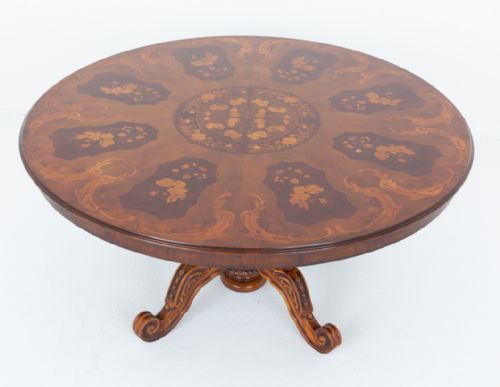


Inlaid Marquetry Round Table
An inlaid marquetry round table brings patterned wood surfaces and circular forms together, offering practical furniture with decorative top panels.
Inlaid Marquetry Round Table
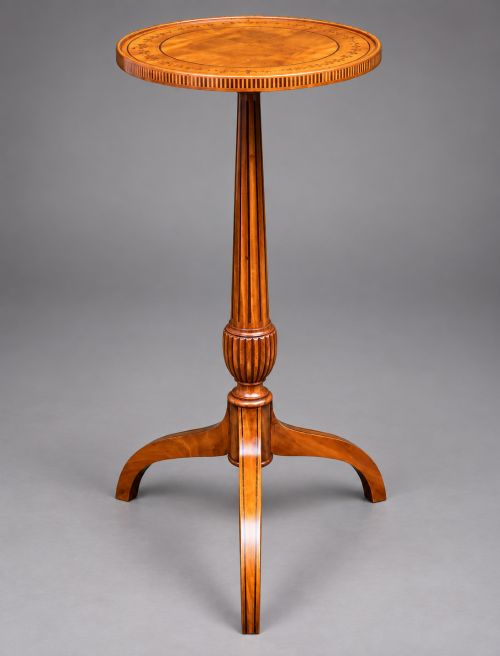
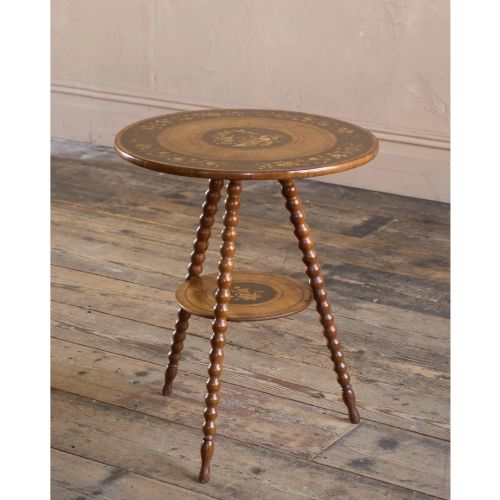
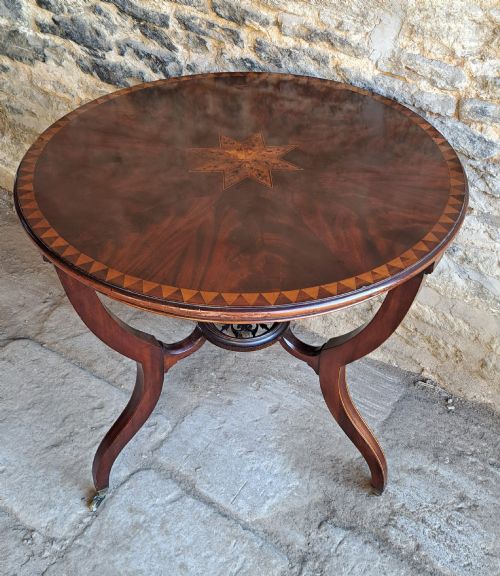
An inlaid marquetry round table combines patterned veneer work with a circular top, serving multiple domestic functions across different rooms. The form appears most frequently as a centre table or an occasional table originating from the nineteenth century.
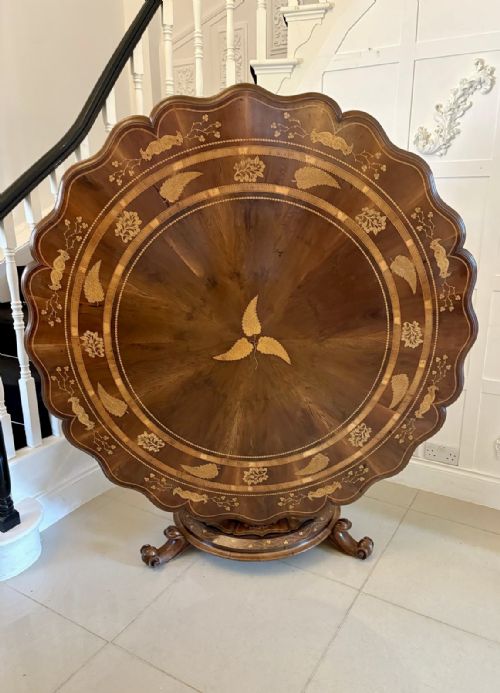
Makers produced these tables in various scales, ranging from small lamp tables to large dining tables intended for entrance halls. Walnut, mahogany and rosewood form the main structural woods, paired with elaborate surface decoration.
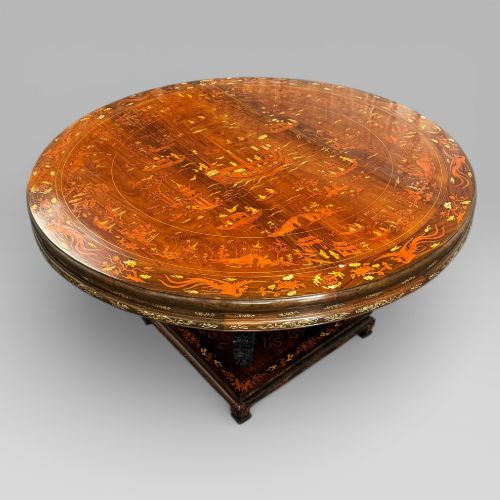
Victorian and Edwardian examples dominate the selection, alongside earlier Regency pieces and later twentieth-century interpretations. The overarching category spans simple wine tables to exhibition quality pieces with intricate pictorial inlays.
Materials and construction methods
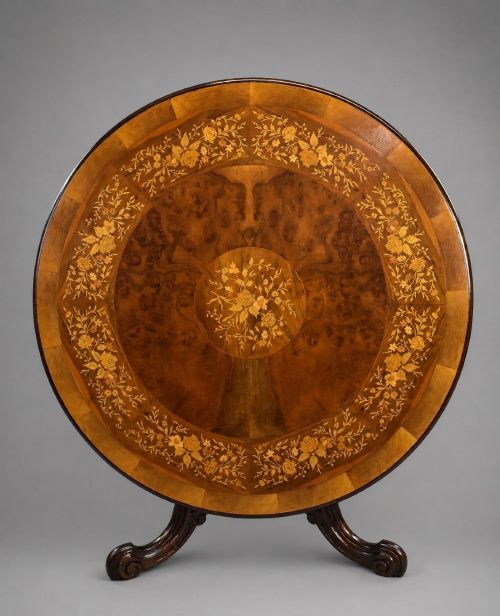
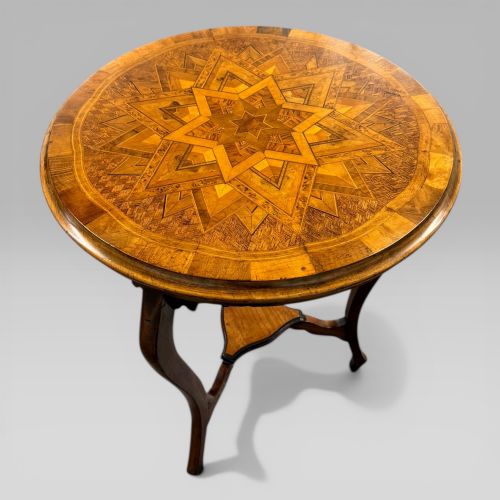
Craftsmen built the core structures using solid timbers like mahogany, walnut and oak, applying fine veneers over the main surfaces. Marquetry inlay involved cutting different woods, brass or specimen pieces to form decorative motifs set flush into the surface.
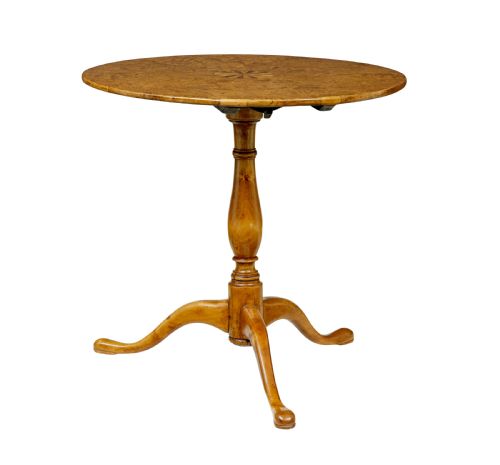
Specialist workshops utilised contrasting natural tones, employing satinwood, burr birch, yew and thuya to create pictorial or geometric designs. Tripod bases, pillar supports and carved central pedestals provided stability for the heavy circular tops.
Some nineteenth-century tables hide astrological signs in their wood veneer, letting you dine surrounded by your personal zodiac constellation.
Distinguishing quality across pieces
Quality rests in the precision of the veneer cutting and the complexity of the wood selection used in the marquetry. Superior examples exhibit tightly fitted inlay work without visible gaps or excessive filler between the different wood species.
The choice of primary timber also dictates the tier of the piece, with burr walnut and exhibition quality rosewood occupying the upper range. Carved details on the pedestals and the crispness of secondary elements like brass mounts separate workshop standards.
Edwards & Roberts·Anton Seuffert·Egan Workshop·Pietro Ferrario·Holland & Sons
The Inlaid Marquetry Round Table Glossary
- Marquetry inlay
- The decorative technique of applying fitted pieces of wood veneer to a structural surface to form pictures or geometric patterns. This method allows artisans to utilise contrasting grains and natural colours.
- Centre table
- A freestanding piece designed to be viewed from all sides, commonly positioned in the middle of a room rather than against a wall. These tables often feature circular tops supported by a central pillar or tripod base.
- Occasional table
- A small, movable table intended for specific, minor domestic uses such as holding lamps or books. They appear frequently in nineteenth-century and Edwardian interiors.
- Specimen wood
- Timber collected from various exotic or domestic trees, often utilised in specific panels to showcase different botanical colours and grain patterns. These woods create a mosaic effect on the tabletop.
- Tripod table
- A small circular table supported by a pillar above three spreading feet. This construction provides stable footing on uneven historical flooring.
Inlaid Marquetry Round Table: Frequently Asked Questions
What rooms suit an inlaid marquetry round table?
These tables function well as central display pieces in entrance halls or as occasional surfaces in reception rooms. Their circular shape permits easy movement around the furniture in limited spaces.
Larger variations operate effectively as dining tables or primary centre tables where the inlaid top remains fully visible.
What is a Killarney marquetry table?
Killarney marquetry originates from Ireland, utilising native woods such as yew and arbutus to depict local architectural ruins, harps or geometric motifs. These regional pieces display distinct botanical palettes native to the area.
Workshops in Killarney produced these specialised tables for tourists and exhibition buyers during the nineteenth century.
Are these tables suitable for daily use?
Historic tables require careful placement away from direct heat sources and strong sunlight to protect the delicate veneer and glue. Using coasters and mats prevents moisture rings from damaging the polished marquetry surface.
Routine maintenance involves gentle dusting with a dry cloth rather than applying modern chemical polishes.