


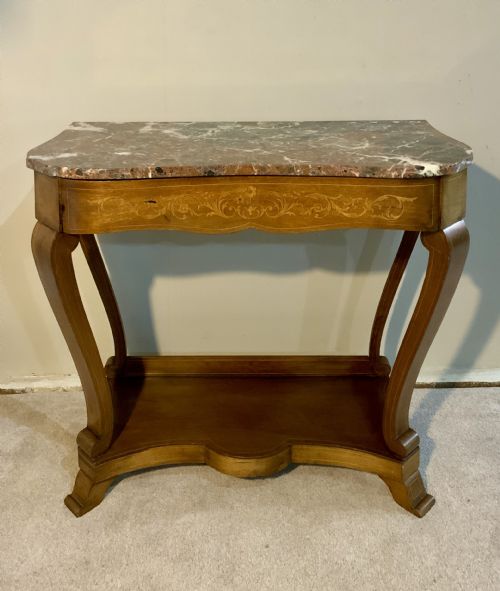


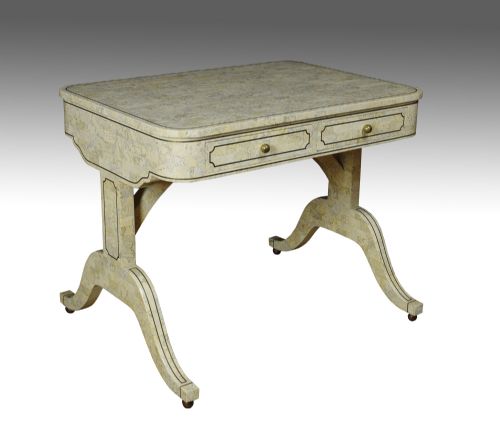

Inlaid Marble Hall Table
An inlaid marble hall table brings weight and polish to an entranceway, uniting solid stone surfaces with decorative timber frames.
Inlaid Marble Hall Table
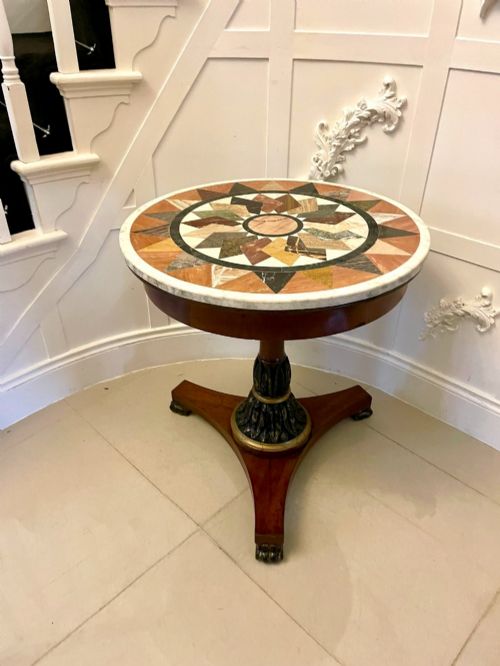
When you search for an inlaid marble hall table, you are looking at substantial antique furniture designed for grand hallways and reception spaces, spanning periods from the Regency era through to the early twentieth century. These pieces combine heavy stone surfaces with supporting frames built from walnut, mahogany, satinwood, and giltwood.
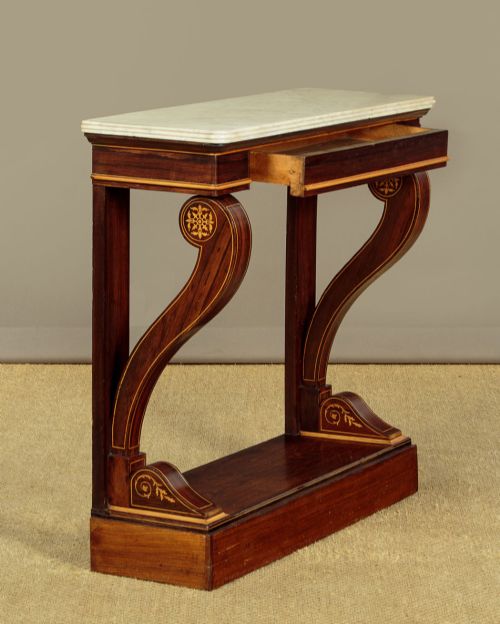
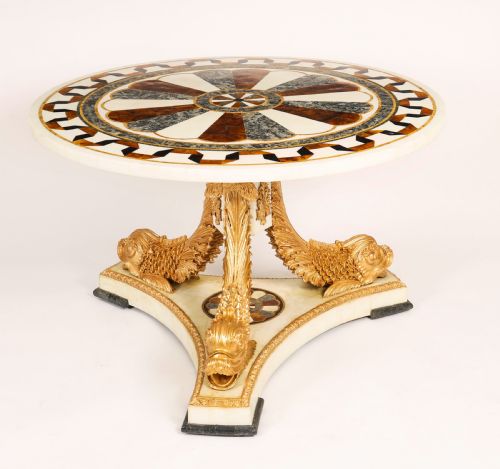
The version you are most likely to meet on this page is an Italian or Regency console or centre table, frequently featuring specimen marble or purple marble tops set into timber structures. Alongside traditional console and centre tables, the selection includes related forms such as pier tables, washstands, and occasional side tables.
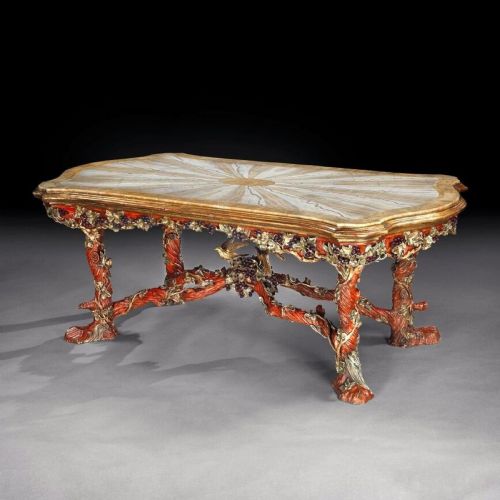
The aesthetic draws heavily on Neoclassical, Italian Rococo Revival, and French Second Empire styles, marked by hand-painted details, carved wood, and intricate wood inlay. Origins range across British, Italian, Dutch, and Scottish workshops, reflecting diverse regional cabinet-making traditions.
How they were made
The construction relies on combining dense natural stone with robust cabinet timbers like mahogany, walnut, and satinwood. Stonemasons cut and polished marble, often assembling specimen pieces or purple slabs to create smooth, decorative surfaces.
Cabinet-makers formed the support structures using traditional joinery, incorporating wood inlay, marquetry, and brass detailing. Carved wood elements, polychrome finishes, and hand-painted decorations were applied to complete the frames of console and centre tables.
Inlaid Marble Hall Table Retail Price Guide 2026
Typical asking prices for inlaid marble hall table among the pieces listed under this phrase on Sellingantiques today, from the lower quarter to the upper quarter. They describe what is for sale here now, not the wider market.
Object forms on this page include console tables, centre tables, washstands, desks, sofa tables, and side tables.
What varies in quality
The distinction between tiers of work rests on the precision of the stone cutting and the complexity of the timber inlay. Finer examples display tightly fitted specimen marble assemblies and crisp, detailed wood marquetry rather than simpler painted substitutes.
Structural execution also sets pieces apart, seen in the depth of hand-carving on wooden bases and the stability of joints in heavy console frames. The choice of primary timbers, such as figured walnut or satinwood, dictates the overall refinement of the piece.
Amleto Bertoni
The Inlaid Marble Hall Table Glossary
- Specimen marble
- A top assembled from multiple small pieces of different coloured marbles arranged in geometric or pictorial patterns. This technique was popular in nineteenth-century Italian workshops.
- Console table
- A table designed to stand against a wall, frequently secured with brackets or resting on front legs. These pieces form a standard feature in traditional hallway settings.
- Marquetry
- Decorative patterns formed by inserting thin veneers of wood into a solid wood background. It differs from simpler inlay by covering the entire surface design.
- Gueridon
- A small French table supported by one or more central columns or figures. They often feature round marble tops suitable for display.
- Pier table
- A low table designed to sit against the wall beneath a pier glass mirror. These tables share similarities in scale and placement with standard console tables.
Inlaid Marble Hall Table: Frequently Asked Questions
What is an inlaid marble hall table used for?
These tables provide a firm surface for displaying decorative objects, lamps, or correspondence near an entrance. Their narrow console formats allow them to sit flush against hallway walls without obstructing movement.
Historically, they served as formal display pieces in grand reception rooms and hallways to showcase wealth and taste. Today, they function well in modern interiors for practical placement of everyday items while anchoring an entryway design.
How do I style a marble top table?
Pair the substantial stone surface with simple accessories to let the natural veining and inlay work remain the visual focus. Bronze figures, ceramic bowls, or tall table lamps balance the heavy proportions of mahogany and walnut frames.
Position the table centrally against a feature wall or beneath a mirror to echo traditional placement. Ensure the surrounding floor space accommodates the table depth, particularly with larger console or centre table formats.
How can I tell a Regency table from later pieces?
Regency pieces typically date from the early nineteenth century and rely on classical architectural motifs, heavier mahogany or rosewood timbers, and restrained brass mounts. Their proportions often reflect strict Neoclassical symmetry and formal design principles.
Later nineteenth-century and early twentieth-century examples, such as Edwardian or revival pieces, introduce lighter satinwood, painted decorations, and varied regional marbles like specimen or purple varieties. Examining the secondary timbers and underside construction helps confirm the period of manufacture.
Are marble top tables difficult to care for?
Marble requires gentle cleaning with damp cloths and mild, pH-neutral soap to protect the polished finish from acidic spills. Avoid harsh chemical cleaners that can etch the stone surface over time.
The wooden frames benefit from occasional waxing suited to walnut or mahogany to maintain the timber condition. Placing felt pads beneath heavy decorative objects prevents scratching the polished stone top.