
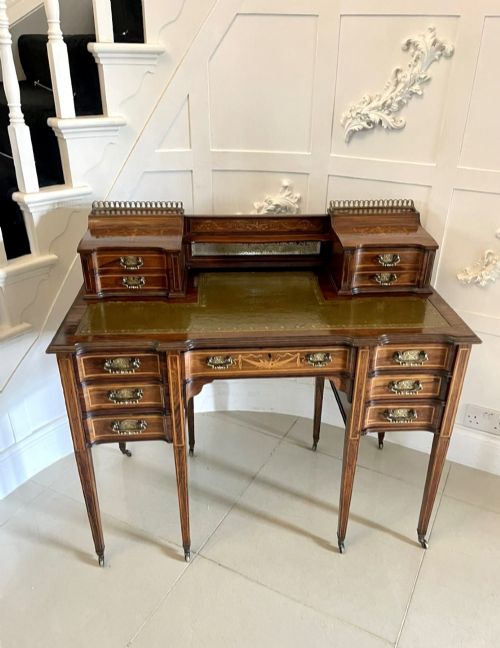
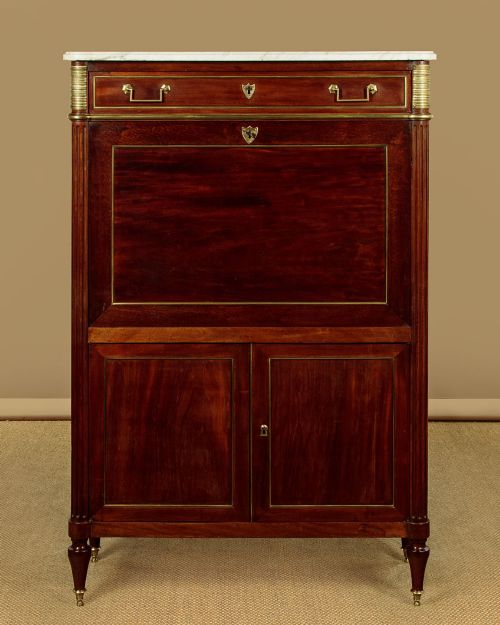
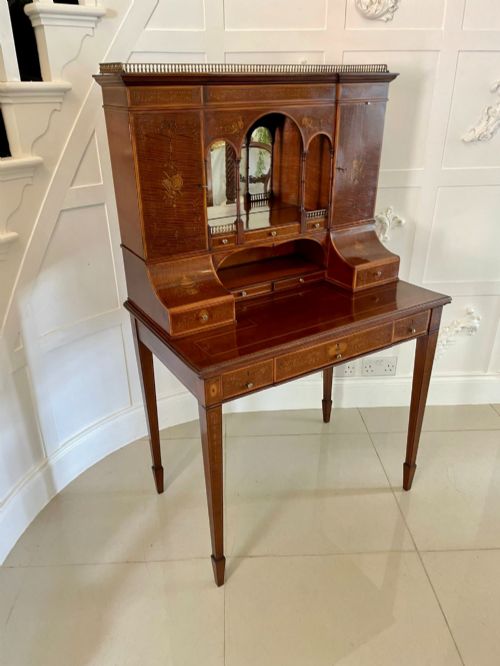
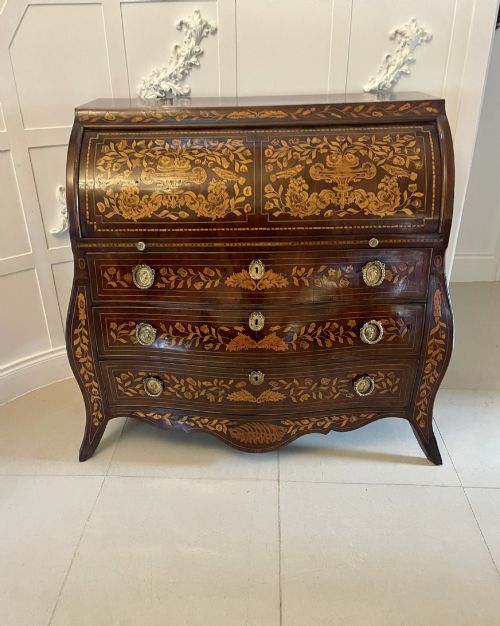
Inlaid Mahogany Writing Bureau
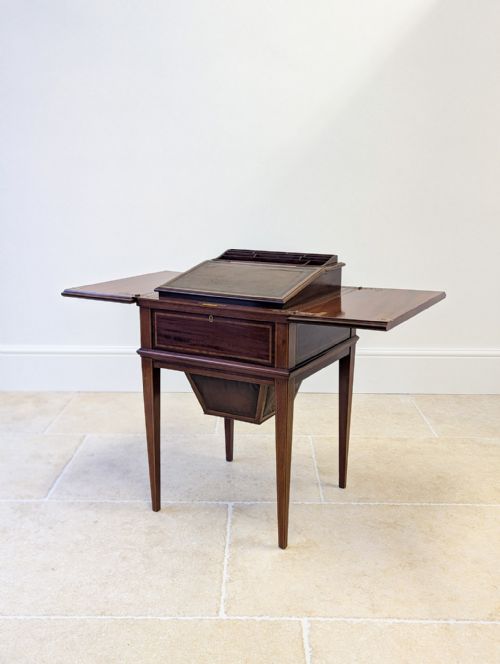
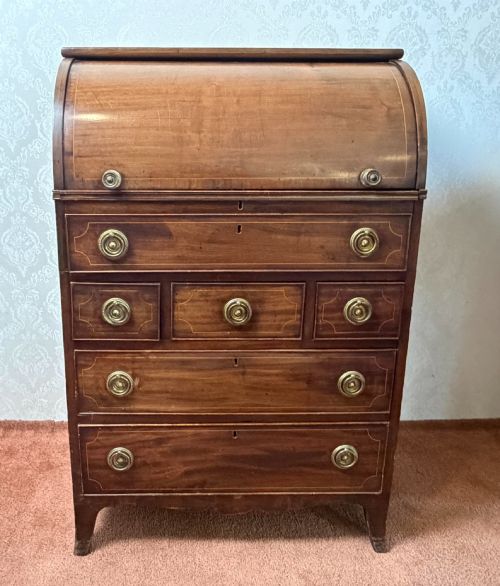
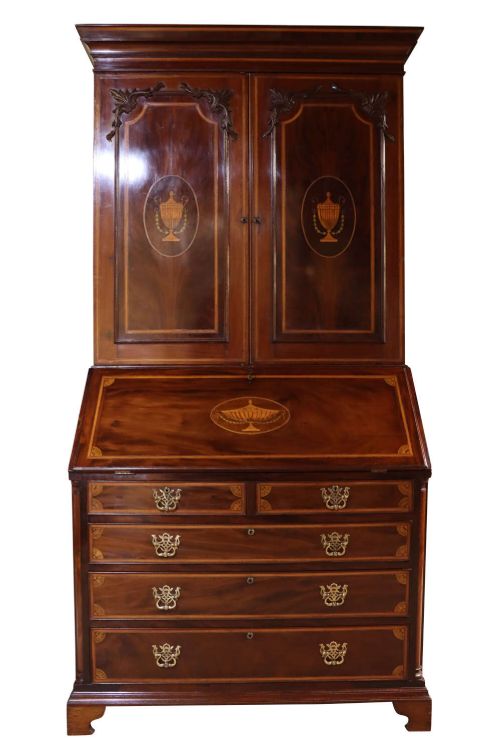
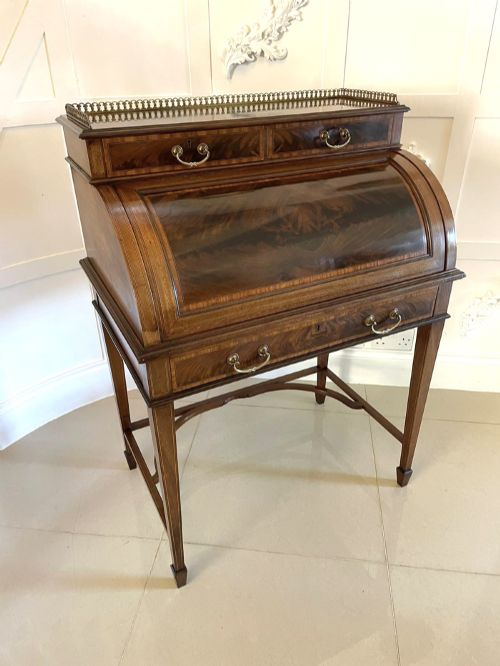
An inlaid mahogany writing bureau brings together figured timber, precise stringing and a fitted drop-front desk tailored for correspondence.
Inlaid Mahogany Writing Bureau
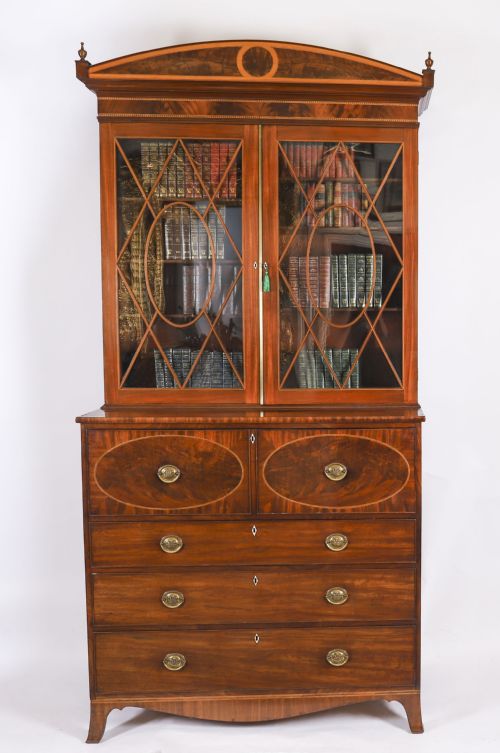
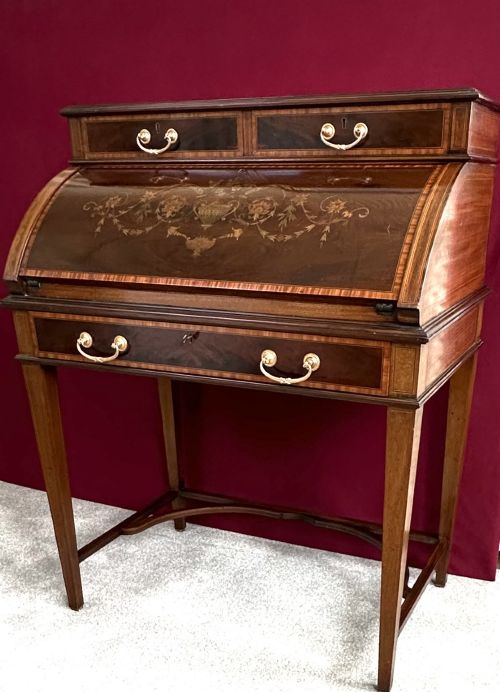
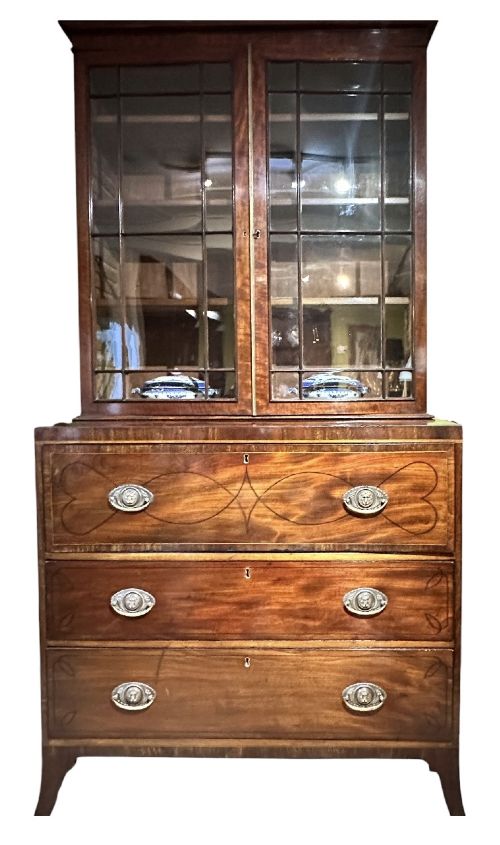
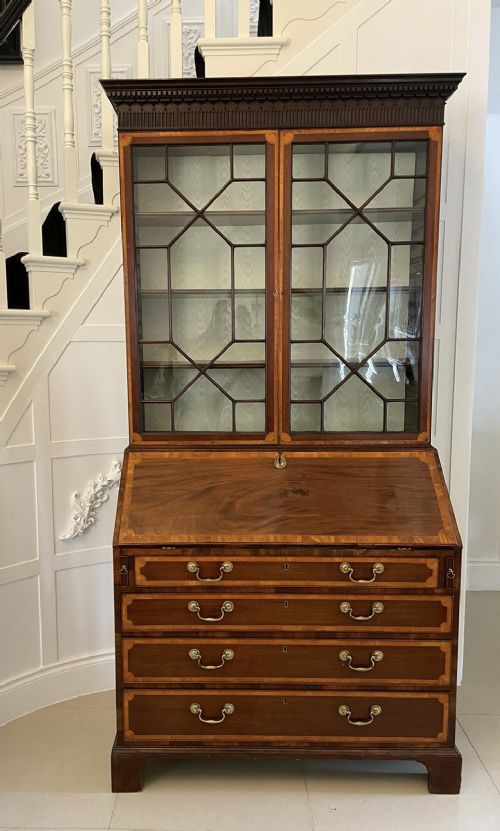
An inlaid mahogany writing bureau centres on a fall-front flap that opens to reveal internal small drawers and pigeonholes for stationery. The form spans Georgian, Regency and Edwardian periods, appearing frequently in smaller proportions suited to domestic rooms.
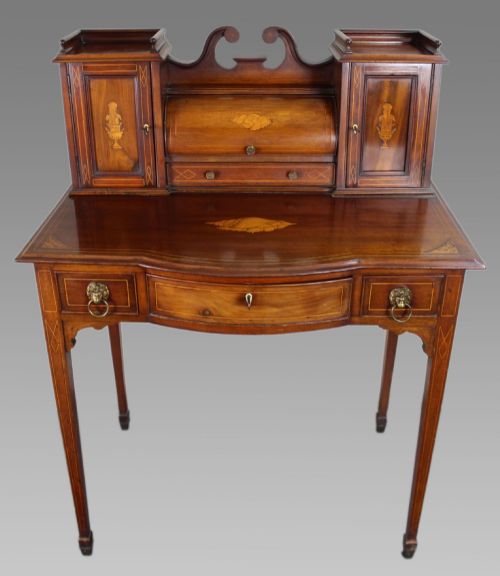
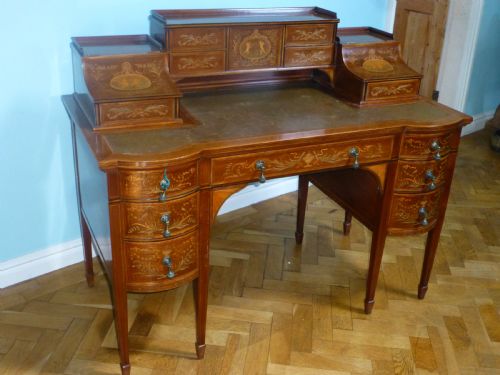
Makers utilised contrasting timbers like satinwood and boxwood to frame drawer fronts and borders with delicate floral or geometric motifs. The selection includes tall bureau bookcases alongside compact writing desks resting on tapered or bracket feet.
Materials and Construction
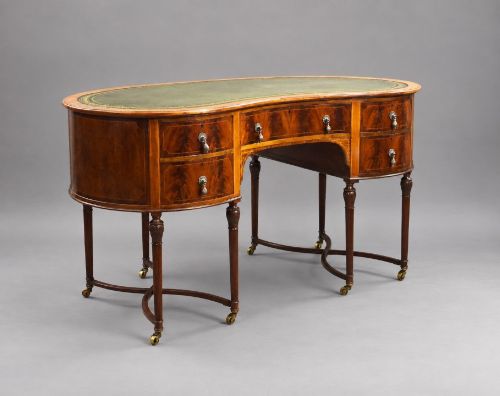
Cabinet makers relied primarily on solid mahogany and flame mahogany veneers laid over secondary timbers, enriched by satinwood and boxwood inlay. Brass hardware, including drop handles and escutcheons, secures the drawers and fall fronts.
Internal compartments often feature miniature drawers and secret compartments constructed with dovetail joints, reflecting traditional cabinet-making standards across the eighteenth and nineteenth centuries.
Materials appearing across the inventory include solid mahogany, flame mahogany, satinwood, brass and leather.
Judging Quality
Quality rests on the depth of figure in the mahogany veneer, the crispness of the boxwood and satinwood inlay work, and the integrity of the internal fittings. Pieces with finely figured flame mahogany and well-executed floral marquetry sit at the upper end of the range.
Structural finesse shows in the hand-cut dovetails of the internal drawers, the balanced proportions of the writing flap, and the survival of original brass handles and working locks.
Maple and Co·Edwards and Roberts
The Inlaid Mahogany Writing Bureau Glossary
- Fall-front
- A hinged writing flap that drops forward to create a horizontal desk surface. It conceals the internal pigeonholes and small drawers when closed.
- Marquetry
- Decorative patterns formed by fitting together contrasting veneers of wood or other materials. These create pictorial or floral designs across the surface.
- Stringing
- Thin lines of contrasting timber inlaid into shallow channels on drawer fronts or legs. It defines the structural outlines of the piece.
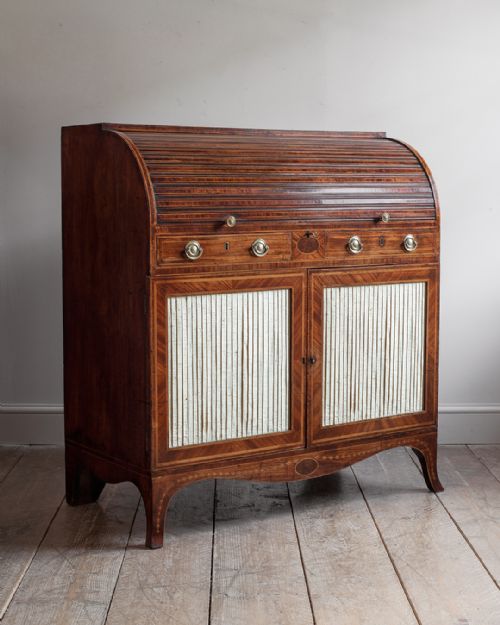
- Secretaire
- A piece of furniture containing a drawer or compartment configured for writing. Often disguised to look like a standard chest of drawers or bookcase base.
- Tambour
- A sliding surface made of narrow strips of wood glued to a fabric backing. It rolls along a track to enclose the desk interior.
Inlaid Mahogany Writing Bureau: Frequently Asked Questions
How do I care for mahogany furniture?
Mahogany surfaces respond best to regular dusting with a soft, dry cloth and occasional applications of traditional beeswax. Keeping pieces away from direct sunlight and heat sources preserves the polish and prevents timber shrinkage.
Avoid using modern liquid polishes containing silicone, which can build up over the antique finish and attract dust.
Where were writing bureaus placed?
Bureaus originally served as private working desks in studies, drawing rooms and bedrooms. Their compact footprint made them practical for managing correspondence in domestic spaces.
Freestanding models allowed placement away from walls, while smaller Edwardian variations suited lighter reception rooms.
How can I tell Georgian from Edwardian pieces?
Georgian bureaus generally display heavier structural timbers, hand-cut dovetails and deep patination acquired over centuries of use. Edwardian revivals often utilise lighter framing, machine-sawn elements and brighter satinwood contrast.
The choice of hardware and secondary woods also assists in separating eighteenth-century production from later nineteenth and twentieth-century interpretations.