



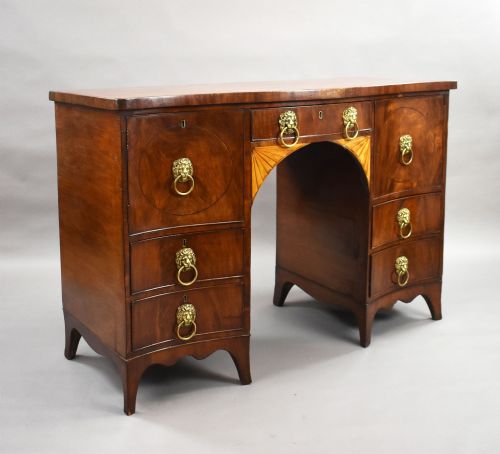
Inlaid Mahogany Server Table
An inlaid mahogany server table brings disciplined eighteenth and nineteenth-century cabinet-making directly into a dining room or hall.
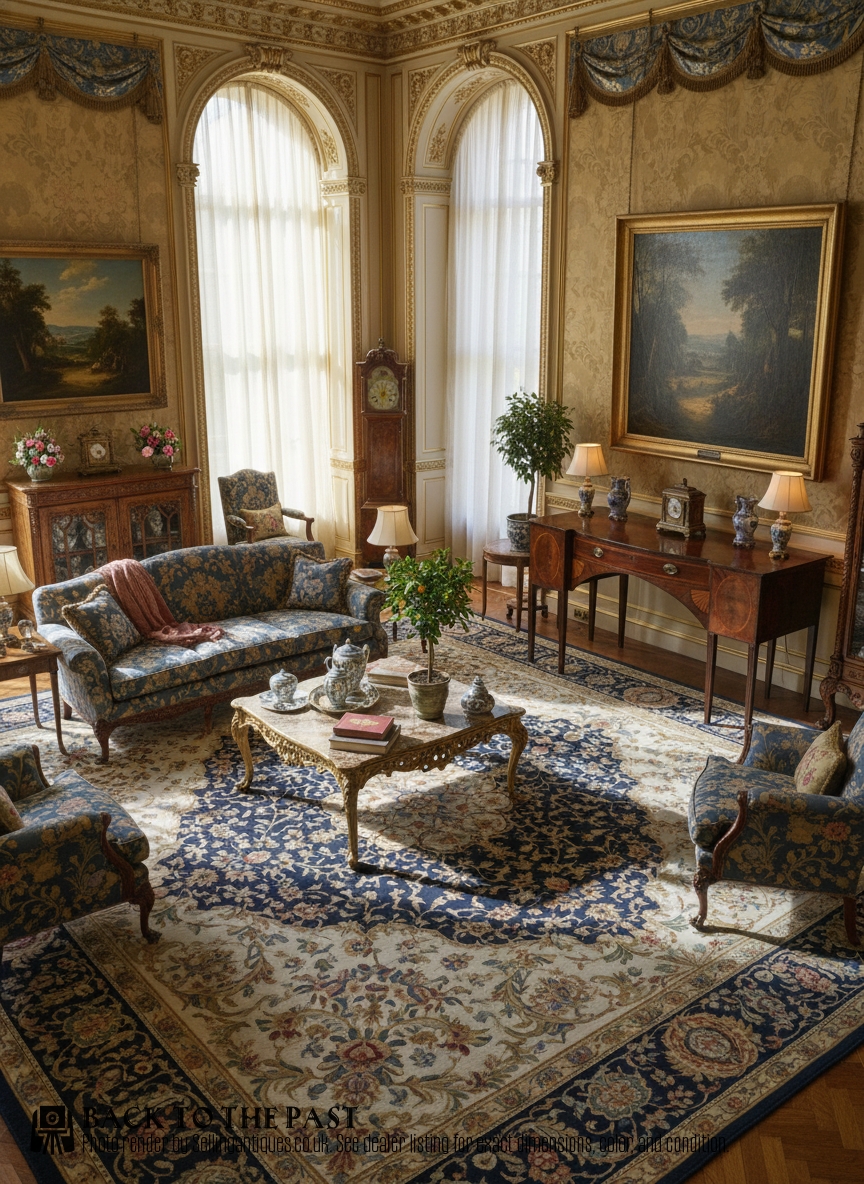
Inlaid Mahogany Server Table
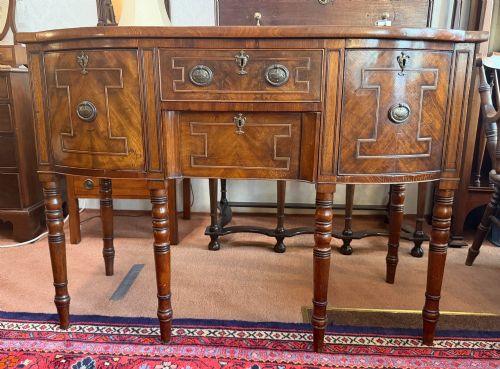
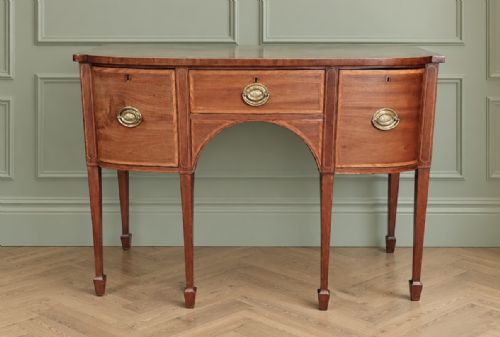
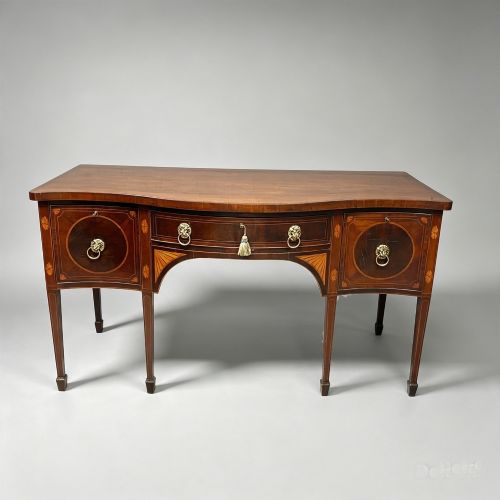
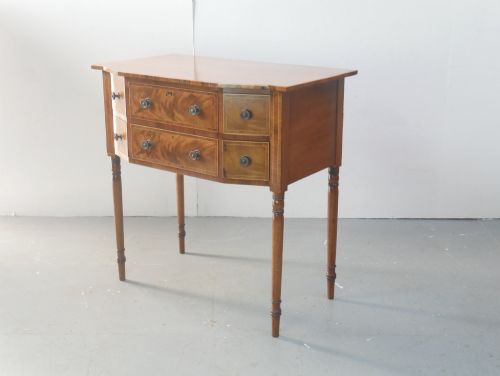
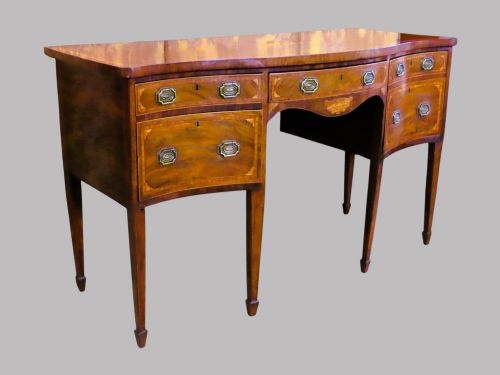
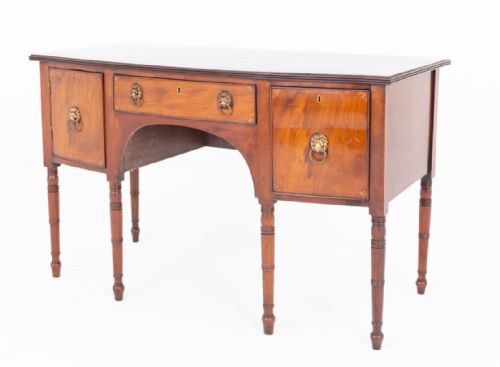
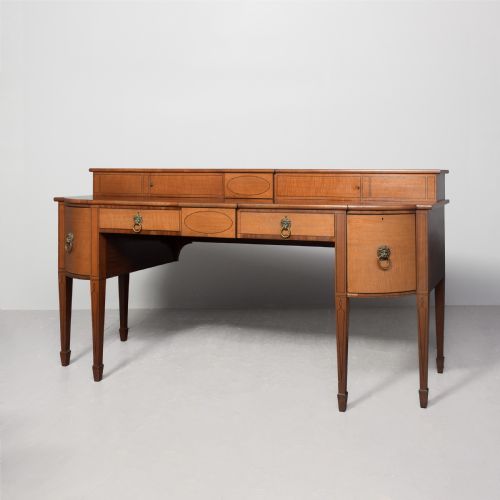
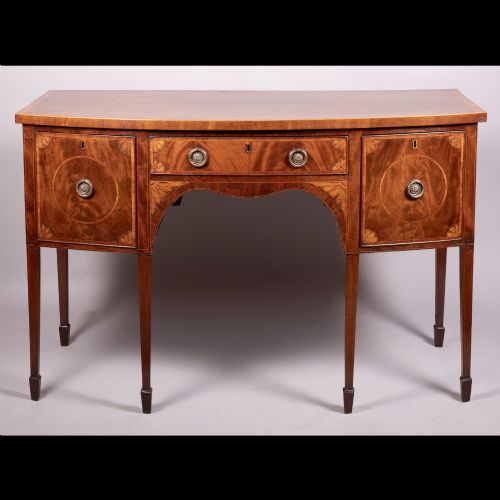
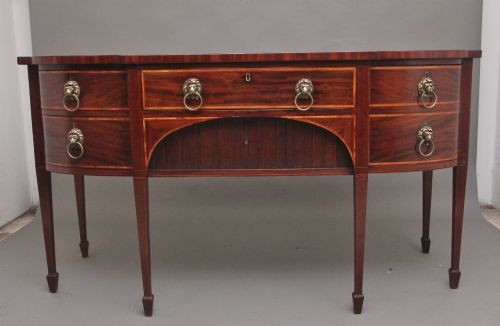
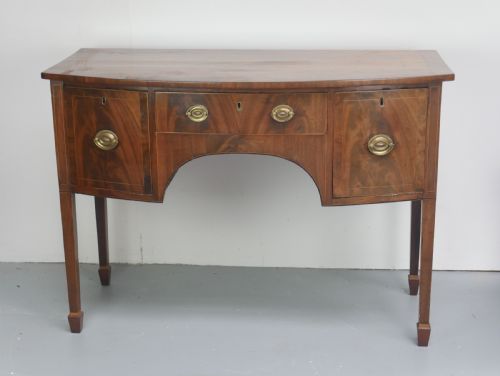
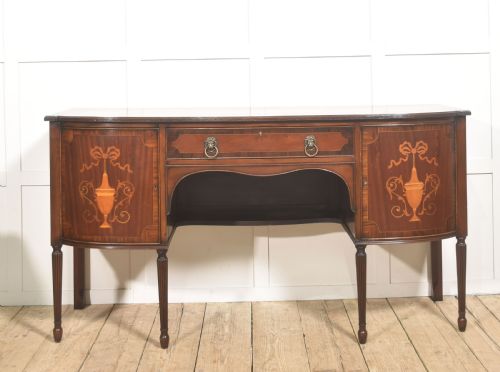
An inlaid mahogany server table combines the utilitarian storage of sideboards and serving tables with decorative timber contrasts. Buyers searching for an inlaid mahogany server table encounter formats spanning Georgian, Regency, and Edwardian eras, including bow-front, serpentine, and breakfront shapes.
The version most frequently met on this page is the bow-front or straight-front sideboard dating from the Georgian or Sheraton periods, often featuring contrasting bandings. Occasional serving tables and servers also appear alongside sideboards, reflecting the overlapping terminology used across the centuries.
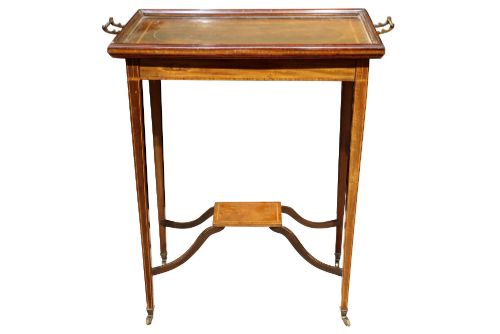
Origins stretch from regional British workshops to Scottish establishments, utilising dense tropical timber combined with pale stringing lines. Pieces range from grand pedestal designs to compact lowboys and smaller side tables suited for modern domestic spaces.
Distinctions in craftsmanship and preservation
Quality rests primarily in the crispness of the timber selection and the precision of the inlay work. Finer examples display continuous grain across drawer fronts and tightly fitted botanical or geometric stringing without gaps or filler.
Proportion and architectural balance separate standard utilitarian pieces from exceptional commissions. Well-preserved original brass hardware, intact secondary linings, and minimal veneer replacement elevate the standing of a surviving server.
The inventory includes sideboards, side tables, lowboys, and console tables with diverse inlaid decorative schemes.
The Inlaid Mahogany Server Table Glossary
- Serpentine
- A front contour curving outward at the centre and inward toward the ends. This shape demands advanced carpentry to fit drawers and framing precisely.
- Bow-front
- A convex, outwardly curved front elevation popular in late eighteenth and nineteenth-century case furniture. It softens the linear profile of a dining room server.
- Crossbanding
- A border of veneer laid with the grain running perpendicular to the surrounding wood. It frames the primary surface panel for visual contrast.
- Stringing
- Thin, narrow lines of contrasting timber inlaid into shallow channels on furniture surfaces. Boxwood and satinwood provide the pale tones against dark mahogany.
- Breakfront
- A piece of furniture where the central section projects forward from the flanking wings. This architectural arrangement creates depth and shadow on larger servers.
Inlaid Mahogany Server Table: Frequently Asked Questions
How do I date an inlaid mahogany server table?
Dating relies on observing structural characteristics, timber selection, and inlay styles alongside secondary woods. Georgian and Sheraton pieces from the late eighteenth century typically feature hand-cut dovetails and subtle boxwood stringing.
Later Edwardian Sheraton Revival examples often display machine-sawn components and brighter, more uniform satinwood veneers. Examining the backboards and drawer linings provides reliable clues to the period of manufacture.
Where were these server tables placed in a home?
These tables served primarily in dining rooms, hallways, and drawing rooms for the preparation and presentation of food and drink. Large variations stood against dining room walls to hold heavy platters, silver, and glassware during grand meals.
Smaller side tables and servers functioned in narrower spaces for holding lamps or serving smaller quantities of provisions. Their shallow depth allowed them to sit flush against walls without obstructing pathways.
What is the difference between a sideboard and a server?
The terms frequently overlap in antique inventories, but servers generally denote lighter, more compact tables used strictly for presenting dishes. Sideboards often incorporate more extensive cupboard and drawer storage configurations beneath the primary surface.
Both forms utilise mahogany and decorative inlay, reflecting the shifting terminology used by makers and dealers across the Georgian and Regency periods.
How should I care for antique mahogany surfaces?
Maintenance requires keeping timber away from direct heat sources and dramatic humidity fluctuations to prevent veneer splitting. Regular dusting with a dry, soft cloth preserves the polish without building up heavy wax residues.
Application of traditional beeswax sparingly helps nourish the grain and maintain the natural lustre of the aged mahogany. Avoid commercial silicone sprays which can penetrate damaged finishes and degrade the wood.