

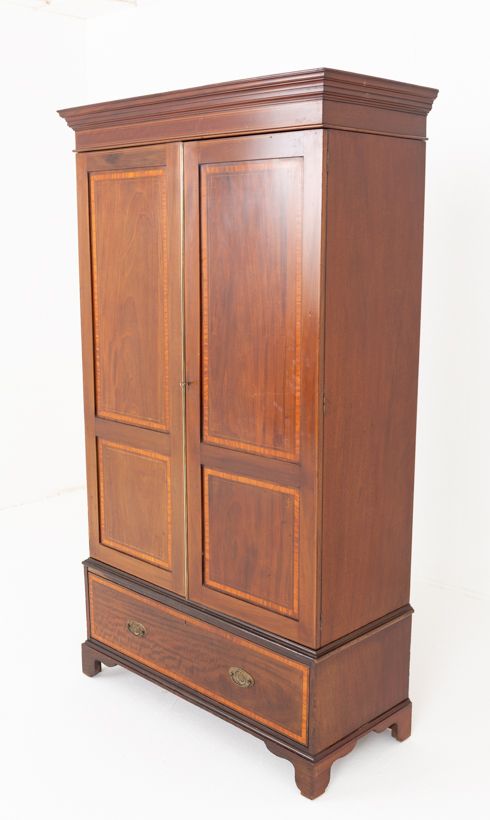
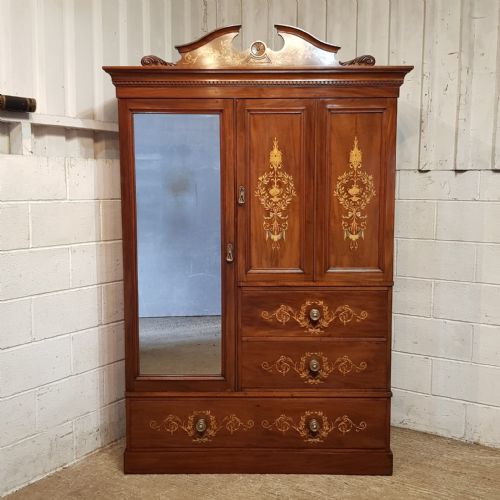
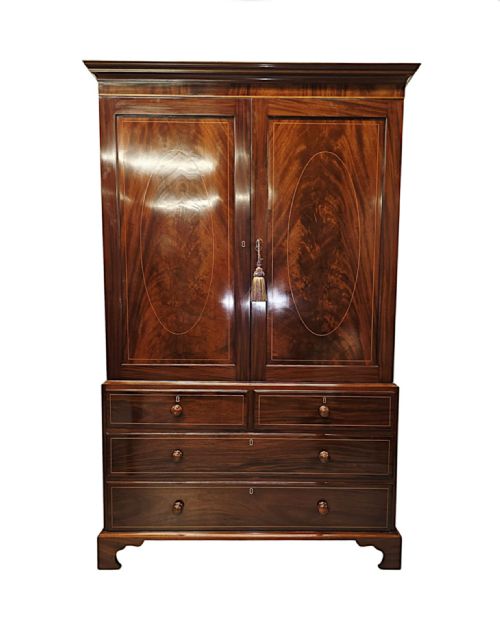
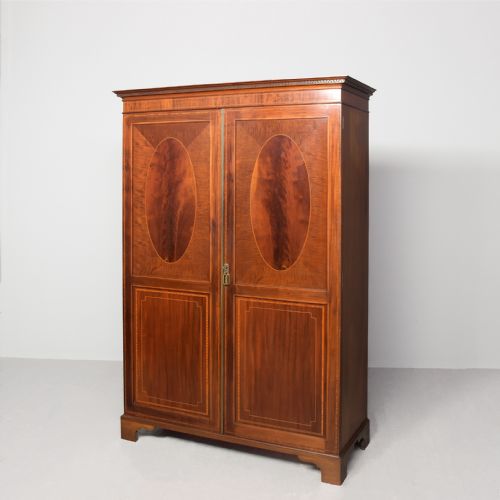
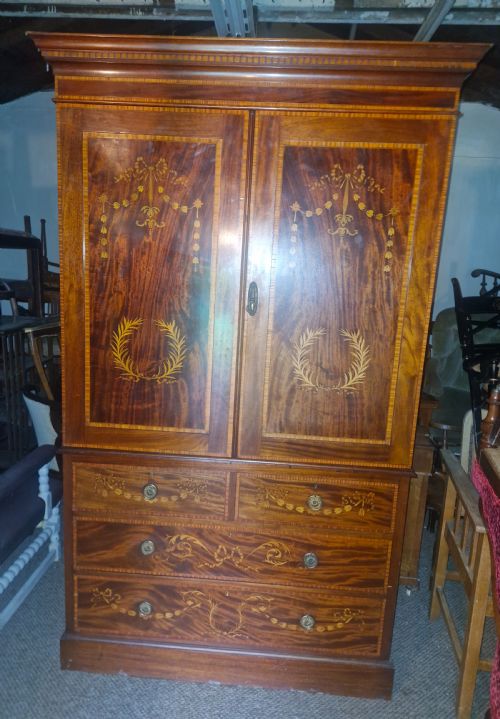


Inlaid Mahogany Press
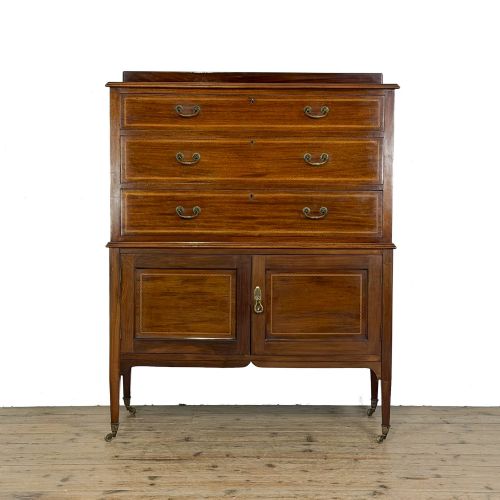
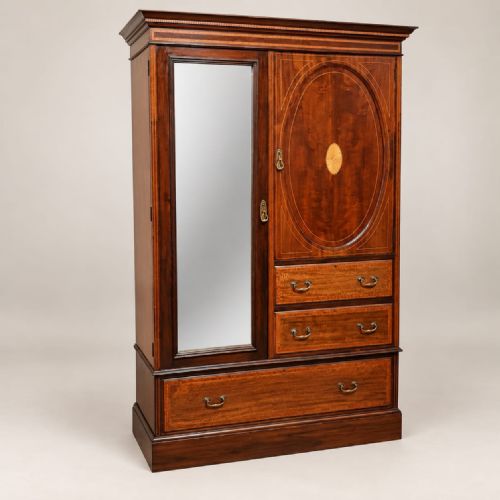
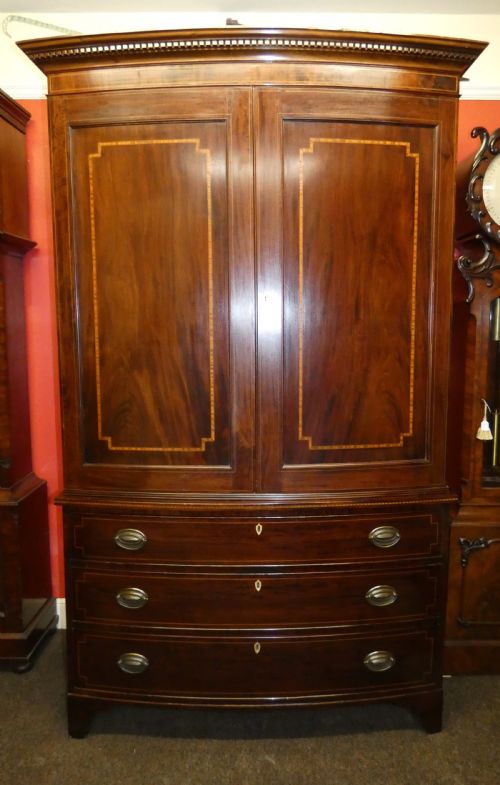
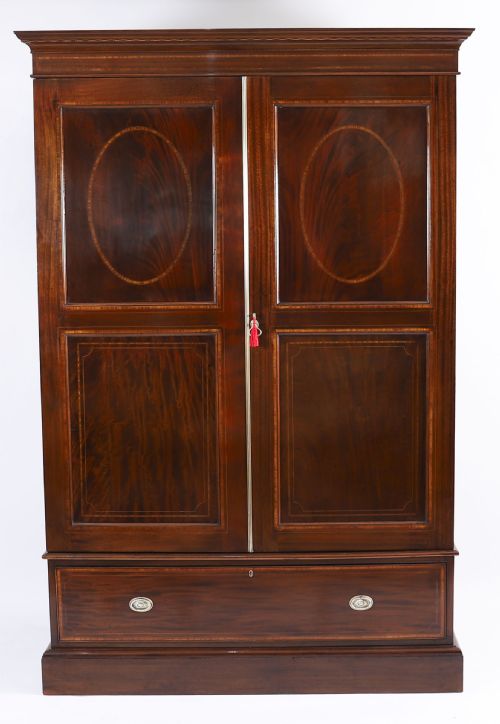
When choosing an inlaid mahogany press, you select a substantial piece of storage furniture that organises clothing while bringing rich timber grain and contrasting detail into a bedroom.
Inlaid Mahogany Press
An inlaid mahogany press functions as a tall storage unit, combining upper sliding trays or hanging space with lower drawers to house linens and garments. These pieces bridge the gap between a chest of drawers and a full wardrobe, offering versatile bedroom storage.
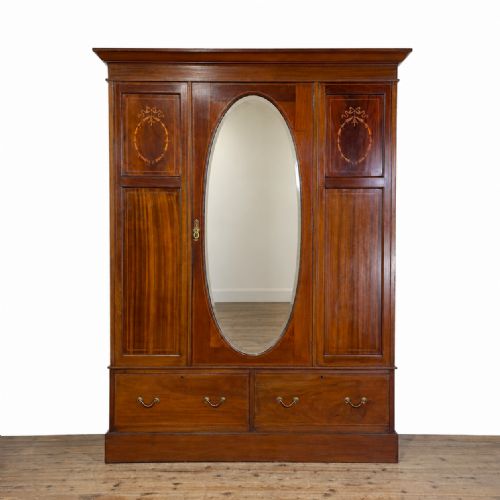
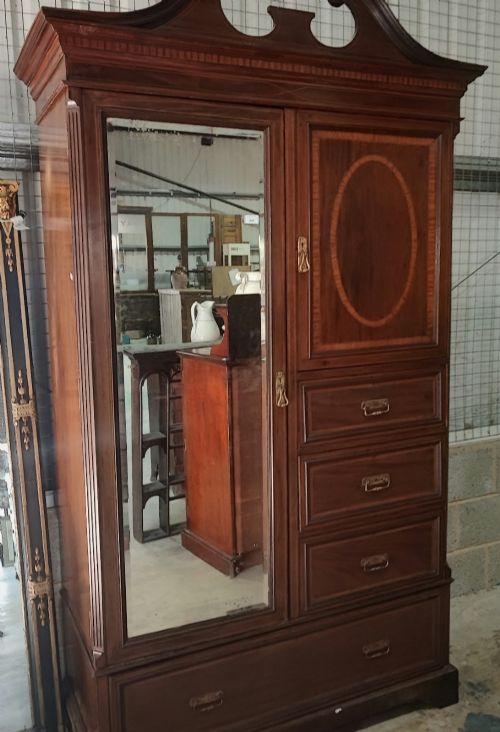
The versions most commonly met on this page span the Georgian, Regency, and Edwardian periods. Examples range from strict George III architectural forms to lighter Edwardian satinwood-banded compactum wardrobes.
Makers and workshops constructed these presses to dominate a bedroom wall, utilising deep cornices and generous proportions. Buyers encounter variations ranging from straightforward Georgian gentleman's presses to elaborate Victorian breakfront wardrobes.
How they were made
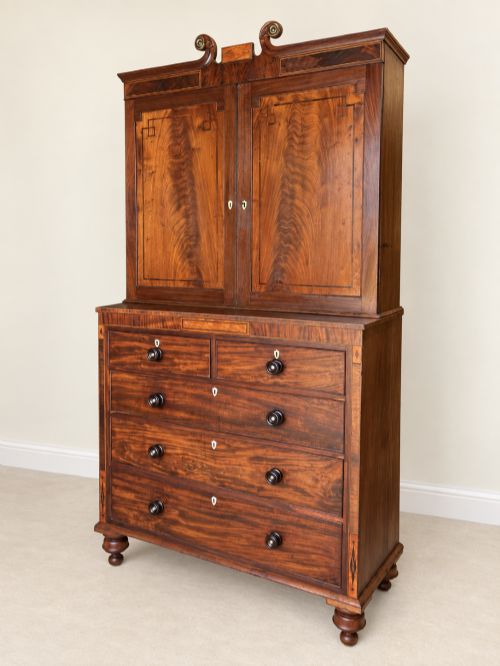
Cabinet makers built these presses using solid mahogany frames and panelled carcases, frequently selecting flame or figured mahogany veneers to create lively grain patterns across the doors and drawer fronts. Secondary timbers such as oak or pine appear internally for drawer linings and internal sliding trays.
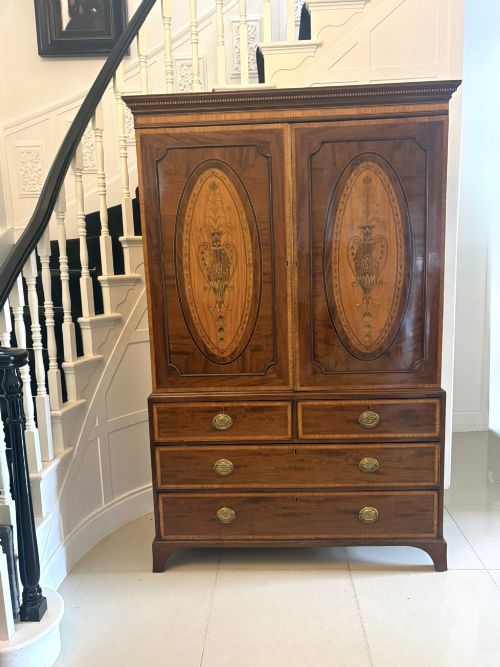
Decoration relied heavily on precise contrasting inlays, utilising satinwood and boxwood strips to form geometric stringing, fan paterae, or delicate shell motifs. Brass hardware, including original drop handles, escutcheons, and sliding tray handles, completed the construction.
Inlaid Mahogany Press Retail Price Guide 2026
Typical asking prices for inlaid mahogany press among the pieces listed under this phrase on Sellingantiques today, from the lower quarter to the upper quarter. They describe what is for sale here now, not the wider market.
Listings span the Georgian, Regency, Victorian, and Edwardian periods, utilising mahogany, satinwood, boxwood, and brass.
What varies in quality
The standard of timber selection separates standard items from exceptional examples, with highly figured flame mahogany veneers and dense, heavy primary timbers marking the superior end of the range. Finer pieces demonstrate careful book-matching of veneers across large double doors to create symmetrical visual movement.
The precision and complexity of the inlay work indicate the tier of craftsmanship involved. Crisp, tightly fitted boxwood and satinwood stringing without visible filler reflects superior workshop standards compared to simpler, coarser banding.
maples & co·Edwards and Roberts·Druce & Co.·WYLIE LOCHHEAD of GLASGOW·James Shoolbred
The Inlaid Mahogany Press Glossary
- Linen press
- A large storage cabinet featuring an upper section with sliding trays for folded textiles above a base of lower drawers. These units evolved into general clothes presses and wardrobes.
- Compactum
- A fitted wardrobe divided internally into distinct sections for hanging clothes, drawers, and linen shelves. This multi-purpose format became popular during the Victorian and Edwardian eras.
- Flame mahogany
- A veneer cut from the branch junction of the mahogany tree, producing a characteristic flickering flame-like pattern. Cabinet makers reserved this highly decorative timber for prominent drawer fronts and door panels.
- Stringing
- A narrow strip of contrasting wood inlaid into a channel on the furniture surface. This technique created delicate linear borders around door panels and drawer edges.
- Patera
- A circular decorative motif carved or inlaid in low relief, often resembling a classical flower or shell. Makers placed these at the corners of door panels or friezes on Sheraton-influenced pieces.
Inlaid Mahogany Press: Frequently Asked Questions
What is an inlaid mahogany press used for?
These large cabinets served primarily to store folded linens, shirts, and garments before fitted wardrobes became standard in bedrooms.
Today, they function as substantial bedroom storage units, offering a combination of hanging space, internal sliding trays, and deep drawers.
How do I tell a Georgian press from an Edwardian one?
Georgian presses typically display heavier architectural proportions, rich flame mahogany veneers, and restrained boxwood stringing executed around the eighteenth or early nineteenth century.
Edwardian examples tend to incorporate lighter satinwood banding, Sheraton Revival styling, and occasionally more complex internal compartments suited to modern wardrobes.
How do I live with a large press in a modern home?
Due to their height and depth, these pieces require adequate wall clearance and careful placement to anchor the room visually without overwhelming smaller spaces.
Many owners utilise the internal sliding trays for knitwear or bedding while reserving the lower drawers for everyday garments.
What is the difference between a press and a wardrobe?
A traditional press specifically incorporates internal sliding trays behind its upper doors, originally designed for flat-folded linen rather than hanging clothes.
Wardrobes focus primarily on vertical hanging space, though later compactum models combined both formats into a single piece of furniture.