
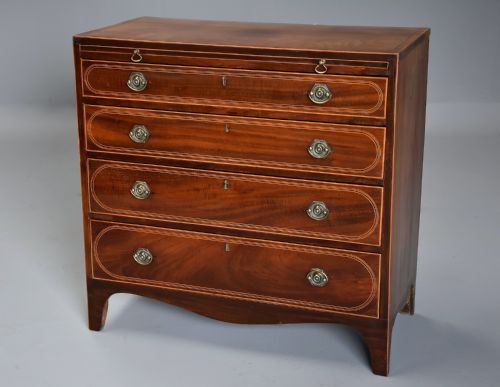
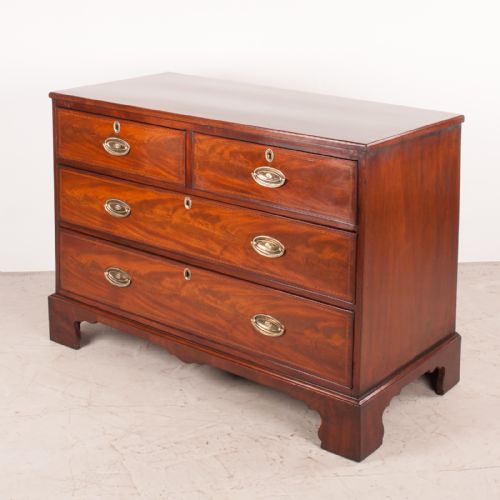
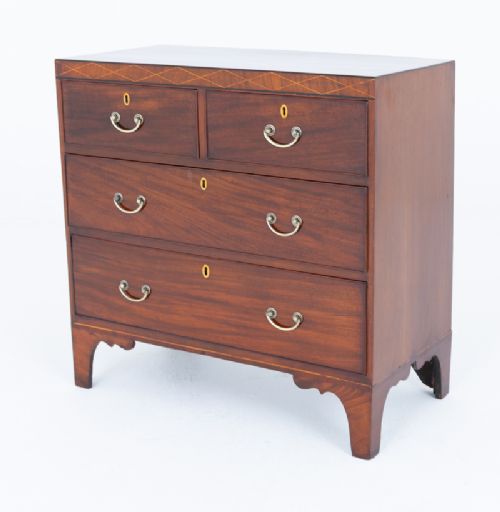
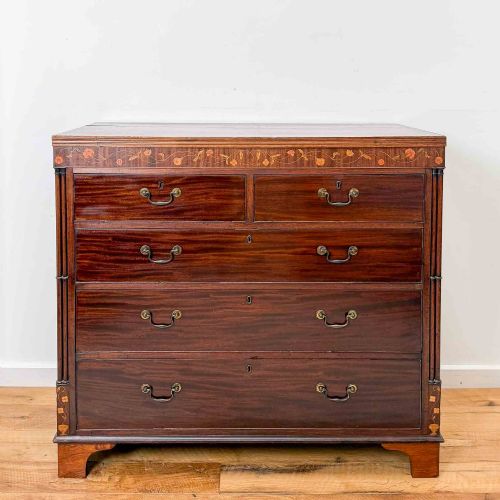
Inlaid Mahogany Bedroom Chest
An inlaid mahogany bedroom chest brings figured timber and crisp stringing into a room, offering practical storage with cabinet-maker detail.
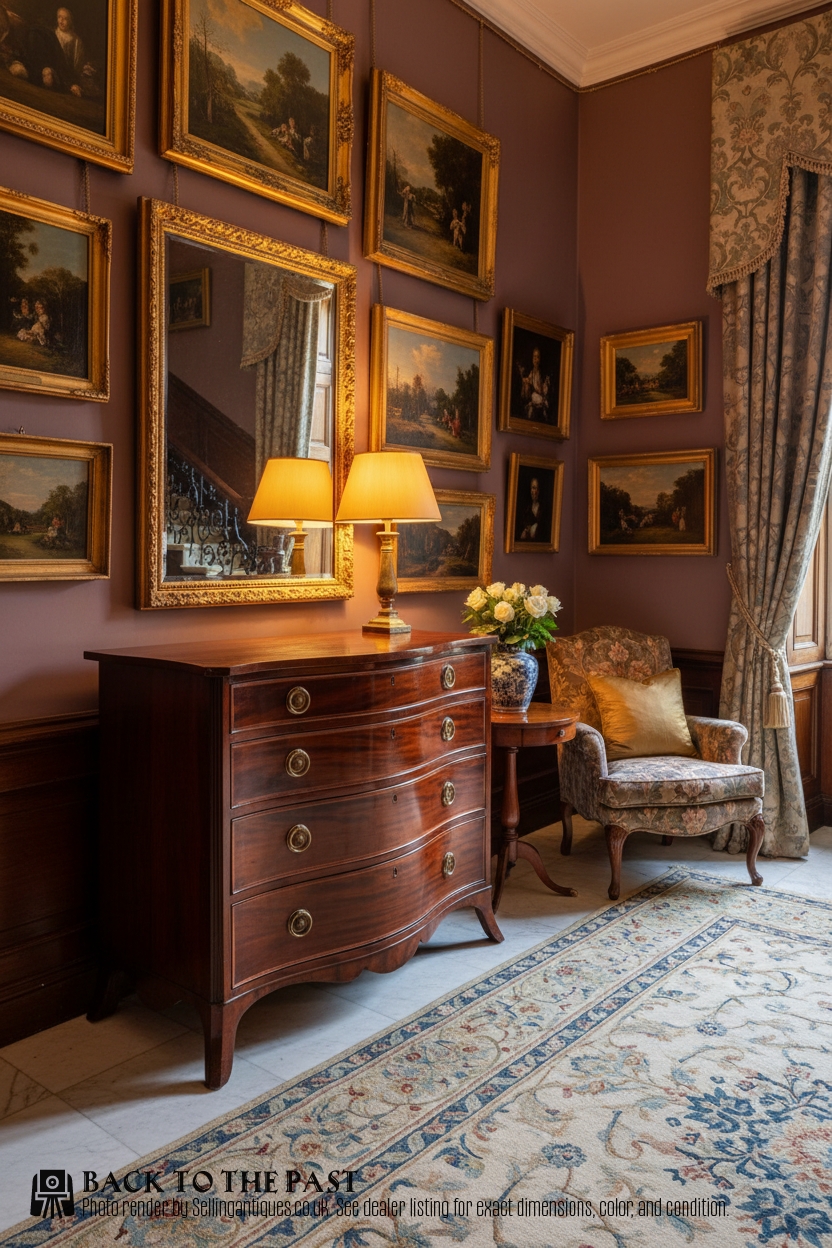
Inlaid Mahogany Bedroom Chest
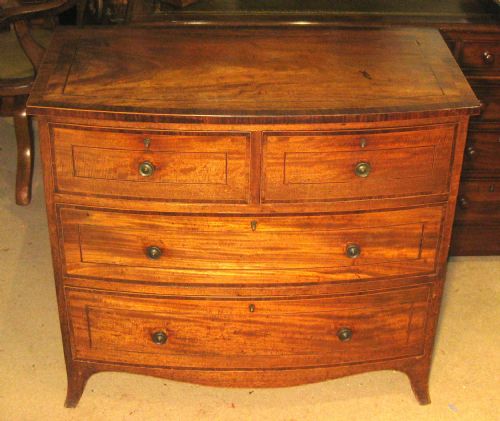
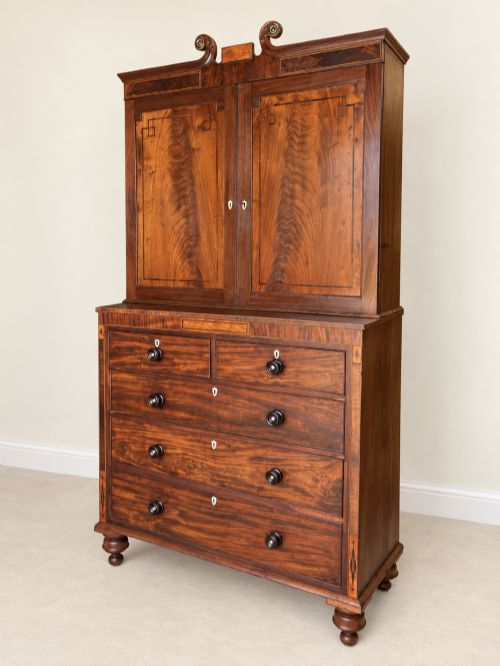
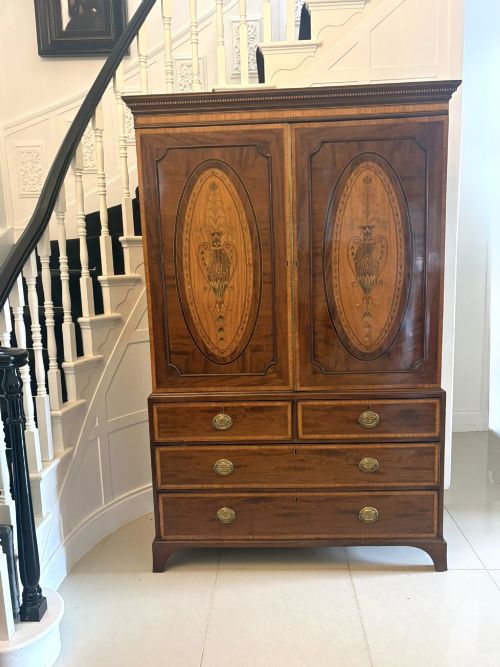
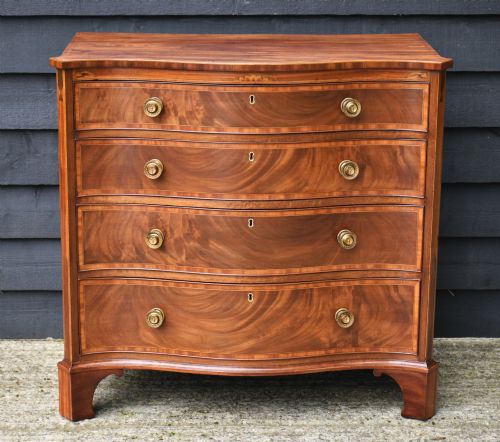
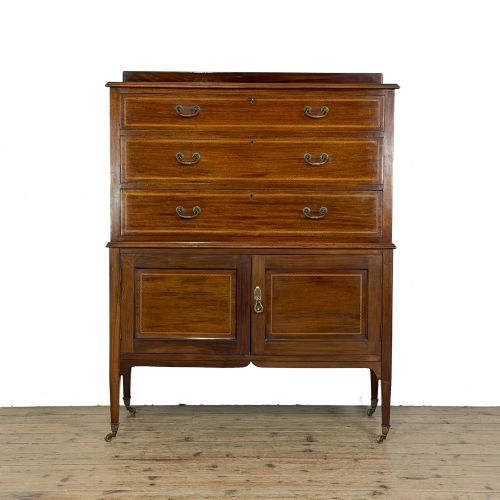
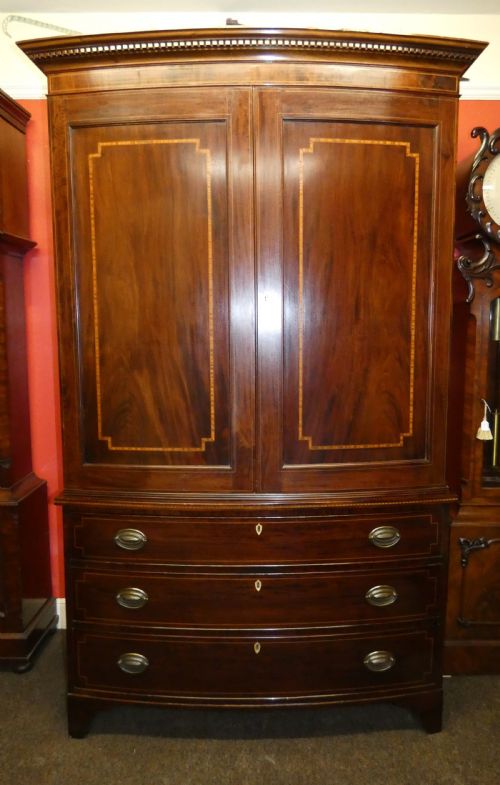
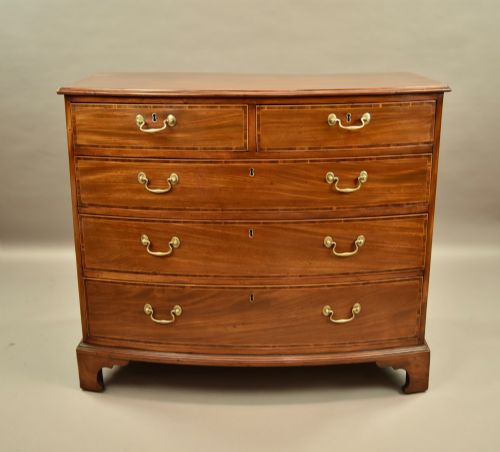
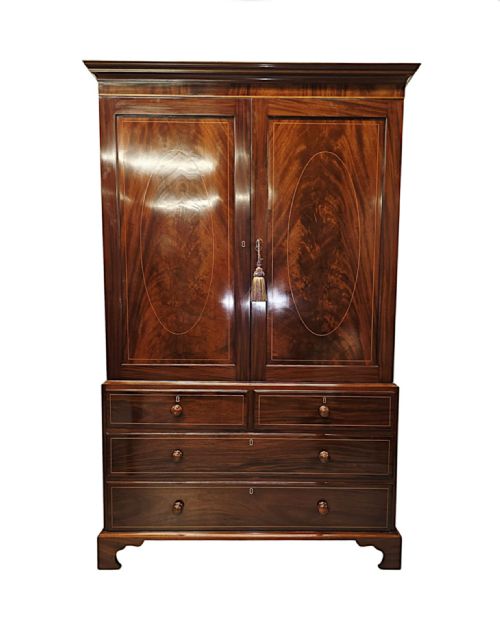
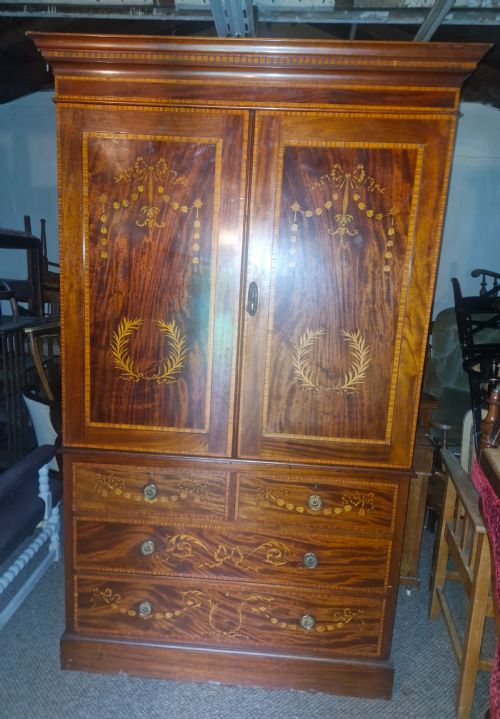
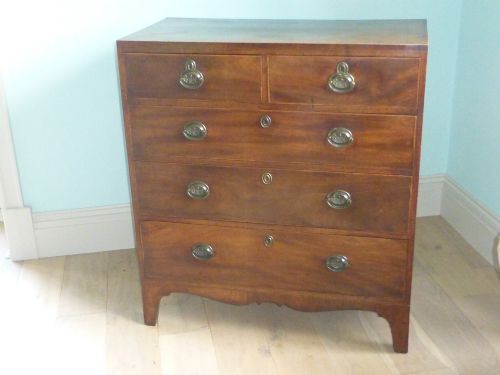
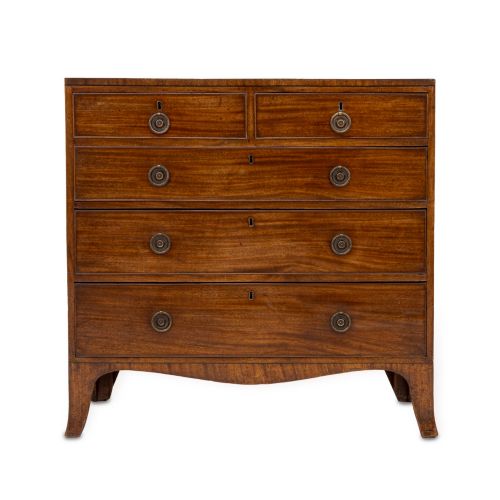
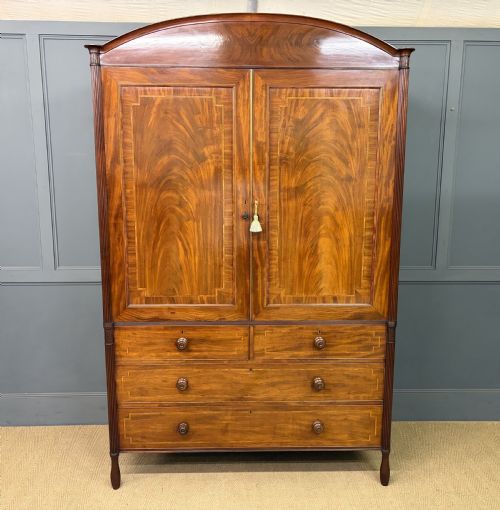
An inlaid mahogany bedroom chest encompasses several forms found across this page, ranging from standard chests of drawers and bowfronts to tallboys, dressing tables and linen presses. The most common format is a chest of drawers, often featuring contrasting boxwood or satinwood stringing and inlay framing the drawer fronts.
The periods represented span from the Georgian and Regency eras through to the Victorian and Edwardian periods, including Sheraton Revival pieces. Buyers encounter various silhouettes, including straight fronts, serpentine shapes, and bowfronts, alongside taller linen presses that combine hanging space or sliding trays with drawer storage below.
Origins in the evidence point to British craftsmanship from the eighteenth, nineteenth, and early twentieth centuries. Pieces often display specific regional cabinet-making traits of their respective decades, such as the flame mahogany veneers of the Georgian period or the lighter satinwood crossbanding typical of later revival styles.
How they were made
Cabinet-makers constructed these carcases primarily using solid mahogany and mahogany veneers, frequently enhanced with contrasting timbers like satinwood and boxwood for inlay work. Drawer linings typically employed secondary woods such as oak or pine, assembled with hand-cut dovetails that indicate the standards of the period.
Surface decoration relied on precision woodworking techniques, including line inlay, crossbanding, and marquetry to create geometric or floral motifs. Brass hardware, ranging from original swing handles to later replacements, completed the construction alongside hand-finished wax or French polish polishes.
Form variations on this page range from compact bedside tables and dressing units to large linen presses and tallboys.
What varies in quality
Quality rests upon the selection of timber and the precision of the cabinet-making, distinguishing standard production from superior workshops. Finely figured flame mahogany or fiddleback veneers combined with meticulous satinwood and boxwood inlay elevate a piece significantly above plain timber carcases.
Proportion and structural integrity define the higher tiers of the range, visible in the sharpness of the serpentine or bowfront curves and the tightness of the drawer dovetails. Maker attribution also plays a role, with established firms achieving more refined execution in their mouldings, crossbanding, and internal drawer construction.
Druce & Co·Mawer & Stephenson·Edwards & Roberts
The Inlaid Mahogany Bedroom Chest Glossary
- Bowfront
- A curved convex front to a chest of drawers that swells outwards in the centre. This shape became particularly popular during the late Georgian and Regency periods.
- Linen Press
- A tall piece of furniture featuring upper doors enclosing sliding shelves for linen, positioned above a lower section of drawers. They often match the inlaid mahogany style of accompanying bedroom chests.
- Crossbanding
- A strip of veneer applied across the grain of the main surface around the border of a drawer front or top. It creates a neat framing effect using contrasting timbers such as satinwood.
- Stringing
- Thin inlay lines of contrasting wood, commonly boxwood or satinwood, embedded into channels cut into the mahogany surface. This technique delineates drawer edges and panel borders.
- Tallboy
- A tall chest of drawers made in two stacked sections, providing substantial vertical storage capacity. Eighteenth-century examples often sit on a base with short legs.
Inlaid Mahogany Bedroom Chest: Frequently Asked Questions
How do I date a mahogany chest?
Dating relies on examining the construction methods, timber choice, and hardware style. Earlier eighteenth-century pieces often feature oak drawer linings and hand-cut dovetails, while later nineteenth-century examples display machine-sawn elements or different veneer thicknesses.
Secondary details like the presence of satinwood inlay, brass handle patterns, and the overall silhouette from bowfront to serpentine also help place the piece within the Georgian, Regency, Victorian, or Edwardian periods.
What is a linen press used for?
A linen press originally served to store household linens and folded garments on interior sliding trays behind upper doors. The lower chest of drawers provided additional space for smaller items of clothing.
In a modern bedroom, these deep cupboards function well for bulky items, knitwear, or as a wardrobe replacement when fitted with hanging rails.
How should I clean inlaid mahogany?
Dusting regularly with a soft, dry cloth prevents dirt buildup on the polished surface. Avoid modern silicone sprays or harsh chemical cleaners which can damage antique polish and dry out the timber.
Applying a traditional beeswax periodically nourishes the mahogany and protects the delicate satinwood and boxwood inlays without harming the historical finish.