



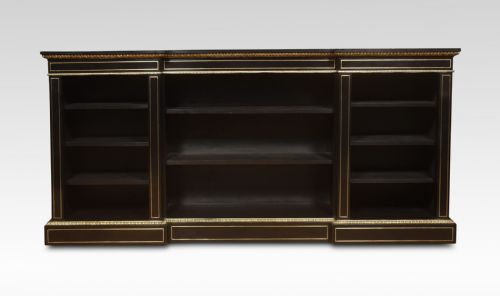


Inlaid Library Shelving
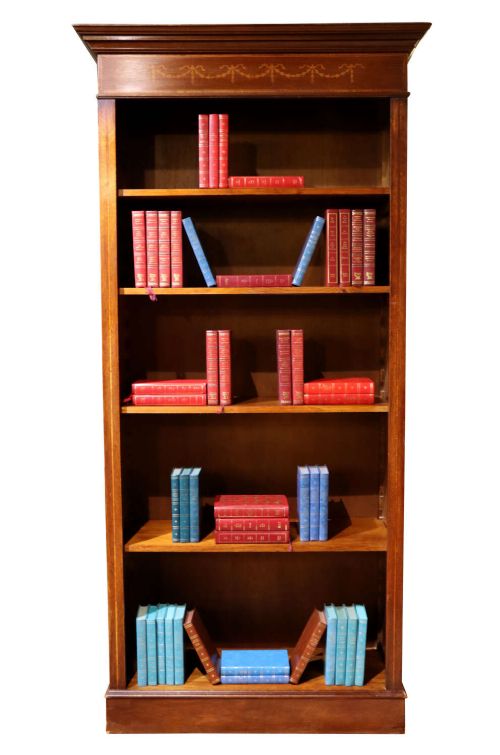
These inlaid library shelving pieces bring rich mahogany and delicate marquetry straight to your walls, offering both practical book storage and classical grace.
Inlaid Library Shelving
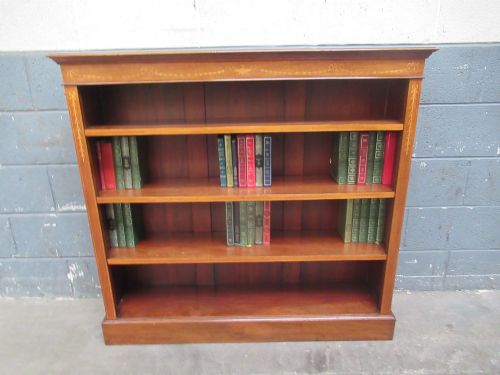
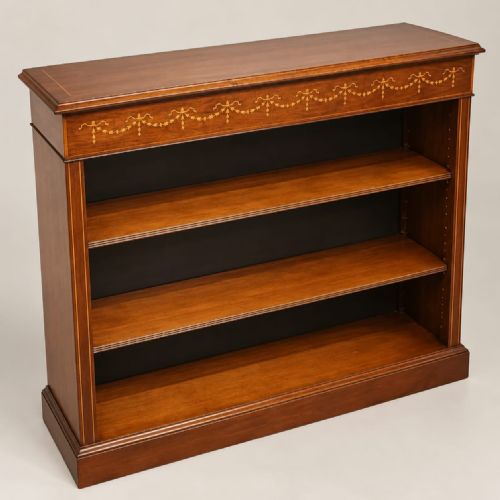
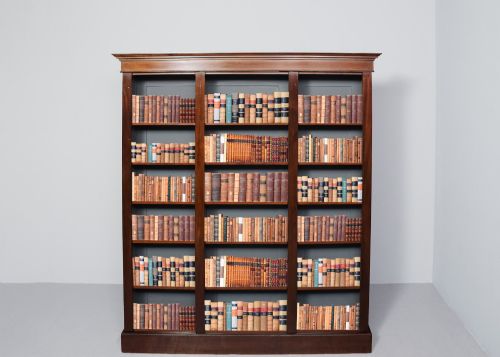
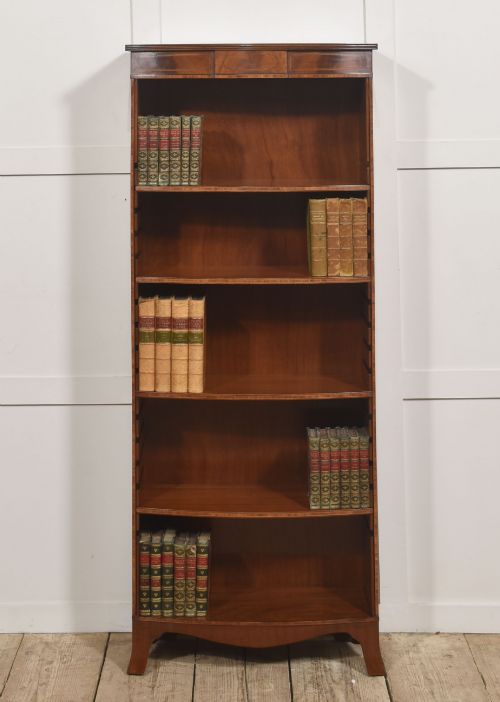
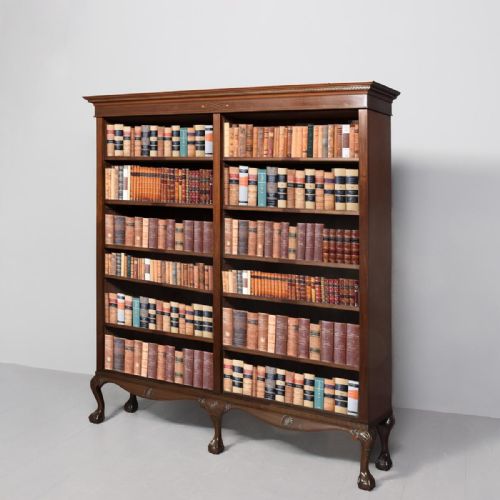
Inlaid library shelving comprises open bookcases and shelving units decorated with contrasting wood inlays, most frequently encountered in mahogany from the Victorian, Edwardian, and Sheraton Revival periods. These pieces range from slim open bookcases to large breakfront and three-section cabinets designed to house substantial collections.
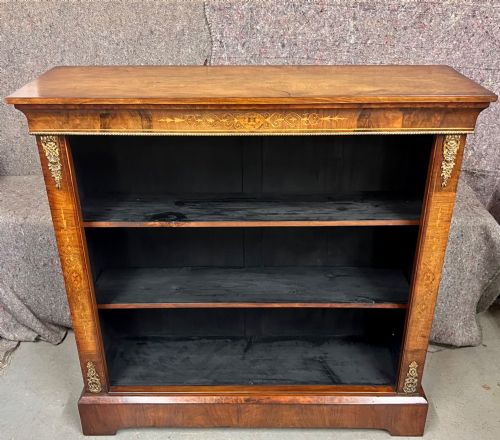
The selections span architectural oak designs, ebonised wood with brass mounts, and bow-fronted library bookcases reflecting Regency, Georgian, and Arts & Crafts influences. Many incorporate adjustable shelves and brass castors for practical movement across the floor.
Buyers most commonly meet Edwardian and late Victorian variations on this page, often featuring satinwood inlay or delicate marquetry detailing. Waterfall bookcases and corner units also appear among the larger architectural cabinets.
How they were made
Makers built these pieces primarily using solid and veneered mahogany, oak, walnut, and rosewood, applying contrasting satinwood and wood inlay to create geometric and floral motifs. Ebonised wood often received brass mounts and hardware to provide structural contrast.
Open bookcases utilised sturdy timber joinery to support heavy volumes, whilst cabinet versions incorporated glazed or solid doors alongside adjustable shelving tracks. Marquetry techniques involved cutting thin veneers of various coloured timbers to fit precisely into recesses carved within the primary wood.
Inlaid Library Shelving Retail Price Guide 2026
Typical asking prices for inlaid library shelving among the pieces listed under this phrase on Sellingantiques today, from the lower quarter to the upper quarter. They describe what is for sale here now, not the wider market.
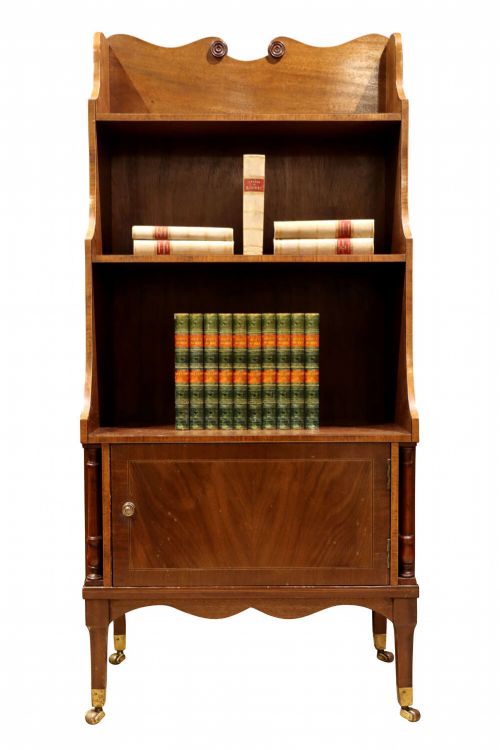
The furniture forms include slim open bookcases, corner units, waterfall bookcases, and large breakfront architectural cabinets.
What varies in quality
Quality rests upon the crispness of the wood inlay and the selection of timber veneers, where finely figured mahogany or satinwood displays superior depth and grain movement. The precision of the marquetry and the integration of brass mounts distinguish finer workshops from simpler commercial output.
Structural integrity also separates the range, evident in the clever execution of adjustable shelving systems, solid backboards, and stable joinery on large breakfront or three-section library pieces.
The Inlaid Library Shelving Glossary
- Inlay
- A decorative technique where pieces of contrasting timber or other materials are inserted into a recessed surface to form a flat design. This method defines the primary ornamentation found across these library shelves.
- Marquetry
- Elaborate decorative veneer work assembled into pictorial or symmetrical patterns using various coloured woods. It requires high skill to align the grain and tone.
- Breakfront
- A piece of furniture where the central section projects forward from the flanking wings. This architectural arrangement adds visual depth to large library bookcases.
- Waterfall bookcase
- A set of open shelves where each tier steps back progressively from the one below, resembling cascading water. These compact units often feature enclosed cupboards at the base.
- Sheraton Revival
- A late nineteenth and early twentieth century design movement that reinterpreted the classical, elegant furniture styles of Thomas Sheraton. Pieces typically utilise fine mahogany and satinwood inlay.
Inlaid Library Shelving: Frequently Asked Questions
What is inlaid library shelving?
Inlaid library shelving refers to open bookcases and multi-section shelving units ornamented with contrasting wood veneers and marquetry. They combine functional book storage with decorative cabinet-making.
These pieces typically date from the Victorian, Edwardian, and Regency eras, utilising timbers such as mahogany, oak, and walnut.
How do I style an open bookcase?
Open bookcases suit traditional studies and contemporary living spaces alike, providing accessible display for books and decorative objects. Their open fronts keep large volumes within easy reach.
Consider the scale of the room and match the timber tone, whether dark mahogany or lighter oak, with your existing furniture.
Are shelves usually adjustable?
Many period open bookcases feature adjustable shelves supported by wooden ratchets or metal track systems. This allows the internal height to adapt to varying book sizes.
Fixed shelving is also common in simpler or earlier regional pieces where stability took precedence over flexibility.
How do I distinguish Edwardian pieces?
Edwardian library shelving often reflects the Sheraton Revival style, employing light satinwood inlay against a dark mahogany background. Proportions tend to be lighter and more refined than earlier Victorian carcases.
Construction details, such as machine-sawn timber and standard brass hardware, help pinpoint this early twentieth-century period.