


Inlaid Leather Top Desk
An inlaid leather top desk brings warmth and a dedicated writing surface to a room, combining fine cabinet timbers with a supple leather writing insert.
Inlaid Leather Top Desk
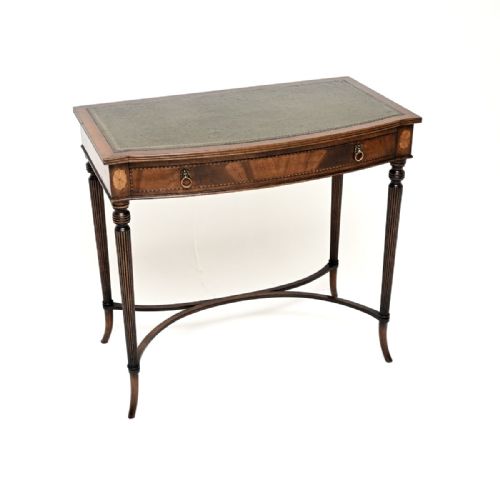
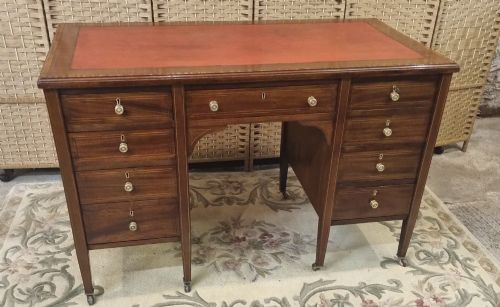
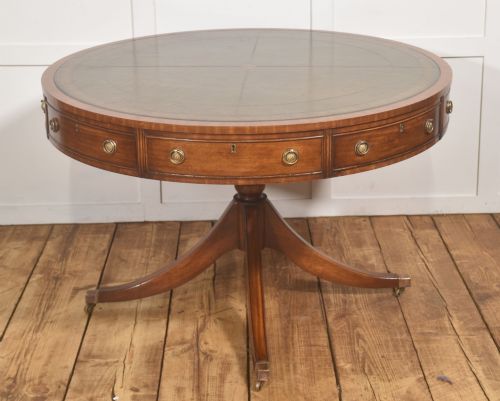
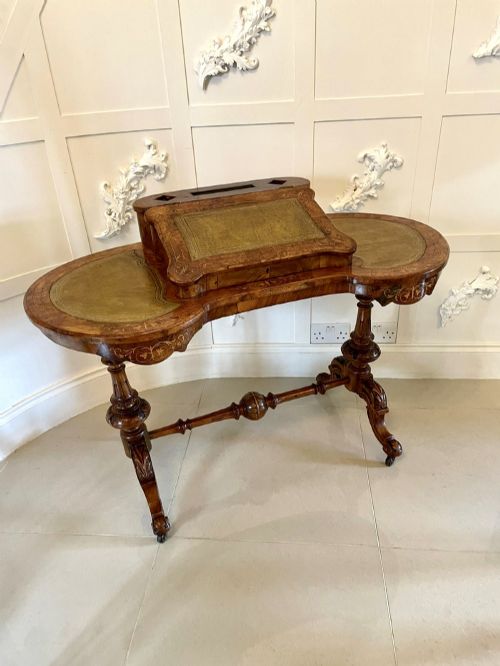
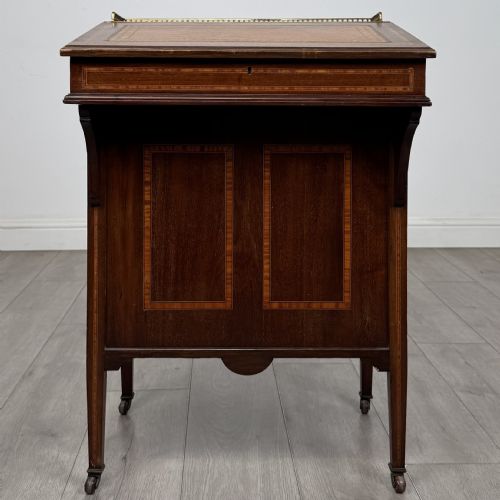
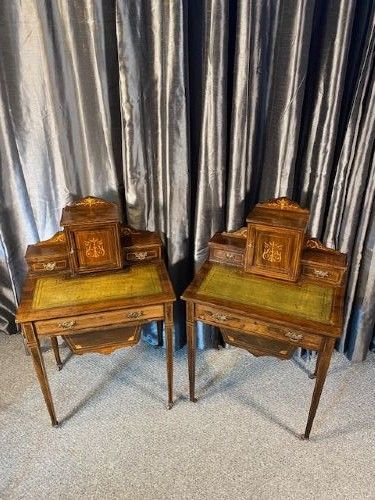
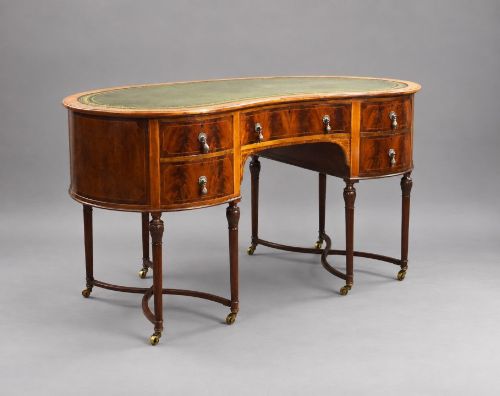
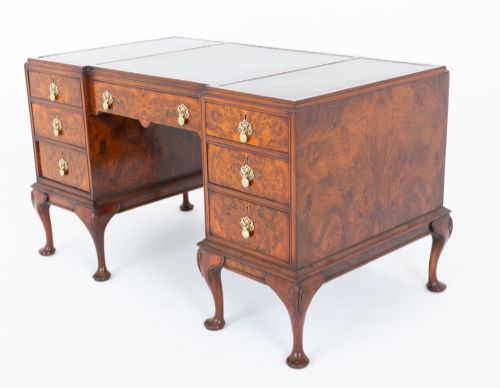
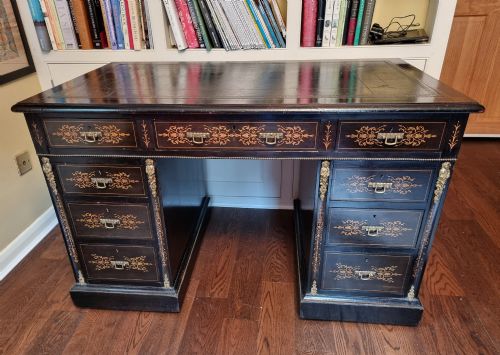
An inlaid leather top desk provides a solid wooden writing surface inset with a contrasting panel of gilt-tooled leather, surrounded by decorative wood inlay or marquetry. These pieces span the Victorian, Edwardian and late nineteenth-century periods, taking forms from kidney-shaped writing tables to pedestal desks and Carlton House desks.
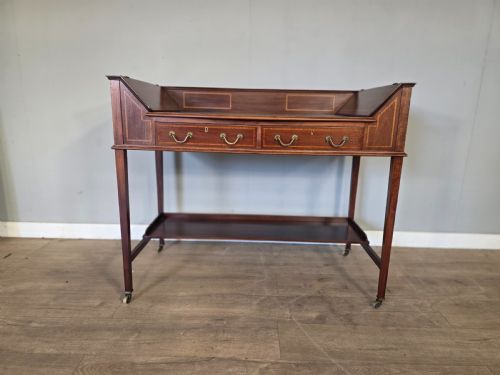
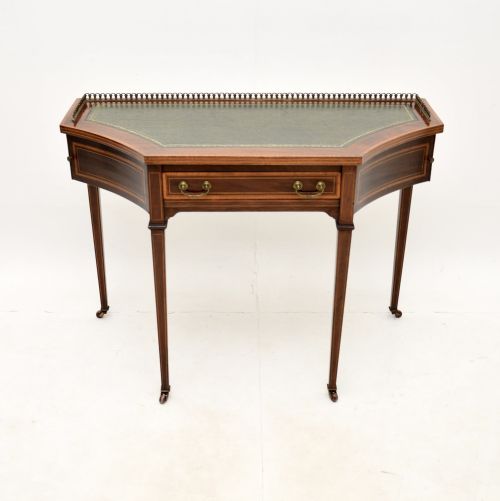
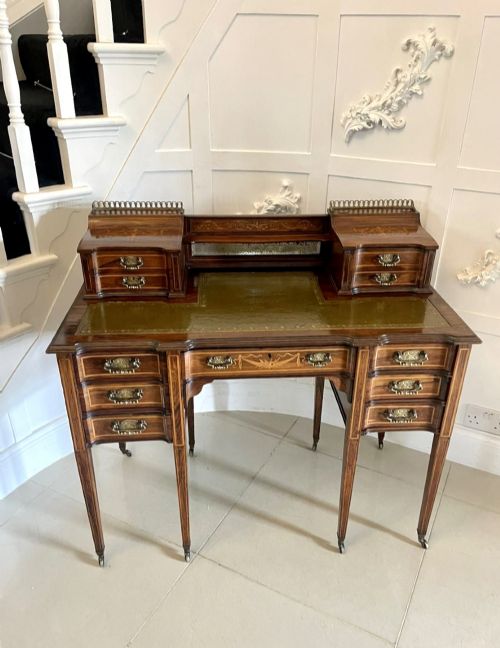
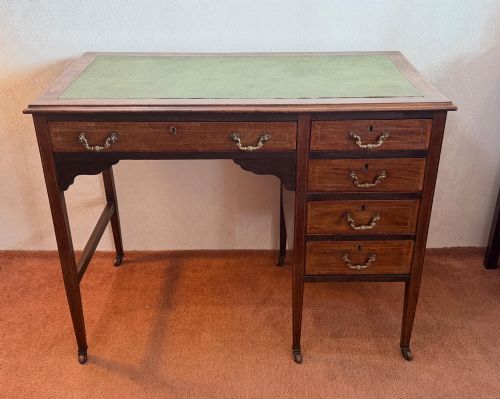
The version most commonly met on this page is the Edwardian or Victorian mahogany writing table, frequently decorated with satinwood inlay and featuring a central drawer flanked by smaller drawers or standing on slender tapering legs. Examples also appear in rosewood, walnut and satinwood, reflecting the cabinet-making tastes of the nineteenth and early twentieth centuries.
How they were made
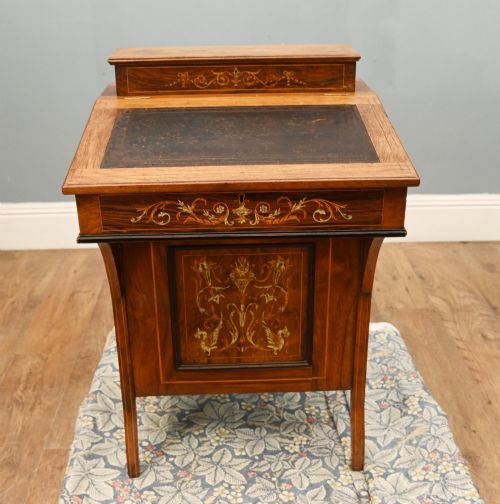
Cabinet-makers constructed the carcase and legs from dense timbers such as mahogany, rosewood or walnut, often applying veneers of satinwood or burr walnut to create contrasting patterns. Inlays were carefully hand-cut and fitted into grooves or channels carved into the timber surfaces, creating geometric lines or floral marquetry motifs.
The writing surface was formed by inserting a piece of high-grade leather into a recessed panel on the desktop, then finishing the outer perimeter with gold leaf tooling. Brass hardware, including handles, key escutcheons and sometimes castors, completed the construction of these functional tables.
Inlaid Leather Top Desk Retail Price Guide 2026
Typical asking prices for inlaid leather top desk among the pieces listed under this phrase on Sellingantiques today, from the lower quarter to the upper quarter. They describe what is for sale here now, not the wider market.
Several kidney-shaped desks invite writers to tuck themselves into a curved wooden embrace while pretending to run an entire empire.
What varies in quality
The refinement of the timber selection and the precision of the inlay work distinguish finer examples from standard production pieces. Superior desks display carefully matched wood grains, intricate multi-wood stringing or pictorial marquetry, and clean joint construction executed by skilled cabinet-makers.
Makers' marks or stamps by notable firms provide a clear indication of workshop origin and higher build standards. Furthermore, the retention of original brass fittings and the quality of the hand-tooled leather insert contribute to the overall integrity of the piece.
Maple and Co·Edwards and Roberts·Wolfe and Hollander·Gill and Reigate
The Inlaid Leather Top Desk Glossary
- Inlay
- A technique where pieces of contrasting timber, shell or metal are embedded into the wood surface to form a decorative pattern. This differs from veneer by being set directly into a recessed channel in the solid wood or ground.
- Marquetry
- Elaborate decorative veneer work assembled to form pictorial or floral designs across the surface of furniture. Makers use various tinted woods to create shading and depth within the pattern.
- Carlton House desk
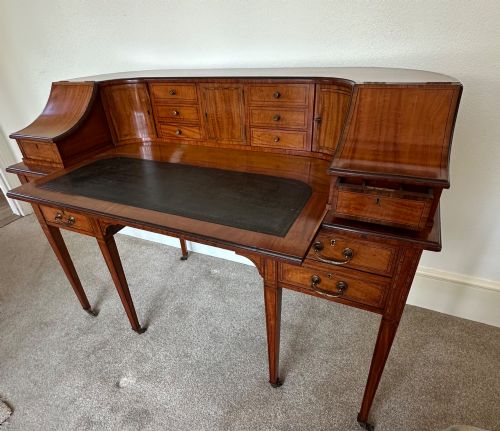
- A form of writing table featuring a curved superstructure of small drawers and compartments rising around the back and sides of the leather inset. This distinctive layout originated in the late eighteenth century.
- Escritoire
- A writing cabinet or desk, often fitted with a fall-front or slanted writing flap concealing internal pigeonholes and small drawers. The term encompasses several variations of compact writing furniture.
- Pedestal desk
- A heavy, freestanding desk comprising two supporting banks of drawers beneath a large top surface. These substantial pieces usually feature a central kneehole space and a tooled leather writing insert.
Inlaid Leather Top Desk: Frequently Asked Questions
What is a Carlton House desk?
A Carlton House desk is a distinctive writing table featuring a curved superstructure of small drawers and letter compartments built around the rear and sides of the writing surface. This layout provides structured storage while maintaining a compact footprint.
First appearing in the Georgian era, these desks continued to be made in refined mahogany and satinwood during the Edwardian period, often incorporating fine stringing and inlay.
How do I tell Victorian from Edwardian desks?
Victorian desks generally utilise heavier proportions, deeper timbers like rosewood or dark mahogany, and robust construction methods. They frequently feature rich burr walnut or substantial brass fittings.
Edwardian pieces tend to display lighter, brighter satinwood and mahogany timbers with delicate inlay, slender tapered legs, and a more graceful, revival-style aesthetic.
Are these desks suitable for daily use?
These desks are well-suited for modern laptop work or writing tasks, provided they are treated with appropriate care for antique wooden furniture. The leather insert offers a durable writing plane that has served this purpose for over a century.
Placing coasters beneath drinks and avoiding direct heat sources will help preserve the timber finish and the leather surface during everyday use.
What is the difference between a writing table and a pedestal desk?
A writing table typically stands on four legs, often with one or more shallow drawers built into the frieze beneath the top. It offers an open, lighter appearance within a room.
A pedestal desk consists of two enclosed stacks of drawers resting on the floor, supporting a larger top panel. This design offers significantly more storage space and a heavier visual presence.