





Inlaid Kingwood Cupboard
An inlaid kingwood cupboard brings warmth and intricate pattern into a room, uniting rich timbers with delicate floral marquetry.
Inlaid Kingwood Cupboard
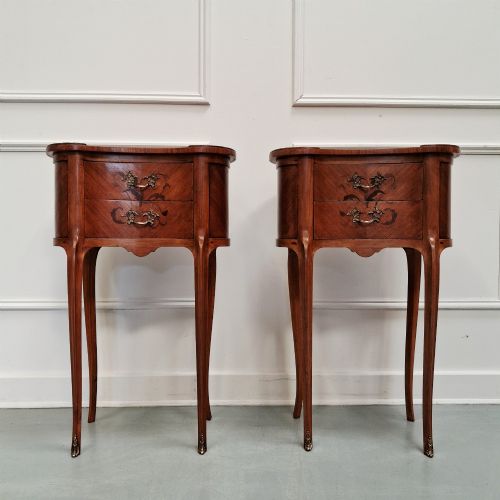
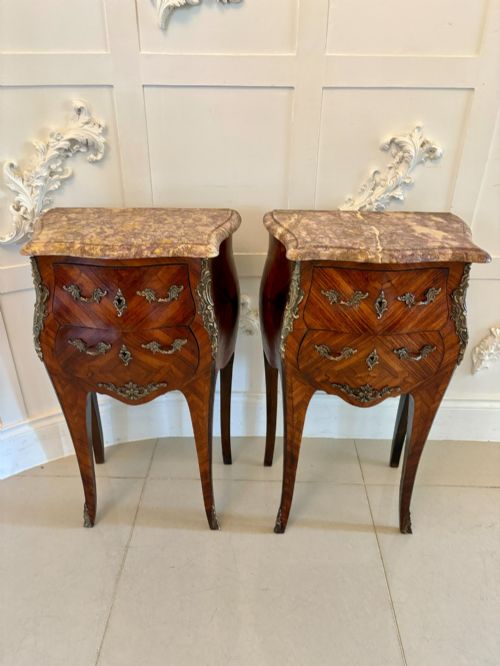
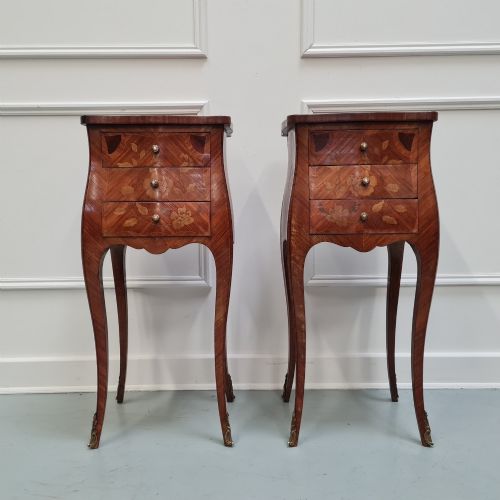
When searching for an inlaid kingwood cupboard, you encounter a variety of forms ranging from bedside tables and side cabinets to commodes, display cabinets, and vitrines. These pieces frequently draw upon French Louis XV styles, French Rococo revival designs, and Victorian aesthetics.
Originating largely from French workshops and continental influences, these cabinets serve functional storage needs while acting as decorative focal points. The combination of figured wood veneers and marquetry creates distinct visual depth across every form.
Materials and construction
Cabinet makers utilised kingwood veneers laid in parquetry or marquetry patterns over a supportive secondary timber carcase. Floral designs in contrasting woods were painstakingly cut and fitted by hand into the surface veneer.
Mounts in cast or chased ormolu and brass provide structural reinforcement and decorative framing around doors, corners, and aprons. Many tops incorporate shaped marble slabs fitted precisely to the contours of the cabinet carcase.
Inlaid Kingwood Cupboard Retail Price Guide 2026
Typical asking prices for inlaid kingwood cupboard among the pieces listed under this phrase on Sellingantiques today, from the lower quarter to the upper quarter. They describe what is for sale here now, not the wider market.
Materials appearing across the inventory include kingwood, walnut, rosewood, ormolu, brass, bronze, marble, and glass.
Distinctions in quality
The standard of an inlaid kingwood cupboard rests upon the precision of the marquetry cutting and the choice of timber figuring. Finer examples display tightly registered parquetry and natural shading within the floral veneer work.
Hardware and mounts distinguish workshop output, as heavier, sharply chased ormolu mounts indicate superior craftsmanship compared to simpler cast brass fittings. The integration of solid marble tops and clean internal carcase construction further separate finer items.
The Inlaid Kingwood Cupboard Glossary
- Kingwood
- A dense, heavily figured Brazilian timber displaying rich brown and violet tones. It gained widespread favour for high-end French and Victorian cabinet making.
- Marquetry
- The art of forming decorative patterns using thin slices of wood veneer applied to a structure. Craftsmen cut various timber species to create pictorial floral or geometric motifs.
- Ormolu
- Gilded bronze used for decorative mounts and furniture hardware. It provides a bright metallic contrast against dark exotic veneers.
- Parquetry
- Geometric wood inlay work arranged in repeating patterns such as cubes or chequers. This technique emphasises the natural grain and colour variations of the timber.
- Vitrine
- A glass-fronted display cabinet designed for showing porcelain or small objects. These pieces often incorporate elaborate marquetry and ormolu mounts.
Inlaid Kingwood Cupboard: Frequently Asked Questions
How do I date an inlaid kingwood cupboard?
Dating relies upon examining the construction methods of the carcase, the timber used for secondary framing, and the style of the ormolu mounts. Revival pieces from the nineteenth and early twentieth centuries often reinterpret earlier seventeenth and eighteenth century forms.
Hardware fixings, drawer linings, and the wear patterns on the underside offer additional clues regarding age. Comparing the specific marquetry motifs against known period pattern books helps narrow down the decade of manufacture.
Where should I place a side cabinet?
These cabinets work well in living rooms, hallways, or bedrooms where their decorative surfaces can be appreciated. Compact bedside versions suit smaller spaces while providing concealed storage.
Keep them away from direct sunlight and excessive heat sources to protect the delicate veneer and polish. Maintaining stable room humidity prevents the timber and underlying carcase from shifting.
How do I care for kingwood veneer?
Dust the surface regularly with a soft, dry cloth to prevent dirt accumulation in the grain and marquetry joints. Avoid using abrasive cleaners, silicone sprays, or excess moisture on antique polished timber.
Apply a quality microcrystalline wax occasionally to nourish the wood and protect the polish. Gentle buffing restores the natural lustre without harming the antique finish.
What is the difference between marquetry and parquetry?
Marquetry involves cutting various veneers into pictorial or floral designs such as bouquets and scrolls. It requires artistic skill to fit different wood shades together seamlessly.
Parquetry uses geometric shapes like squares, triangles, or diamonds to create repeating abstract patterns. Both techniques frequently appear together on the surface of fine cabinets.