

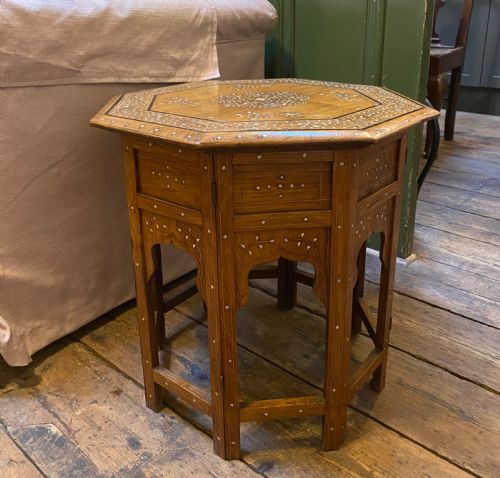
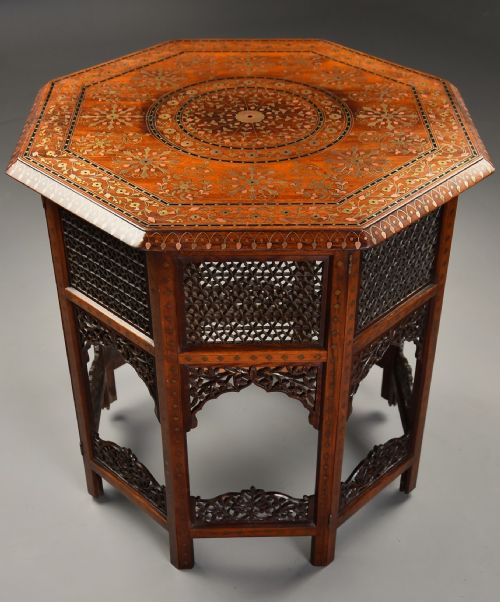
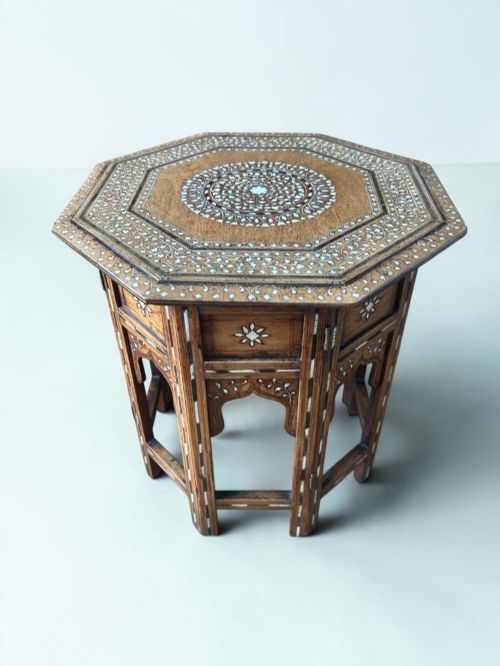
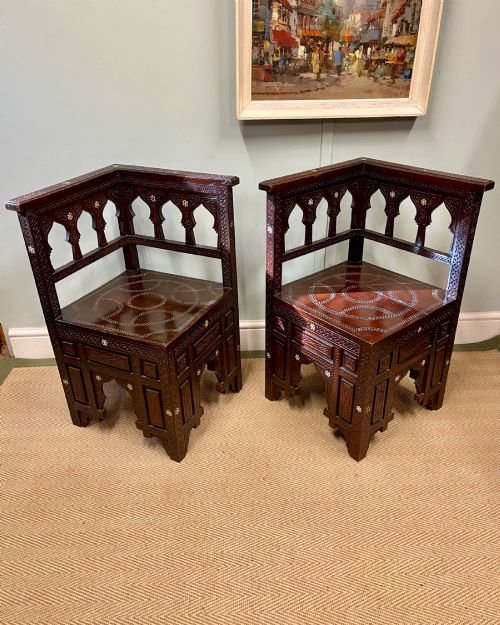


Inlaid Hardwood Table
An inlaid hardwood table brings together dense timber and intricate decorative work from varied global traditions.
Inlaid Hardwood Table
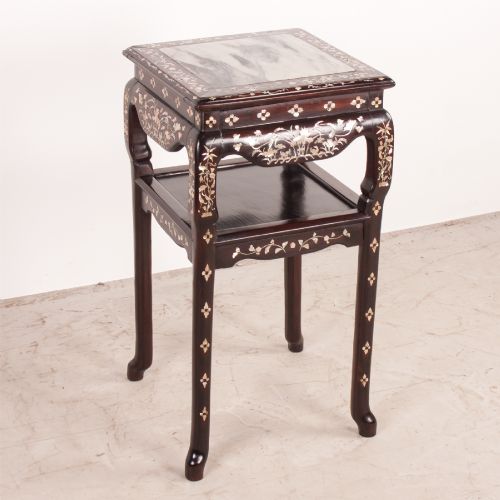
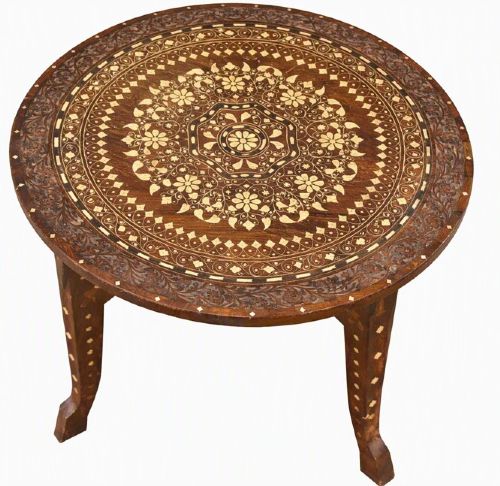
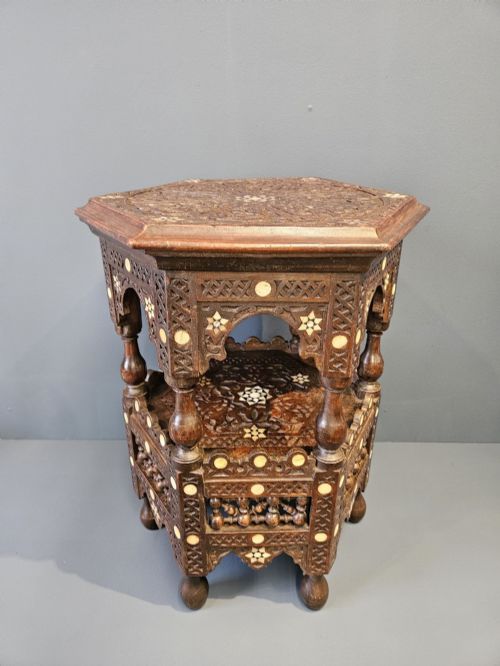
An inlaid hardwood table is an example of intricate craftsmanship, spanning occurrences from the nineteenth century into the early twentieth century. The forms encountered most frequently on this page include occasional tables, side tables, centre tables, and octagonal lamp tables.
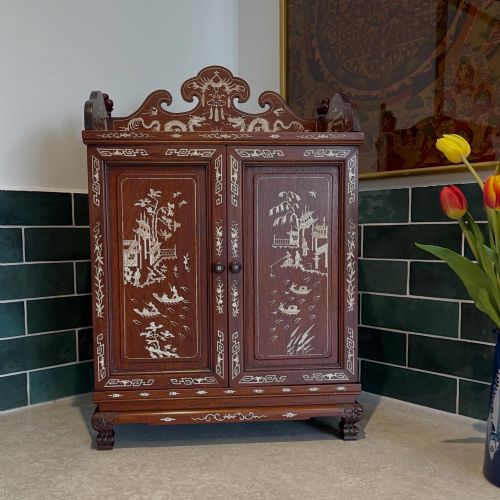
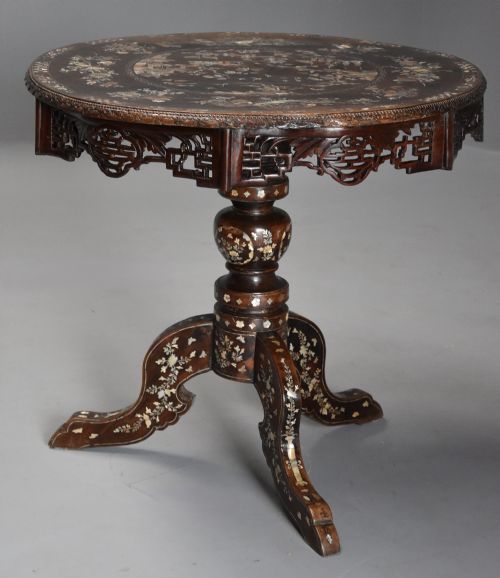
Geographic origins for these items extend across global regions including China, Anglo-Indian workshops, Syria, and North Africa. Makers utilised dense timbers, shaping them into drum-shaped barrel forms, folding stands, and tiered surfaces.
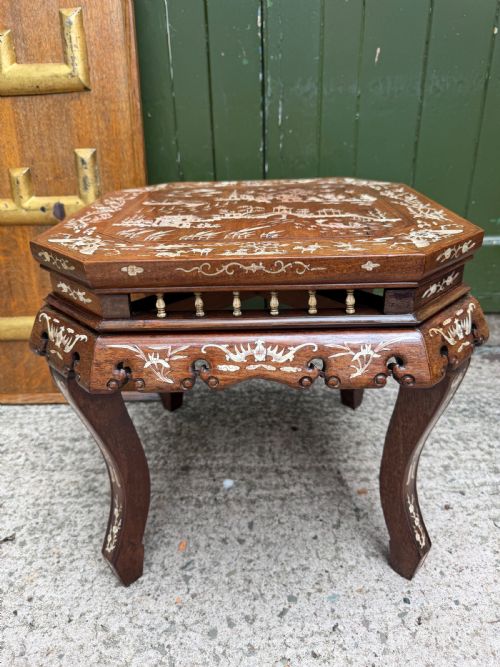
Surfaces display decorative elements tied to distinct cultural periods such as the Qing Dynasty, Meiji Period, and Moorish Revival. Buyers searching for an inlaid hardwood table select between circular tops, octagonal designs, and low stands.
How they were made
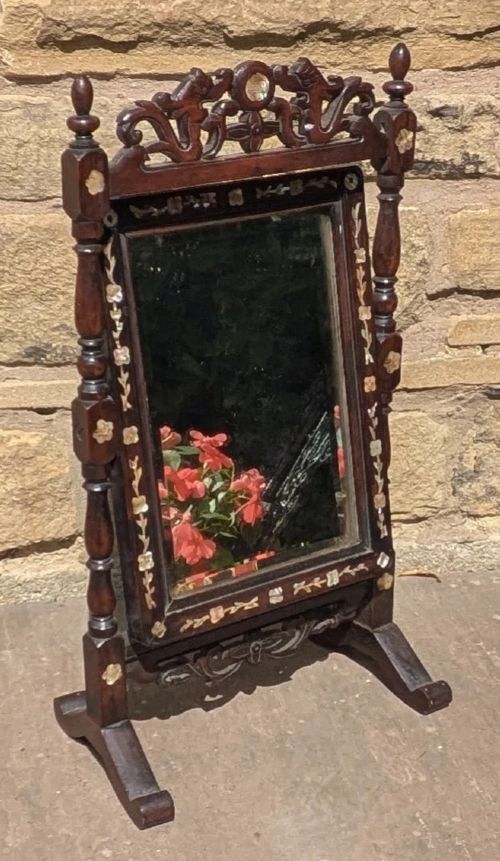
Articles are constructed from dense timbers such as padauk, rosewood, and hongmu, providing a heavy structural foundation. Artisans incorporated contrasting materials into the timber surface by recessing pieces of mother-of-pearl, bone, ivory, brass, and glass into hand-cut channels.
Surface decoration frequently combines deep carving with geometric or figurative inlay work, sometimes augmented by lacquer or marble inserts. Joinery methods allow for multi-tiered structures, folding mechanisms, and octagonal top construction without relying on modern fixings.
Inlaid Hardwood Table Retail Price Guide 2026
Typical asking prices for inlaid hardwood table among the pieces listed under this phrase on Sellingantiques today, from the lower quarter to the upper quarter. They describe what is for sale here now, not the wider market.
Several tables feature detailed inlay depicting camels and rabbits wandering across the wooden surface.
What varies in quality
The standard of a piece depends upon the precision of the inlay work and the depth of the surrounding carved detail. Superior examples display tightly fitted contrasting materials embedded flush with the timber, whereas simpler items feature shallower carving and broader joints.
The choice of structural timber and the complexity of the form dictate the standing of the piece within its type. Heavy native hardwoods paired with extensive mother-of-pearl or bone placement represent the finer end of the available range.
Liberty & Co
The Inlaid Hardwood Table Glossary
- Hongmu
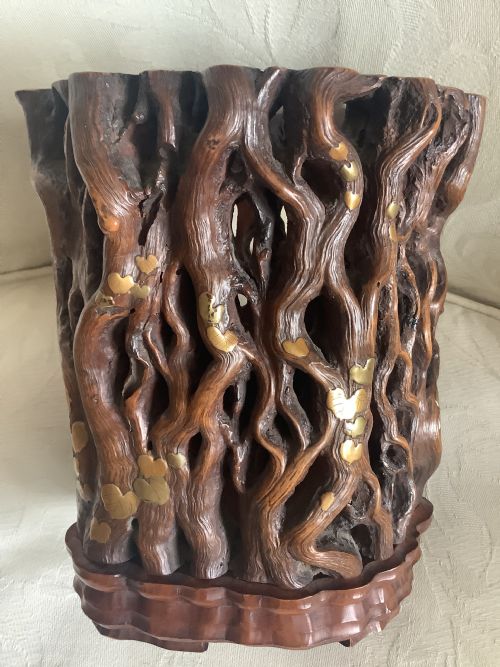
- A dense, dark traditional Chinese hardwood frequently utilised for carved furniture and table stands. This timber provides a heavy structural base for intricate inlay.
- Mother-of-pearl
- The iridescent inner layer of mollusc shell embedded into timber surfaces to form decorative motifs. Artisans cut thin sections of this material to create contrasting floral or geometric patterns.
- Shibayama
- A Japanese technique involving the inlay of delicate materials such as bone and shell into a wooden base. This method appears on decorative screens and panels associated with the Meiji period.
- Padauk
- A heavy tropical hardwood valued for its strength and rich reddish-brown colouration. It serves as a stable timber for folding tables and stands.
Inlaid Hardwood Table: Frequently Asked Questions
How do I identify an Anglo-Indian table?
Anglo-Indian tables from the nineteenth century are typically recognised by their dense overall carved decoration and octagonal tops. They frequently incorporate bone, ivory, or brass inlay arranged in intricate geometric patterns.
Many of these pieces originate from workshops in regions such as Hoshiarpur, employing regional motifs that distinguish them from Chinese or Moorish examples.
What woods are used in Chinese inlaid tables?
Chinese tables from this category utilise dense native timbers, including hongmu and rosewood. These heavy woods provide a stable dark ground for contrasting mother-of-pearl inlay.
The natural grain and deep colouration of the timber are chosen to complement the iridescent quality of the shell work.
Where were Moorish revival tables made?
Moorish revival and North African tables draw upon Islamic design traditions, featuring octagonal forms and complex geometric inlay. They often combine bone and mother-of-pearl with dark hardwood.
These pieces were produced during the Victorian era and later, reflecting a widespread European interest in exotic decorative arts.
How should I clean an inlaid surface?
Maintenance requires dry dusting with a soft cloth to protect the delicate junction between the timber and the inlaid material. Moisture can damage older bone or shell elements and affect the surrounding wood.
A light application of appropriate wax helps preserve the finish without loosening small recessed pieces.