
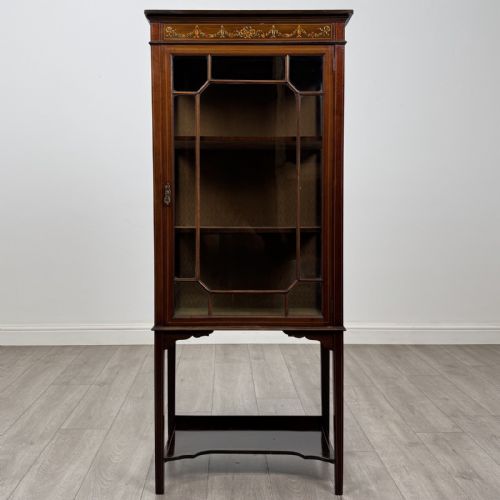
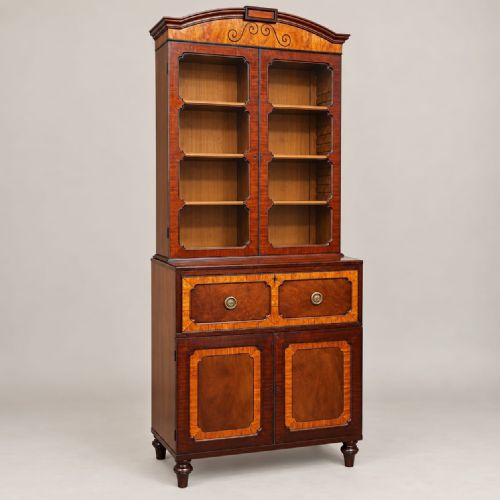
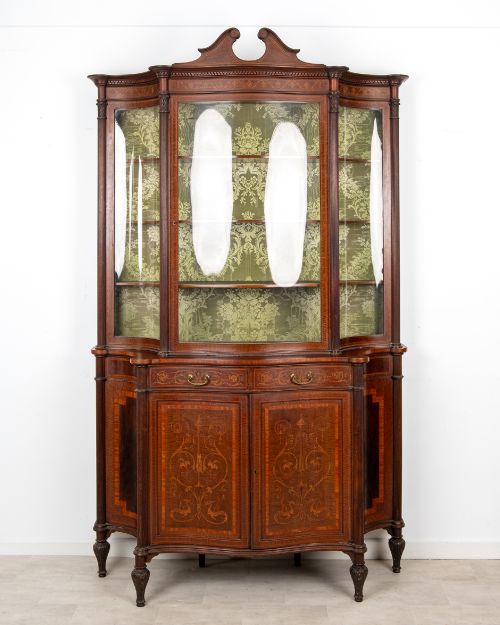
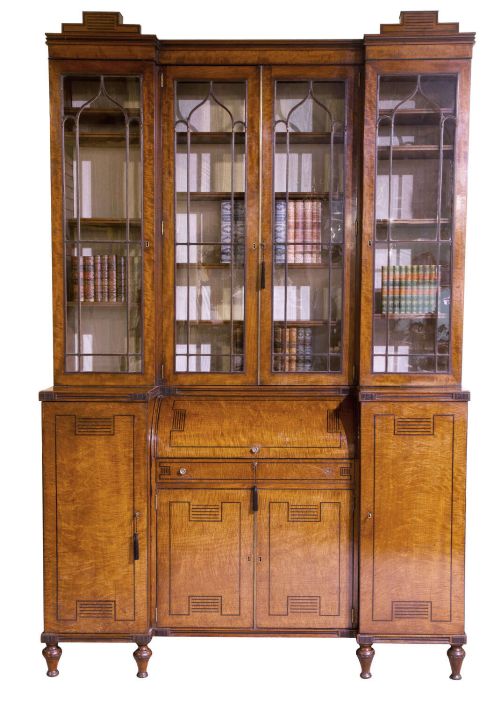
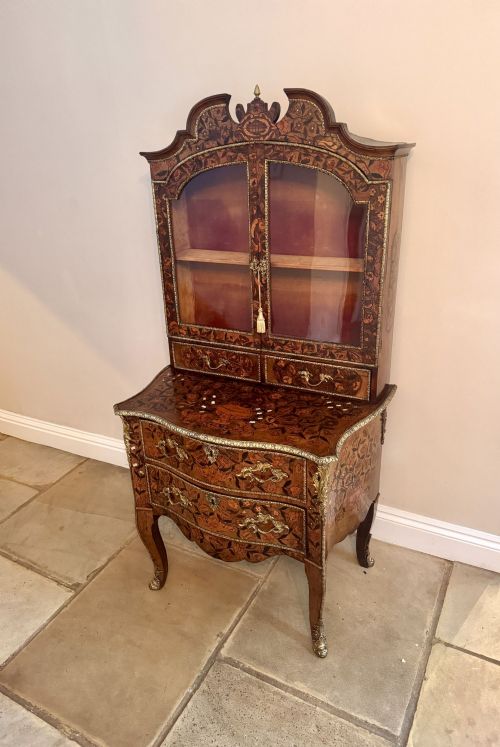
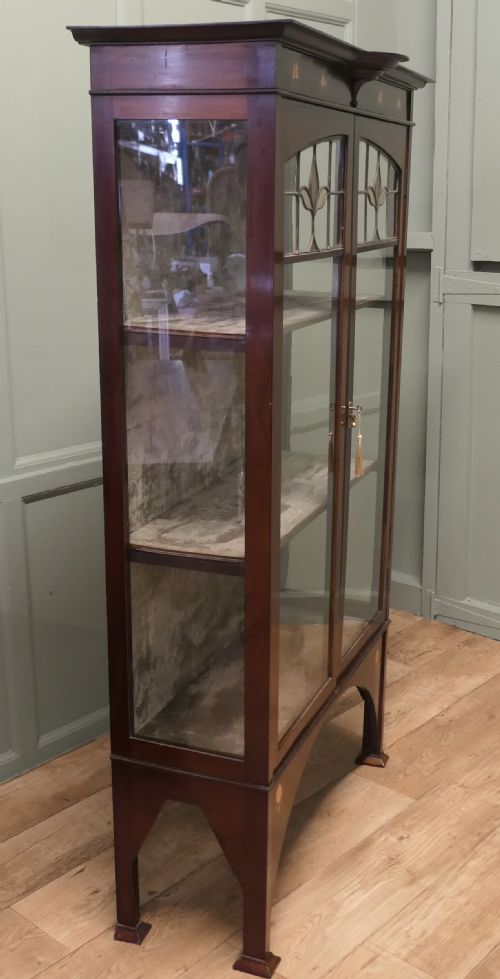
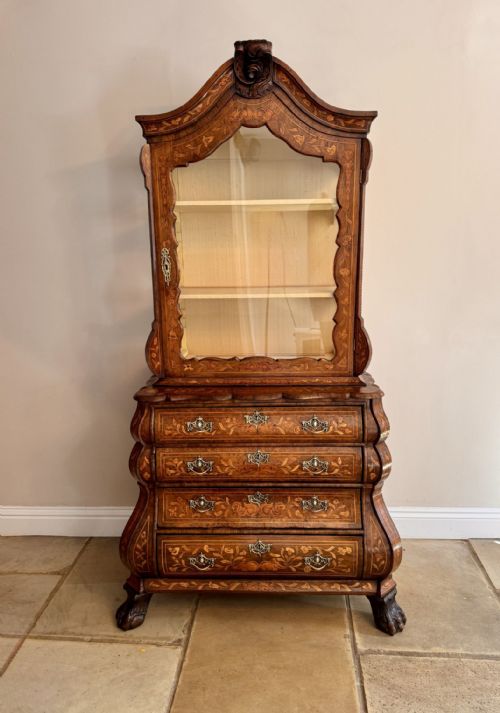
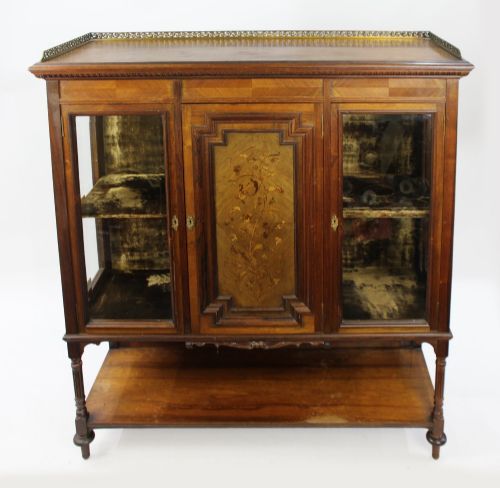
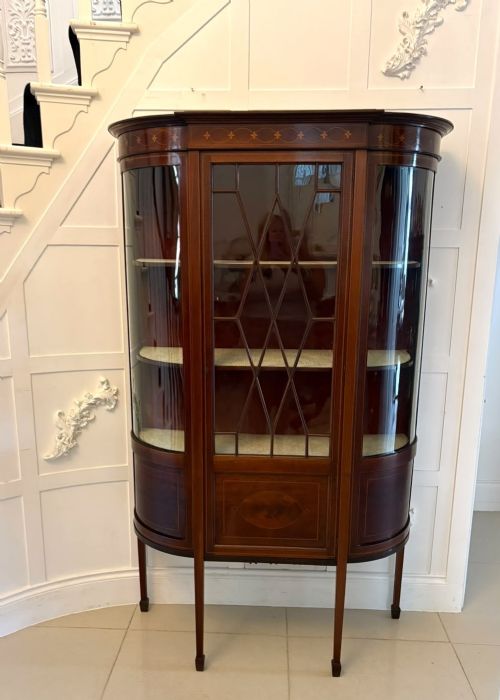
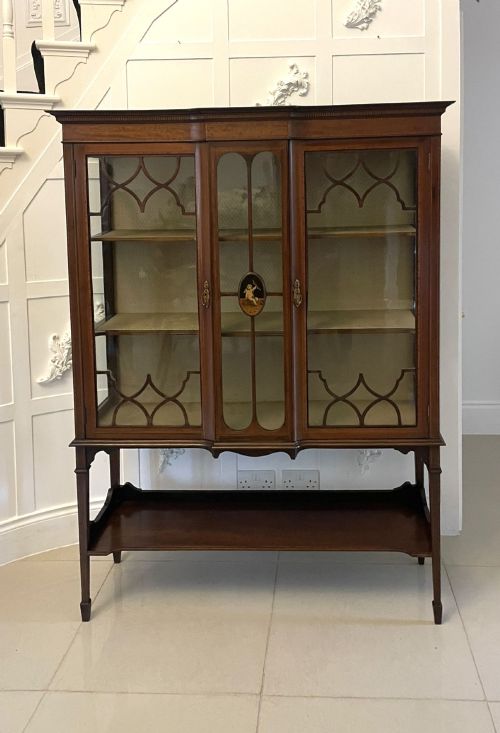
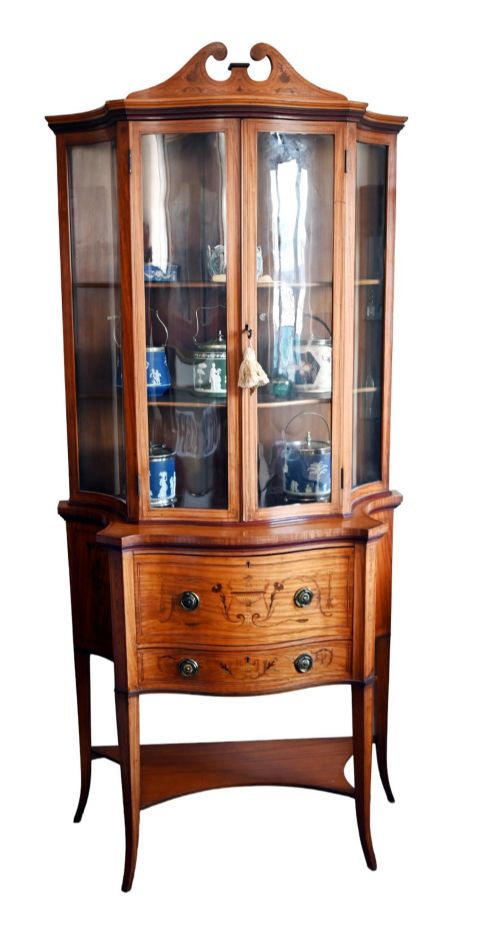
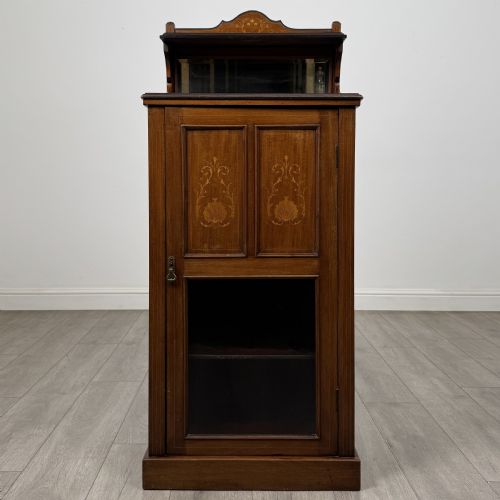
Inlaid Glazed Display Cabinet
When you search for an inlaid glazed display cabinet, you meet timber furniture built to house china and books behind glass.
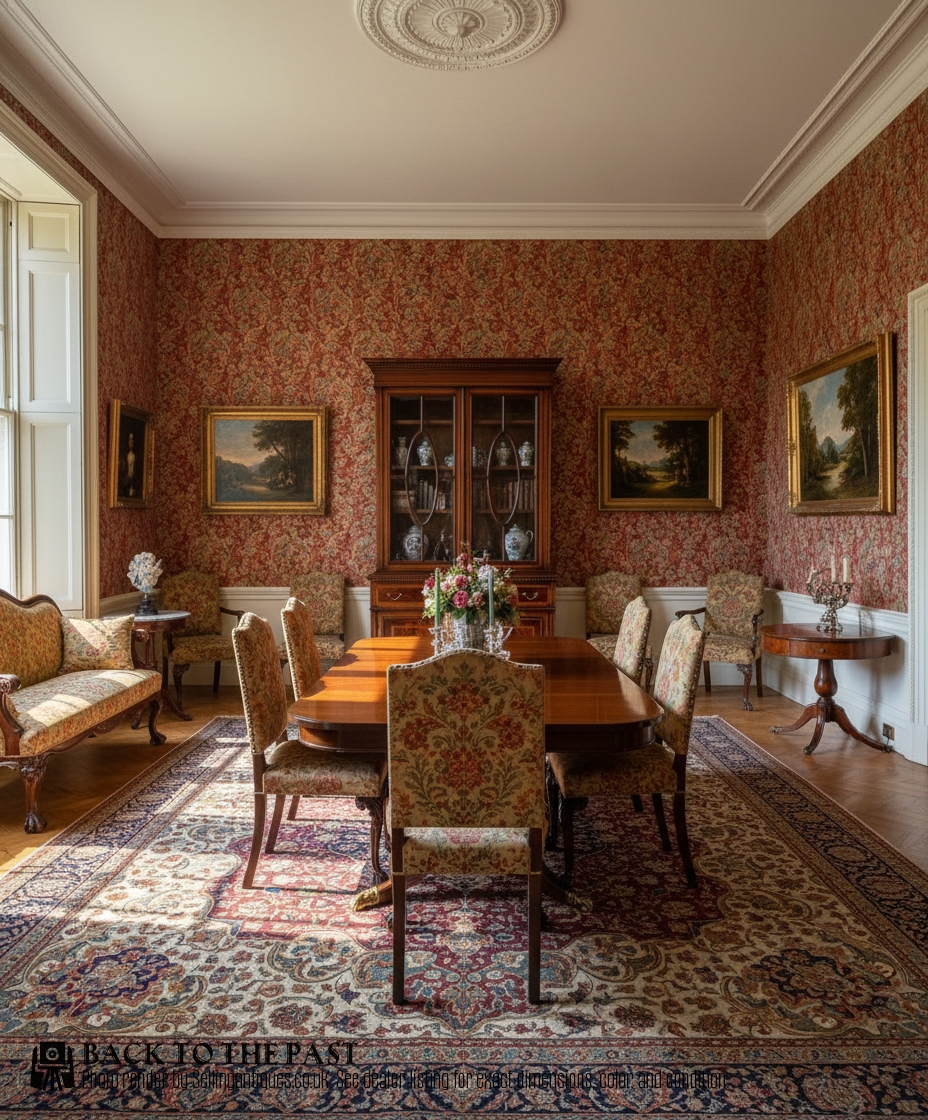
Inlaid Glazed Display Cabinet
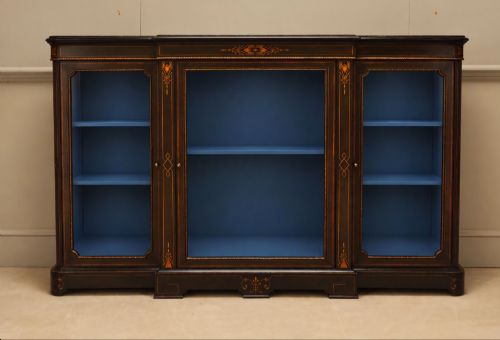
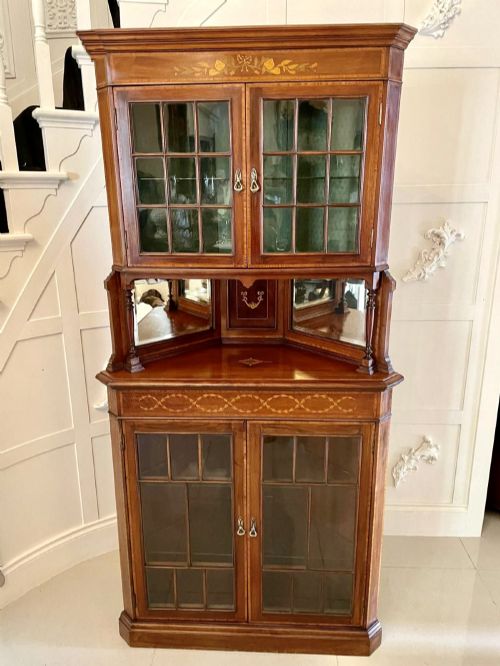
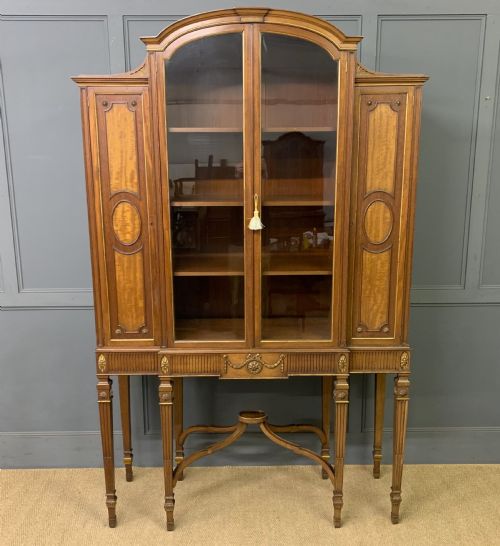
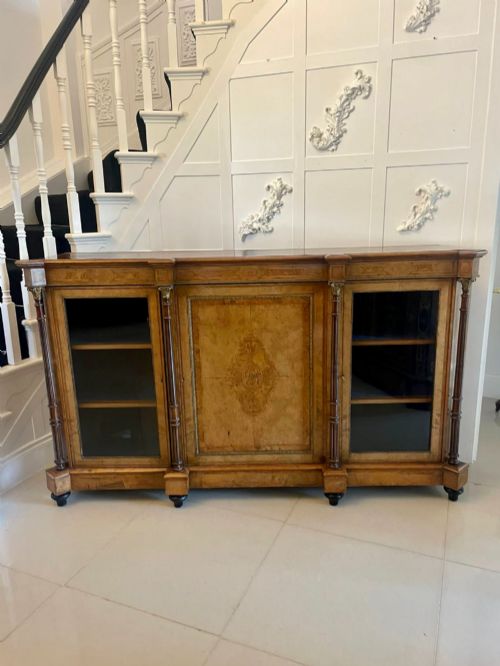
An inlaid glazed display cabinet spans tall freestanding bookcases, corner cupboards, and low pier cabinets designed to protect collections behind glass doors. You will find Edwardian mahogany versions alongside Victorian burr walnut examples and earlier Georgian forms.
The layout relies on timber framing fitted with large glass panels, occasionally supported by shelves or internal compartments. Many items incorporate marquetry details and brass mounts across the door fronts and cornices.
Makers produced these pieces for formal reception rooms, drawing upon Sheraton Revival and Art Nouveau design vocabularies. The surviving stock ranges from narrow wall-hanging cupboards to monumental breakfront credenzas.
Materials and construction
Cabinet makers utilised solid timbers and veneers including mahogany, satinwood, burr walnut, and rosewood over pine carcases. Fine floral or geometric marquetry decoration required contrasting woods such as boxwood and ebony cut into precise recesses.
Glazing involved individual leaded panes or large sheets held within wooden astragal bars. Ormolu mounts, brass handles, and fabric linings completed the interior and exterior presentation of the best examples.
Mahogany, satinwood, burr walnut, and rosewood form the primary timber palette across these nineteenth and early twentieth-century listings.
Factors of quality
The standard of an inlaid glazed display cabinet rests on the crispness of the marquetry cutting and the choice of burl or flame veneers. Well-executed pieces show precise matching of wood grains across the doors and drawer fronts.
Structural integrity depends on the weight of the timber and the rigidity of the glazed doors over decades of use. Mounts cast in ormolu and substantial brass hardware distinguish ambitious workshop output from standard domestic furniture.
Edwards & Roberts·Collinson & Lock·Maple and Co.
The Inlaid Glazed Display Cabinet Glossary
- Marquetry
- Decorative veneer work forming pictures or patterns by assembling small pieces of different coloured wood. This technique requires exceptional skill to fit timber sections seamlessly into the surface.
- Ormolu
- Gilt bronze mounts applied to furniture for decorative effect. The metal is cast and chased before receiving a gold wash.
- Astragal
- Moulding profiles used to hold glass panes within a door frame. These slender wooden bars divide the window into smaller geometric sections.
- Pier cabinet
- A low freestanding cabinet designed to fit against the wall space between windows. These pieces often feature glass doors and elaborate marquetry.
- Credenza
- A low sideboard or cabinet featuring cupboards and display space. Victorian examples frequently incorporate porcelain plaques alongside marquetry.
Inlaid Glazed Display Cabinet: Frequently Asked Questions
How do I clean the glass safely?
Use a soft microfiber cloth and a mild glass cleaning solution applied to the cloth rather than directly onto the wood. Avoid spraying liquid near the antique timber and delicate marquetry.
Take care around leaded panes and fragile astragal bars to prevent accidental pressure damage during routine maintenance.
Can I adjust the internal shelving?
Many Edwardian and Victorian cabinets feature adjustable wooden shelves supported on traditional wooden rack strips or metal pins. Some older corner cupboards and fixed bookcases retain static timber tiers.
Inspect the interior supports carefully before attempting to alter shelf heights to avoid splitting the lining boards.
Where should I place my cabinet?
Position these timber pieces away from direct sunlight and strong heat sources such as radiators to prevent veneer cracking and warping. Consistent indoor humidity preserves both the wood and the internal fabric linings.
Allow adequate floor clearance to ensure the doors swing clear of surrounding furniture and foot traffic.
How do I distinguish Edwardian from Victorian?
Victorian cabinets generally display heavier proportions, darker mahogany or burr walnut timbers, and prominent ormolu mounts. Edwardian pieces often favor lighter satinwood and mahogany with delicate Sheraton Revival inlay.
Construction methods also shift, with Edwardian workshops frequently adopting standardised machine-cut joints alongside traditional hand-cut dovetails.